
Quick Summary: Roasted tomatillos and fresh green chiles blend into a bright, tangy sauce that freezes beautifully and works as a base for eggs, stews, chilaquiles, and tacos. Made with farm-fresh peppers, fresher tasting than anything from a store, and naturally slow carb compliant. Prep: 10 min | Cook: 10 min | Makes: 3 cups
Jump to: RECIPE | Ingredients | Stew vs Sauce | How to Use It | Why From Scratch? | FAQ
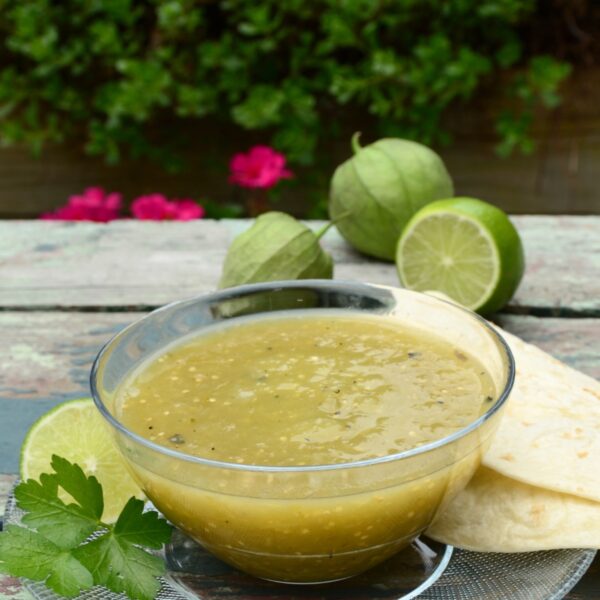
Every fall when the tomatillos and chile peppers are ready to harvest at my farm, one of the first things I make with them is this Chile Verde sauce.
Roasted tomatillos, poblano peppers, and serrano peppers blend up into a bright, tangy sauce that freezes beautifully and works as a base for dozens of Mexican dishes. I make it in big batches and pull it from the freezer all year for breakfast eggs, pork stew, chilaquiles, and lots more.
This post may contain affiliate links, and you can read our disclosure information here–
Ingredients and Substitutions
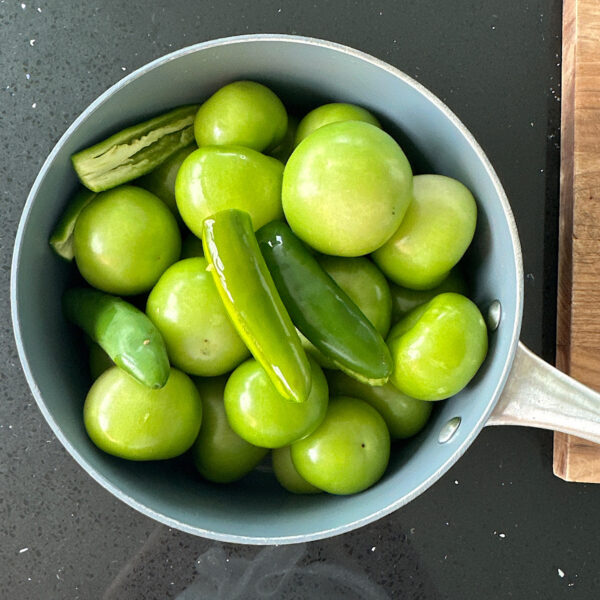
Tomatillos and some sort of green chile pepper are the two key ingredients of chile verde.
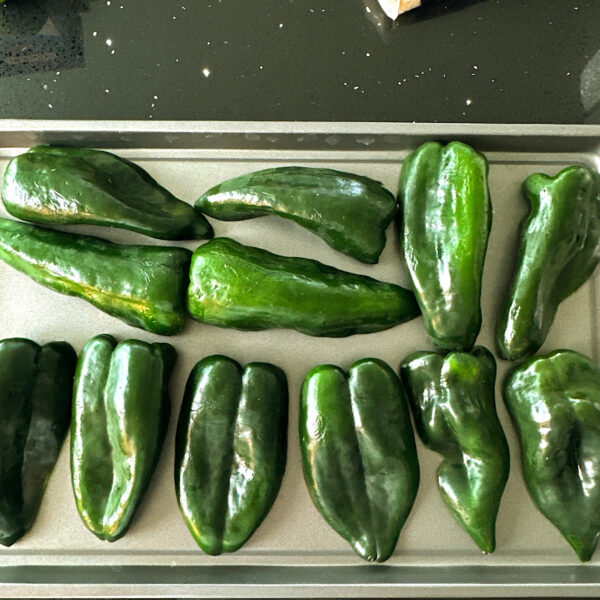
Different cooks will use different varieties of green chiles, but most often you will see Poblano chiles used for mild heat and Serranos used for spicier versions.
Here are a few variations/additions or substitutions that you may want to try if customizing:
- Hatch chile peppers (medium spicy)
- Jalapeno chile peppers (spicy)
- Anaheim chile peppers (mild)
- Purple tomatillos instead of the green ones
- Purple onions
- Garlic
- Different herbs (oregano instead of cilantro for example)
What is the Difference Between Chili Verde Stew, Chile Verde Sauce or Chile Verde Salsa?
Although the terms “Chili Verde stew”, “Chile Verde sauce”, and “Chile Verde salsa” are sometimes used interchangeably, they are technically different.
Often, when “Chili Verde” is mentioned without being attached to the word salsa, it refers to the stew version, with meat and vegetables in addition to the green chiles and tomatillos. A great recipe that showcases the Chili Verde as a stew is this Slow Cooked Pork Chili Verde Stew
The Hatch green chile is frequently associated with Chili Verde Stew.
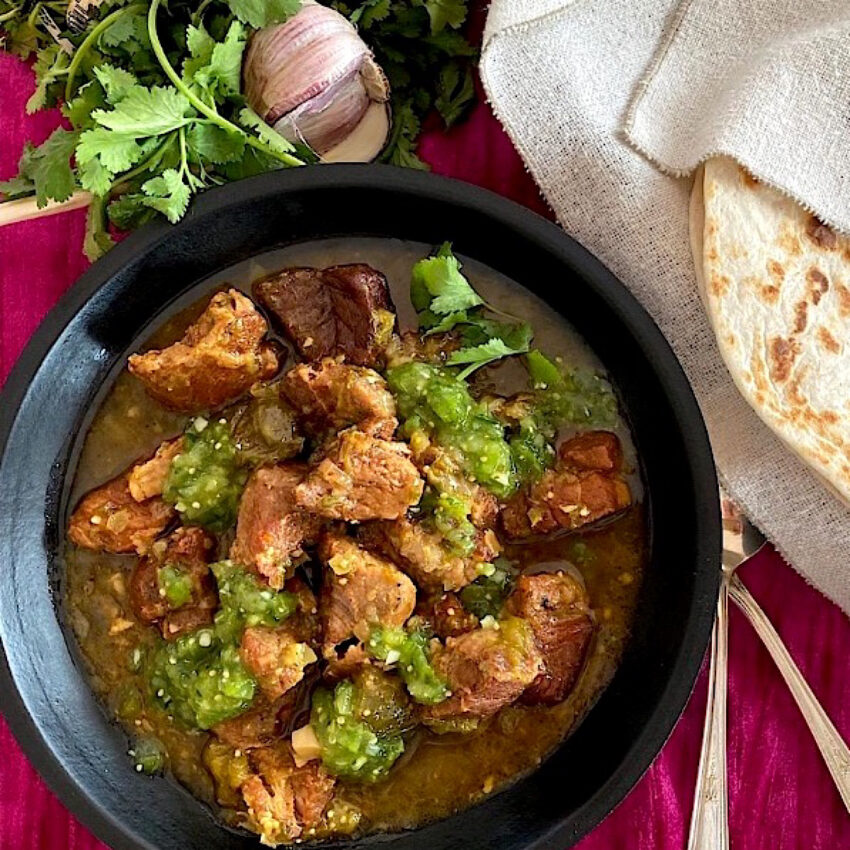
Chile Verde Sauce is a comforting sauce often served with braised pork or used to smother crusted fish fillets (in the US you might see it as a topping for burritos or as a breakfast egg dish).
“Chile Verde salsa” typically refers to the fresh condiment made with tomatillos, herbs, onions, green chiles, and cilantro.
Ingredients for the salsa are typically used raw (chopped and blended “together”), but they can also be roasted first to give it a more sauce-like consistency.
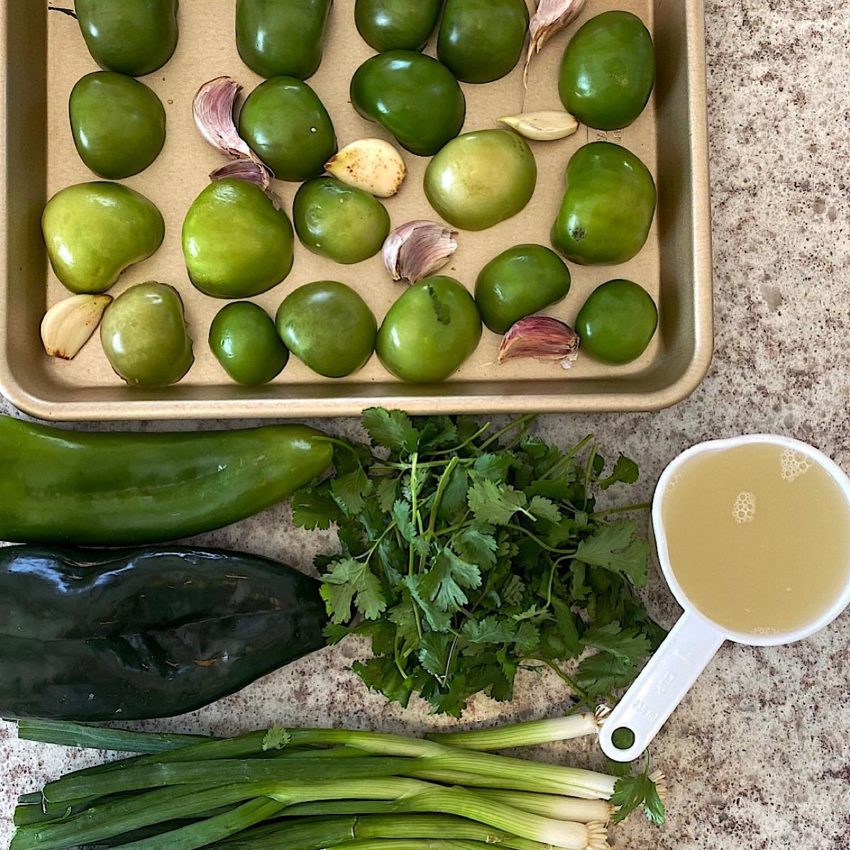
By the way, you can grow your chile peppers in a pot and enjoy fresh salsa all Summer. You can grow the peppers you like alongside the cilantro and keep it close to your house for easy picking. Just make sure and replace the cilantro occasionally, as it tends to bolt fairly quickly.
Cooked Chili Verde (the stew or sauce) is used as a base for many Mexican main dishes (like chilaquiles), whereas the raw Chile Verde salsa is typically used as a condiment.
Did you know? Chile Verde sauce is sometimes referred to as a Mexican mother sauce because it has so many different uses.
I like to make a pureed sauce from roasted tomatillos and chiles and then freeze batches of this sauce in quart-freezer bags. It’s then available all year to enhance breakfasts or Mexican main dishes.
For another chile-forward recipe that can be made ahead and used as a condiment try this popular Salsa Macha.
Cooking Tip: the spicier you make the salsa, the more salt you should add to offset the heat.
How Do You Use Chile Verde Sauce?
There are SO many uses for this simple sauce! Here are some of my favorite recipes:
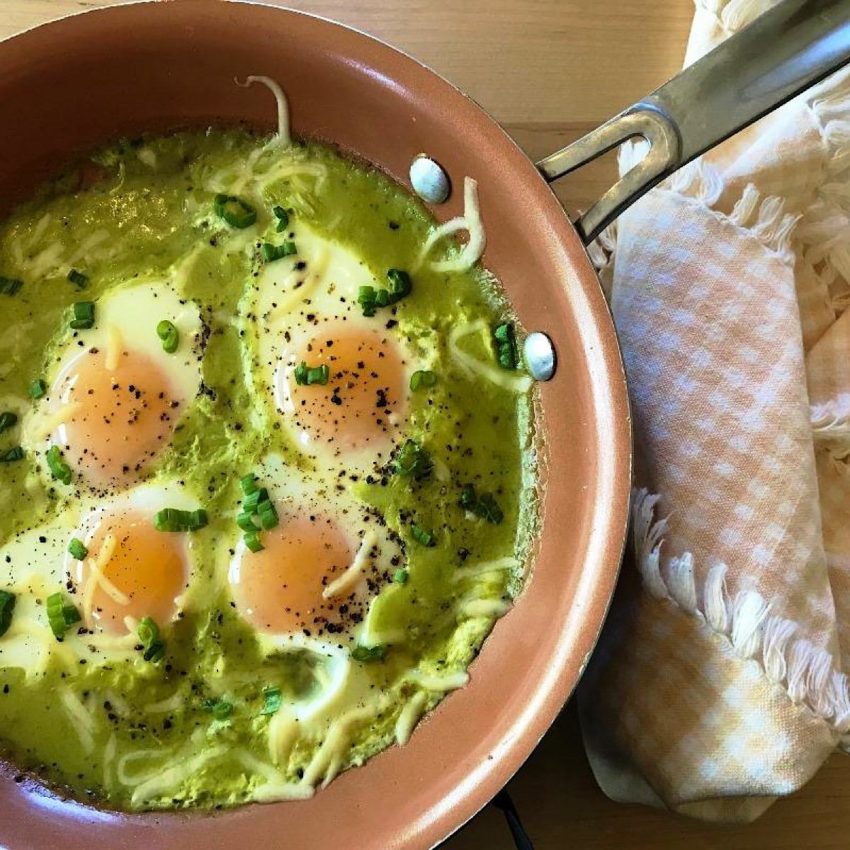
- Breakfast Baked Eggs with Chile Verde
- Beef or Pork Chili Verde Stew
- Chicken Pipian with pumpkin seeds and green mole
- As an addition to burritos/ tacos or carnitas bowls
- As an addition to my all-time favorite “chorizo and egg dinner”
- In vegetarian queso y rajas (cheese and pepper) tamales
- Topping for grilled fish or meat dishes (like this Grilled Salmon)
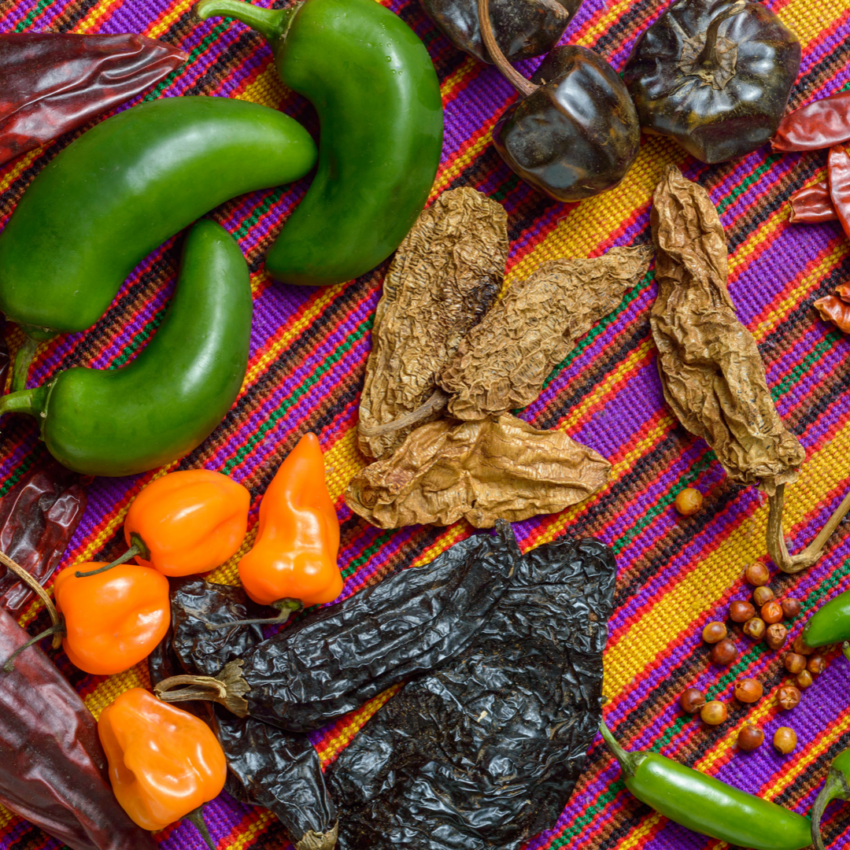
Having the right chiles, spices, and staples already in your kitchen makes recipes like this one come together in minutes. If you’re building out your Mexican cooking setup, this guide to stocking a Mexican pantry covers everything from dried chiles to masa harina.
Why Make Chile Verde Sauce from Scratch?
My daughter lives in Denver, Colorado, where pre-made chile verde salsa is present in nearly every store. However, there are so many reasons to make fresh chile verde salsa at home.
It’s Quick and Easy
One of the main reasons to make this salsa at home is it is simple. It only takes a few minutes and there are relatively few ingredients. Even the most novice of cooks can feel like a 5-star chef after making this salsa type of sauce.
You control the heat level
Another important reason to avoid the store-bought versions is taste.
When you buy products at the store, you have less control over the spice level, salt content, or different preservatives and additives.
Note: We taste-tested the recipe below against this Hatch chile verde sauce and found that, although both versions were good, all four of our family members preferred the homemade version.
Although the Hatch chile pepper version touts “medium” spice, it was too spicy for some of our family and not spicy enough for others.
It also did not taste as fresh as our homemade version, but it was still quite good.
Here are some ideas of different ingredients you could add to the basic chile verde recipe below to change the flavor profile slightly:
- Cilantro
- Onion
- Lime juice
- Sugar/ salt
No added sugar or chemicals
The final reason to make homemade chile verde salsa is the health pros and cons. Store-bought products often have chemical additives or added sugar/ sodium.
As with the taste, when you make this at home, you can more easily add or take out certain ingredients that don’t fit with your specific diet.
FAQ
They refer to the same thing. Chile is the traditional Mexican spelling for the pepper, while chili is the common American adaptation. Both terms are used interchangeably in the US, though chile verde is more accurate for Mexican-derived dishes. Since the chili spelling is most often seen in reference to stews, I have opted to use chili verde for stews and chile verde for sauces and salsas that commonly use fresh chile peppers.
Yes. Freeze in quart bags or containers for up to several months. It thaws quickly and tastes nearly as fresh as the day you made it.
Poblanos for a mild version, serranos for a spicy version, or a mix of both. Anaheim peppers and Hatch chile peppers are also popular chile peppers to use in a Verde sauce.
They’re related but different. Salsa Verde is typically raw and used as a condiment. Chile Verde sauce is roasted and cooked, used as a base for stews and main dishes
About one week in a sealed container.
Yes. Use only poblanos or Anaheims and skip the serranos or jalapeños.
Yes. The base ingredients (tomatillos, peppers, garlic, onion, broth, cilantro) are all slow carb approved. Use it over eggs, grilled chicken, or fish for a compliant meal. Just skip the tortillas.
Chile Verde Sauce
Equipment
Ingredients
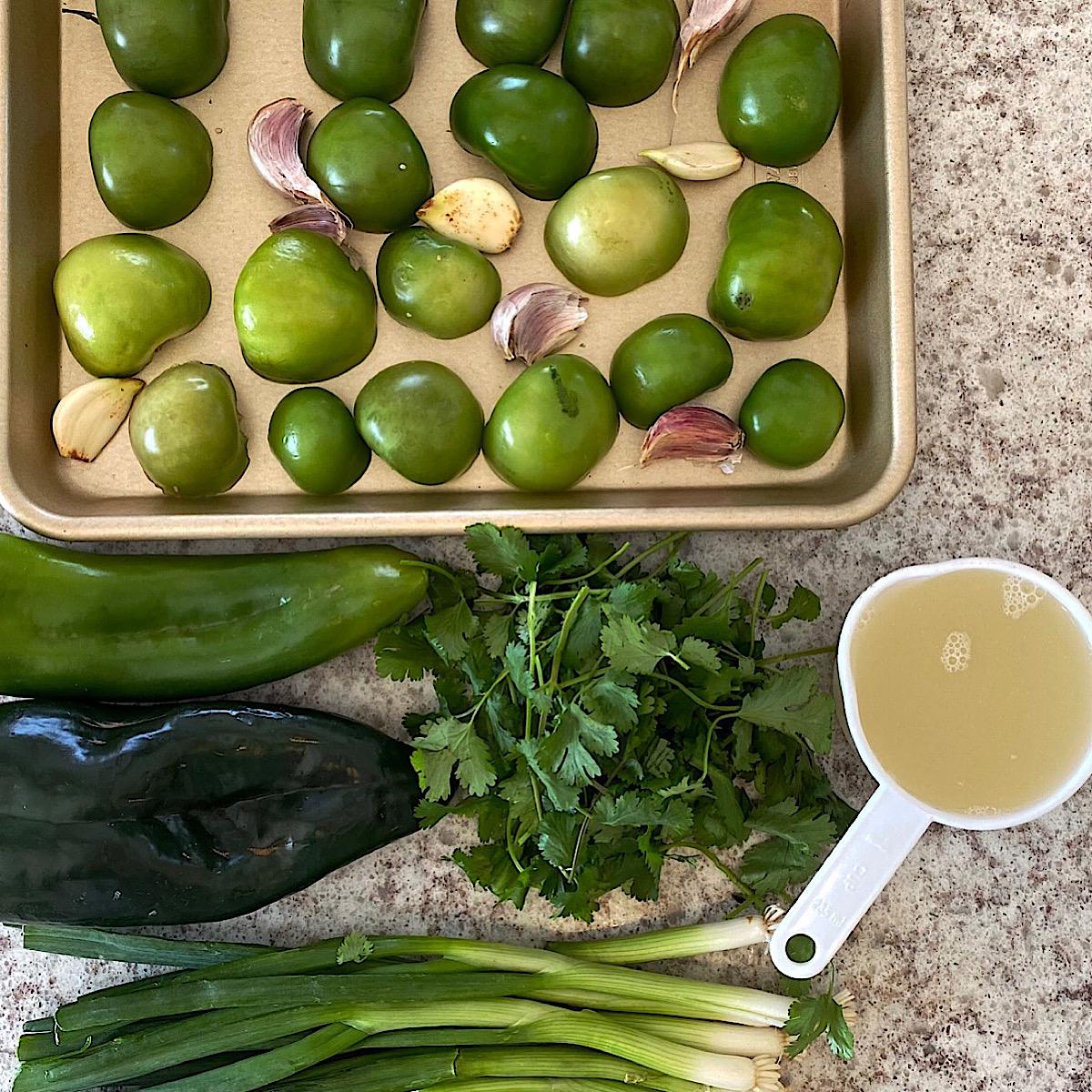
- 1 ½ pounds tomatillos
- 2 Anaheim or Jalapeno chile peppers
- 3 green chile peppers poblano, serrano, Hatch or your preference
- 4-5 cloves garlic
- 2 cups chicken broth
- 1 bunch green onions (scallions) coarsely chopped
- 1 bunch cilantro stems removed (about 1/2 cup)
- 2 teaspoons sea salt more as needed
Instructions
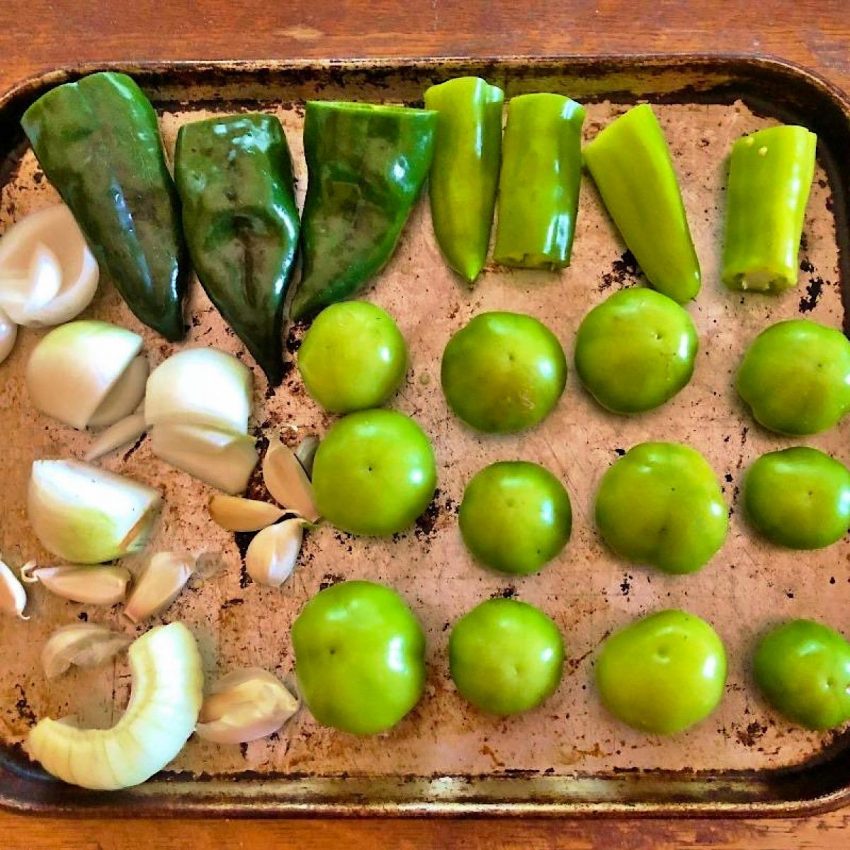
- Remove papery husks from tomatillos and rinse. Cut the tomatillos in half and place cut side down on a foil-lined baking sheet. Place peppers (whole) and 4-5 garlic cloves (in their skins) on the baking sheet. Roast tray of tomatillos and peppers and garlic under a broiler for about 5-7 minutes or until skins are blackened.1 1/2 pounds tomatillos, 3 green chile peppers, 4-5 cloves garlic, 2 Anaheim or Jalapeno chile peppers
- Cool tomatillos and peppers for a few minutes. In a food processor or a blender combine roasted tomatillos, garlic, peppers, 2 cups chicken broth, green onions, cilantro and salt. If you want a spicier version, add some hot chile powder to the blender (I used a hatch chile powder).2 cups chicken broth, 1 bunch green onions (scallions), 1 bunch cilantro, 2 teaspoons sea salt
- Season to taste with additional salt. Can be used as salsa immediately, stored in a sealed container in the refrigerator for 1 week, or frozen to serve later with a wide array of Mexican dishes.
Video
Notes
- This recipe makes 3 cups.
- The spicier you make this salsa the more salt you should add to offset the heat
1 thought on “Chile Verde Sauce (Chili Verde): Homemade with Roasted Tomatillos”