
Quick Summary: Fresh salsa made by grinding roasted heirloom tomatoes with garlic, onion, jalapeño, and cilantro in a molcajete (Mexican mortar and pestle). The grinding releases more oils and creates a better texture than a blender or food processor. Best with peak-season tomatoes. Prep: 10 min | Serves: 4
Jump to: RECIPE | What is a Molcajete? | How to Make it | Best Tomatoes | Best Peppers | Pico de Gallo | FAQ
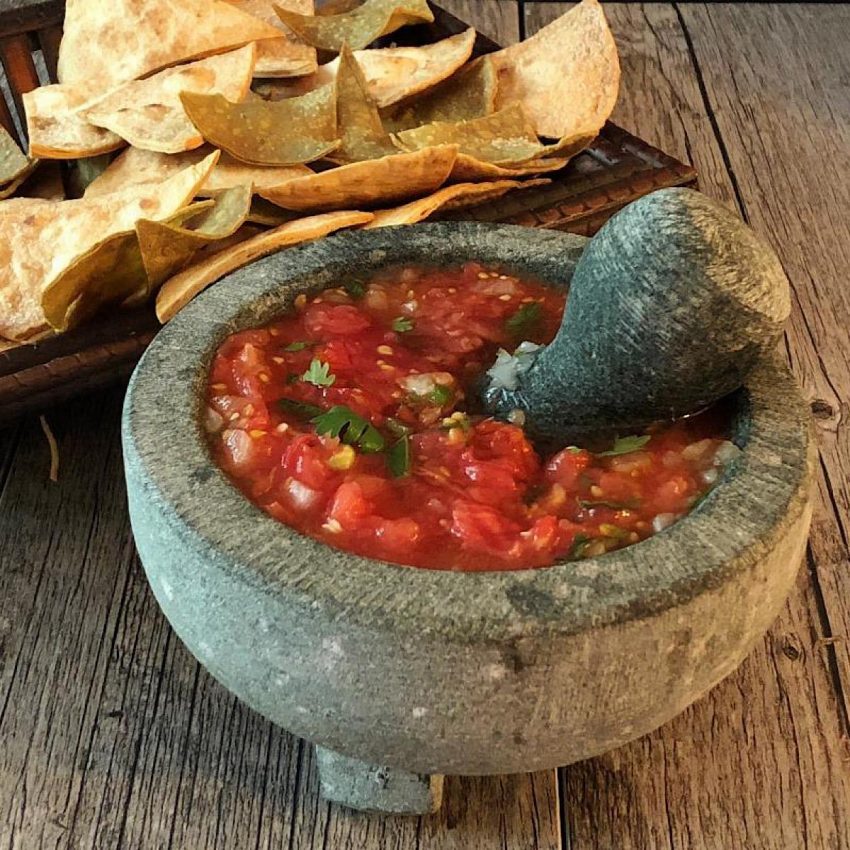
I always wondered whether a mocajete (aka mortar & pestle) truly made a difference or whether it was just another kitchen gadget to take up counter space (and something else to clean).
Well, this fresh salsa roja, made with seasonal heirloom tomatoes and a few other fresh ingredients made me a true believer of the mocajete.
Mashing tomatoes, onion, cilantro, and peppers together with salt releases more oils and blends the flavors differently than a food processor. The texture is better, chunkier in some places and smoother in others. The taste is brighter.
At HeathGlen Farm, I grow a wide range of heirloom tomatoes specifically for fresh eating and salsas. When tomato season hits, the molcajete now comes out and stays out until frost.
This post may contain affiliate links, and you can read our disclosure information here–
What Is a Molcajete?
A molcajete (mohl-kah-HEH-teh) is a Mexican mortar and pestle traditionally made from volcanic rock (basalt). It’s been used in Mexican kitchens for thousands of years, dating back to Aztec and Mayan civilizations.
The rough, porous surface of the stone is what makes it work. When you grind ingredients against it, the texture breaks down cell walls and releases oils in a way that blades (like in blenders or food processors) cannot replicate. The result is a salsa with deeper, more integrated flavor.
Look for a molcajete made from genuine volcanic rock, not cement or composite materials. It should be heavy (8 to 15 pounds is normal) and have a rough interior surface. Size matters too: a 6 to 9-inch diameter bowl gives you enough room to make a full batch of salsa.
New molcajetes need to be seasoned before first use. Grind dry rice in the bowl until the rice comes out clean (not gray with stone dust). This may take several rounds.
Why Use a Molcajete Instead of a Blender?
Mashing the tomatoes, onion, cilantro and peppers together with a little salt released more of the oils and blended the various flavors than my food processor or kitchen knife ever did! Here’s why:
- Texture: A molcajete creates irregular texture, some parts smoother, some chunkier. A blender makes everything uniformly smooth or uniformly chunky.
- Flavor release: Grinding against stone ruptures more cell walls than blades do, releasing more oils and juices.
- Control: You decide exactly how much to grind. Stop when you like the texture.
- Tradition: There’s something satisfying about making salsa the way it’s been made for centuries.
Cooked salsas would be a different story, but when you’re in the high season of fresh, juicy heirloom tomatoes, using a mortar and pestle will turn your salsa into a food memory that will last all winter.
Just make sure you get a quality Molcajete made of fine-grained lava rock and get one that is large enough for a whole batch of salsa (6 to 9-inch diameter). They need to be pretty heavy to really grind the spices and chiles together.
Choosing the Best Tomatoes for Salsa
The tomato is the star of a salsa roja so first opt for the freshest, tastiest tomato you can find.
I use a range of heirloom tomatoes because I grow them at my farm and have easy access to them. It’s fairly easy to find heirloom tomatoes at most farmers’ markets these days however.
Here’s the rundown:
- Heirloom tomatoes: My preference. They have more complex flavor than grocery store varieties. I grow a range of paste and slicing heirlooms specifically for salsas.
- Roma or paste tomatoes: These are meatier tomatoes with less juice, which means less watery salsa. Good choice year-round. If you come across an heirloom roma type called Opalka, grab it. These are my number one tomato for sauces and salsas.
- Grocery store tomatoes: If this is all you have access to, roast them first to bring out flavor. Fifteen minutes at 400°F concentrates the taste and makes them easy to peel.
Even with good heirlooms, roasting is an option. It adds a slightly charred, deeper flavor and makes the tomatoes easier to muddle in the molcajete.

Chile Peppers for Salsa Rojo
The heat level is up to you. Here are the most common options:
- Jalapeño: Medium heat, grassy flavor. The classic choice.
- Serrano: Hotter than jalapeño, sharper flavor. Traditional in many regions.
- Anaheim: Mild heat, slightly sweet.
- Habanero: Very hot, fruity flavor. Use sparingly.
- Poblano: Mild, earthy. Good for a low-heat salsa.
At HeathGlen, I grow all of these and rotate through them depending on my mood and who’s eating. For this recipe I used jalapeño, but feel free to substitute.
Remove the seeds and ribs for less heat. Leave them in for more.
How to Make Salsa Roja in a Molcajete
- Roast tomatoes on a sheet pan at 400°F for about 15 minutes. This is optional but recommended for more flavor.
- While tomatoes roast, add garlic, onion, jalapeño, cilantro, and salt to the molcajete.
- Grind these aromatics together until they form a rough paste.
- Add the roasted tomatoes and grind them into the paste, working in batches if your molcajete is small.
- Taste and adjust salt, lime juice, or chile as needed.
- Serve immediately with chips, or refrigerate covered.
The salsa is best eaten the same day but keeps refrigerated for 2 to 3 days.
If you want to delve into the world of Mexican cuisine, you’ll want to take a look at this checklist for stocking a Mexican pantry.
Pico de Gallo vs Salsa Roja
Both are fresh tomato salsas, but they differ in texture and method.
- Pico de gallo: Chopped (not ground), chunky, more like a relish. The tomatoes stay in distinct pieces. No cooking.
- Salsa roja: Ground or blended, saucier texture. The ingredients are integrated rather than distinct. May include roasted tomatoes.
My recipe below falls somewhere between the two. The molcajete creates a texture that’s chunkier than blender salsa but more integrated than pico de gallo. Call it what you like.
I like them all and every which way, as long as they have good tomatoes!
The Chips
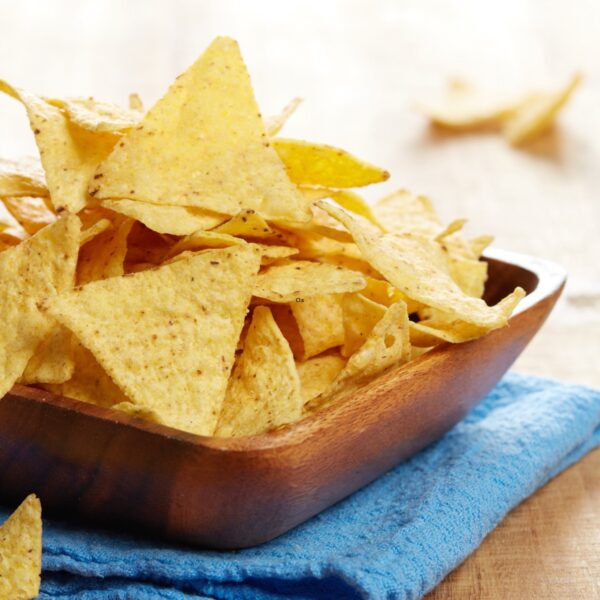
It’s pretty tough to enjoy salsa without the crunchy, salty tortilla chips. The good news is there are now low carb tortilla chips available (I order cactus tortilla chips online). You can put a little oil and salt on them and bake them at 350 for 10-12 minutes for delicious chips.
If you’re not living a low carb lifestyle, then do the same thing with flour or corn tortillas. They are soooo much better than store-bought!
FAQ
The salsa itself is very low carb (about 5g per serving). The chips are the variable. Use cactus or low carb tortilla chips for a slow carb option.
Not required, but recommended. Roasting deepens the flavor and makes grocery store tomatoes taste better. With peak-season heirloom tomatoes, you can skip this step if you prefer a brighter, fresher flavor.
Yes, though most are smaller than a molcajete, so you may need to work in batches. The volcanic rock of a traditional molcajete has a rougher texture that grinds more efficiently
Refrigerated and covered, 2 to 3 days. The flavor is best on day one.
Use a food processor and pulse briefly for a chunkier texture. It won’t be quite the same, but it’s a reasonable substitute.
Yes. Tomatillos add tartness. For a salsa verde, replace the tomatoes entirely with tomatillos.
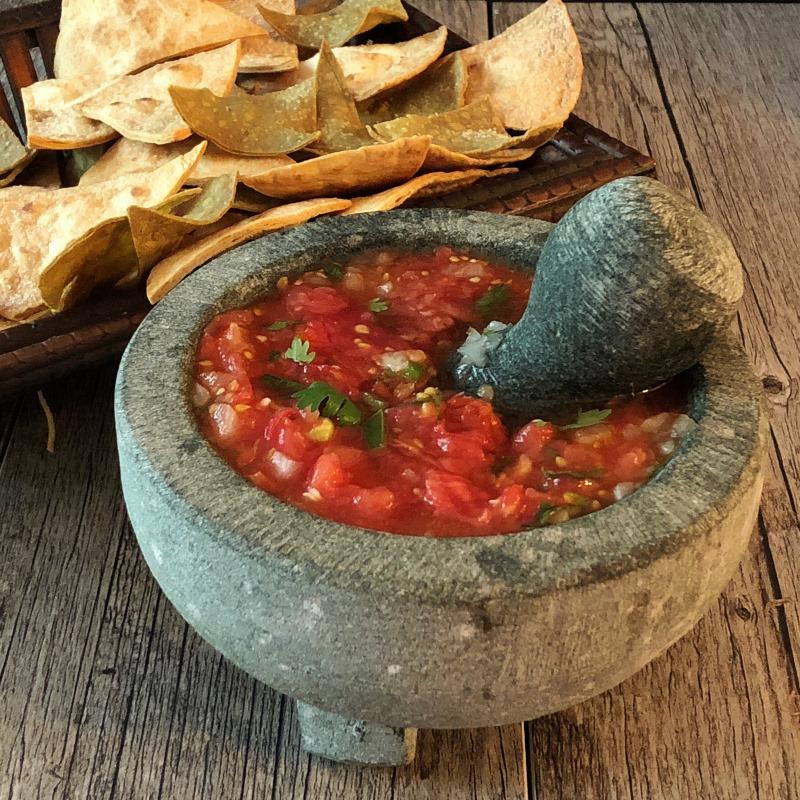
Fresh Salsa using a Molcajete
Ingredients
- 2 heirloom tomatoes large roma types
- ½ cup onion chopped
- 1-2 tsp jalapeno coarsely chopped
- 1 clove garlic coarsely chopped
- 1 tbsp cilantro
- ½ tsp salt
Instructions
- To get the most flavor out of the tomatoes, roast them on a sheet pan for about 15 minutes in a 400 F degree oven.2 heirloom tomatoes
- While the tomatoes are roasting, chop the remaining ingredients and muddle together in the molcajete (mortar and pestle) with the 1/2 tsp salt1/2 cup onion, 1-2 tsp jalapeno, 1 clove garlic, 1 tbsp cilantro, 1/2 tsp salt
- Add the tomatoes to the mortar and grind together with the other ingredients (depending on the size of your molcajete, this may need to be done in 2 batches)
- Enjoy with the freshly baked chips and store any remaining salsa covered and in the refrigerator.
Sorry it should be Salsa Roja (salsa is feminine so the adjective ending needs to be feminine as well)