
Quick Summary: Floral, citrusy, minty, or warm and spicy: once you know the base + star + accent formula, you can blend herbal teas that taste better than anything from a box. Here are 9 of my favorite blends from over a decade at my farmers market stand, plus a flavor chart and food pairings. Prep: 5 min | Steep: 5 to 10 min | Makes: 5 to 10 cups per blend
Jump to: The Base + Star + Accent Formula | 9 Herbal Tea Recipes | How to Make Herbal Tea | Holiday Gifts and Gatherings | Tea Blending Chart | Wellness Blends | FAQ
This post may contain affiliate links, and you can read our disclosure information here–
I’ve been blending and selling herbal teas (aka tisanes) at my Minnesota farmers market stand for over a decade, and the question I get most often is: ‘How do I make herbal tea that actually tastes good?’
The secret to herbal teas that taste good and don’t have that medicinal character is blending. Mixing a mellow base with a stronger ‘star’ ingredient and a punch of accent flavor transforms forgettable herbal teas into something you’ll actually want to drink for pleasure as well as for health benefits.
This guide covers my formula, plus 9 of my favorite blend recipes, and includes food pairings
The Base + Star + Accent Formula
I’ll list some tea-blending recipes below, but in case you want to explore creating your own combinations, try following the base + star ingredient + accent formula as illustrated in the graphic below called “Blending Herbal Teas”.
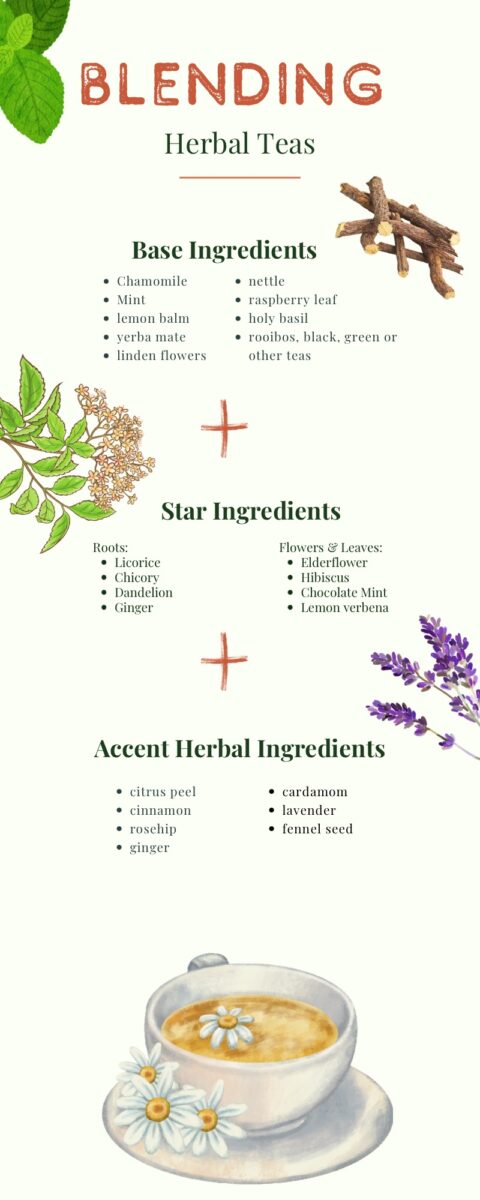
Mellow Base Ingredients:
- chamomile
- (pepper)mint
- lemon balm
- linden flowers
- yerba mate
- nettle
- raspberry leaf
- holy basil
- rooibos or actual real tea.
Stronger Star Ingredients:
- Roots: licorice, chicory, dandelion, ginger
- Leaves and Flowers: elderflower, hibiscus, chocolate mint, lemon verbena
Very Strong Ingredients to Add an Accent Flavor:
- citrus peel (citrus)
- cinnamon (warm)
- rosehip (floral & tangy)
- ginger (spicy)
- cardamom (warm)
- lavender (floral)
- fennel seed (licorice)

9 Herbal Tea Recipes (+ Food Pairings)
I’ve gathered a few of my personal favorite herbal tea blend recipes here.
As a rule of thumb, you’ll want to use 1 teaspoon of tea blend for every 6-oz cup of boiling water. Steep herbal teas longer than black teas. You may need to steep up to 10 minutes to extract full flavor of those that contain bark or chips (something other than leaves).
Each blend makes roughly 5 to 10 cups of tea. For a bigger batch, swap tablespoons for teaspoons. Jump to the printable recipe card for all nine blends on one page.
Black teas go with hearty dishes, green teas go with light dishes, white teas are for very neutral foods like white fish… and herbal teas are considered to be healing teas for a number of ailments, but they tend to go particularly well with desserts.
I’ll include some food pairing suggestions with the 9 homemade herbal blends below.
1. Floral Tea (Chamomile, Rose, and Lavender)
- 2 teaspoons dried chamomile flowers (base)
- 2 teaspoons dried rose petals (star)
- 1 teaspoon dried lavender buds (accent)
Pairs well with: tart, citrus-based desserts like my faux Meyer Lemon Pie.
2. Citrus Tea (Lemon Verbena and Bee Balm)
- 3 teaspoons dried lemon verbena (base)
- 2 teaspoons dried bee balm leaves (star)
- 1 teaspoon dried lemongrass (accent)
- 1/2 teaspoon dried orange peel (accent)
Pairs well with: something sweet and fruity to balance out the tea’s tartness, like strawberry tiramisu.
3. Mint Tea with Rose Geranium
- 4 teaspoons dried mint leaves (base)
- 1 teaspoon dried rose geranium leaves (accent)
Pairs well with: chocolate, of course! Try it with chocolate espresso quick bread.
4. Herbal Iced Tea (Mint, Pineapple Sage, and Hibiscus)
- 6 teaspoons dried mint leaves (base)
- 3 teaspoons dried pineapple sage leaves (star)
- 1 teaspoon dried hibiscus flowers (accent)
Pairs well with most summer dishes. Try it with squash blossoms, radish-cream cheese appetizers, or low-carb beef sliders.
5. Sleepy Time Tea (Lemon Balm, Chamomile, and Valerian)
- 4 teaspoons dried lemon balm leaves (base)
- 2 teaspoons dried chamomile flowers (base)
- 1 teaspoon dried valerian root (star)
- 1/2 teaspoon dried lavender flower (accent)
Pairs well with: if you’re taking it to help you sleep, you may want to have this one on its own.
6. Mediterranean Tea (Mint, Rosemary, and Thyme)
- 3 teaspoons dried mint leaves (base)
- 1 teaspoon dried rosemary (star)
- 1 teaspoon dried thyme (star)
- 1/2 teaspoon dried lemon peel (accent)
Pairs well with: anything Mediterranean such as this roasted harissa chickpea snack
7. Warming Tea (Holy Basil, Ginger, and Cardamom)
- 4 teaspoons dried holy basil (base)
- 1 teaspoon dried ginger (star)
- 1 teaspoon cardamom pods, lightly crushed (star)
- 1/2 teaspoon dried lemon peel (accent)
- 1/2 cinnamon stick (accent)
Pairs well with: this Pumpkin Amaretto quick bread for a very complimentary combination.
8. Immune Booster Tea (Nettle, Echinacea, and Ginger)
- 4 teaspoons dried nettle leaf OR dried holy basil OR half-half (base)
- 1 teaspoon dried Echinacea flower (star)
- 1 teaspoon dried ginger (star)
- 1/2 teaspoon dried rosehip (accent)
9. Fresh Herbal Tea (Mint, Ginger, and Rosemary)
- 1 sprig fresh mint (base)
- 2 slices of fresh ginger root (star)
- 1 sprig of fresh rosemary (star)
- 1 slice of lemon (accent)
- Optional: 1 slice of orange
Simmer this mixture for 5 minutes on low heat and then let it sit for 5 more.
Herbal Tea Blends for Holiday Gifts and Gatherings
A jar of homemade tea blend is one of the easiest holiday gifts you can make. Mix a batch in a wide-mouth jar, add a label with the ingredients and brewing directions (1 teaspoon per 6 ounces of boiling water, steep 5 to 10 minutes), and tie a small tea strainer to the lid.
Blends keep for up to a year, so you can make them weeks ahead. The Warming Tea and Floral Tea make good gift blends because the ingredients are easy to find and they look pretty through the glass. List every ingredient on the label so friends with allergies know what’s inside.
Tea is also the easiest way I know to turn a winter afternoon into a cozy gathering. Here are some of the recipes and ideas that I gathered our family and friends together around tea last year.
- A ploughman’s lunch board with a pot of strong Builder’s Brew for a relaxed holiday lunch
- A full English breakfast for Christmas morning after gift opening
- Afternoon tea at home with easy finger food
- A tea tasting party with tea flights for friends who love tea and want to go deeper
- A cozy London fog (Earl Grey tea latte) by the fire
- Spiked cranberry apple tea for a holiday toast
If you’re in the Twin Cities, you’ll find my hand-blended teas at the St. Paul Farmers Market.
If you’re just getting started with teas and tisanes, my complete guide to teas covers everything from growing a tea garden to brewing temperatures to the difference between true teas and herbal tisanes.
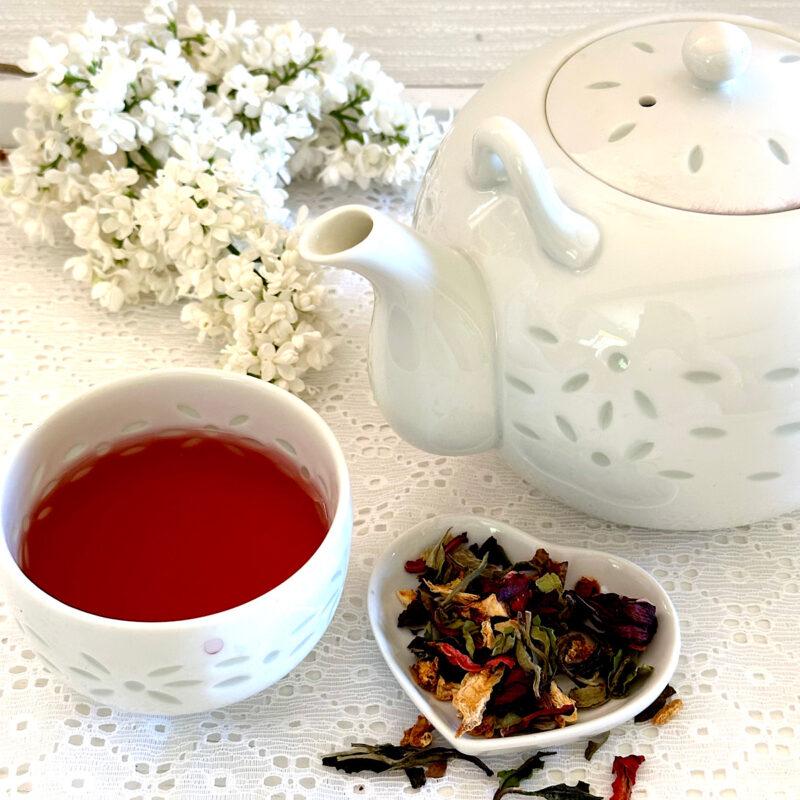
How to Make Herbal Tea at Home
- Bring fresh water to a boil.
- Measure 1 teaspoon of dried blend for each 6-ounce cup, or about 1 tablespoon if you’re using fresh herbs.
- Pour the water over the herbs and cover the cup or pot while it steeps. The lid keeps the aromatic oils in your tea instead of in the air.
- Steep 5 minutes for leaves and flowers, or up to 10 minutes for roots, bark, and seeds.
- Strain, taste, and add a little honey if you like.
Equipment for Tea Blending
Making your herbal tea blends is super easy if you have a few types of herbs on hand.
Many commercial blends contain artificial ingredients and even sweeteners. They can also be quite old and stale, or made with low-grade tea.
Going the DIY route is usually more natural (and more fun too!). All you’ll need is:
- Glass jars
- Labels
- Tea strainer
- Your herbs of choice
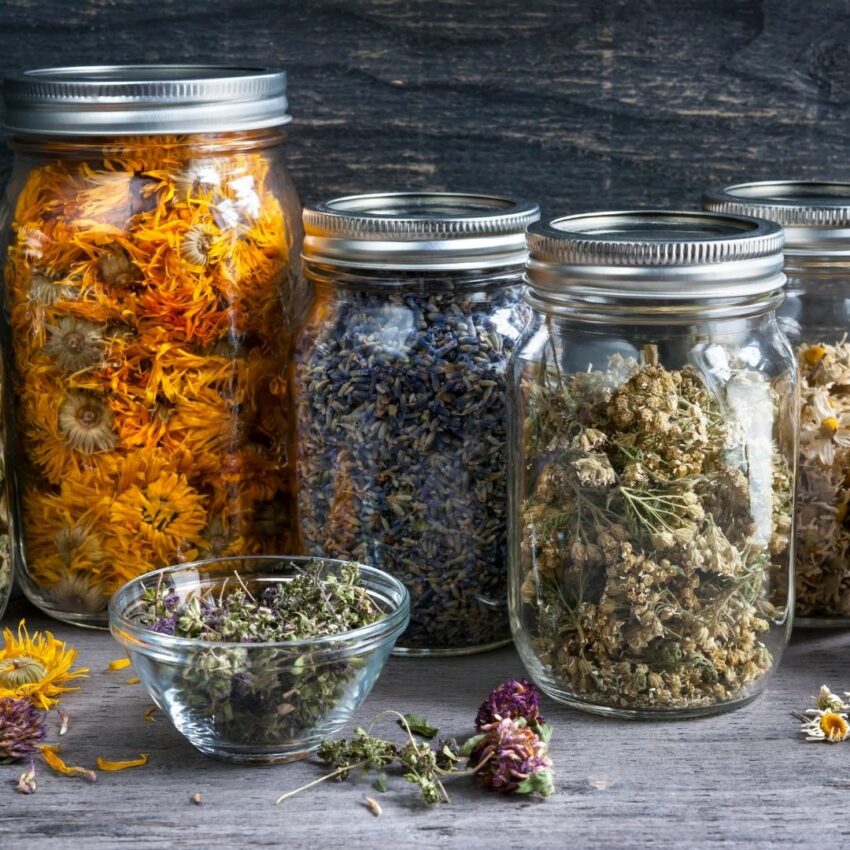
After mixing, you can store your blends in the jars, making sure to seal them well. Keep in a dry and dark place for up to a year; your herbal tea won’t go bad after that, but the flavors may become less intense.
You could spruce them up with a slice of fresh lemon or ginger if this happens and you don’t want to just toss them.
if your garden doesn’t yield all the herbs you like (here are the best herbs to grow for tea).
And don’t forget, although we call them herbal teas, they don’t technically only need to contain herbs. Many common whole spices, like cinnamon, cardamom, ginger, and the like are also easy enough to find, maybe even in your cupboard. The same goes for flavor bombs like citrus peel.
Flavor Profiles: Choosing Your Ingredients
There are too many herbs and spices that work for tea blending for me to even try to begin listing them all, but these are some of the more popular flavors, and my favorites:
| Flavor | Herbs | Best Used As |
|---|---|---|
| Citrusy | Lemon balm, lemon verbena, lemongrass, lemon thyme, citrus peel | Base (lemon balm), star (lemon verbena), accent (peel) |
| Minty | Peppermint, spearmint, chocolate mint, bee balm, catnip | Base or star |
| Floral | Chamomile, rose petals, hibiscus, elderflower, lavender | Base (chamomile), star (rose, hibiscus), accent (lavender) |
| Warm and spiced | Ginger, cinnamon, cardamom, turmeric, fennel seed | Star or accent |
| Earthy | Rooibos, nettle, raspberry leaf, dandelion root, licorice root | Base (rooibos, nettle), star (roots) |
Wellness Blends
Many of the herbs used in blends can have two functions. They can add flavor to your tea blends, but they can also support specific wellness issues. Here are ten detailed posts on the teas and tisanes that support certain wellness issues:
- Teas and tisanes to support sleep
- Teas and tisanes to support inflammation and joint pain
- Teas and tisanes to support energy and focus
- Teas and tisanes to support anxiety
- Teas and tisanes to support metabolic health (weight loss)
- Teas and tisanes to support autoimmune problems
- Teas and tisanes to support digestive and gut health
- Teas and tisanes to support women’s hormonal health
- Teas and tisanes to support skin health (complexion)
- Teas and tisanes to support liver health (detox)
Frequently Asked Questions:
Start with a chamomile or lemon balm base, as both are mild and forgiving. Add one star ingredient like dried ginger or hibiscus, then finish with a small accent of citrus peel or lavender. The floral blend and sleepy time blend in this post are good first projects because the ingredients are easy to find and the results are reliably good.
Match your base and star ingredients to the wellness goal you have in mind. For sleep, chamomile and lemon balm are well-researched choices. For digestion, ginger and fennel seed are reliable. For energy without caffeine, peppermint and holy basil work well together. The key is choosing a mellow base that you enjoy drinking on its own, then layering in herbs that support your specific need. For deeper guidance on wellness-focused blending, the individual posts in my tea series cover sleep, digestion, anxiety, inflammation, and more.
Many gentle herbs like chamomile, mint, and lemon balm are commonly given to children as weak, cooled brews. Stronger herbs like valerian and licorice root aren’t recommended for kids. Check with your pediatrician before offering herbal tea to young children. Healthline’s guide to teas for toddlers is a good starting point.
Nope! Tisanes that don’t contain Camellia sinensis (the tea plant) don’t have caffeine, so you can drink them whenever. The only exception would be if you used yerba mate in your blend.
Stored in sealed glass jars in a cool, dark place, blends stay flavorful for up to a year. After that they won’t spoil, but the flavor fades. Add fresh ginger or lemon to revive older blends.
They’re the same thing. “Tisane” is the technical term for any tea that doesn’t contain actual tea leaves (Camellia sinensis). I use both terms interchangeably, as herbal tea is a common descriptive name for people just learning about tisanes.
Yes, but you’ll need more; roughly triple the amount. Fresh herbal teas are lovely but don’t store well, so make them same-day. The “Fresh Herbal Tea” recipe at the end of this post is a good starting point.
Just glass jars for storage, labels, and a tea strainer for brewing. No special equipment required. If you get serious about it, a kitchen scale helps with consistency.
Most of the herbs in these blends are gentle culinary herbs, but a few aren’t for everyone. Licorice root can raise blood pressure, valerian is a sedative, and some herbs aren’t recommended during pregnancy. If you’re pregnant, nursing, or taking medication, check with your doctor before drinking wellness blends regularly.
Yes. Click Print Recipe on the recipe card below, then choose “Save as PDF” in your print window. You’ll get all nine blends on one page. For wellness-focused blending, my free Brew for Your Body guide goes deeper, and you can get it by subscribing below.
There isn’t one best tea for everyone. Gentle herbs like peppermint, chamomile, rooibos, lemon balm, and ginger are commonly enjoyed daily by healthy adults. Stronger herbs like licorice root and valerian are better for occasional use. The wellness posts above cover what the research shows for specific goals, and if you’re pregnant or take medication, check with your doctor first.
Herbal Tea Recipes (9 Easy Blends)

Ingredients
Floral Tea
- 2 teaspoons dried chamomile flowers base
- 2 teaspoons dried rose petals star
- 1 teaspoon dried lavender buds accent
Citrus Tea
- 3 teaspoons dried lemon verbena base
- 2 teaspoons dried bee balm leaves star
- 1 teaspoon dried lemongrass accent
- ½ teaspoon dried orange peel accent
Mint Tea
- 4 teaspoons dried mint leaves base
- 1 teaspoon dried rose geranium leaves accent
Herbal Iced Tea
- 6 teaspoons dried mint leaves base
- 3 teaspoons dried pineapple sage leaves star
- 1 teaspoon dried hibiscus flowers accent
Sleepy Time Tea
- 4 teaspoons dried lemon balm leaves base
- 2 teaspoons dried chamomile flowers base
- 1 teaspoon dried valerian root star
- ½ teaspoon dried lavender flower accent
Mediterranean Tea
- 3 teaspoons dried mint leaves base
- 1 teaspoon dried rosemary star
- 1 teaspoon dried thyme star
- ½ teaspoon dried lemon peel accent
Warming Tea
- 4 teaspoons dried holy basil base
- 1 teaspoon dried ginger star
- 1 teaspoon cardamom pods, lightly crushed star
- ½ teaspoon dried lemon peel accent
- ½ cinnamon stick accent
Immune Booster Tea
- 4 teaspoons dried nettle leaf; Holy basil works in place of nettle, or use half of each. base
- 1 teaspoon dried Echinacea flower star
- 1 teaspoon dried ginger star
- ½ teaspoon dried rosehip accent
Fresh Herbal Tea
- 1 sprig fresh mint base
- 2 slices of fresh ginger root star
- 1 sprig of fresh rosemary star
- 1 slice of lemon accent
- For the Fresh Herbal Tea, add a slice of orange if you like. Simmer 5 minutes on low heat, then let it sit 5 more.
Instructions
- Measure the herbs for your chosen blend into a small glass jar and shake to combine.
- For each cup, use 1 teaspoon of the blend to 6 ounces of boiling water.
- Steep 5 minutes for leafy and floral blends, or up to 10 minutes for blends with roots, bark, or seeds.
- Strain and serve hot, or chill over ice.
Fantastic article!
So glad you enjoyed it Cheri. Thanks for commenting!
good
Very glad you got something from this post….and thanks for commenting!
This is a great article, thanks very much!
I’m so happy to hear it was helpful. Thank you for commenting!
When using mint, is there a particular type of mint? Peppermint? Spearmint? Can you get just “mint”?
Great question Kari. I grow all the mints (except mojito mint) and have used them all in various tea blends. I prefer chocolate mint because I think it has the most “minty” aroma (it doesn’t smell like chocolate btw). Most of the commercial tea blends use spearmint. They all have benefits with the most common being muscle relaxation and digestion.
They are a bit different in their makeup however and the most health research has been around spearmint and peppermint. Here is a good article that talks about the difference in taste and health benefits: https://www.herbstoponline.com/blogs/news/spearmint-vs-peppermint-the-differences-health-benefits-best-uses
Also, remember that with all of the wellness teas that you need to drink them about 3 times per day to receive the benefits. It’s not a one-off type of deal.
thank you! this was wonderful. it was cheerful, informative, and concise.
Thank you for commenting Joy! Love those 3 adjectives….exactly what I aspire to!
Love teas herbal favorite
I’m there with you Juanita. I’ve switched up my coffee habit this Winter to tea and it’s so much more comforting!
This is so helpful, thank you!
Thank you for commenting! So glad you found it helpful!
Does anyone use dried Saffron Crocus PETALS in the tea blends?
I have never seen these available to purchase. Maybe someone else on the site can answer?
@Shalane, I understand those are toxic. We live near a couple of saffron farms and though they use them sometimes for cosmetics, soaps etc, consuming them is not recommended!
Saffron is used in cooking the world over and has been used safely for centuries. Not sure what you are referring to….any sources? Saffron is available in most grocery stores and although expensive it is ubiquitous in cooking.
A clarification on my earlier reply: the saffron spice is the red stigmas of the saffron crocus (Crocus sativus), and it’s used safely in cooking all over the world. The petals are a different question, and since I haven’t used them I can’t speak to them in tea. The bigger concern is look-alikes. Autumn crocus (Colchicum) is toxic and easy to confuse with saffron crocus, so only use petals you know came from Crocus sativus.
Thank you for helping me expand my teas 💖 I love this 💖