
Quick Summary: For those managing autoimmune conditions, chronic fatigue syndrome, long COVID, or fibromyalgia, typical “immune boosting” advice can backfire. The goal isn’t to stimulate your immune system, rather it’s to modulate it, manage inflammation, conserve energy, and navigate flares with gentle support. Reishi, turmeric, green tea, and adaptogens offer help without overstimulating an already reactive system.
Jump to: Understanding Autoimmune Challenges | Modulation vs. Stimulation | Best Herbs for Autoimmune Support | Herbs to Avoid | Managing Fatigue | Navigating Flares | DIY Blends | References | FAQ
If you have an autoimmune condition, you’ve probably heard the advice: “boost your immune system.” Elderberry! Echinacea! More vitamin C!
The problem is your immune system isn’t weak. It’s dysregulated.
It may be attacking your own tissues, staying in chronic inflammatory mode, or responding erratically to things that shouldn’t trigger a response. “Boosting” an already overactive system can make things worse by triggering flares, increasing inflammation, deepening fatigue.
This post is specifically for those navigating autoimmune conditions: chronic fatigue syndrome, long COVID, fibromyalgia, and other conditions involving immune dysfunction.
The approach here is different from typical immune support advice however. The goal is modulation, not stimulation. Calming down, not revving up. Gentle support that respects your body’s limits.
I’ve watched people I love navigate these challenges. The “just boost your immunity” advice isn’t helpful, and it can sometimes be harmful. What follows is what research and traditional practice suggest actually helps.
Understanding Autoimmune Challenges
A brief overview helps explain why the approach must be different:
In a healthy immune system, the body distinguishes between self and foreign invaders, attacking only what doesn’t belong.
In autoimmune conditions, this distinction breaks down. The immune system attacks the body’s own tissues. It might be joints in rheumatoid arthritis, thyroid in Hashimoto’s, myelin in multiple sclerosis, and so on.
The result:
- Chronic inflammation
- Unpredictable flares
- Bone-deep fatigue that sleep doesn’t resolve
- A body that often feels like the enemy
What you need is different:
- Immune modulation, not stimulation
- Anti-inflammatory support
- Energy conservation strategies
- Stress resilience (stress triggers flares)
- Acceptance that your path is different from “wellness culture” advice
Modulation vs. Stimulation: Why It Matters
This distinction is critical:
Immune-stimulating herbs rev up immune activity. They increase white blood cell production, stimulate cytokines, and push the immune system to fight harder. This is helpful for fighting infections. It’s potentially harmful however when your immune system is already overactive.
Examples of immune-stimulating herbs: Echinacea, elderberry, astragalus (in some cases)
Immune-modulating herbs help the immune system function appropriately, which means neither over- nor under-active. They calm over reactivity while maintaining baseline defense. This is what autoimmune conditions typically need.
Examples of immune-modulating herbs: Reishi, turmeric, green tea, ashwagandha
The bottom line: When choosing herbs for autoimmune support, you want modulators and anti-inflammatories, not stimulants.
Best Herbs for Autoimmune Support
Reishi (Ganoderma lucidum)
Reishi is a medicinal mushroom revered in Asian medicine as an immune modulator. Unlike stimulating herbs, reishi helps balance immune function.
What the research shows: Research demonstrates reishi modulates immune response. It can enhance immunity in those with weakened systems while calming overactive immune responses. It also reduces inflammation and supports stress resilience.
Best for: Immune modulation. Long-term resilience. Calming overactive immunity.
How to use: Reishi must be simmered or extracted, as the compounds aren’t water-soluble with simple steeping. Simmer sliced reishi for 1-2 hours, or use prepared extracts.
Flavor profile: Bitter, woody, earthy. Usually combined with other herbs to improve taste.
Turmeric (Curcuma longa)
Turmeric is a powerful anti-inflammatory, addressing the chronic inflammation that underlies most autoimmune conditions.
What the research shows: Curcumin, the active compound in turmeric, has demonstrated anti-inflammatory effects comparable to some medications in certain studies. It modulates inflammatory pathways involved in autoimmune responses.
Best for: Reducing chronic inflammation. Daily maintenance between flares.
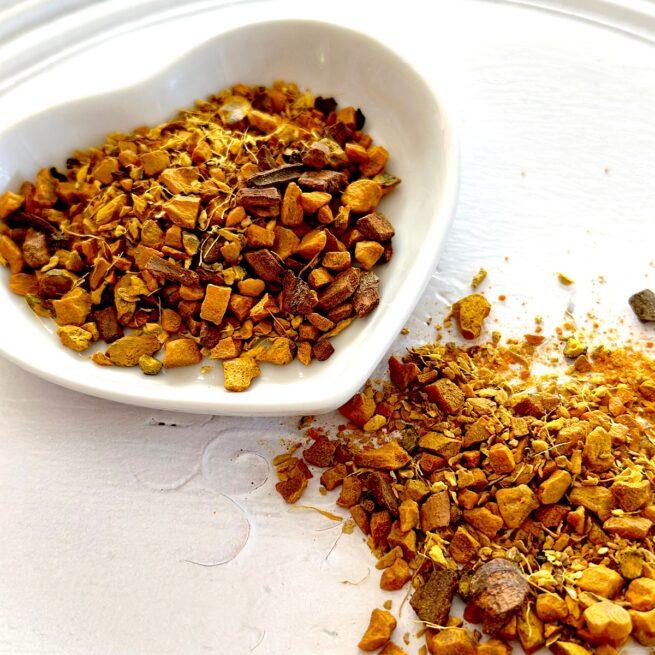
How to use: Turmeric needs black pepper (piperine) and fat for absorption. Golden milk or chai-style blends work well. I blend turmeric with ginger, black pepper and cinnamon for better flavor and synergy. It is the most popular wellness tea I sell at the St. Paul Farmers Market.
Flavor profile: Earthy, slightly bitter, warm. Much better in blends than alone.
For anti-inflammatory support, see my post on teas for joint pain.
Green Tea (Camellia sinensis)
Green tea contains EGCG, which has immunomodulating and anti-inflammatory effects, and it’s gentle enough for daily use.
What the research shows: EGCG has been studied for its effects on autoimmune conditions, showing potential to modulate T-cell responses and reduce inflammatory markers.
Best for: Gentle daily support. Those who tolerate caffeine. Steady, sustained energy without crashes.
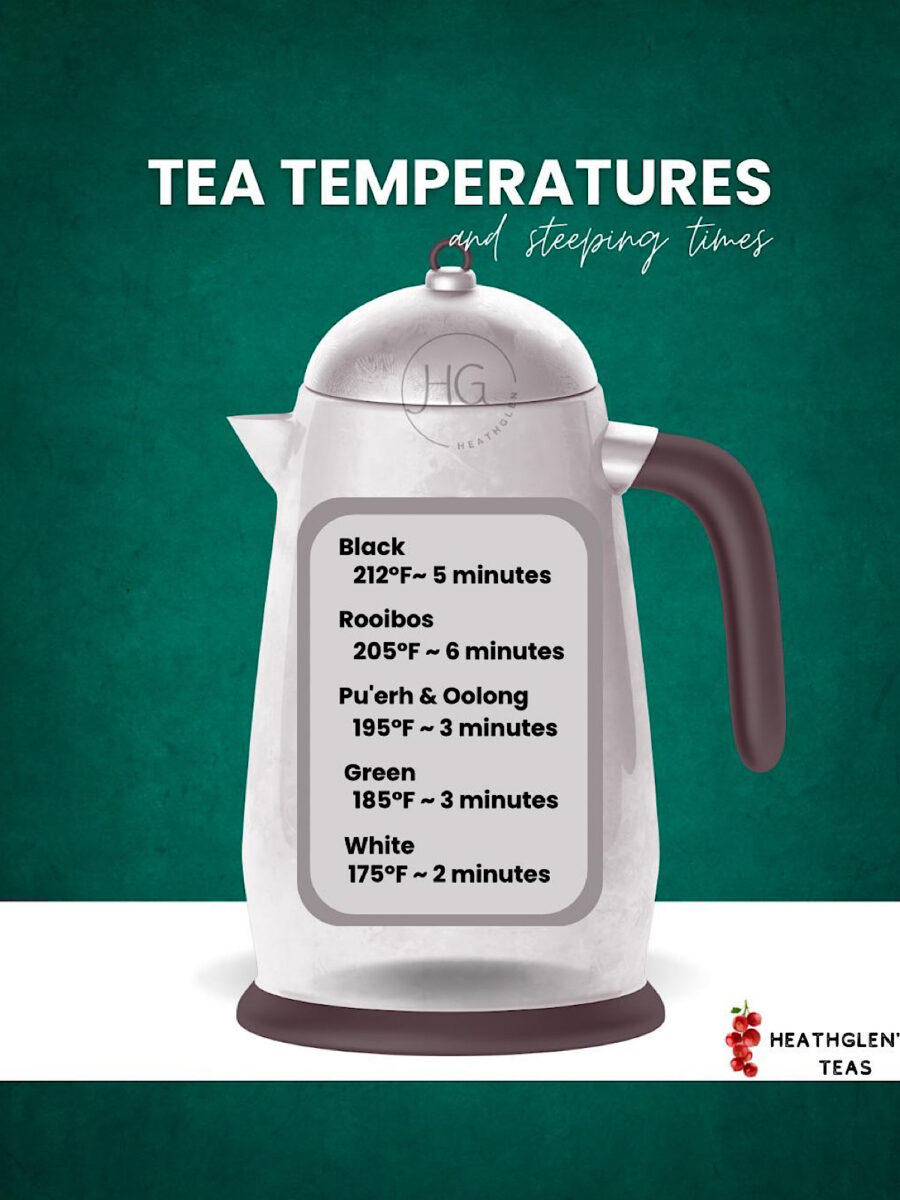
How to use: 2-3 cups daily. Steep properly (not boiling water) to avoid bitterness and reduce caffeine extraction by shorter steep times if sensitive (see infographic below on steeping time and temperatures for green tea).
Flavor profile: Vegetal, grassy, sometimes sweet depending on variety.
Ashwagandha (Withania somnifera)
Ashwagandha is an adaptogen that helps manage stress-triggered immune responses. Since stress is a major flare trigger, managing the stress response indirectly supports immune balance.
What the research shows: Ashwagandha reduces cortisol levels and modulates the stress response. It has also shown immunomodulating effects in studies.
Best for: Stress-related flares. Fatigue with anxiety. Building long-term resilience.
How to use: Can be taken as tea, though the flavor is strong. Often easier as powder stirred into warm milk or in capsule form.
Flavor profile: Earthy, slightly bitter, horsey (the name means “smell of horse” in Sanskrit).
Caution: Avoid during pregnancy. May interact with thyroid medications. Discuss with your practitioner.
Ginger (Zingiber officinale)
Ginger is warming, anti-inflammatory, and supports circulation, helping move immune cells through the body while calming inflammation.
What the research shows: Anti-inflammatory, helps with nausea and digestive upset (common in autoimmune conditions), supports circulation.
Best for: Daily anti-inflammatory support. Digestive comfort. Warming during cold flares.
How to use: Fresh ginger sliced into hot water. Dried ginger in blends.
Flavor profile: Warm, spicy, bright.
For digestive support, see my post on teas for digestive health.
Tulsi / Holy Basil (Ocimum sanctum)
Tulsi is an adaptogen with gentle immune-modulating properties. It helps manage stress while providing antimicrobial support without overstimulating.
What the research shows: Adaptogenic, anti-inflammatory, supports the body’s stress response — which indirectly supports immune balance.
Best for: Those whose flares connect to stress. Long-term gentle support.
Flavor profile: Slightly spicy, clove-like, pleasant.
Cat’s Claw (Uncaria tomentosa): Use with Caution
Cat’s claw is traditionally used for autoimmune conditions, particularly in South American medicine, and has some research support.
The caution: Some studies suggest it may stimulate certain immune pathways. Opinions among practitioners vary. If you try it, start with very small amounts and watch carefully for any sign of increased symptoms.
Best for: Those who have tried gentler options and want to experiment carefully.
Herbs to Avoid or Approach Carefully
These herbs are often recommended for “immune support” but may worsen autoimmune conditions:
- Echinacea: Stimulates immune activity. May trigger flares. Avoid during active disease and approach cautiously even between flares.
- Elderberry: Same concern — immune stimulation may not be appropriate. Some people with autoimmune conditions use it cautiously for acute infections between flares, but many practitioners recommend avoiding it entirely.
- Astragalus: Opinions vary. Some practitioners avoid it with autoimmunity; others find it helpful for building baseline resilience between flares. If you try it, do so only when stable and watch carefully.
- High-dose Vitamin C: Often recommended for immunity, but high doses may stimulate immune activity. Moderate dietary intake is fine; megadoses may not be.
The bottom line: Start with the gentlest options (green tea, turmeric, reishi) and observe carefully. What helps one person may worsen another. Your body’s response is your best guide.
Managing the Fatigue
The fatigue that accompanies autoimmune conditions is unlike normal tiredness. It’s bone-deep exhaustion that sleep doesn’t fully resolve. It’s cognitive fog, physical heaviness, and the frustration of a body that won’t cooperate.
What helps:
Energy budgeting: You have limited energy. Spend it wisely and strategically.
Pacing: Doing too much on good days leads to crashes. Maintain a sustainable baseline rather than boom-bust cycles.
Sleep hygiene: Even if sleep doesn’t fully restore you, poor sleep makes everything worse. Protect your sleep fiercely.
Gentle movement: As tolerated. Movement helps, but pushing through crashes backfires. Listen to your body.
Stress reduction: Stress depletes limited energy reserves and triggers immune reactions.
For stress management that supports immune function, see my post on teas for anxiety.
Teas that may help with fatigue:
Adaptogens: Ashwagandha, rhodiola, or eleuthero support energy without stimulating like caffeine. They work over weeks, not hours.
Gentle caffeine: If you tolerate it, green tea provides steady energy without the crash of coffee. The L-theanine calms while the caffeine lifts.
Nourishing herbs: Nettle or oat straw. These are mineral-rich herbs that support overall vitality without stimulating.
What to avoid: Strong stimulants (high caffeine, guarana) borrow energy from later. They may help short-term but worsen fatigue overall. They create energy debt you can’t afford.
The bottom line: Tea helps at the margins. Rest, pacing, stress management, and medical care are the foundation. Don’t expect herbs to solve what requires systemic management.
Navigating Flares
Flares are periods when symptoms intensify, resulting in more fatigue, more pain, more inflammation. They can be triggered by stress, infection, overdoing it, hormonal changes, or sometimes nothing identifiable.
During a flare:
Reduce demands. This is not the time to push through. Cancel what you can. Ask for help.
Prioritize rest. Your body is fighting something. Let it.
Anti-inflammatory support. Turmeric, ginger, or green tea are gentle anti-inflammatories which may help.
Avoid immune stimulants. Echinacea, elderberry, or high-dose vitamin C. Skip these during active flares.
Warmth and comfort. Warming teas, heating pads, whatever soothes.
Stay hydrated. Inflammation increases fluid needs.
Between flares:
This is when to build resilience:
- Use adaptogenic herbs for stress management
- Be consistent with anti-inflammatory support
- Use immune-modulating herbs if tolerated
- Restore depleted reserves with nourishing herbs
Tracking helps: Notice what precedes flares. Stress? Overdoing? Certain foods? Poor sleep? Patterns help you intervene earlier or avoid triggers.
What to Avoid
- Overdoing stimulants during flares: Caffeine, guarana, and other stimulants tax your already stressed system. They borrow energy you don’t have.
- Immune stimulants with autoimmune conditions: Echinacea, elderberry, and other stimulating herbs may worsen autoimmune flares. Use cautiously if at all.
- “Miracle cure” supplements: If something promises to cure chronic fatigue or autoimmune disease, it’s lying. Be skeptical of expensive protocols promising dramatic results.
- Ignoring your body’s signals: Pain, fatigue, and malaise are information. Pushing through consistently leads to worse crashes.
- Comparing yourself to healthy people: Your energy budget is different.
Creating Your Own Autoimmune-Supportive Blends
Here are DIY recipes specifically designed for autoimmune conditions. They are focused on modulation, anti-inflammatory support, and comfort. These blends avoid immune-stimulating herbs.
Once a batch is made, store it in a covered container out of sunlight for 3+ months.
To make tea: Add 1 tablespoon of blend to 6-8 ounces boiling water and steep for 5-10 minutes.
The infographic below shows steeping time and temperature for true teas. Note that herbal teas can be steeped longer than true teas at a high temperature (212 F). Do not over-steep green teas or they will be bitter.
Daily Anti-Inflammatory Support
- 2 parts green tea (or rooibos if avoiding caffeine)
- 1 part turmeric
- 1 part ginger
- 1 part cinnamon
- Pinch black pepper (aids turmeric absorption)
Gentle daily support. Can be used long-term.
Immune Modulation Blend
- 2 parts reishi (simmered extract or powder)
- 1 part turmeric
- 1 part ginger
- 1 part cinnamon
- Pinch black pepper
Modulating rather than stimulating. For building long-term balance.
Fatigue Support
- 2 parts green tea (or rooibos if avoiding caffeine)
- 1 part ashwagandha
- 1 part nettle
- 1 part peppermint
- Small piece of licorice root
Supportive without overstimulating. For ongoing fatigue management.
Flare Comfort Blend
- 2 parts chamomile
- 1 part ginger
- 1 part turmeric
- 1 part lemon balm
- 1 part rose petals
Calming, anti-inflammatory, comforting. For active flares.
Calming Anti-Inflammatory
- 2 parts chamomile
- 1 part turmeric
- 1 part ginger root
- 1 part lemon balm
- Honey to taste
Especially good for evening, when inflammation and anxiety intersect.
Comfort and Rest
- 2 parts rooibos
- 1 part chamomile
- 1 part lavender
- 1 part passionflower
For when you need to stop and let your body recover. Caffeine-free.
Gentle Nourishment
- 2 parts nettle
- 1 part oat straw
- 1 part peppermint
- 1 part rose hips
Mineral-rich, restorative. For rebuilding between flares.
A Note on Being Believed
Many people with chronic immune conditions spend years not being believed by doctors, family, and sometimes even themselves. The fatigue is invisible. The flares are unpredictable. You look fine when you’re actually struggling.
This is real. Your experience is valid. The limitations you face aren’t laziness or poor attitude.
Tea won’t fix this. But a warm cup of something soothing, a few minutes of quiet, a small act of self-care in a body that often feels like the enemy all makes a difference.
If you’re navigating chronic immune challenges, I hope you find support from medical professionals who believe you, practices that help you manage within your limits, and community with others who understand.
FAQ
For prevention, astragalus and adaptogenic herbs build baseline resilience. Elderberry during cold season may help. Basics matter most: sleep, nutrition, hand washing, stress management.
No. Echinacea is for acute use — take at first sign of illness for 1-2 weeks. It’s not meant for ongoing daily use and may lose effectiveness or cause issues with long-term use.
It depends on the tea. Avoid immune-stimulating herbs (echinacea, elderberry) especially during flares. Immune-modulating herbs (reishi, turmeric) may be helpful. Start gently and observe your body’s response.
This is complex and individual. Adaptogenic herbs may help over time. Pacing and energy management are essential. Avoid stimulants that create energy debt. Work with practitioners who understand chronic fatigue.
Increased fatigue, worsening symptoms, more pain or inflammation, cognitive fog, feeling like you’re fighting something. Patterns vary by condition and individual. Tracking helps you recognize your early warning signs.
Most practitioners recommend caution. Elderberry stimulates immune activity, which can worsen autoimmune symptoms. Some people use it carefully between flares for acute infections, but many avoid it entirely. When in doubt, skip it.
Tea can support immune function modestly as part of a healthy lifestyle. It cannot cure immune conditions or replace medical care. Think of it as one gentle tool among many.
Boosting means stimulating immune activity, which is helpful for fighting infections, but potentially harmful for autoimmune conditions. Modulating means helping the immune system function appropriately (neither over- nor under-active). For autoimmune conditions, modulation is usually the goal.
Not necessarily. Green tea’s combination of caffeine and L-theanine provides gentle, sustained energy without the crash of coffee. However, if caffeine worsens your symptoms or disrupts your sleep, caffeine-free options like rooibos work well as bases for anti-inflammatory blends
Green tea, turmeric (with black pepper and fat), ginger, and chamomile are gentle starting points. Reishi is excellent for modulation but has a strong flavor. Start with one or two and observe before adding more.
If you want to explore the world of teas and tisanes, check out this Complete Guide to Teas. It includes information on how to grow a tea garden, types of tea, brewing times and temp., recipes for blends, caffeine amounts, and much more.
References and Further Reading
- Reishi and immune modulation: Guggenheim AG, et al. “Immune modulation from five major mushrooms: Application to integrative oncology.” Integrative Medicine, 2014.
- Curcumin and autoimmunity: Bright JJ. “Curcumin and autoimmune disease.” Advances in Experimental Medicine and Biology, 2007.
- Green tea EGCG and immune modulation: Wu D, et al. “Green tea EGCG, T cells, and T cell-mediated autoimmune diseases.” Molecular Aspects of Medicine, 2012.
- Ashwagandha and immune function: Mikolai J, et al. “In vivo effects of Ashwagandha on lymphocyte subsets and natural killer cell activity.” Journal of Alternative and Complementary Medicine, 2009.