
Quick Summary: Turmeric, ginger, willow bark, and nettle have the strongest evidence for joint pain relief. They work through different mechanisms, primarily reducing inflammation and blocking pain signals. Tea alone won’t cure arthritis, but daily use can be a meaningful part of managing stiffness and discomfort.
Jump to: How Joint Pain Tea Works | Best Herbs to Use | Inflammation Connection | How to Use | Blending Your Own | What to Avoid | FAQ
I run a small farm in Minnesota where I grow specialty crops and sell at a large farmers market. My joints have opinions about the weather, about how many flats of tomato seedlings I moved yesterday, and about about whether I managed to stretch every so often throughout the day. I’ve learned that managing joint comfort is a daily practice, if I want to keep farming into old age (and I do).
Herbal tea won’t replace medical treatment for serious joint conditions. But certain herbs have genuine anti-inflammatory and pain-relieving properties that can help take the edge off daily discomfort. Used consistently, they become one more tool for staying active and doing the work you love.
How Joint Pain Herbal Teas Work
Most joint pain involves inflammation, whether from osteoarthritis (wear and tear), rheumatoid arthritis (autoimmune), injury, or simple overuse. The herbs that help with joint pain typically work through one or more of the following mechanisms:
- Anti-inflammatory action: Compounds like curcumin in turmeric and gingerols in ginger block inflammatory pathways in the body, reducing the swelling and irritation that cause pain.
- Pain signal blocking: Some herbs, like willow bark, contain compounds similar to aspirin that interfere with pain signaling.
- Antioxidant protection: Inflammation generates free radicals that damage joint tissue. Antioxidant-rich herbs help protect cartilage and other joint structures.
- Muscle relaxation: Stiff, tense muscles around sore joints make everything worse. Some herbs help relax surrounding tissue.
Understanding these mechanisms helps explain why different herbs work better for different people, and why combining herbs with complementary actions often works better than any single herb alone.
Best Herbs for Joint Pain
Turmeric (Curcuma longa)
Turmeric is the most studied herb for joint inflammation. Its active compound, curcumin, is a potent anti-inflammatory that works by blocking multiple inflammatory pathways, including the same COX-2 enzyme targeted by medications like ibuprofen.
Research shows curcumin can reduce joint pain and stiffness in both osteoarthritis and rheumatoid arthritis. Some studies find it comparable to anti-inflammatory medications, with fewer side effects.
The absorption problem: Curcumin is poorly absorbed on its own. You can significantly increase absorption by consuming turmeric with black pepper (which contains piperine) and some fat. This is why golden milk, made with turmeric, black pepper, and milk or coconut milk, is more effective than plain turmeric tea.
Flavor profile: Earthy, warm, slightly bitter. Works well with ginger, cinnamon, and black pepper.
How to use: Golden milk is the most effective delivery method. For tea, simmer turmeric with black pepper and add a splash of coconut milk or cream.
Ginger (Zingiber officinale)
Ginger contains gingerols and shogaols, compounds with anti-inflammatory and pain-relieving properties. Studies show ginger can reduce joint pain and improve mobility in people with osteoarthritis, with effects similar to ibuprofen in some trials.
Ginger also improves circulation, which helps bring nutrients to joint tissue and carry away inflammatory waste products.
Flavor profile: Warm, spicy, slightly sweet. One of the most pleasant medicinal herbs to drink.
How to use: Fresh ginger makes the strongest tea. Slice a thumb-sized piece, simmer for 10 to 15 minutes, strain. Drink 2 to 3 cups daily for ongoing support.
Willow Bark (Salix alba)
Willow bark is nature’s aspirin. It contains salicin, which your body converts to salicylic acid, the same compound that makes aspirin work. Willow bark has been used for pain relief for thousands of years and has modest research support for osteoarthritis and back pain.
Unlike aspirin, willow bark releases salicin slowly, providing longer-lasting relief with less stomach irritation for most people.
Cautions: Avoid if you’re allergic to aspirin, taking blood thinners, or have stomach ulcer issues. Not recommended for children (same Reye’s syndrome concerns as aspirin). Don’t use before surgery.
Flavor profile: Bitter, astringent. Best blended with more pleasant herbs or taken as a tincture.
Nettle (Urtica dioica)
Nettle leaf has been used for arthritis for centuries. It’s rich in minerals including calcium, magnesium, and silica that support joint health, and contains compounds that appear to reduce inflammatory cytokines.
Studies show nettle can reduce joint pain and stiffness and may allow people to reduce their use of conventional pain medications. It’s particularly valued for its mineral content, providing ongoing nutritional support for joint tissue.
We have a lot of nettle on the farm that I am experimenting with in the herbal teas I sell at market.
Flavor profile: Green, slightly grassy, mild. Easy to drink daily.
How to use: Steep dried nettle leaf for 10 to 15 minutes for a mineral-rich infusion. Can be drunk several cups daily long-term.
Devil’s Claw (Harpagophytum procumbens)
Devil’s claw is a South African herb traditionally used for arthritis and back pain. It contains iridoid glycosides, compounds with anti-inflammatory and pain-relieving properties.
Research supports its use for osteoarthritis, with some studies showing effects comparable to conventional medications. It’s particularly well-studied for lower back pain.
Cautions: May increase stomach acid; avoid with ulcers or GERD. Can interact with blood thinners and heart medications. Not recommended during pregnancy.
Flavor profile: Bitter. Usually taken as capsules or tincture rather than tea.
The Inflammation Connection
You’ll notice I keep mentioning inflammation. That’s because most joint pain, regardless of the specific diagnosis, involves inflammatory processes.
Inflammation isn’t always bad. Acute inflammation is your body’s healing response to injury. But chronic, low-grade inflammation damages joint tissue over time, breaking down cartilage and irritating the joint lining.
Many factors contribute to chronic inflammation: diet high in processed foods, excess weight, lack of movement, poor sleep, chronic stress. Addressing these factors alongside herbal support gives you the best results.
Anti-inflammatory herbs work on the same pathways as anti-inflammatory medications, just more gently. They won’t provide the immediate powerful relief of prescription drugs, but they also don’t carry the same risks with long-term use. For daily management of mild to moderate joint discomfort, this gentler approach often makes sense.
For the stress and tension that often accompany chronic pain, see my post on teas for anxiety.

Supporting Herbs and Teas Worth Knowing
These have traditional use and some evidence, though less robust than the herbs above:
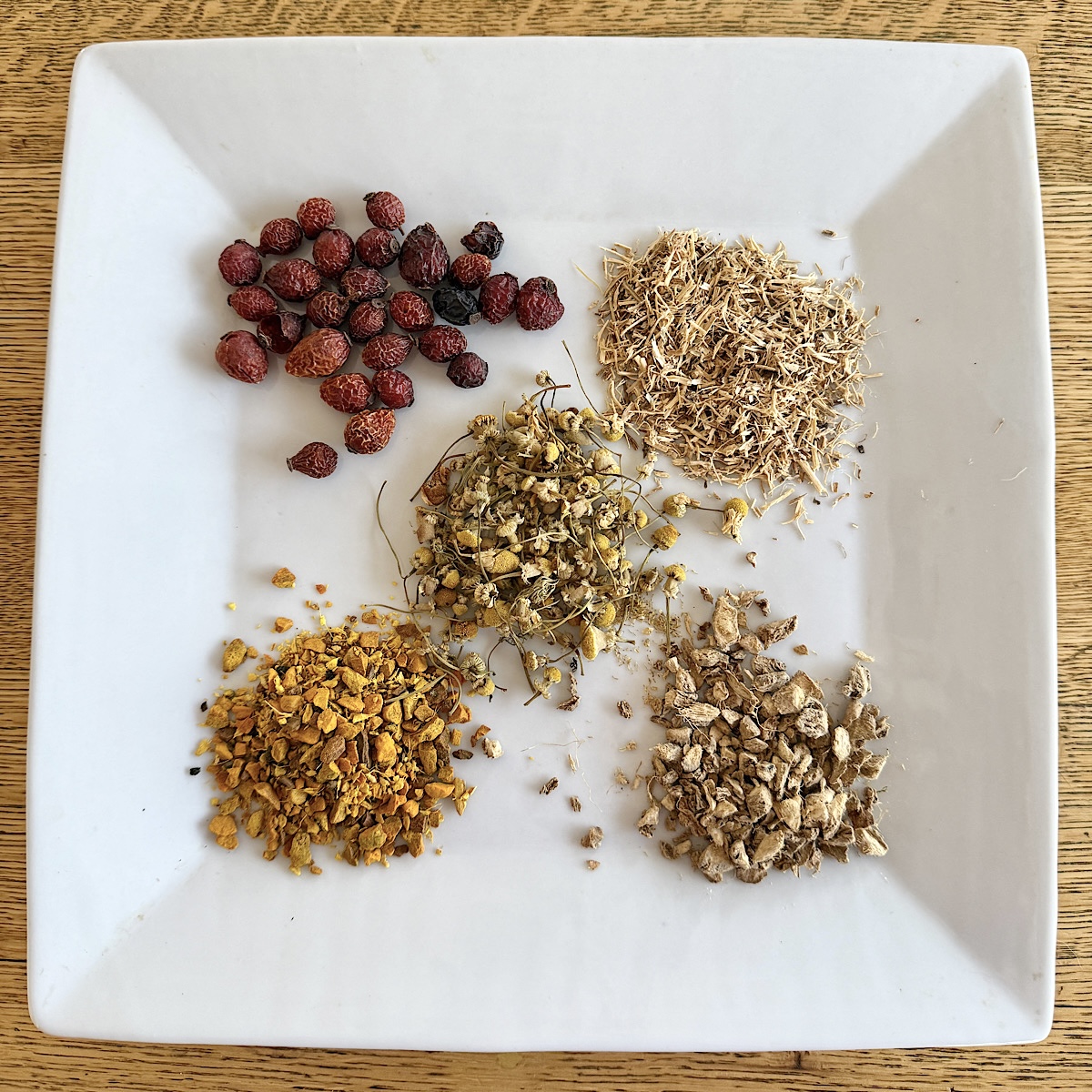
- Rosehip: Rich in vitamin C and galactolipids, compounds that may protect cartilage. Studies show rosehip can reduce osteoarthritis pain and improve joint function. Pleasant, slightly tart flavor that blends well.
- Boswellia (Frankincense): Traditional Ayurvedic herb for joint inflammation with growing research support. Contains boswellic acids that block inflammatory enzymes. Usually taken as capsules; the resin doesn’t make good tea.
- Green Tea: Contains EGCG, a powerful antioxidant that may protect cartilage and reduce inflammation. Also supports overall health. Note that it contains caffeine.
- Chamomile: Anti-inflammatory and muscle-relaxing. Helpful when joint pain is accompanied by muscle tension or when you need to sleep despite discomfort.
- Meadowsweet: Like willow bark, contains salicylates for pain relief. Gentler on the stomach than willow bark. Pleasant, honey-like flavor.
How to Use Joint Pain Teas Effectively
- These herbs work best with daily, consistent use over weeks and months. Don’t expect dramatic results from a single cup. Think of it as maintenance instead of a quick fix.
- Many people find morning tea helps with overnight stiffness. A second cup in the afternoon can address pain that builds through the day. Some herbs (like valerian or chamomile) are better suited to evening if joint pain interferes with sleep.
- Most studies on joint herbs and teas run 4 to 12 weeks before measuring results. If you’re trying a new herb, commit to at least a month of consistent use before deciding whether it helps.
- Herbal teas work best alongside other joint-supportive practices. These practices would include movement, maintaining healthy weight, anti-inflammatory diet, and adequate sleep. No herb can overcome a lifestyle that promotes inflammation.
- Joint pain fluctuates with weather, activity, stress, and sleep. Keep a simple log so you can identify whether an herb is actually helping or whether you’re just having a good week.
Creating Your Own Joint Support Blends
Daily Anti-Inflammatory Blend
- 2 parts nettle leaf
- 1 part ginger (dried or fresh)
- 1 part turmeric
- Pinch of black pepper
- Pinch of cinnamon
Foundational daily support. Add a splash of milk or coconut milk for better turmeric absorption.
Morning Stiffness Blend
- 2 parts ginger
- 1 part turmeric
- 1 part rosehip
- Pinch of black pepper
Warming blend to ease into the day.
Golden Milk (Most Effective Delivery)
- 1 cup milk or non-dairy milk
- 1 teaspoon turmeric powder
- 1/2 teaspoon ginger powder or fresh grated ginger
- Pinch of black pepper
- Pinch of cinnamon
- Honey to taste
Simmer milk with spices for 5 minutes. Strain if using fresh ginger. The fat in milk dramatically improves curcumin absorption.
Gentle Long-Term Support
- 2 parts nettle leaf
- 1 part rosehip
- 1 part chamomile
Mineral-rich, antioxidant, easy to drink daily for months.
Stronger Pain Relief Blend
- 2 parts meadowsweet or willow bark
- 1 part ginger
- 1 part chamomile
- Honey to offset bitterness
For days when pain is more significant. Don’t use willow bark daily long-term or if you take blood thinners.
What Won’t Help (and What to Avoid)
- Keep your expectations in line. Tea can help manage joint discomfort. It cannot regrow cartilage, cure rheumatoid arthritis, or replace joints that need medical intervention.
- Drinking joint tea once a week when pain flares won’t do much. Daily use over time is what produces results.
- If you’re eating a highly inflammatory diet, not sleeping, and never moving, tea is swimming upstream. Address the big factors first.
- Avoid willow bark if you take blood thinners: The salicin in willow bark has blood-thinning effects similar to aspirin. This can be dangerous if you’re already on anticoagulants.
- Avoid devil’s claw with certain medications. It can interact with blood thinners, diabetes medications, and heart medications. Make sure and check with your pharmacist.
- Avoid very high doses of any herb. More isn’t better. Stick to tea consumption of around 2 to 4 cups daily, rather than trying to concentrate herbs for stronger effects.
A Note on Serious Joint Conditions
If you have significant joint disease, diagnosed rheumatoid arthritis, or joints that are rapidly worsening, please work with a rheumatologist or orthopedist. Herbal tea is supportive care, not treatment for serious conditions.
That said, many people with arthritis find that consistent use of anti-inflammatory herbs allows them to reduce their reliance on over-the-counter pain medications, or makes the days between medication doses more comfortable. This is a reasonable goal and worth pursuing.
I’ve also found that the ritual of making and drinking tea creates moments of stillness in a physically demanding day. When you garden, or do any physical work, those pauses matter. Sometimes the ritual is as therapeutic as the herbs.
For joint pain that interferes with sleep, see my post on teas for sleep.
FAQ
Turmeric and ginger have the most research support. For daily use, nettle provides mineral support. For more immediate pain relief, willow bark or meadowsweet contain aspirin-like compounds. A blend covering multiple mechanisms often works best.
Most people need 4 to 8 weeks of consistent daily use to notice meaningful improvement. Some notice subtle changes sooner. This is slow support, not a quick fix.
Generally yes for turmeric, ginger, nettle, and rosehip. Avoid willow bark and meadowsweet if you take blood thinners or aspirin. Devil’s claw interacts with several medications. When in doubt, ask your pharmacist.
Supplements typically provide higher, more standardized doses of curcumin. Tea provides lower doses but may be absorbed well if consumed with black pepper and fat (as in golden milk). For significant joint disease, supplements may be more effective. For general daily support, tea is reasonable.
Green tea contains anti-inflammatory antioxidants (EGCG) that may protect cartilage. It’s not as specifically joint-focused as turmeric or ginger, but it contributes to overall anti-inflammatory support. The caffeine may be a consideration.
For mild daily discomfort, some people can manage with herbal support alone. For more significant pain, these teas can complement but may not replace medication. Never stop prescribed medications without consulting your doctor.
Nettle, ginger, turmeric, rosehip, and chamomile are considered safe for long-term daily use. Willow bark and meadowsweet (salicylate-containing herbs) are best used intermittently rather than continuously. Devil’s claw should be used in courses rather than indefinitely.
They may help with symptoms, particularly inflammation and pain. However, RA is an autoimmune condition that requires medical management to prevent joint damage. Use herbal support alongside, not instead of, your rheumatologist’s treatment plan.
These are supplements, not herbs, and they’re taken as pills rather than tea. Research results are mixed. They’re a different category from herbal anti-inflammatories and can be used alongside.
If you want to explore the world of teas and tisanes, check out this Complete Guide to Teas. It includes information on how to grow a tea garden, types of tea, brewing times and temp., recipes for blends, caffeine amounts, and much more.
References and Further Reading
- Turmeric/curcumin for joint arthritis: Daily JW, et al. “Efficacy of turmeric extracts and curcumin for alleviating arthritis symptoms: A meta-analysis.” Journal of Medicinal Food, 2016.
- Ginger for osteoarthritis: Bartels EM, et al. “Efficacy and safety of ginger in osteoarthritis patients: A meta-analysis.” Osteoarthritis and Cartilage, 2015.
- Willow bark for musculoskeletal pain: Vlachojannis JE, et al. “A systematic review on willow bark for musculoskeletal pain.” Phytotherapy Research, 2009.
- Rosehip for osteoarthritis: Christensen R, et al. “Does rosehip reduce pain in osteoarthritis patients? A meta-analysis.” Osteoarthritis and Cartilage, 2008.
- Base-of-thumb pain: Randall C, Randall H, Dobbs F, et al. Randomized controlled trial of nettle sting for treatment of base-of-thumb pain. Journal of the Royal Society of Medicine.
- Low back pain: 2000;93(6):305-309. Gagnier JJ, Chrubasik S, Manheimer E. Harpgophytum procumbens for osteoarthritis and low back pain: A systematic review. BMC Complementary and Alternative Medicine.