
Quick Summary: A robust tomato sauce made from fresh end-of-season tomatoes, simmered with basil, thyme, garlic, and a hint of sumac for depth. Freeze in batches to enjoy summer tomato flavor all winter. Prep: 20 min | Cook: 1 hr | Serves: 8
Jump to: RECIPE | Why Freezer Tomato Sauce? | Why Use Sumac? | How to Make It | More Preserving Methods | FAQ

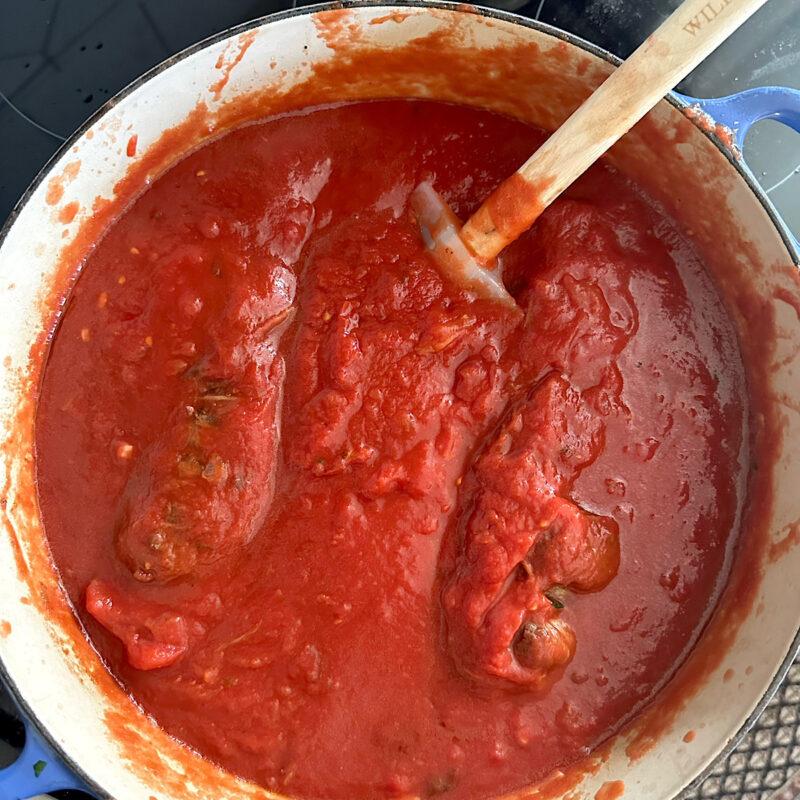
Tomato season at HeathGlen Farm is short but intense. By late August, I’m swimming in heirloom tomatoes and racing to preserve as many as possible before the first frost.
This freezer sauce is my workhorse recipe. It is fresh tomatoes simmered with onion, garlic, basil, and thyme, then frozen in batches for winter. The secret ingredient is sumac, a Middle Eastern spice that adds a subtle tangy depth without overpowering the tomato flavor.
People always ask what’s different about this sauce. Well, now the secret ingredient is not so secret anymore!
This post may contain affiliate links, and you can read our disclosure information here–
Why Make Freezer Tomato Sauce?
Grocery store tomatoes are bred for shipping, not flavor, and it’s particularly hard to find good ones in winter. Their thick skins and mealy texture can’t compare to ripe summer tomatoes.
Making sauce when tomatoes are at their peak and freezing it in batches lets you cook with real tomato flavor year-round.
It also uses up end-of-season tomatoes that might be too soft for slicing but still have great taste.
If you prefer to preserve tomatoes in dry form instead, this guide to making dehydrated tomato powder is another excellent option for year-round flavor.
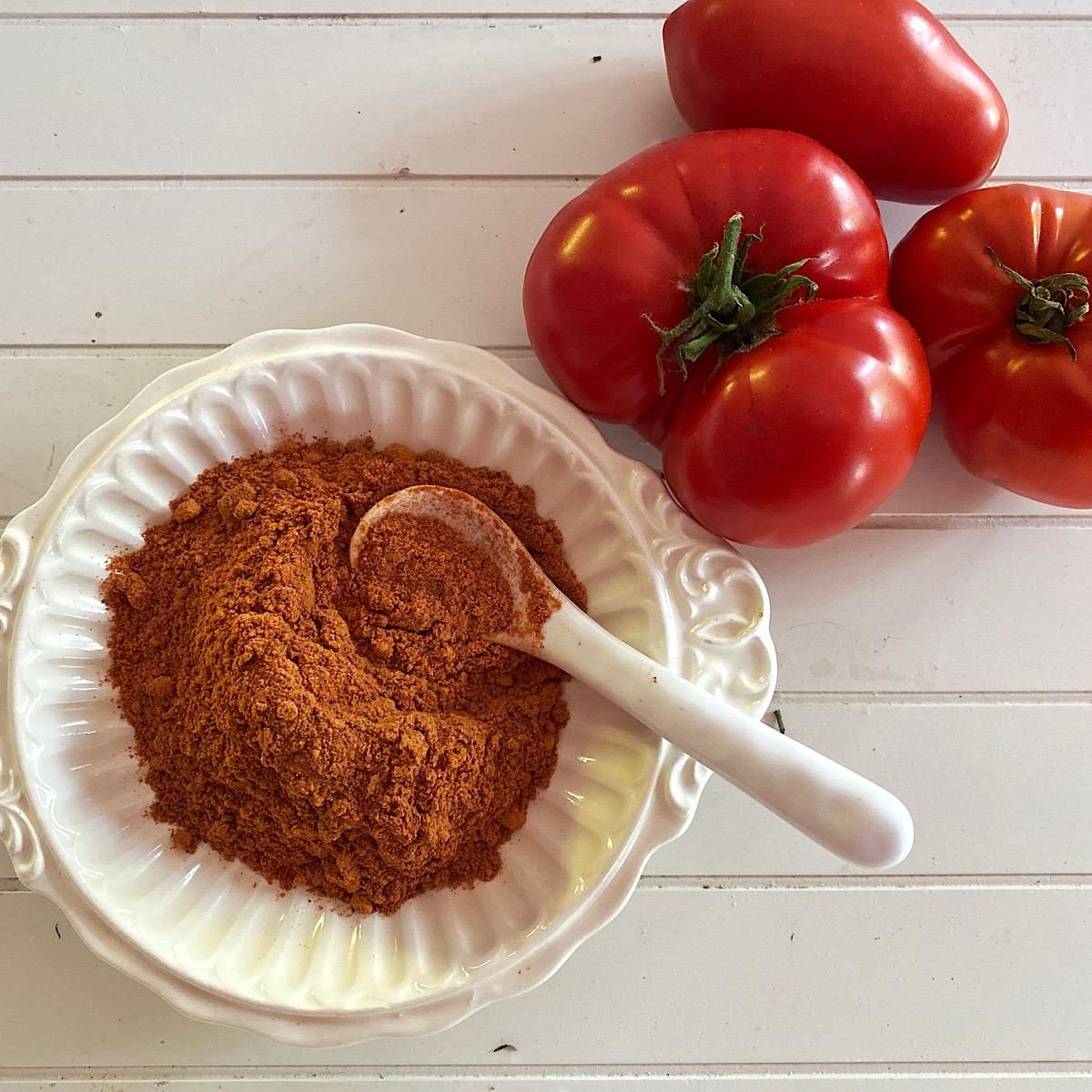
What Is Sumac and Why Add It to Tomato Sauce?
Sumac is a deep red spice ground from dried sumac berries, common in Middle Eastern cooking. It has a tangy, slightly fruity flavor, almost like lemon but earthier.
In tomato sauce, it adds a subtle brightness that makes people notice something is different without being able to identify it. Start with 2 teaspoons per batch and adjust to taste.
Sumac is a spice that is relatively new to the American palate. It was noted by several chefs that I follow that it was a good complement to tomatoes, so I thought I’d give it a try. They were right.
How to Make Freezer Tomato Sauce
The ingredient and recipe details are listed in the recipe card below. In short:
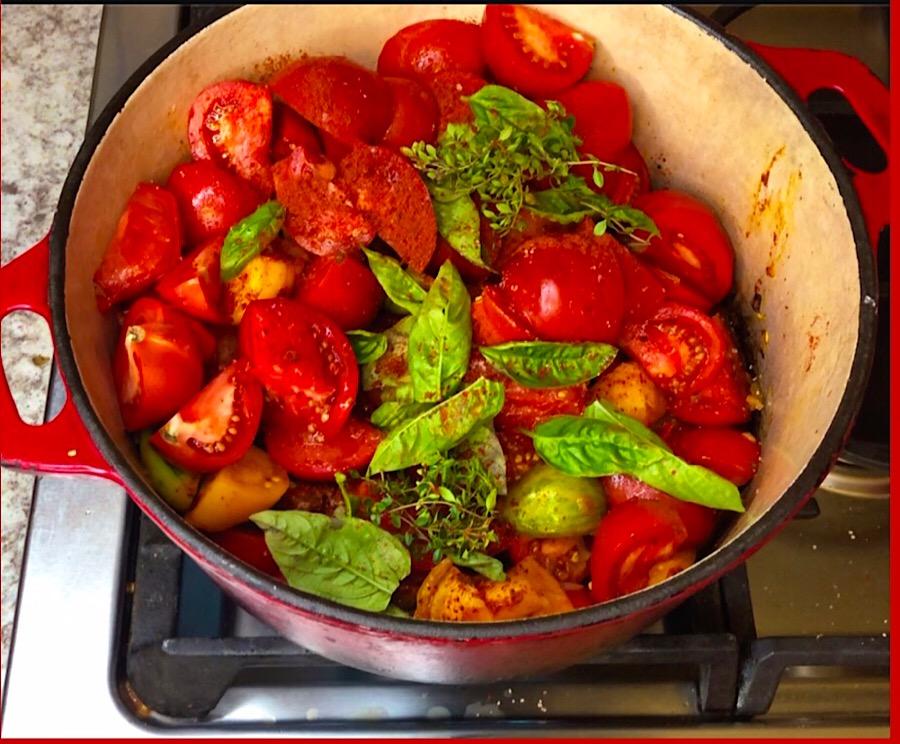
- Sauté chopped onion in olive oil until caramelized, add garlic, then add coarsely chopped fresh tomatoes with basil, thyme, chile pepper, salt, and sumac.
- Simmer for about an hour until thickened. Run through a food mill to remove skins and seeds (or leave rustic), cool, and freeze in labeled bags.
Add this freezer basil pesto to your meal and you’re golden.
Tips for the Best Flavor
- Use the ripest tomatoes you can find, even if they’re a little soft. Heirloom varieties with thin skins work especially well.
- Don’t skip the caramelized onions; they add sweetness and depth.
- If you prefer a smoother sauce, use a food mill. If you like texture, just pull out the larger skin pieces with tongs as it cools.
- For help choosing the best varieties for sauce, this guide to heirloom tomato flavor profiles by color breaks down which tomatoes are meaty enough for cooking
Check out this collection of popular tomato recipes for a range of tomato recipes, from fresh salsas to slow cooked stews, to tomato martinis.
FAQ
Properly stored in freezer bags or containers, it keeps for 6 to 8 months. Label with the date so you use older batches first.
No. Simmering softens the skins, and a food mill removes them at the end. If you don’t have a food mill, you can pull out large skin pieces with tongs or blanch and peel tomatoes before cooking.
Yes. Fresh tomatoes, onion, garlic, and herbs are all compliant. There’s no added sugar.
Freezing is simpler and preserves more fresh flavor. Canning requires proper acidity levels and pressure canning for safety. If you want to can, follow tested USDA guidelines.
A squeeze of lemon juice or a pinch of lemon zest gives a similar tangy note, though the flavor won’t be identical. Za’atar spice blend (which contains sumac) also works.
Yes, but leave at least an inch of headspace because the sauce expands as it freezes. Wide-mouth jars work better than narrow-mouth for freezing. Freezer bags laid flat are my preferred method because they thaw faster and stack more efficiently.
The ripest tomatoes you have, even if they’re a little soft for slicing. Heirloom paste tomatoes like San Marzano or Opalka are ideal because they’re meaty with fewer seeds. But any ripe tomato works. For more on choosing varieties by flavor and meatiness, see this guide to heirloom tomato flavor profiles.
More Ways to Preserve Summer Tomatoes
For nine more methods of preserving fresh produce, from fermenting to shrub syrups, see this complete guide to preserving fruits, vegetables, and herbs.
Freezer Tomato Sauce with Sumac
Equipment
- Dutch oven (Or large pot)
Ingredients
- 7 lbs fresh tomatoes
- 1 large onion
- 2-4 cloves garlic
- 2 Tbsp olive oil
- 1 bunch fresh basil
- 3 sprigs fresh thyme
- 1 tsp spicy chile pepper
- 1 tsp salt
- 2 tsp sumac
Instructions
- Coarsely chop tomatoes, onion and garlic7 lbs fresh tomatoes, 1 large onion, 2-4 cloves garlic
- Add olive oil to dutch oven or large pot and heat up over medium heat. Add onions and saute about 5 minutes or until caramelized. Add garlic for last 30 seconds2 Tbsp olive oil
- Add tomatoes, herbs and spices and bring to a simmer over medium high heat. Lower heat and simmer for about 1 hour1 bunch fresh basil, 3 sprigs fresh thyme, 1 tsp spicy chile pepper, 1 tsp salt, 2 tsp sumac
- Optional: Cool slightly and add a cup of the sauce to the food mill situated over a bowl. Turn the food mill to grind the tomato peels, seeds and pulp, releasing the sauce to the bowl below the food mill.If you want to leave the sauce more rustic, you don’t have to run it through the food mill. The tomato peels are the main problem, as they can put people off the texture. You could just pull the peels out with tongs as it is cooling. Alternatively you can peel the tomatoes ahead of time, but you will lose some of the intensity of flavor.
- Pour the bowl of tomato sauce into ziplock freezer bags (carefully), label with date and place in the freezer
Is the nutritional values for a serving or the whole recipe?
It is for one serving. The whole batch is considered 8 servings.
@dorothy stainbrook,
Thank you
Sumac?
Yes! Sumac goes really well with tomatoes and brings out the flavor. It used to be hard to find in powdered form, but it’s getting more popular now and you can often find it in the local grocer.
@dorothy stainbrook,
Sandy….i find Sumac at Asian Indian stores in my area.