
Quick Summary: Repeatable, easy protein-heavy breakfasts that keep you full until lunch. Includes weekday staples, weekend recipes worth the extra effort, how the 30-grams-of-protein rule actually works, and what to do if you’re skipping breakfast and doing intermittent fasting instead.
Jump to: The 30 Grams of Protein Rule | Quick Breakfast Ideas | How to Cook Eggs | Weekend Breakfast Ideas | Should You Skip Breakfast? | FAQ
There are all kinds of fantastic meals one could make and still be true to a slow-carb Diet, but there is a reason that Tim Ferriss developed Rule #2: “Eat the same few meals over and over again.”
It has to do with lifestyle. He tells you not to fool yourself that you will cook all the time…because you won’t. These quick slow-carb ideas for breakfast will get you through the times when you aren’t feeling it.
I am as hard-pressed for time as anyone and I just can’t find the time or energy to be creative 24/7. However, I have found a few “fast food” tricks that have worked for me for those meals where you just don’t want to think about it.
My own pre-slow-carb breakfast was coffee and cookies. A lot of cookies (sometimes muffins). Switching to high-protein breakfasts was the single biggest change in my early weeks on the diet, and the energy difference was noticeable within days.
Here are some guidelines that made my breakfast on a slow-carb diet easier:
This post may contain affiliate links. As an Amazon Associate, I also earn from qualifying purchases. You can read our disclosure information here–
Do You Really Need 30 Grams of Protein Within 30 Minutes of Waking?
This is one of the most-asked questions about the Slow Carb Diet, and the answer has evolved a bit since The 4-Hour Body was published.
Ferriss’s original rule was to eat 30 grams of protein within 30 minutes of waking up. The idea was to kick-start your metabolism, stabilize blood sugar, and prevent the mid-morning crash that sends people reaching for carbs. For someone coming off a breakfast of cereal, muffins, or nothing at all, this rule was transformative.
In practical terms, 30 grams of protein at breakfast looks something like:
- Four large eggs (about 24-28 grams of protein, close enough when paired with a side)
- Three eggs plus a couple of turkey sausage links or a few slices of bacon
- A protein smoothie with whey isolate (check the label for 30 grams per serving)
- Two eggs plus a half cup of black beans (adds about 7 grams of protein plus the legume requirement)
- Leftover chicken or steak from last night’s dinner reheated with vegetables
You don’t need to hit exactly 30 grams. The point is to make protein the centerpiece of your first meal rather than grabbing something carb-heavy on your way out the door. Even 20 grams of protein from three eggs is dramatically better than a muffin and a latte.
One important caveat: since the book came out, Ferriss has talked extensively about intermittent fasting and acknowledged it as a viable alternative to the morning protein rule. If you’ve been on slow carb for a couple of months and find you’re not hungry in the morning, skipping breakfast and eating your first protein-heavy meal at lunch is a legitimate approach.
I’ve written a full guide on combining slow carb and intermittent fasting that covers when and how to make that transition.
What Are the Best Quick Slow Carb Breakfasts for Weekdays?
These are the breakfasts that got me and most of my coaching clients through the work week. None of them take more than 10 minutes. Most take less than 5.
- Scrambled eggs with seasoning variations. This is the workhorse slow carb breakfast and the one I come back to more than anything else. Three to four eggs scrambled in a pan with olive oil, finished with whatever seasoning sounds good that morning. The base stays the same; the flavor changes daily. I rotate through chipotle salt, fresh herbs from the garden (thyme, tarragon, chives), curry powder, everything bagel seasoning, and sometimes just good salt and pepper. Add black beans on the side to check the legume box. See the egg cooking tips section below for technique.
- Leftover dinner protein. Ferriss is right that cooking extra protein at dinner and reheating it for breakfast is the easiest possible morning meal. It sounds odd the first time you eat chicken and vegetables at 7 AM, but you get used to it quickly, and it’s genuinely more satisfying than any traditional breakfast food. Reheat in the microwave while your coffee is brewing and you’re out the door.
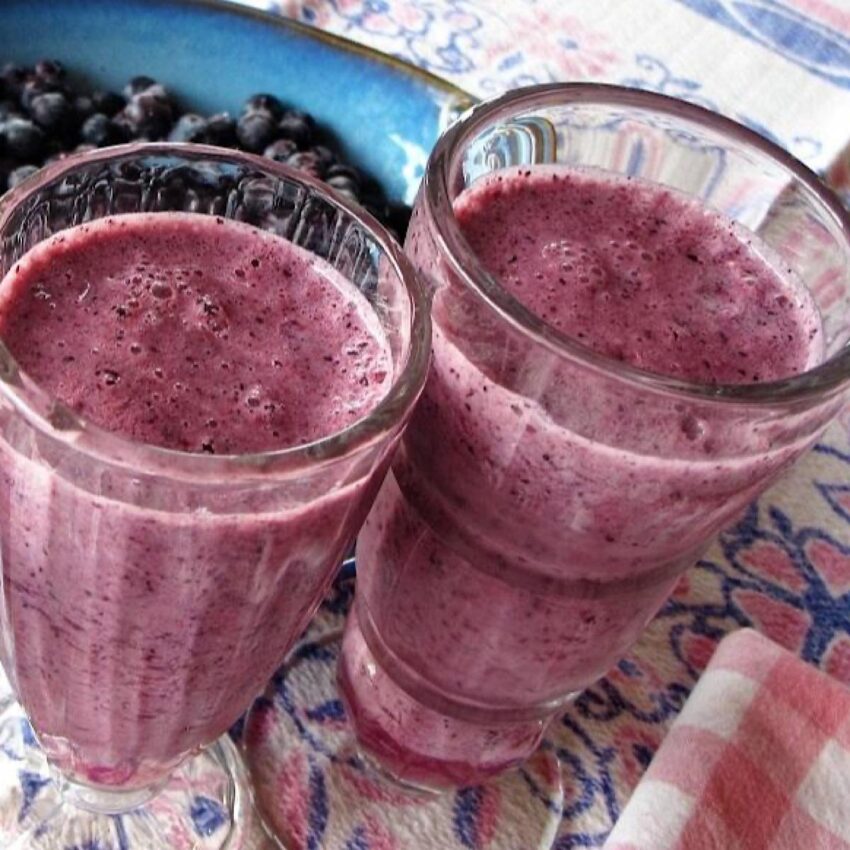
- Protein smoothie. I only go this route when I’m heading out to exercise and don’t want a heavy meal. My homemade blueberry protein smoothie gives me control over the carbs and sugar. If you’re buying commercial protein powder, look for whey isolate with minimal ingredients. Read the label carefully. Many “protein” products have as many carbs as a granola bar, and the flavored versions often have added sugars or sugar alcohols that will stall your progress.
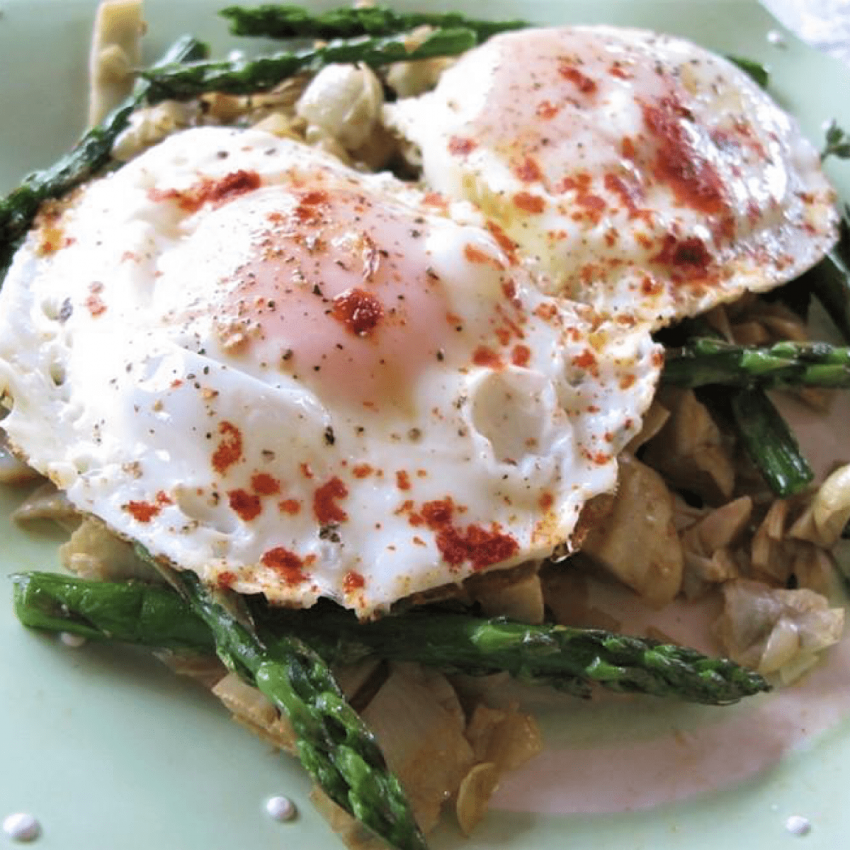
- Eggs plus whatever vegetables are in the fridge. Sauté a handful of spinach, leftover roasted vegetables, bell peppers, or asparagus in olive oil, then scramble or fry a few eggs on top. This takes about 5 minutes and covers protein and vegetables in one pan.
- Turkey or chicken sausage with black beans. Quick, high protein, and filling. Look for sausages with clean ingredient lists and minimal added sugar.
- Cottage cheese with everything bagel seasoning (if you tolerate dairy). This is a grey-area food on strict slow carb, but it works for some people, especially in maintenance. About 25 grams of protein per cup. Check my post about cottage cheese on a slow carb diet, for more nuanced details from Ferriss.
I am sold on Ferriss’ high protein centerpiece of each meal, particularly the “first meal” (for some this would be breakfast).
Here are my favorite tips for fast, easy breakfasts:
- First up, if you are doing intermittent fasting and skipping breakfast altogether, add some cinnamon and heavy whipping cream to your coffee. The cream keeps you satiated longer without adding carbs (some call this bullet-proof coffee). Re cinnamon: no more than 1 tsp a day, as cinnamon is blood thinner.
- Leftovers: Make enough dinner proteins that you have some left for breakfast the next day. It’s easy to reheat something in the microwave while you are still waking up, and if you make a good dinner, it is going to taste good the second time around.
- Protein Smoothies: I only have a protein drink if I am going to work out that morning and I’m tired of eggs. I prefer my homemade protein smoothie because I control the carbs and sugar. Most commercial protein drinks have quite a few carbohydrates and/or sugars in them. Read the labels carefully and look for one that is a “whey isolate”.
- Scrambled eggs are the most versatile protein you can make, and once you get the technique down they take all of 2-3 minutes to make (see tips on eggs below).
How Do You Make Great Scrambled Eggs in 3 Minutes?
Since eggs are the backbone of slow carb breakfasts, it’s worth getting the technique right. Here’s what I’ve found works best after making them nearly every morning for over a decade.
- The Pan and the Oil. Use a well-seasoned cast iron skillet or a good nonstick pan. Add a little olive oil and turn the burner to low, letting the pan warm up for a minute. Cast iron is my preference because once it’s warmed through it holds heat evenly, but it will stick if you skip the oil.
- Use fresh, organic eggs if you can get them. The difference in flavor and color is noticeable, especially when the eggs are the star of the plate.
- Add your seasonings to the beaten eggs before they hit the pan. This is where the variety comes in. My favorites: chipotle salt, chopped scallions, fresh ginger, diced peppers, prosciutto, or any fresh herbs I have growing in the garden. Beat three or four eggs lightly with a whisk, add the seasoning, and pour into the warmed pan.
- Don’t overwork them. Use a rubber spatula to gently fold the eggs a few times as they set. Don’t chop them up or stir vigorously. Make a few slow turns, let them cook until they’re just set but still soft and slightly glossy. Pull them off the heat while they still look slightly underdone, because they’ll continue cooking on the plate.
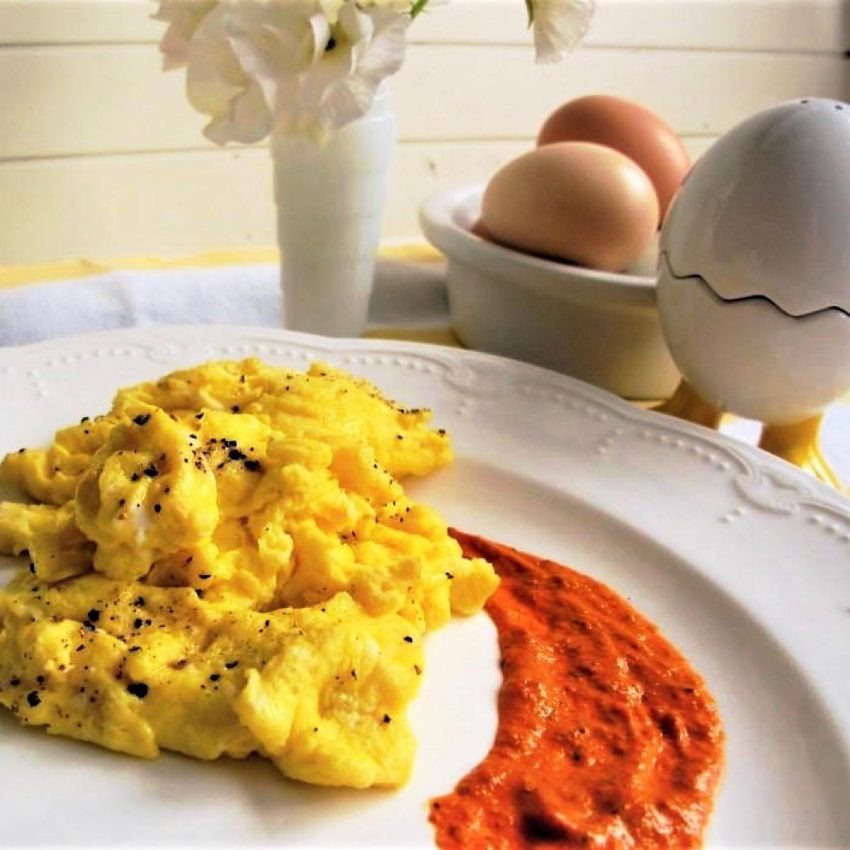
Did you know? The French have a phrase for the perfect texture of scrambled eggs…”snotty”. My husband thought this term was fairly unappetizing, but it does the trick for describing when they are done. Soft, fluffy, spicy, & “snotty” = done!
What Slow Carb Breakfasts Are Worth the Extra Effort on Weekends?
If you want to change up your breakfast routine, try some of these creative breakfast ideas. They may take a little more time but are well worth the effort:
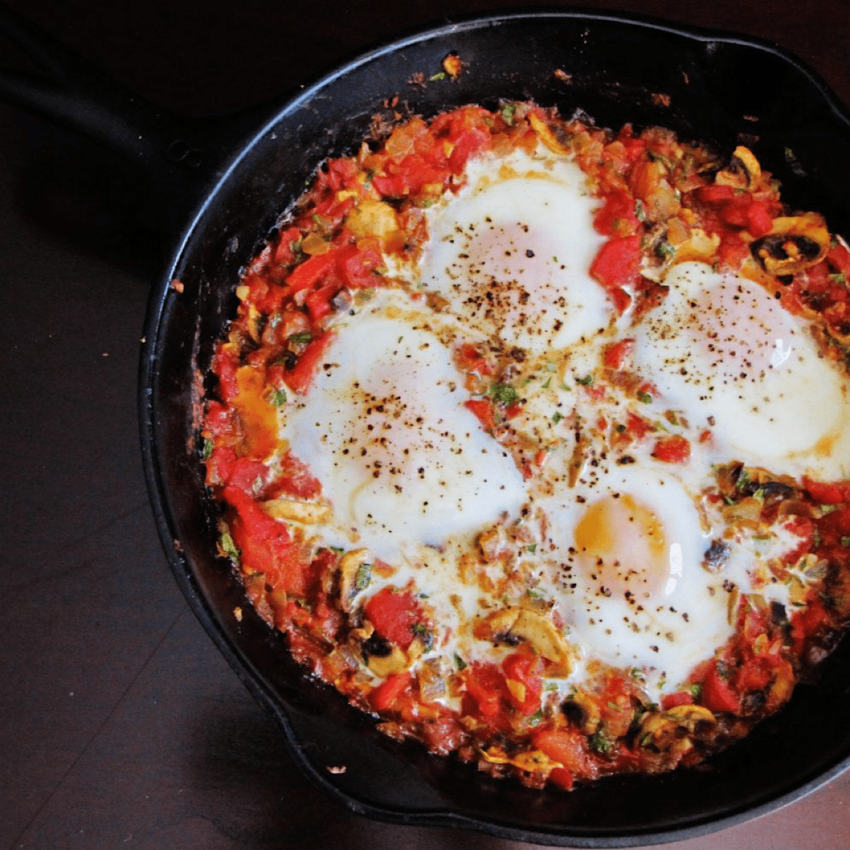
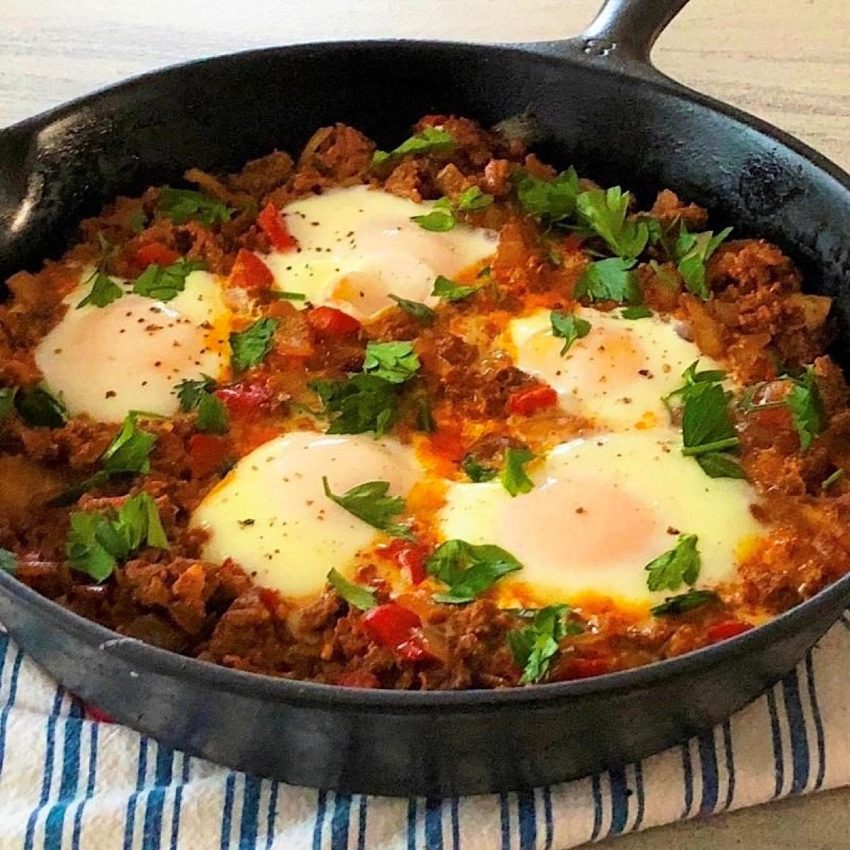
- Shakshuka (North African Baked Eggs) is one of my favorites for a weekend morning. Eggs baked in a spiced tomato sauce with peppers and onions. It’s warming, satisfying, and naturally slow carb compliant.
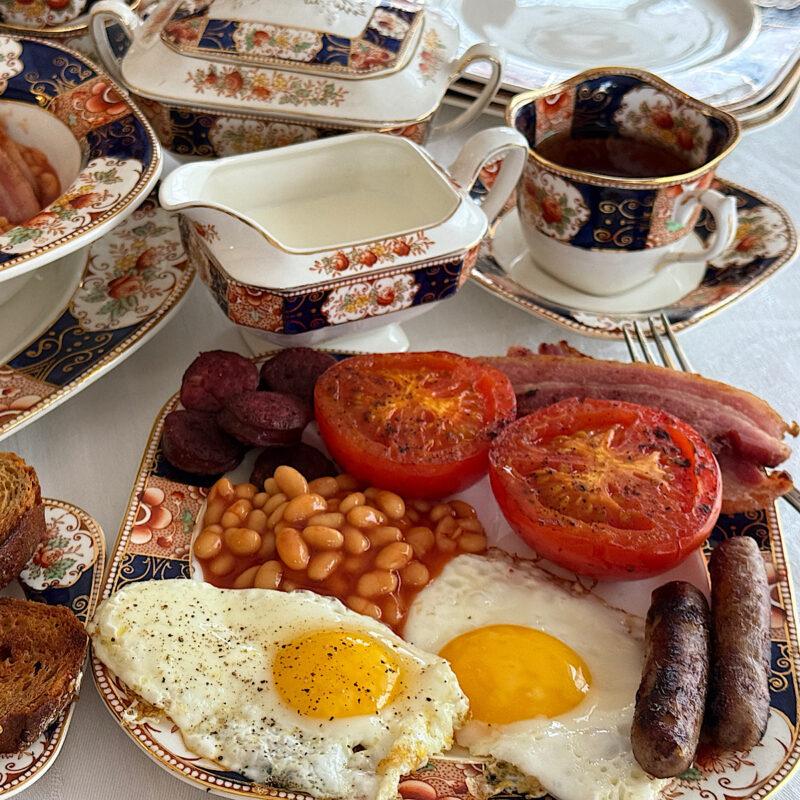
- Full English Breakfast. Eggs, bacon, sausage, beans, and tomatoes. Skip the toast and you have a protein-heavy plate that will carry you through half the day.
- Chorizo and Eggs. A fast skillet meal with big flavor. Good chorizo does most of the work for you.
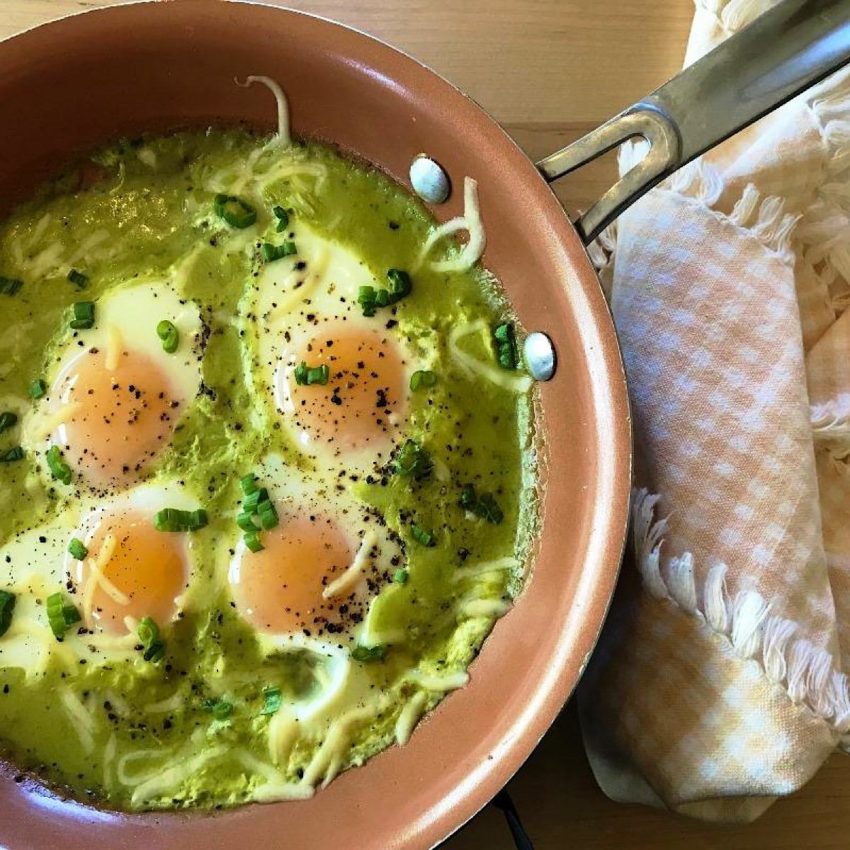
- Mexican Baked Eggs in Chile Verde Sauce. If you have chile verde on hand (or leftover from the week), crack a few eggs into it and bake. Warm, spicy, and completely compliant.
- Omelets with whatever you have. Weekend mornings are when it’s worth taking the time to make a proper omelet rather than scrambled eggs. Fill it with sautéed vegetables, leftover meats, fresh herbs, and a little hot sauce.
Here are the photos (and links) for the above recipes:
What If You’re Skipping Breakfast? (Intermittent Fasting on Slow Carb)
After my initial weight loss on the Slow Carb Diet, I transitioned to 16:8 intermittent fasting, which means I skip breakfast entirely and eat my first meal around noon. This was the change that moved my last five stubborn pounds, and I’ve been doing it for over a decade.
If you’re considering skipping breakfast, two things matter. First, don’t start intermittent fasting on day one of slow carb. Follow the 30-grams-of-protein rule for at least six to eight weeks while you adapt to the diet. Once your body is comfortable burning protein and fat instead of carbs, pushing breakfast back gets much easier.
Second, during the fasting window, stick to water, black coffee, or plain tea. Adding cream, sweeteners, or anything with calories technically breaks the fast. A little cinnamon in black coffee is fine and can help with blood sugar, but keep it to a teaspoon or less per day.
For a deeper look at how to combine these two approaches, including when to start, what to drink, and how it interacts with cheat day, see this full guide on combining slow carb and intermittent fasting.
FAQ
If you’re doing intermittent fasting, yes. Many people on slow-carb find they’re not hungry in the morning after the first few weeks. Coffee with a little fat (butter, MCT oil) can hold you until lunch.
Change the seasonings daily. Chipotle salt, Italian herbs, curry powder, everything bagel seasoning, fresh chives. The base is the same; the flavor profile changes.
This rule was designed for beginners transitioning away from high-carb breakfasts. It works well in the first couple of months. After you’re adapted to slow carb eating, many people (including Ferriss himself) transition to intermittent fasting and skip breakfast entirely. The key is making protein the centerpiece whenever you do eat your first meal.
Focus on other proteins: leftover meat from dinner, turkey sausage, protein smoothies, or canned fish if you’re up for it. Eggs are the most convenient option, but they aren’t the only one. Black beans or lentils with sausage is a good egg-free combination.
Yes. Black coffee is fine on slow carb. If you add cream, use real heavy cream rather than flavored creamers, and keep the amount small. Flavored creamers almost always have added sugar. If you’re doing intermittent fasting, skip the cream during the fasting window and drink it black.
These breakfast ideas are specifically designed for the Slow Carb Diet from Tim Ferriss’s The 4-Hour Body, which means they follow the five rules: no white carbs, eat the same few meals repeatedly, don’t drink calories, take a weekly cheat day, and include protein and legumes at every meal. Most of these breakfasts also work for general low carb or keto eating, with the exception of the beans (which are allowed on slow carb but not keto). For the full list of what you can and can’t eat, see the slow carb diet allowed foods list.
Look for whey isolate with minimal added ingredients. Read the carb and sugar counts on the label. Many “protein” products are loaded with fillers, sugar alcohols, and carbs that will stall your progress. If the protein powder has more than 5 grams of carbs per serving, keep looking.
Oatmeal is not compliant on the Slow Carb Diet. It’s a grain, which puts it in the “white carbs” category even though it’s often marketed as a healthy breakfast. Save it for cheat day.
Not during the diet phase. Fruit is off-limits on slow carb except on cheat day. Once you’ve hit your goal and moved into maintenance, some fruit can come back gradually. For a guide to which fruits are lowest in sugar, see this ranked list for low carb eating.
I’m always confused by how eggs meet the 30g requirement. An egg has about 6-8g of protein, meaning I’d have to eat at least four or five eggs each morning to meet the goal. What am I missing?
Techsavvywriter – I interpreted the 30 gram suggestion a little differently. I think Tim Ferris was saying if you opt for the protein powder drink for your breakfast, make sure it is one that has 30 grams of protein, as they vary widely in carbs and protein. I think the basic idea of the diet is to start your day with protein and try and make that one of your bigger meals of protein. I used to use the protein powder, but now I just make 3-4 eggs and call it good. I think one of the nicer things about this diet is that you don’t count calories and you don’t need to get too wrapped up in monitoring protocols. Just follow the 5 basic rules and you’re good (or even simpler – eat a lot of protein and vegetables, stay away from white & processed food, and keep fruit to the cheat days)
I love this diet but it’s a lot to keep track of. I ended up buying the Slow Carb Diet Tools & Recipes app for my iPhone.
Good tips on getting more protein and less carbs. Can’t wait to try them out for breakfast.