
Quick Summary: Pot up tomato seedlings when they have two sets of true leaves (around 4 weeks). Move from small cells to 4-inch pots. Plant deeper than they were originally, burying the stem up to the first set of true leaves. Handle seedlings by leaves, not stems. Keep newly potted plants out of bright sun for a few days while they recover. Read time: 6 min | Experience level: Beginner
Jump to: When to Pot Up Tomato Seedlings | How to Transplant | Troubleshooting Problems | FAQ
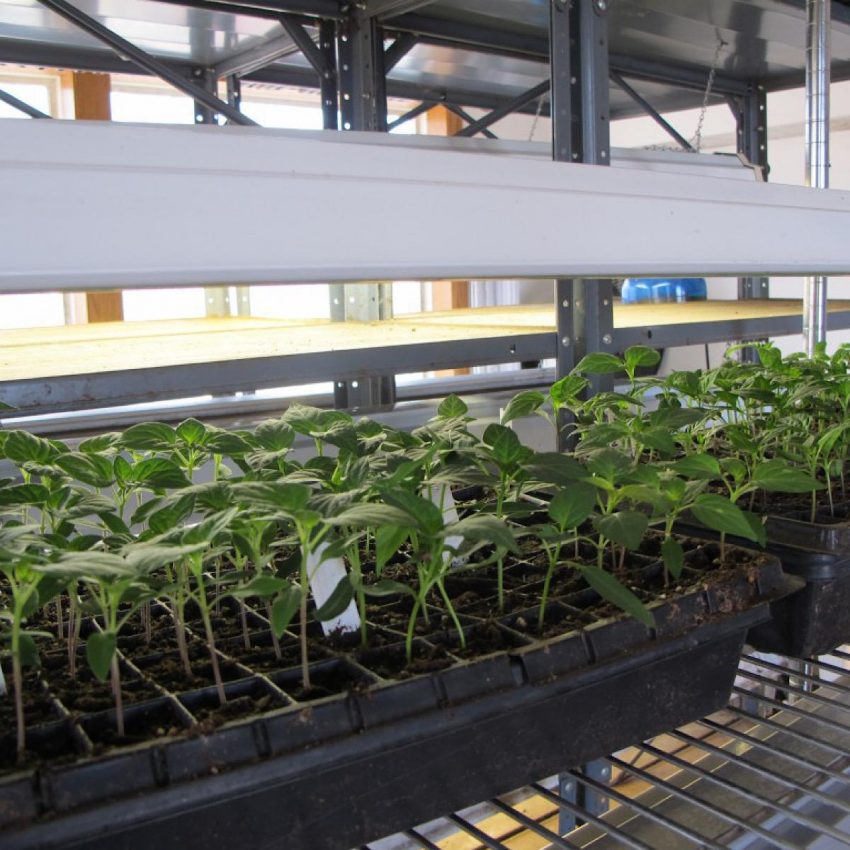
Potting up is one of the most important steps between germination and planting outside. I start tomato seedlings in 196-cell trays at HeathGlen Organic Farm, then move them to 4-inch pots around 4 weeks, then to the garden around 6 weeks.
This intermediate step gives roots room to develop and produces stronger transplants. Skip it, and your seedlings will be rootbound and stressed before they ever hit the garden.
This post may contain affiliate links. As an Amazon Associate, I also earn from qualifying purchases. You can read our disclosure information here–
When Should You Pot Up Tomato Seedlings?
Although the 4-week timeline for potting up seedlings is a good benchmark, another sign that they are ready is when they have two sets of true leaves (do not count the set of “seed leaves” at the bottom).
Depending on the weather and when you are going to put the heirloom tomato plants in their permanent bed, you may need to pot up a second time. A good rule of thumb when deciding when to do the second transplant is to wait until the height of the seedling is three times the diameter of its pot (probably around 6-10″ tall).
How Do You Handle Tender Seedlings?
- Handle the seedlings by the leaves rather than the stems. If you tear a leaf, the plant will still grow. If you break the tender stem, the plant is ready for the compost pile.
- I grow my initial heirloom tomato plants in 196-cell trays, and when it is time to pot up I take a butter knife and gently pop the plant out of the cell with the soil bundle (aka a plug) intact. Have a 4″ pot ready with moist potting soil and make a hole with your finger in the center of the soil in the 4″ pot. Place the seedling plug into this hole and gently press the soil around it to make contact with the roots.
- If you grow many seedlings in one large container rather than in cells, you will need to tease apart the roots from each seedling and then place in the hole of the 4″ container. Alternatively, you can snip off the weaker seedlings at the soil line and leave the strongest plant in the container to take advantage of the nutrients in the remaining soil. Remember…don’t handle the seedlings by the stem!
How Do You Pot Up Tomato Seedlings?
- When potting the heirloom tomato plants up to larger pots, plant them a bit deeper than they were in the cell or original container. Additional roots will form along the buried stem and give you a more vigorous plant. You can cover the seed leaves and plant right up to the lower set of true leaves.
- Newly potted up heirloom tomato plants may look limp and stressed the first day or two. Don’t do anything drastic like fertilizing them. They will recover with a couple days rest in the same environment they were in prior to potting up. Keep them out of bright sunlight for a couple of days.
- Use the same potting soil that you used to start your seeds…not garden soil.
- Water the tomato seedlings in their cells or container well BEFORE you start to pot up. Moist soil will cling to the roots and protect them from drying out.
What Problems Should You Watch For?
If your heirloom tomato seedlings are getting tall and spindly, they are referred to as leggy seedlings. There is help for leggy seedlings however.
Here are a few tips for preventing weak heirloom tomato seedlings:
- the light source may be too weak or too far away from the growing tip;
- the room temperature may be too warm (I keep my daytime temperature around 70 degrees and the night temperature around 50 degrees; or
- you are using too much fertilizer. Just use potting soil that already has fertilizer in it or use potting soil with compost. Wait until they are in the garden or in their outdoor pots before getting more generous with fertilizer.
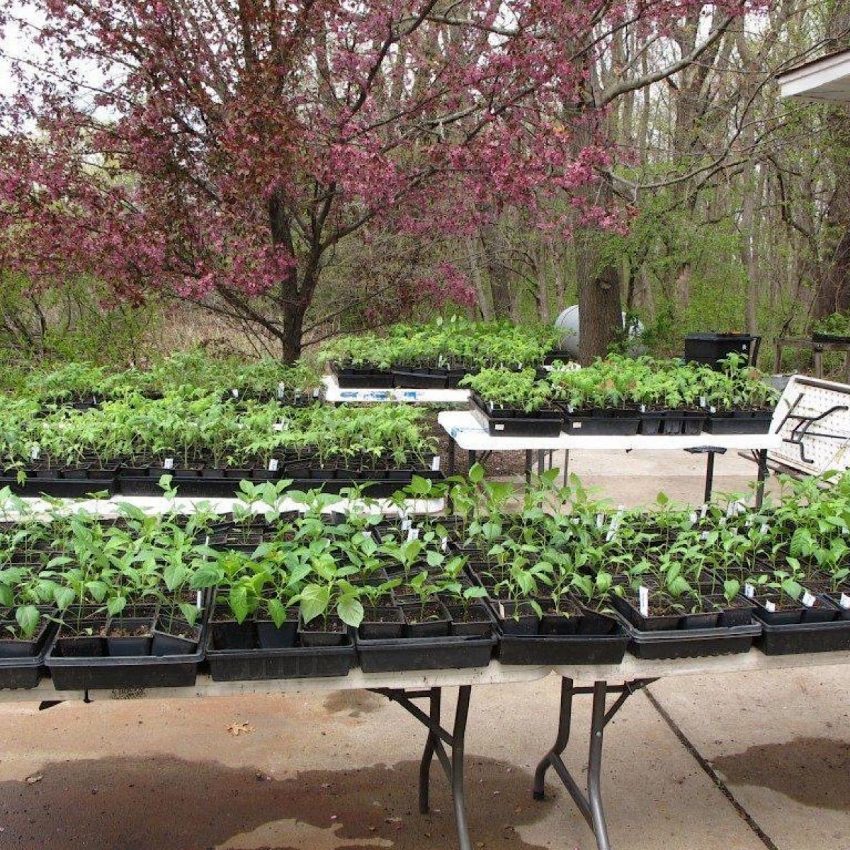
When this post was written it was one of the the longest, coldest winters in Minnesota. There was still 4” of snow on the ground by April 19th.
If Spring weather is fluctuating a lot with cold temperatures or heavy storms, it is really important to get the seedlings outside for short periods on the good days. This is called “hardening off”.
You do not want to take your young seedlings from a protected indoor environment outside without hardening off first. They will often wilt and die. Here is a guide on how to harden off tender seedlings.
Guides for successfully growing tomatoes

FAQ
When they have two sets of true leaves (not counting the seed leaves), usually around 4 weeks after germination. Another sign: when the seedling height is three times the pot diameter.
The intermediate step develops stronger root systems. Seedlings in small cells quickly become rootbound and nutrient-depleted. Potting up gives them room to grow before facing outdoor stress.
Deeper than they were before. Bury the stem up to the first set of true leaves. Tomatoes grow roots along buried stems, producing stronger plants.
Transplant shock. They’ll recover in a few days. Keep them out of bright sunlight and don’t fertilize. Just let them rest in the same conditions they were in before.
No. Use the same potting soil you started seeds in. Garden soil is too dense for containers and may contain diseases or pests.
Bury more of the stem when potting up. The buried portion will develop roots. Also check your light source. Leggy seedlings usually mean insufficient light.
If you want to grow your own tomatoes for recipes like this, The Tomato Workbook for Beginners, covers everything from seed starting to harvest, with variety recommendations for different cooking uses.
You can purchase a digital copy from this website, or purchase a print copy from Amazon. Both are $11.95.
I realize this is an old post and might no longer warrant a response but I figure I’ll try 😉
Could you be more specific as to what you initially plant the tomatoes in? How deep are the 196 cell trays? And then 4″ refers to diameter or depth of the larger pots?
Sorry, I am new to growing from seed and there are so many options in a little confused.
Thanks!
The plug trays come in different sizes but the depth doesn’t vary much. I plant mine in trays that have 128 plugs. I think they’re probably a couple inches deep. The larger 4″ pots — yes, that is the diameter. Thanks for asking and sorry it took so long to reply.