
Quick Summary: Biscochitos (bee-sko-CHEE-tohs) are anise-and-orange-scented Mexican shortbread cookies dusted in cinnamon sugar, traditionally served during Christmas celebrations. Includes an explanation of texture differences when using lard vs butter. Prep: 15 min + 30 min chill | Cook: 10 min | Makes: 36 cookies
Jump to: RECIPE | What are Biscochitos? | Regional Variations | Lard vs Butter | Ingredients | Cooking Tips | Drink Pairings | FAQ
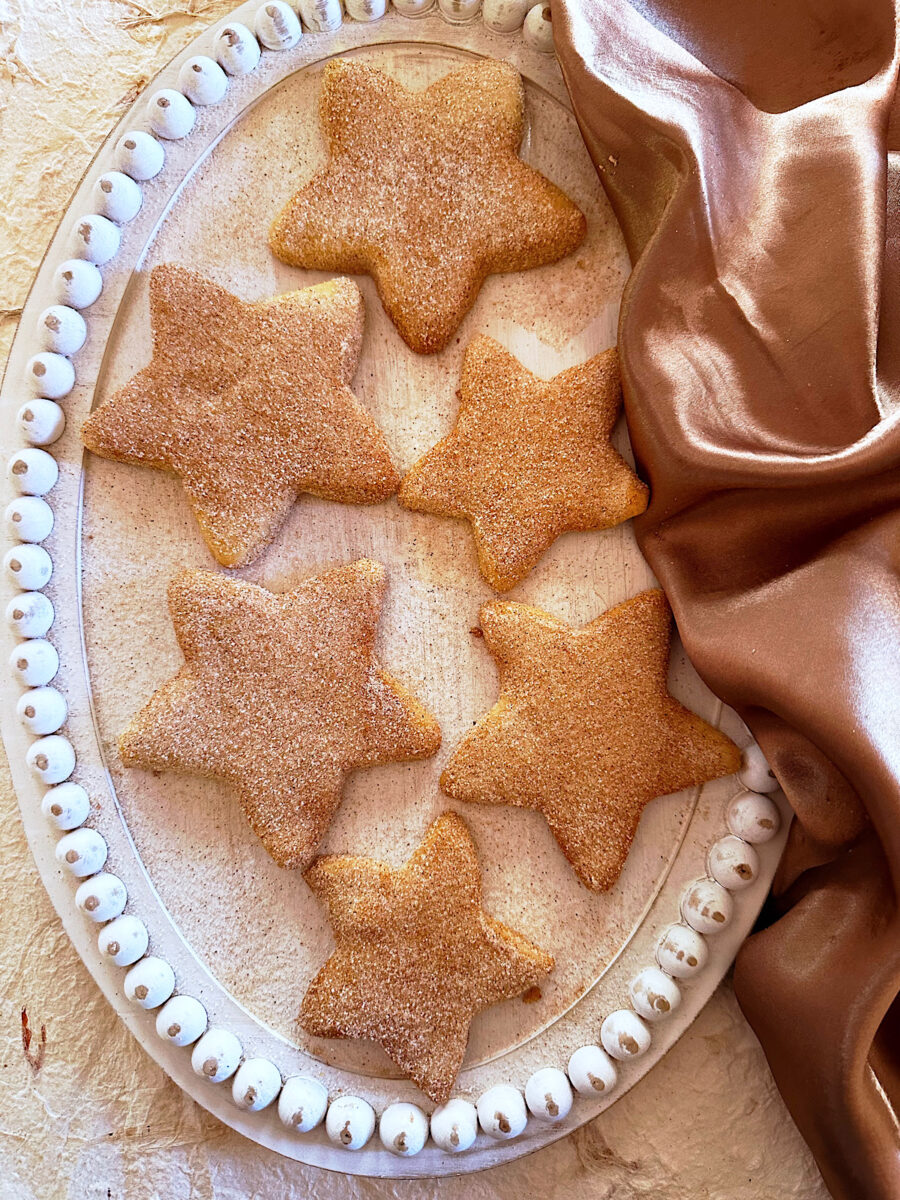
Biscochitos are a holiday tradition throughout Mexico and the American Southwest, and they also hold the distinction of being the official state cookie of New Mexico. They are basically a cross between sugar cookies and Mexican wedding cookies.
I first made these upon a request from my daughter’s foster teen from the Bajio region of Mexico, who I refer to throughout this site as mi amiga.
I tested them with both lard and butter versions to see which she liked best. No surprise that she chose the lard version, as that is what she is used to cooking with!
This post may contain affiliate links. As an Amazon Associate, I also earn from qualifying purchases. You can read our disclosure information here–
What are Biscochitos?
Biscochitos (bee-sko-CHEE-tohs), also spelled bizcochitos, are Mexican shortbread cookies flavored with anise, orange zest, and cinnamon, then coated in cinnamon sugar after baking. The name comes from the Spanish “bizcocho,” meaning a small cake or biscuit.
The texture is somewhere between a sugar cookie and a Mexican wedding cookie. Unlike American shortbread, which relies on butter alone for flavor, these Mexican shortbread cookies get their distinctive taste from the combination of anise seed (or star anise), citrus, warm spices, and traditionally, lard.
Why Are Biscochitos the State Cookie of New Mexico?
In 1989, New Mexico became the first state in the U.S. to adopt an official state cookie, and biscochitos earned that honor. The designation recognized the cookie’s deep roots in New Mexican Hispanic culture, where families have been making biscochitos for generations, with recipes passed down and guarded carefully.
The New Mexican version typically uses anise seed, lard, and sometimes a splash of wine or brandy. Many families have their own variations, with some add more orange, some less cinnamon, some insist on a particular shape.
The state cookie designation was partly a cultural preservation effort. As New Mexican food traditions gained wider attention, there was concern that the distinctive regional versions of dishes like biscochitos might be diluted or forgotten. The official recognition helped cement the cookie’s place in New Mexican identity.
When Are Biscochitos Traditionally Served?
Biscochitos are most closely associated with Christmas (Navidad) in both Mexico and New Mexico. During the holiday season, families make large batches for gatherings, gift-giving, and holiday parties.
In New Mexico, no Christmas celebration is complete without a plate of biscochitos alongside the luminarias and tamales.

Beyond Christmas, biscochitos appear at other significant celebrations:
- Weddings: Biscochitos are a traditional wedding cookie in New Mexican Hispanic communities, sometimes served alongside or instead of cake.
- Baptisms and First Communions: The cookies mark religious milestones, particularly in Catholic families.
- Quinceañeras: The celebration of a girl’s fifteenth birthday often includes biscochitos among the desserts.
- Day of the Dead (Día de los Muertos): Some families include biscochitos on the ofrenda or serve them during the celebration, though pan de muerto is more traditional.
- New Year’s: Biscochitos carry over from Christmas celebrations into the New Year.
The cookies are also made for funerals and wakes in some communities, as a comfort food that connects mourners to tradition and family history.

Are There Regional Variations of Biscochitos?
The basic formula of anise-flavored shortbread with cinnamon sugar coating appears throughout Mexico and the American Southwest, but regional and family variations abound.
Mexican Variations: In Mexico, you’ll find similar cookies under different names depending on the region. In some areas, polvorones refers to the same anise-spiced cookie; in others, polvorones are a slightly different, more crumbly cookie made with ground nuts.
Pan de polvo tends to be a simpler version with fewer spices. The lines between these cookies blur depending on who you ask and where their family is from.
Some Mexican versions use only anise seed, while others add cinnamon to the dough itself (not just the coating). Orange zest is common in some regions and absent in others. In parts of central Mexico, a touch of ground clove appears in the spice blend.
New Mexican Variations: New Mexican biscochitos are often made with wine (traditionally a sweet wine like Moscatel) or brandy in the dough, which adds complexity and helps tenderize the cookie.
Some families use whiskey instead. The New Mexican versions also tend to be slightly thicker than some Mexican versions.
The fat used varies by family tradition and personal preference, with some insisting on lard (like mi amiga). Others have always used butter, and some use a combination of both for flavor and texture.
Shape Variations: The fleur-de-lis is the traditional shape in New Mexico, symbolizing the Spanish colonial heritage.
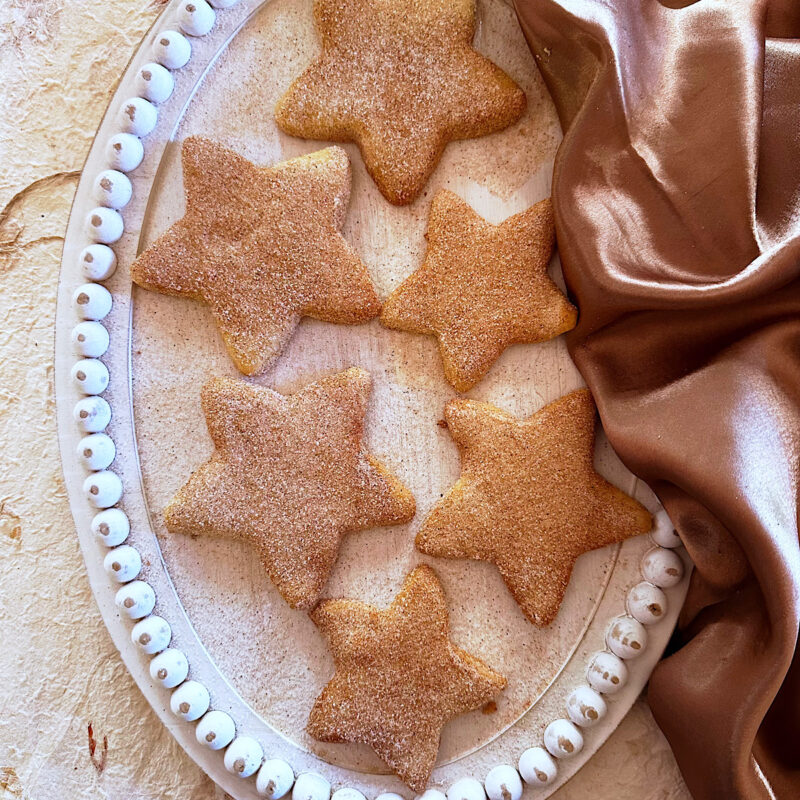
Star shapes are popular for Christmas. Some families have signature shapes passed down through generations, from simple rounds to elaborate cutouts.
While not a biscochito cookie per se, these Low Carb Mexican spice chocolate cookies can fill in when you need something that is low carb.
Lard vs Butter for Dough?
It is said by many that in order for biscochito recipe to be authentic, you must use lard. While I have no problem with lard, there are many cooks who are averse to lard for a number of reasons.
I have tested them made with lard and with butter and I have included directions for either one in the recipe below. Here are a few of the primary differences between lard, shortening and butter:
- Base ingredient: Lard is made from animal fat, while shortening is made from hydrogenated vegetable oil. Butter is made from milk or cream.
- Flavor: Lard can have a flavor that ranges from mildly porky to neutral, while shortening has no flavor. Butter has a rich flavor and can make cookies chewier. Sometimes lard and butter are used in combination to achieve the best of both flavors and textures.
- Texture: Lard typically works best when deep-frying food, baking flaky pie crusts or making masa dough for tamales. Shortening is an option for vegetarian and vegan bakers, and is a good choice for baked goods with delicate flavors. It is also ideal for making cookies with a softer texture.
- Melting point: Shortening typically melts between 111°F and 122°F (44°C – 50°C), while lard has a melting range of 30-40 °C (86-104 °F) for leaf lard and 43-48 °C (109-118 °F) for back fat lard.
- Health: Lard has less saturated fat than butter, and most of its fat is monounsaturated. Monounsaturated fat is considered healthier than saturated fat.
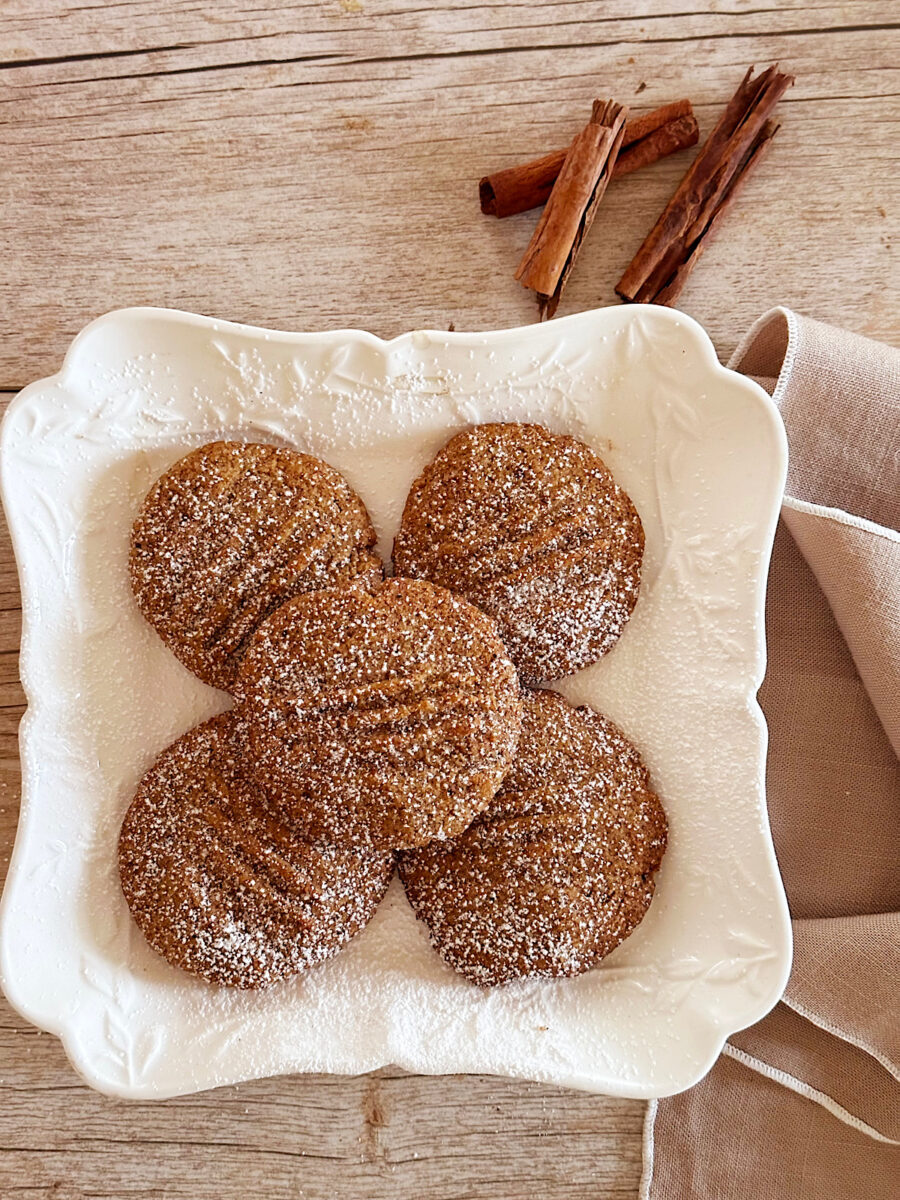
So the bottom line is that with respect to “flavor”, you can use lard, shortening, or butter and achieve a fairly comparable flavor in these cookies. The texture is where you will see the most difference.
Biscochitos Made with Butter:

Biscochitos Made with Lard:
Ingredients
The following photo shows you all the ingredients you will need for this recipe. For details on measurements, see the recipe below.

Tip: If you are looking for lard in the grocery store it is often in the meat department, whereas shortening is with the oils, and butter is with dairy.
How to Make Biscochitos
The detailed ingredients and instructions are in the recipe card below. In short:
- Whisk together the dry ingredients (flour, cinnamon, baking powder, baking soda, salt, ground anise, and orange zest).
- Cream the fat and sugar until light and fluffy, then add the egg, brandy, and anise extract. Gradually mix in the dry ingredients until just combined.
- Chill the dough for at least 30 minutes, as this makes rolling easier and helps cookies hold their shape. Roll out to about 1/4-inch thickness on a lightly floured surface, cut with cookie cutters, and bake at 350°F for about 10 minutes, until edges just begin to turn golden.
- While the cookies are still warm, coat each one in cinnamon sugar. The warmth helps the sugar adhere and creates that signature sweet, spiced crust.
Tips for Perfect Biscochitos
- Don’t over-measure flour. This is the most common cause of dry, crumbly dough. Fluff your flour before scooping or use a kitchen scale for accuracy.
- Chill the dough. The 30-minute rest isn’t optional. It makes rolling easier and helps cookies hold their shape during baking.
- Watch the edges. Remove cookies from the oven when edges just start to turn golden. They’ll continue cooking on the hot pan for another minute or two.
- Coat while warm. The cinnamon sugar adheres best to slightly warm cookies. Too hot and it melts; too cool and it won’t stick well.
- Use fresh spices. Ground anise loses its punch over time. If your anise has been in the cabinet for a year, consider replacing it.
What to Drink with Biscochitos?
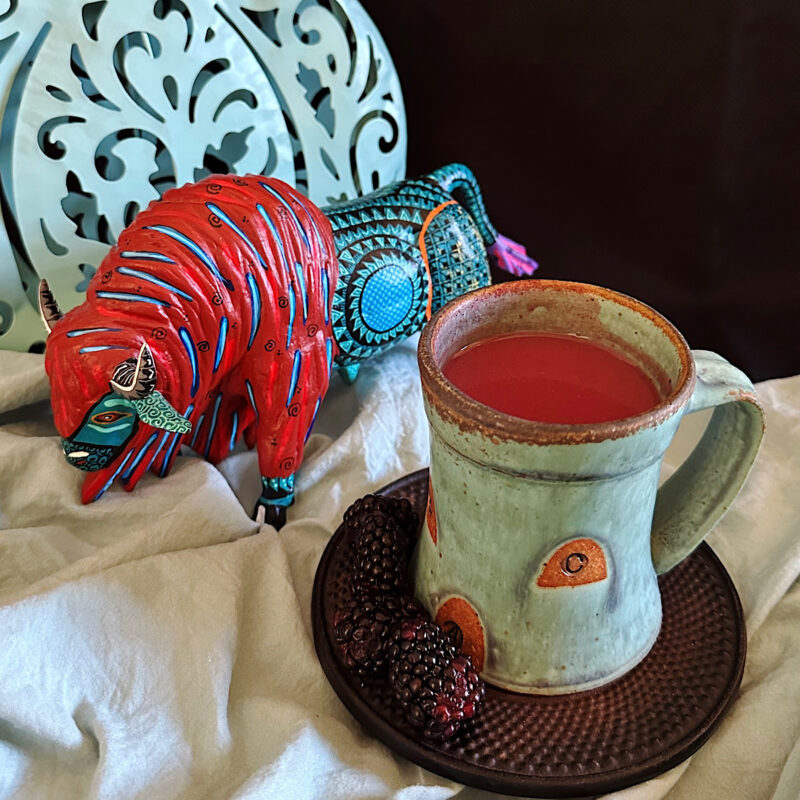
I like my cookies with a hot, robust tea. The raspberry black tea or the pu-erh blend with cocoa nibs, cinnamon chips, and árbol chile (shown below) complement the anise and cinnamon flavors nicely.
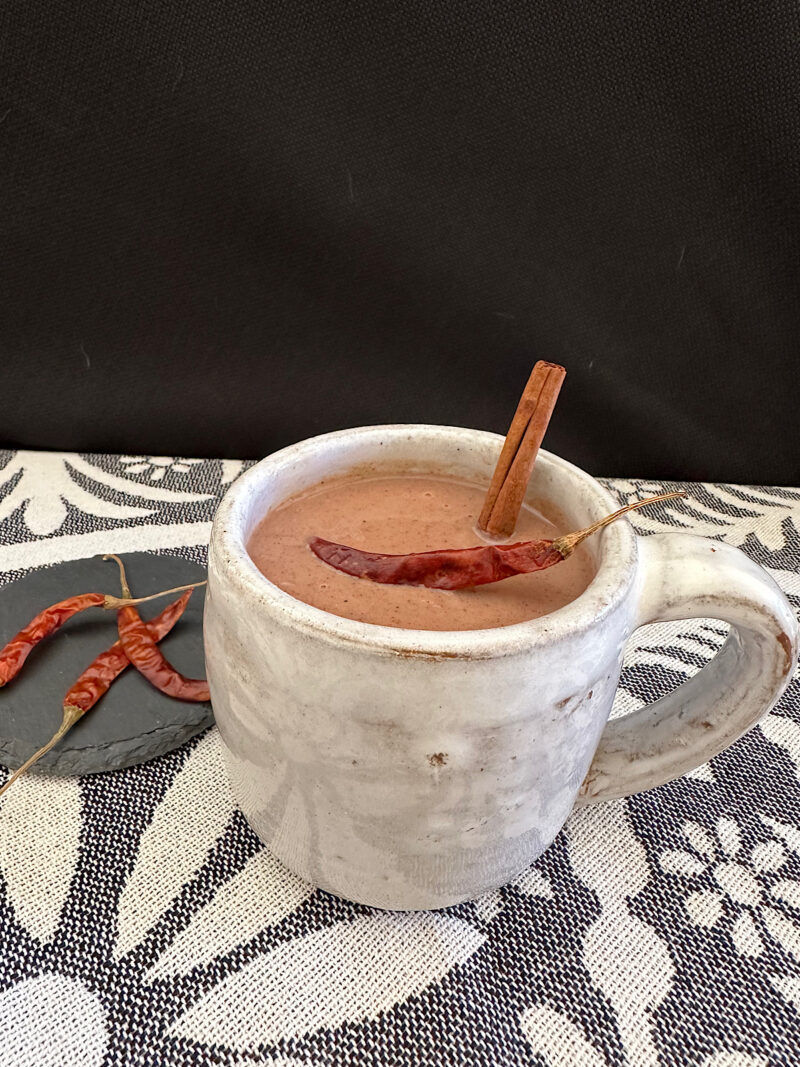
At a Mexican celebration, you’re more likely to be served atole or champurrado (see photos below) alongside your biscochitos. These thick, warming corn-based drinks are traditional holiday pairings.
Coffee works well too, particularly Mexican café de olla, which is brewed with cinnamon and piloncillo, although this coffee along with the cookies might be a little too sweet for some palates.


FAQ
Biscochitos (bee-sko-CHEE-tohs) are traditional Mexican shortbread cookies flavored with anise, orange zest, and cinnamon, then coated in cinnamon sugar. They’re the official state cookie of New Mexico and a staple at Christmas celebrations.
The anise-orange-cinnamon flavor profile is distinctly Mexican, and the texture is more tender and crumbly than typical American sugar cookies. The cinnamon-sugar coating after baking also sets them apart.
Yes. Butter produces a slightly chewier cookie with richer flavor, while shortening gives a softer texture. The recipe includes directions for all three options.
Over-measuring flour is the most common cause. Fluff your flour before measuring or use a kitchen scale.
Stored in an airtight container at room temperature, biscochitos keep well for about a week. They can also be frozen for up to 3 months.
Yes. The dough can be refrigerated for up to 3 days or frozen for up to 3 months. Baked cookies freeze well also. Layer them between parchment paper in an airtight container.
The fleur-de-lis is traditional in New Mexico, reflecting Spanish colonial heritage. Stars are popular for Christmas. Many families have their own signature shapes.
New Mexican versions often include wine or brandy, which adds flavor complexity and helps tenderize the dough. You can substitute vanilla extract if you prefer
They’re closely related but not identical. In some Mexican regions, polvorones refers to the same anise-spiced shortbread cookie. In others, polvorones are crumblier cookies made with ground nuts. Pan de polvo is another variation. The names and recipes blur depending on the region and family tradition.
A cross between a sugar cookie and a Mexican wedding cookie, with a distinctive anise-orange-cinnamon flavor and a crunchy cinnamon-sugar coating. The anise gives them an almost licorice-like warmth that sets them apart from plain shortbread.
No. They’re made with flour, sugar, and butter or lard, so they’re not compliant with slow carb, low carb, or keto diets. For a lower-carb Mexican cookie alternative, try these low carb Mexican spice chocolate cookies.
Mexican Shortbread Cookies: Biscochitos

Equipment
- bowls
- Stand mixer or hand blender
- microplane for orange zesting
Ingredients
- 3 cups all-purpose flour
- 1 ½ teaspoon cinnamon
- 1 ½ teaspoon baking powder
- ½ teaspoon baking soda
- ½ teaspoon kosher salt
- 1 ½ teaspoon ground anise seed can sub in ground star anise
- 2 teaspoons orange zest zest from 1 large orange
- 1 ¼ cups butter can substitute lard or shortening
- ¾ cups sugar
- 1 large egg
- 1 tablespoon brandy can substitute vanilla
- 2 teaspoons anise extract can substitute more anise seed to the dry ingredients
For Sugar-Cinnamon Dusting Powder
- ½ cup sugar
- 2 teaspoons cinnamon
Instructions
- Preheat oven to 350℉In a large bowl, whisk together the first 7 ingredients (all the dry ingredients minus the sugar). Set aside.3 cups all-purpose flour, 1 1/2 teaspoon cinnamon, 1 1/2 teaspoon baking powder, 1/2 teaspoon baking soda, 1/2 teaspoon kosher salt, 1 1/2 teaspoon ground anise seed, 2 teaspoons orange zest
- In a stand mixer, add the lard (or butter) and sugar and mix until light and fluffy (about 3 minutes). Add the egg, the brandy and the anise extract and mix until combined.Slowly add the flour mixture to the bowl of the stand mixer while mixing over low speed. Mix until just combined.Gather the dough into a ball and cover with plastic wrap. Refrigerate for at least 30 minutes.1 1/4 cups butter, 3/4 cups sugar, 1 large egg, 1 tablespoon brandy, 2 teaspoons anise extract
- Lightly flour the surface where you will be rolling out the dough, as well as dusting the rolling pin with flour. Cover a cookie sheet with parchment paper.Separate the dough into 3 roughly even balls and roll each one out individually to about 1/4-inch thick. Use your favorite cookie cutter to cut out cookies, and gather unused dough pieces into ball and roll out again. Continue until the cookie sheet is full and then bake for 10 minutes (at your previously pre-heated oven of 350℉).Do not overcook. Remove the cookies from oven when edges are just starting to turn golden. For my oven that was 10 minutes.While cookies are baking, whisk together 1/2 cup sugar with 2 teaspoons cinnamon in a fairly large bowl (depending on how big your cut cookies are).
- Remove cookies from oven and sprinkle with the sugar-cinnamon mixture. Cool for 10 minutes and then place the cookies one-by-one in the bowl of sugar-cinnamon mixture and spoon the mix over the cookie. Shake it off a little and place on a plate or wire rack.Repeat this process for all of the cooled cookies.Roll out and cut the dough for the second batch of cookies, bake them 10 minutes and repeat the sugar-cinnamon coating process. Same thing for the 3rd batch.Note: If you have more than one cookie sheet you can prepare the 2nd and 3rd batches of cookies for baking while the 1st batch is cooking.1/2 cup sugar, 2 teaspoons cinnamon