
Quick Summary: Fall-apart tender beef simmered in a rich red sauce made from dried Mexican chiles. Colorado means “red” in Spanish, referring to the sauce color, not the state. This version uses a chile spice blend for easier preparation while keeping authentic flavor. No tomatoes, no beans, just beef, chiles, and aromatics. Includes guidance on dried chiles vs spice blends. Prep: 25 min | Cook: 2.5 hours | Serves: 4
Jump to: Recipe | What is Chile Colorado? | Using spice blends as alternative | Best Chile Peppers to Use | How to Make | FAQ
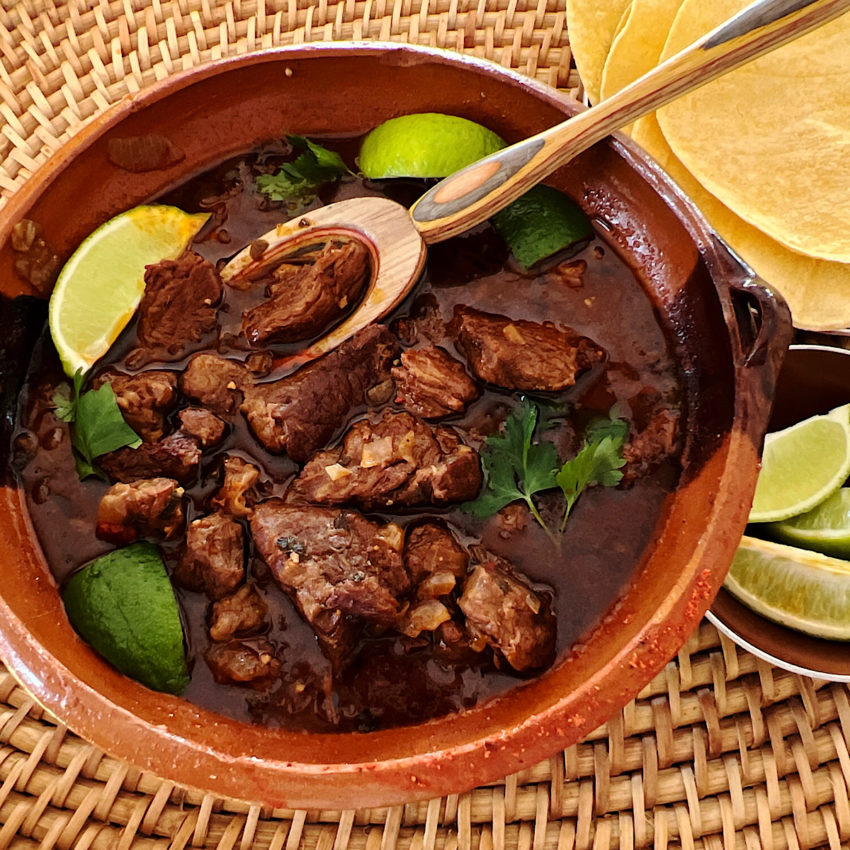
Chile Colorado is one of those dishes that sounds complex but is actually straightforward once you understand that it is basically just tender chunks of beef slow-simmered in a sauce made from dried red chiles. There are no tomatoes or beans, but rather just meat, chiles, onion, garlic, and aromatics. The name means “red chile” in Spanish (colorado = red), referring to the deep reddish-brown color the dried peppers give the sauce.
This is comfort food in northern Mexico and the American Southwest. The beef becomes fall-apart tender during the long simmer, and the sauce develops layers of earthy, slightly fruity, mildly spicy flavor. I use a one of the spice blends I developed for the St. Paul Farmers’ market rather than reconstituting whole dried chiles, which saves significant time without sacrificing the essential character of the dish.
This post may contain affiliate links, and you can read our disclosure information here–
What is Chile Colorado?
Chile Colorado is a Mexican stew of beef (or sometimes pork) braised in a red chile sauce. The sauce gets its color and flavor from dried chiles, typically a blend of anchos (smoky, chocolatey), guajillos (bright, fruity), and sometimes pasillas (earthy, mild). It’s distinct from American chili, which usually includes tomatoes and beans.
The dish has nothing to do with the state of Colorado. Both get their name from the Spanish word for “red.” Early Spanish explorers named the territory for its red sandstone formations. The dish is named for its red chile sauce.
Traditional chile colorado is served with warm tortillas for scooping the meat and sauce. Rice and beans are common accompaniments. The sauce should be thick enough to coat the meat, not soupy.
Dried Chiles vs Powdered Spice Blend
The most authentic method of making Chile Colorado involves sourcing several varieties of dried chiles, toasting them, removing stems and seeds, rehydrating in hot water, and blending into a sauce. It produces excellent results but requires time and access to specialty ingredients.
A quality chile spice blend offers a practical alternative. Look for blends that list ancho, guajillo, and other Mexican chiles as primary ingredients, not generic “chili powder” which often contains cumin, garlic, and other seasonings already mixed in.
The recipe below uses a spice blend for convenience. If you prefer the traditional dried chile method, toast the chiles in a dry skillet until fragrant, remove stems and seeds, soak in hot water for 20-30 minutes, then blend with some of the soaking liquid until smooth.
The recipe below uses annatto powder, which is a bright red powder made from ground annatto pods. Annatto, or achiote in Spanish, is a seed that is native to the Yucatan region of Mexico and parts of Brazil. It helps to give this dish its unique red color and adds a little fruity twist to the dish.
Annatto powder can be hard to find in stores, and the best bet is likely a Mexican specialty grocery store or Amazon.
If making this stew using authentic methods is what you prefer, here’s a really nice pictorial step-by-step showing how to use re-constituted dried chiles rather than a spice blend.
Can You Make it in a Crockpot?
There are a variety of recipes for this dish that involve making it in a crock pot, or using canned enchilada sauce, or making it with the more labor-intensive dried and reconstituted chiles.
The recipes that call for making this meal in the crockpot often call for an additional step to boil down and thicken the sauce separately.
I don’t recommend making this in a crockpot because it doesn’t allow the signature sauce to evaporate and thicken properly. And using a canned enchilada sauce for Chile Colorado, while quick, provides a flavor profile that is just wrong for this dish.
Best Chile Peppers for Chile Colorado
Best Chile Peppers for Chile Colorado
- Ancho: Dried poblano pepper. Smoky, slightly sweet, with chocolate and raisin notes. The backbone of most chile colorado sauces.
- Guajillo: Bright red, fruity, tangy. Adds color and a sharper chile flavor.
- Pasilla: Also called chile negro. Earthy, mild, with berry undertones. Adds complexity.
- Chile de árbol: Small, hot, used sparingly for heat. Optional.
A classic blend might be 3 parts ancho, 2 parts guajillo, 1 part pasilla. Adjust based on your heat preference and what’s available.
**Tip: This is a perfect recipe to freeze. You can easily make a double batch and quickly have a warm, robust meal ready on a chilly day. This should freeze well for up to 6 months.
Key Ingredients
This recipe for Chile Colorado simmers the stew meat and sauce on low to gradually bring out the robust flavors, but it uses a spice blend rather than dried chile peppers.
Toasted cumin, mexican oregano and carmelized onions are the ingredients that add the robust flavors to this simple stew.
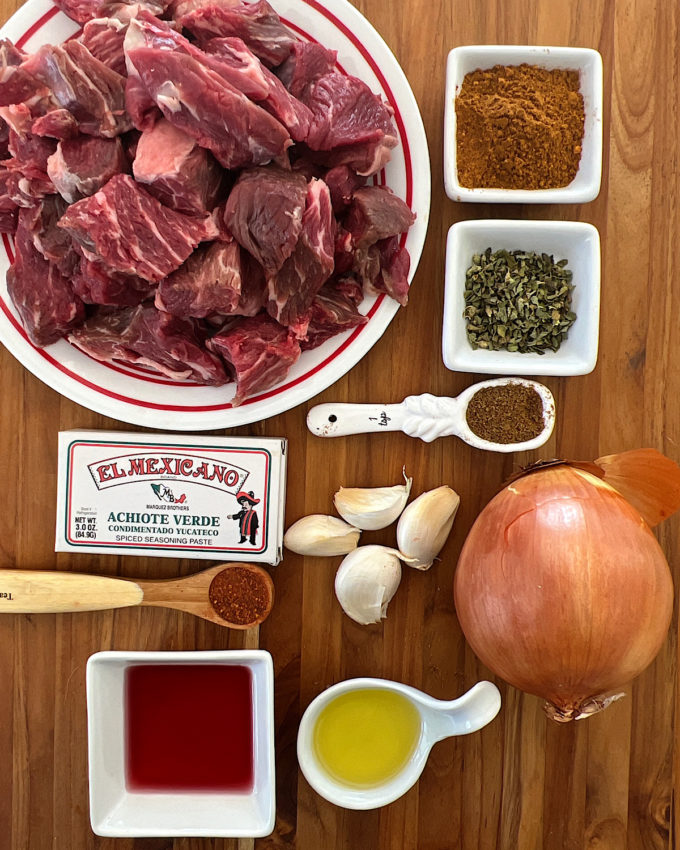
When it comes to the amount of time spent on this dish as opposed to its taste, I’ve found most cooks want a compromise. They seek the hearty flavors of this stew without having to spend too long sourcing and preparing the ingredients.
How to Make Chile Colorado with Spice Blend
The detailed ingredients and instructions are in the recipe card below. Here is a shortened version:
Heat oil in a Dutch oven over medium-high heat. Sear the beef chunks in batches until browned on all sides. Don’t crowd the pan or the meat will steam instead of sear. Once browned, add water to cover, reduce heat to low, cover, and simmer for about an hour until the meat is starting to become tender.
While the beef simmers, prepare the sauce base. Sauté minced onion in oil over medium heat until caramelized and golden, about 10 minutes. Add garlic and cook 30 seconds until fragrant. Stir in your chile spice blend, oregano, toasted cumin, achiote (for color and subtle fruity flavor), vinegar, and salt. Cook for a minute to bloom the spices.
Add the onion-spice mixture to the pot with the beef. Cover and continue simmering for another 1 to 1.5 hours until the meat is fall-apart tender and the sauce has thickened. Taste and adjust salt. The sauce should coat the meat richly.
Serving Suggestions
Chile Colorado is usually served with fresh tortillas and/or rice. If you are practicing a slow carb lifestyle, you will need to exclude both of these, but the stew alone is quite satisfying. There are some low carb tortillas on the market now. Here’s a short list I compiled as well as a homemade recipe.
If you are not concerned about carbs and want a more authentic Chile Colorado experience, serve it with warm, fresh tortillas. (Oh, and don’t forget a beer – Mexican, of course!)
Is it “chile” or “chili”?
In researching chile peppers, I noticed a lot of confusion about the correct use and spelling of the word to distinguish the pepper. As a general rule of thumb chile with an “e” at the end is the correct Spanish spelling. It refers to a capsicum pepper, specifically a spicy pepper grown throughout New Mexico.
Chili spelled with an “i” at the end is the Americanized version, and usually refers to the dish or the stew rather than the fresh or dried peppers.
Dishes that feature New Mexico chiles, normally use the “chile” spelling. You’ll often see this spelling as in green chile sauce, green chile stew, red chile sauce, and chile colorado.
You’ll often see a powdered spice mix in the grocery store labeled “Chili Powder.” It seems many Americans make their stew with this powdered form of peppers, but it is not recommended.
Similar Recipes You’ll Love
Here are some other recipes we love, and we think you will too!
FAQ
Chuck roast or beef stew meat. You want cuts with some fat and connective tissue that become tender during long cooking. Lean cuts will turn dry and tough.
Mildly to moderately spicy, depending on your chile blend. Anchos and guajillos are mild to medium. Add chile de árbol for more heat.
Yes, but it may not be as complex and robust as the stovetop version. Sear the meat and sauté the aromatics first on the stovetop. Then transfer everything to the slow cooker on low for 6-8 hours. The sauce may need reducing on the stovetop at the end if it’s too thin.
Same dish, different names. “Carne con chile colorado” literally means “meat with red chile sauce.”
Yes. It freezes beautifully for up to 6 months. The flavors actually improve after freezing and reheating.
A seed native to Mexico and Central America, ground into bright red-orange powder. It adds color and a subtle earthy, slightly peppery flavor. Find it at Mexican grocery stores or online. Optional but traditional.
Chile Colorado Using a Spice Blend
Equipment
Ingredients
- 4 tbsp olive oil refined, divided
- 2 lbs beef stew meat I have also used chuck roast cut into bite-sized chunks
- 4 cups water
- 1 large onion minced
- 4 cloves garlic peeled and minced
- 2 tbsp smoked chile blend
- 1 tsp dried oregano
- 1 tsp ground cumin toasted
- 1 tsp achiote you can use ground achiote seeds or a paste (the paste will have other seasonings in it however)
- 2 tbsp red wine vinegar
- 1 tsp salt taste as you go and add more if needed
Instructions
- Heat oil over med-high heat in dutch oven or large iron skillet. Sear stew meat in oil until browned and then add water. Cover and simmer over low heat for about an hour.4 tbsp olive oil, 2 lbs beef stew meat, 4 cups water
- While stew meat is simmering, saute the onion in the oil in a large skillet over medium heat until it is caramelized. This will take 5-10 minutes and the onion will turn translucent and golden, but not dark brown. When onion is caramelized, add the garlic to the skillet and saute for 30 seconds to 1 minute, being careful not to burn garlic.1 large onion, 4 cloves garlic
- Next, add smoked chile blend, oregano and ground cumin, achiote, vinegar and salt to caramelized onion-garlic mixture and cook for about 1 minute, stirring while cooking. Set aside.2 tbsp smoked chile blend, 1 tsp dried oregano, 1 tsp ground cumin, 1 tsp achiote, 2 tbsp red wine vinegar, 1 tsp salt
- When stew meat has finished simmering for an hour, add the onion-spice mixture to the stew pot. Cover and simmer 1 to 1 1/2 hours. Taste occasionally and add more salt if needed.
No,you guys got it right.
Red chili is made with beef.
Green chili is made with pork.
Sorry Carlos.
Kenney Mazon Poncho Villa.
Well thanks for weighing in Kennedy! The one thing I do know for sure is that it is good!
So actually traditional red Chile and meat is used with pork. Green Chile as well. But if you are doing a green chili stew, beef would be used. And definitely no onions never use anything but a red Chile pod that was a dried from a big Jim, Sandia or other type of mesilla valley Chile. Never ancho me or anything of the sort. And no vinegar.
Thanks Carlos! I will look back at this and see about any changes. All of my recipes are modifications to fit my best idea of taste and cooing methods of classic recipes. Certainly appreciate advice on making it better.
I made this the othe night. Question: do you snap the stems off and dump out the seeds? How did you remove seeds? Or skins?
i tried removing the seeds with a sieve after the food processor and didn’t have much luck. It tasted great, but was kind of a pain to make.
I think my dried pepper technique needs work. My kitchen was a new shade of orange by the time I finished. 🙂
Beth, My first stab at this was made with using reconstituted dried chiles. I have adapted it now (based on your comments and my own need for easy recipes) to use a smoky spice blend rather that the dried chiles. Much easier, and I don’t think it lost the flavor. The flavor punch will, of course depend on the type of spice blend you use and how fresh it is.
Looking forward to trying this recipe. If it is like the others, it will be delicious. Thank you for sharing them.
So sweet Annie. Thank you.