
Quick Summary: Quick Summary: A complete guide to root vegetables ranked by carb count, from radishes (3.9g per cup) to sweet potatoes (41.4g). Includes storage tips, roasting methods, and a comforting root vegetable ragù recipe with squash, parsnips, and carrots. Prep: 15 min | Cook: 30 min | Serves: 5
Jump to: RECIPE | What are Root Vegetables? | Lowest in Carbs | How to Cook Root Vegetables? | Roasting without oil | Dehydrating | Storing Raw Root Veggies | FAQ
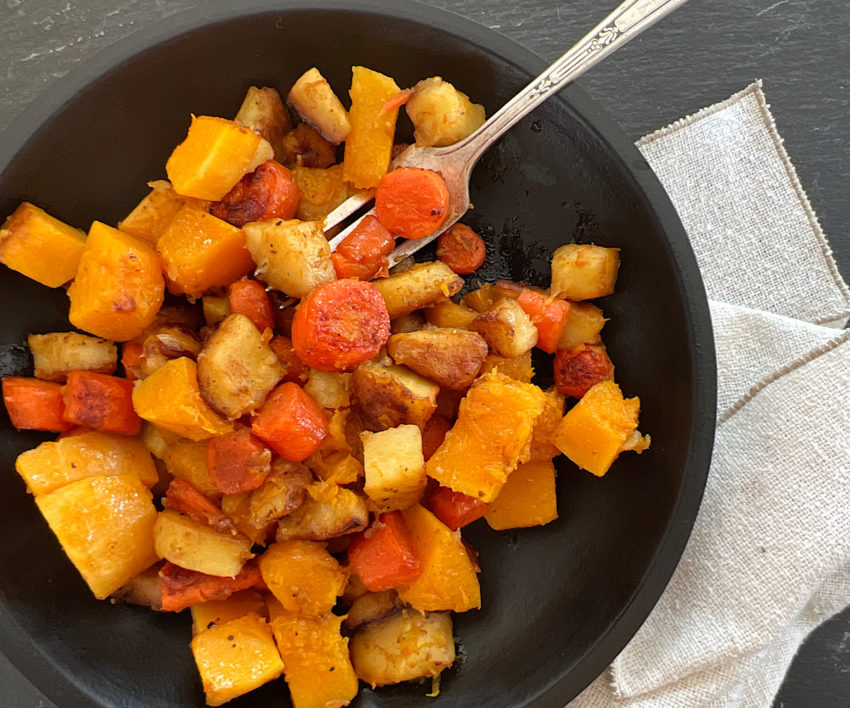
Although I don’t grow root vegetables at HeathGlen farm to sell at the farmers’ markets, they are a staple in our family vegetable plot and in the Italian kitchen garden.
During my years as a slow carb diet coach, clients always asked which root vegetables they could eat without going over their daily carb count. The answer: plenty of them, if you choose wisely.
This guide ranks common root vegetables from lowest to highest carbs. I also include a recipe for one of the easiest ways to get the best flavor these hearty vegetables., using their natural sweetness without added sugar.
This post may contain affiliate links, and you can read our disclosure information here–
What are Root Vegetables Anyway?
Well, to put it simply they are the vegetables that develop under the soil instead of above. They may have edible greens that grow above ground, but typically the vegetable is thought of as the “tuber” part of the plant instead of the greens.
Generally root vegetables like potatoes, carrots and sweet potatoes are too high in carbs to include in a low-carb or keto diet, but they are still quite healthy and some of the carbs are mitigated by the amount of fiber in these vegetables.
Root vegetables are full of powerful antioxidants, fiber, and beneficial vitamins, so you really don’t want to ignore them…..just don’t make a whole meal out of them.
Lower carb options would include root vegetables like:
- Onions,
- Cabbage,
- Radish,
- Jicama, and
- Rutabaga
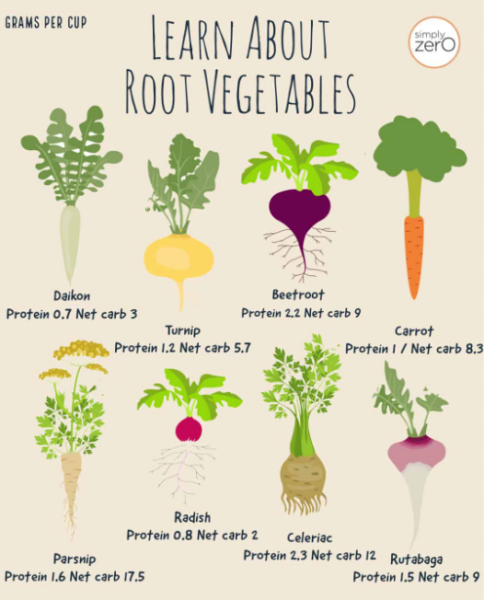
Here is a list summarizing the carb level from lowest to highest (includes the fiber count):
Which Root Vegetables Are Lowest in Carbs?
Analyses below are for 1 cup (cubed or sliced). Net carbs are typically calculated by subtracting the fiber from the total carb amount.
- Radishes: 3.9 grams carbs; 1.9 grams fiber
- Daikon radish: 4.8 grams carbs; 1.9 grams fiber
- Fennel: 6.4 grams carbs; 3.6 grams fiber
- Kohlrabi: 8 grams carbs; 5 grams fiber
- Turnips: 8 grams carbs, 3.2 grams fiber
- Jicama: 11 grams carbs; 6 grams fiber
- Onions: 11 grams carbs; 2 grams fiber
- Carrots: 11.7 grams carbs; 3.4 grams fiber
- Rutabaga: 12 grams carbs; 3.2 grams fiber
- Beets: 13 grams carbs; 3.8 grams fiber
- Leeks: 13 grams carbs; 1.6 grams fiber
- Celeriac: 14.4 grams carbs; 2.8 grams fiber
- Parsnips: 24 grams carbs; 6.5 grams fiber
- Potatoes: 11.78 grams carbs; 1.8 grams fiber
- Sweet potatoes: 41.4 grams carbs; 6.6 grams fiber
How to Cook Root Vegetables?
Roasting is an extremely popular way to cook these firm vegetables, as it caramelizes them and brings out the sweetness that you don’t get when eaten raw.
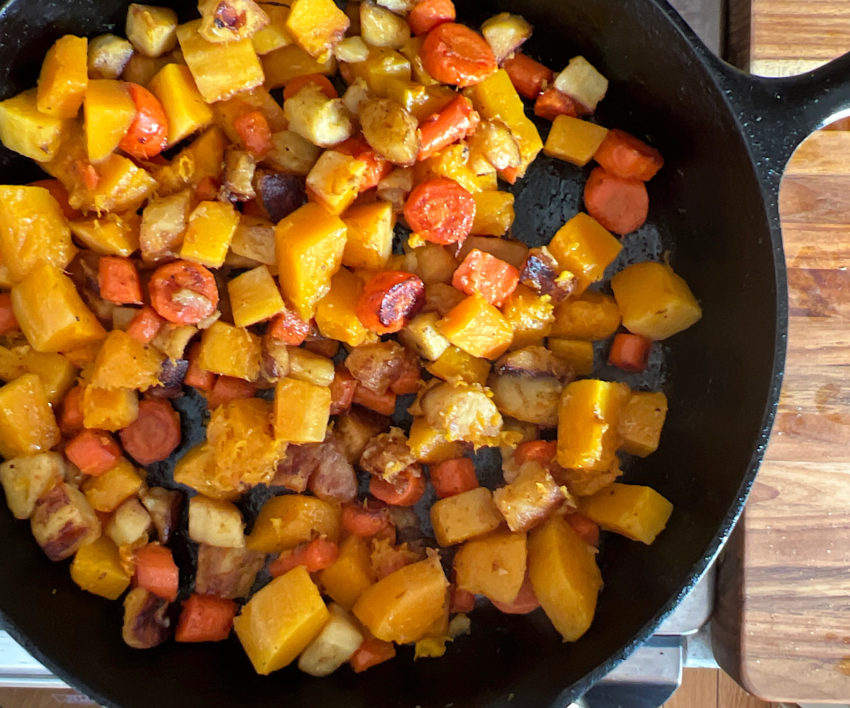
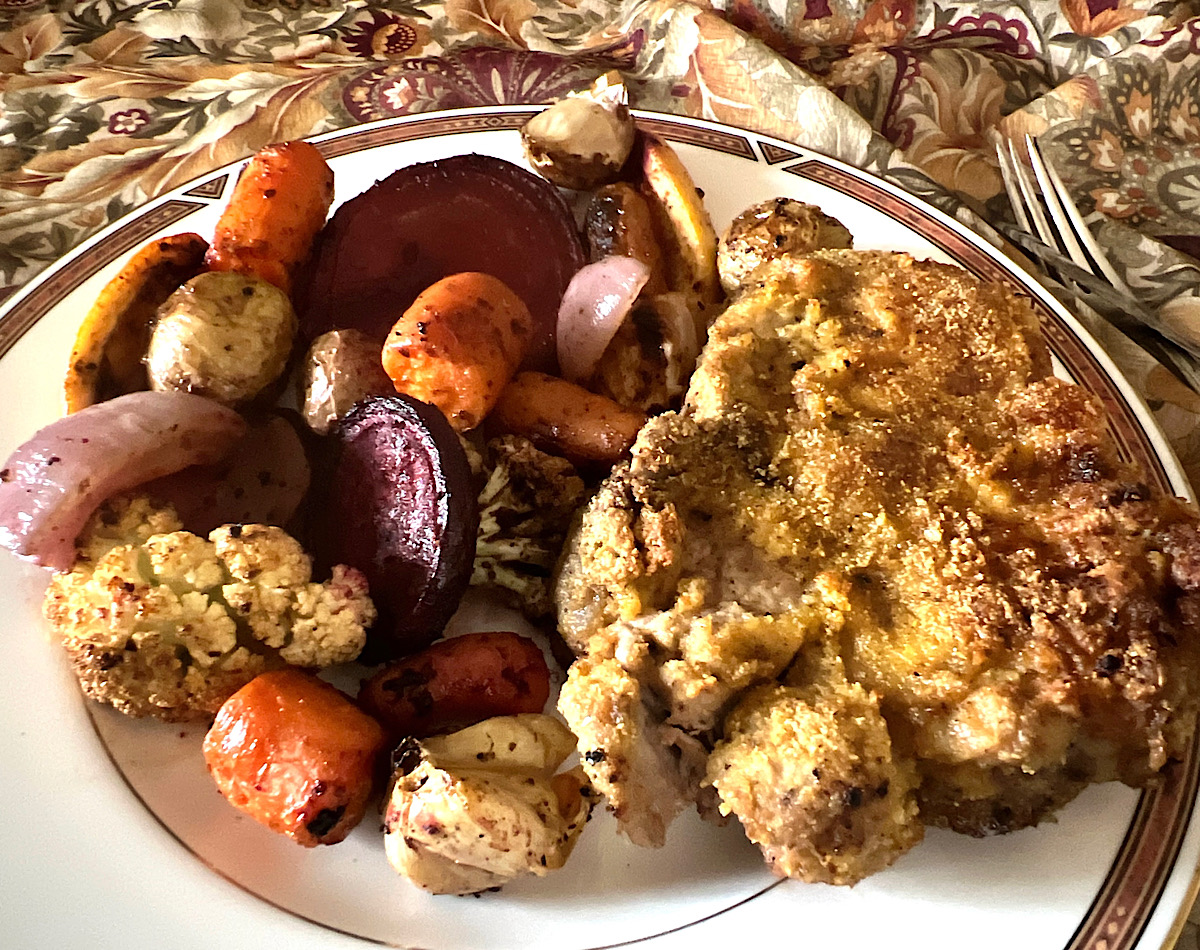
A simple sheet pan filled with root vegetables and placed in a 425 degree F oven for 30-40 minutes is a very easy and increasingly popular way to roast root vegetables. Just sprinkle them with your favorite spice and drizzle with olive oil before roasting.
The spices you choose will allow you to change up the flavor profile so as not to get bored.
Add some chicken, pork chops or fish to the cookie sheet and you have what is referred to as a “sheet pan dinner”, or as the Brits would say….”a traybake”.
How to Roast Veggies without Oil
A drizzle of oil on the ingredients prior to roasting can certainly help to prevent the ingredients from drying out in the hot oven. Olive oil is my oil of choice, but if you prefer no oil at all, you can steam the veggies first and then finish in the oven to keep them tender.
Steaming works well, but it does add an extra step, so if it keeps you from cooking nutritious root veggies, just add a drizzle of oil and call it good.
How to Make Dehydrated Vegetable Chips
Root vegetables are the perfect foil for making a crunchy, crispy low carb snack. They are firm and not filled with water, allowing them to turn crispy in the dehydrator.
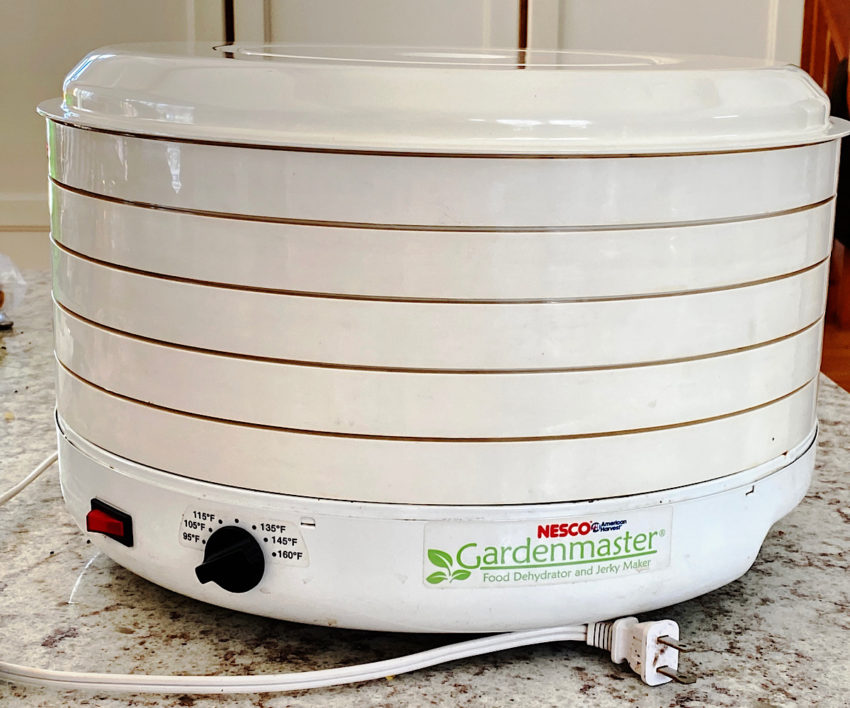
Just use a dehydrator that has temperature controls so that you can adjust based on the vegetable. We grow chile peppers and tomatoes and dry them for our online spices all Fall, and so I’ve gone through a lot of dehydrators.
If you plan to do much dehydrating of produce, this Gardenmaster dehydrator has been the most reliable workhorse for me.
The best thing about making vegetable chips is the flexibility you have with the seasonings. You can give them a Mexican flair, a Moroccan taste, a Korean twist, etc. Here are some of my favorite ways to make vegetables in the dehydrator.
How to Store Raw Root Vegetables
Most root veggies can be stored one of two ways: wrapped and in the crisper drawer of the refrigerator, or in your pantry in a cool, dark, dry place. I store radishes, carrots, jicama and parsnips in the crisper drawer and then place onions and potatoes in a cool (55 to 60 degrees F) dark place that is dry.
Most of the root vegetables you get at the store have been cured and should keep for a month or more.
If you plan to keep your vegetables for a long time, this post from The Spruce gives you detailed instruction for each of the different root vegetables.
How to Make Root Vegetable Ragù
The full instructions and ingredient amounts are in the recipe card below. In short:
- Roast cubed butternut squash in the oven at 350 F while sautéing carrots and parsnips on the stovetop with butter and broth.
- Combine everything in the skillet, toss gently, and serve as a comforting side dish alongside pork, fish, or any protein.
Popular Recipes with Root Vegetables
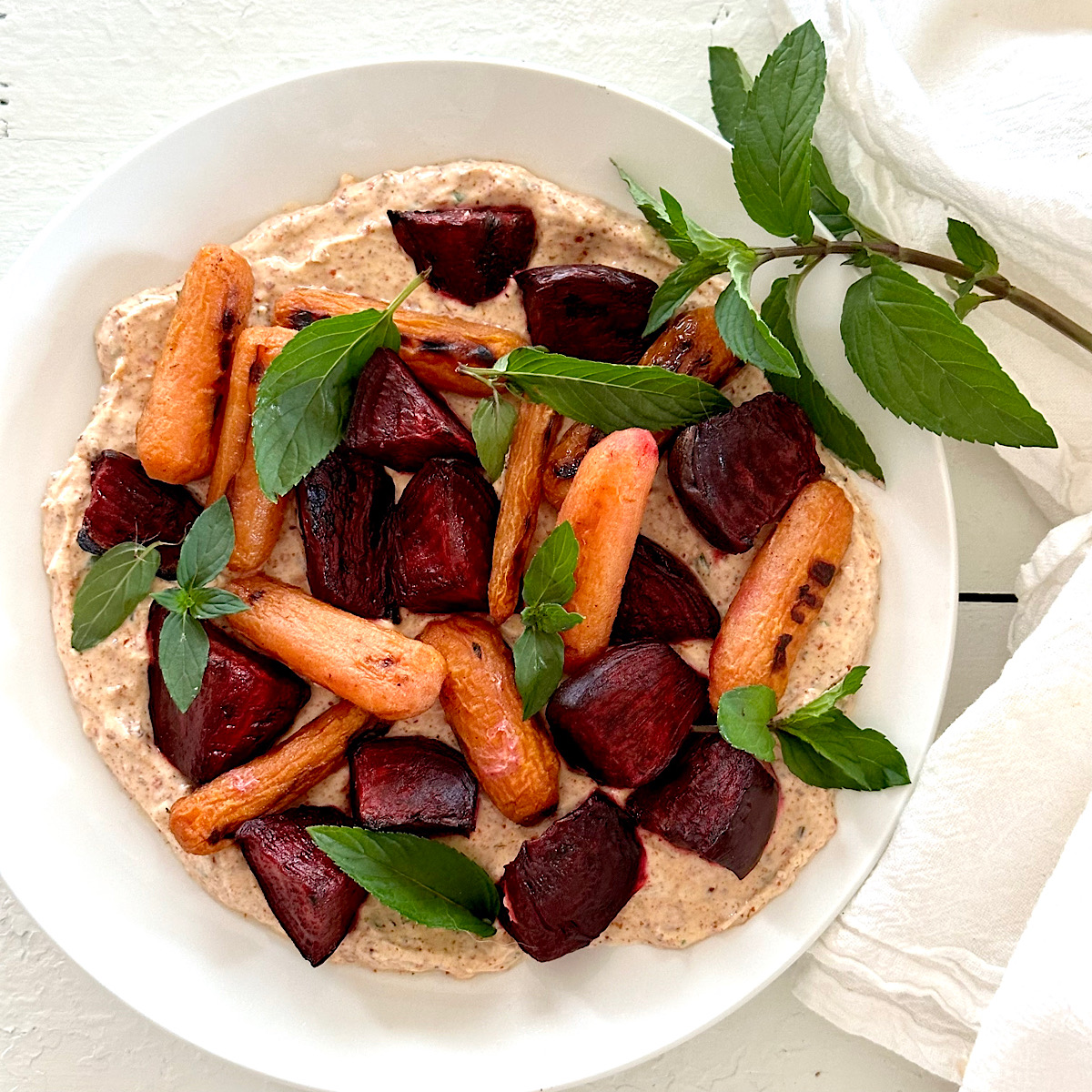
FAQ
Radishes, daikon, fennel, kohlrabi, and turnips are all excellent choices with net carbs under 6 grams per cup. Jicama and carrots work in moderation.
Carrots have about 11.7 grams of carbs per cup, but 3.4 grams of that is fiber. In moderate portions as part of a meal with protein, they fit most slow carb plans.
Roasting at 425°F caramelizes the natural sugars and brings out deep flavor. Toss with olive oil and your favorite spices, spread in a single layer, and roast for 30-40 minutes.
Traditional white potatoes are not slow carb compliant due to their high glycemic index. Sweet potatoes are healthier but still high in carbs at 41.4 grams per cup.
Most cured root vegetables keep for a month or more. Store radishes, carrots, and parsnips in the refrigerator crisper drawer. Keep onions and potatoes in a cool, dark, dry place around 55-60°F.
The recipe uses butternut squash, which is moderate in carbs. For strict slow carb compliance, reduce the squash portion or substitute with lower-carb turnips or rutabaga.
Get seasonal recipes and seasonal gardening tips in your inbox every Sunday when you subscribe to my weekly newsletter. It’s usually 3 recipes and 1 gardening guide. Short, sweet, and helpful.
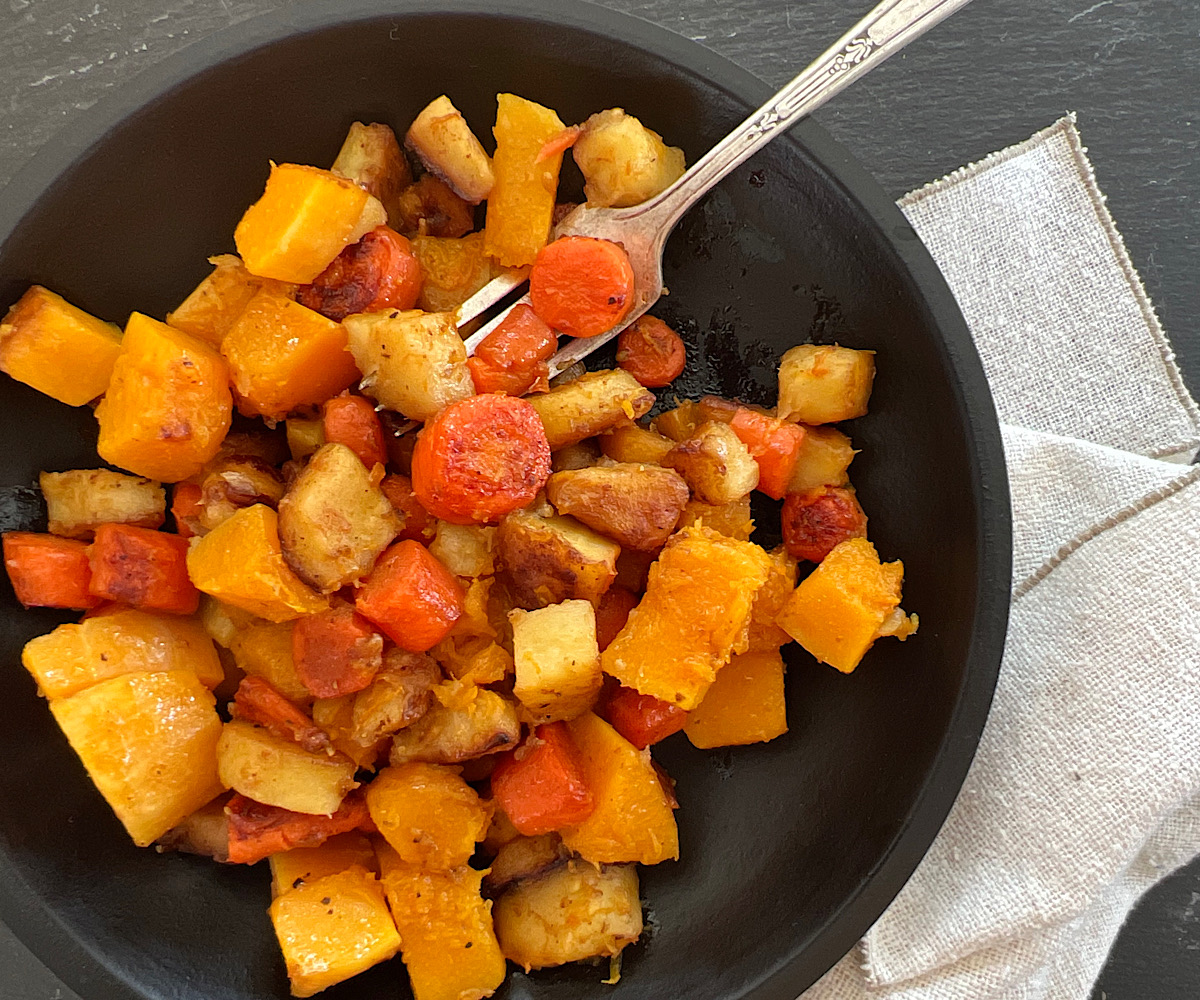
Vegetable Ragù: Squash, Parsnips & Carrots
Equipment
- oven safe pot
Ingredients
- 1 tablespoon olive oil
- 3 cups butternut squash cubed
- 1 teaspoon salt
- 1 ¼ cups chicken broth can substitute vegetable broth
- 1 tablespoon butter
- 2 cups carrots peeled & chopped into bite-size pieces
- 2 cups parsnips peeled & chopped into bite-size pieces
- 1 teaspoon sugar optional
Instructions
- Preheat oven to 350° F. In an ovenproof pot, skillet or dutch oven, heat 1 tablespoon olive oil over medium heat. Add cubed squash, salt and 1/2 cup of the broth. Gently mix together and place the pot in the oven to bake for 15 minutes1 tablespoon olive oil, 3 cups butternut squash, 1 teaspoon salt, 1 1/4 cups chicken broth
- While the squash is baking, heat 1 tablespoon butter in a large skillet on the stovetop over medium heat. Add the carrots, parsnips, and sugar (and salt to taste). Cook until the vegetables are lightly browned (about 3 min).1 tablespoon butter, 2 cups carrots, 2 cups parsnips, 1 teaspoon sugar
- Add the remaining 3/4 cup broth, cover and simmer until tender (about 10 minutes).1 1/4 cups chicken broth
- When squash is fork-tender, remove it from the oven and add to the skillet of carrots and parsnips. Toss all ingredients together gently. Taste and adjust seasonings to taste.
- Serve as a side dish to pork, fish or other protein for a low carb dinner