
Quick Summary: A practical grocery list for the slow carb diet, organized by category with protein gram counts for common foods. Use this when you’re setting up your pantry for the first time or planning a week of meals. Print this out and use it as a reference for meal planning and quick shopping decisions.
Jump to: High Protein Foods | Vegetables | Sauces & Condiments | Canned Goods | Dry Goods | FAQ
Grocery shopping on a slow-carb diet gets easier once you know what to look for. This list covers compliant proteins, vegetables, pantry staples, sauces, and packaged foods, with protein gram counts to help you hit the 20-30 grams per meal target.
Most of these items also work for ketogenic and general low-carb eating, though I’ve noted where slow-carb guidelines differ from strict keto.
Print this list or save it to your phone for quick reference at the store.
If you are new to the slow carb diet, check out this list of allowed foods, domino foods and forbidden foods.
High-Protein Foods
First up is a list of proteins and the gram count for each one. Protein is the keystone of the 4-hour body diet (aka Slow Carb Diet) and the guidelines call for 20-30 grams of protein for each meal. This list will make it a little easier for you to make quick decisions on how to satisfy that guideline:
Beef
- Hamburger patty, 4 oz: 28g protein
- Steak, 6 oz: 42g protein
- Most cuts: 7g protein per ounce
Chicken
- Chicken breast, 3.5 oz: 30g protein
- Thigh: 10g protein
- Drumstick: 11g protein
- Wing: 6g protein
Fish
- Most fillets, 3.5 oz cooked: 22g protein (about 6g per ounce)
- Canned tuna, 6 oz: 40g protein
Pork
- Pork chop: 22g protein
- Tenderloin, 4 oz: 29g protein
- Ham, 3 oz: 19g protein
- Bacon, 1 slice: 3g protein
- Ground pork, 1 oz raw: 5 grams; 3 oz cooked: 22 grams
Eggs & Legumes
- Egg, large: 6g protein
- Cottage cheese, ½ cup: 15g protein
- Most beans, ½ cup cooked: 7-10g protein
- Tofu, ½ cup: 20g protein
Nuts & Seeds
- Almonds, ¼ cup: 8g protein
- Peanut butter, 2 Tbsp: 8g protein
- Pumpkin seeds, ¼ cup: 8g protein
- Cashews, ¼ cup: 5 grams
- Pecans, ¼ cup: 2.5 grams
- Sunflower seeds, ¼ cup: 6 grams
- Flax seeds, ¼ cup: 8 grams
Vegetables (Refrigerator & Freezer)
Allowed: Spinach, leafy greens, peppers, zucchini, summer squash, asparagus, broccoli, cauliflower, cucumber, green beans, spaghetti squash, cabbage, celery, mushrooms
Limited or Not Allowed:
- Root vegetables (potatoes, beets, turnips, parsnips): not allowed
- Winter squash: not allowed
- Corn: not allowed
- Carrots: use sparingly, higher in sugar
- Most fruit: not allowed, except ½ cup berries per day and lemon/lime juice
For more details on allowed vegetables, check out this list of vegetables ranked from lowest carbs to highest carbs
Sauces & Condiments
Hidden sugars are everywhere in packaged sauces. Read labels carefully.
Generally Safe:
- Mustard (except honey mustard)
- Vinegars (watch for added sugar in balsamic)
- Olive oil and coconut oil
- Hot sauces (check labels)
- Salsas (check labels)
- Soy sauce or tamari
- Mayonnaise (look for high monounsaturated fat)
- Pesto
- Horseradish
- Capers and olives
- Herbs and spices
- Lemon and lime juice
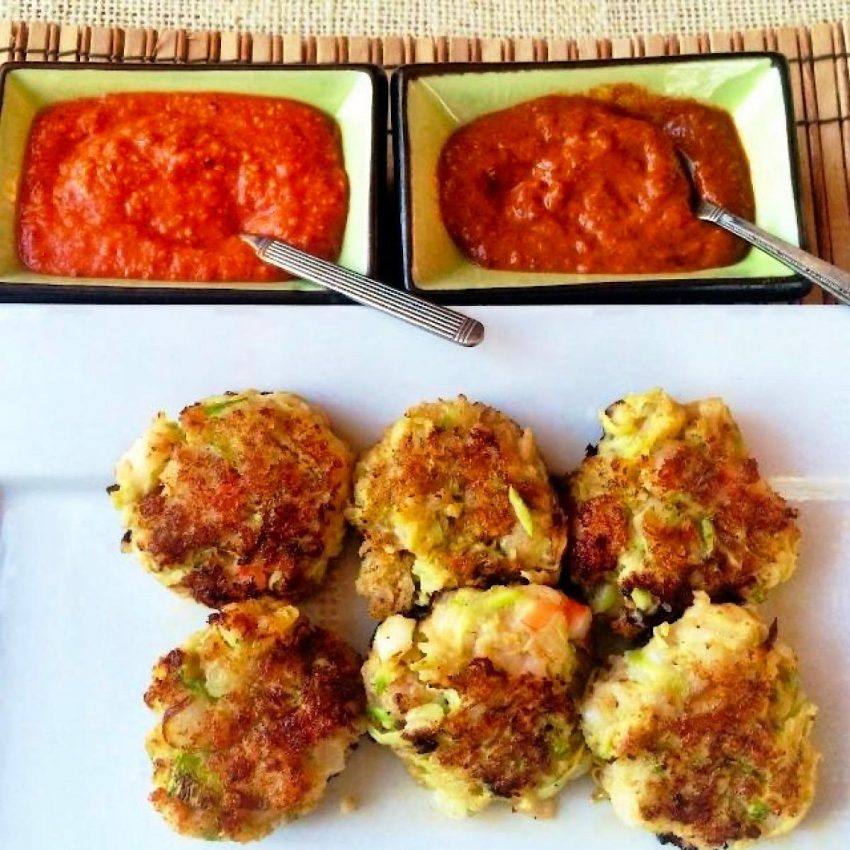
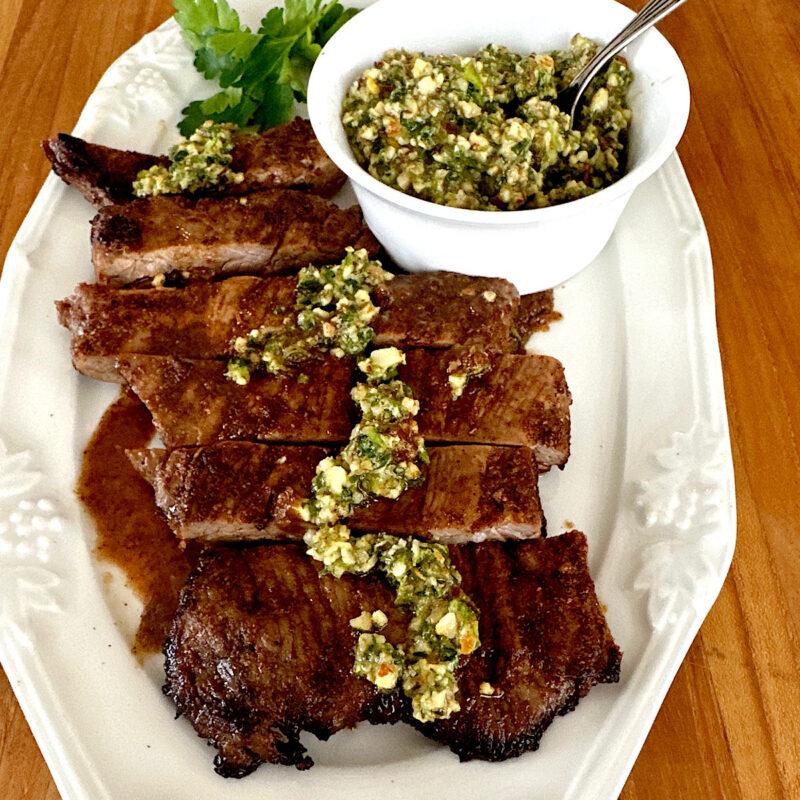
Here are a few homemeade no-sugar sauces that can definitely liven up your meals, whether it be the main protein or a vegetable side dish.
Canned & Jarred Goods
- Canned seafood (tuna, salmon, sardines, crab, smoked oysters)
- Canned tomatoes, tomato paste, tomato sauce (no sugar added)
- Salsa and green chiles
- Roasted red peppers (rinse if sugar is listed)
- Sun-dried tomatoes in oil
- Chicken and vegetable stock
- Artichoke hearts
- Dill pickles and Italian pickled vegetables
- Anchovies
- Olives
- Nut butters (no sugar added)
- Coconut milk (unsweetened)
- Dried and canned beans (rinse canned beans)
Packaged & Dry Goods
- Nuts: almonds, walnuts, pecans, hazelnuts, peanuts (small amounts, easy to overeat)
- Seeds: sunflower, pumpkin, flax
- Coffee and tea
- Sugar-free gelatin
- Chicharrones (pork rinds)
- Protein powders (look for whey isolate, under 2g sugar, 20g+ protein per scoop, low carb)
Protein Powder Notes
Look for whey isolate with less than 2 grams of sugar, at least 20 grams of protein per scoop, and low total carbs. Beyond that, taste varies widely between brands. A teaspoon of cinnamon helps improve the flavor of most powders.
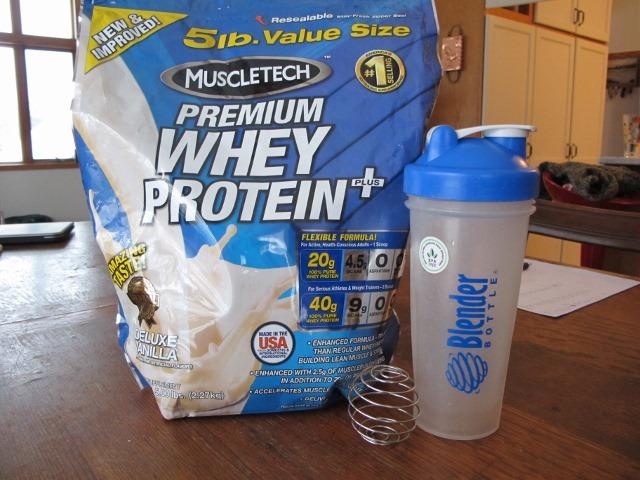
My go-to breakfast for several years was this blueberry protein smoothie. Sometimes I would alternate it with eggs, but since I am a blueberry farmer, I had a freezer full of blueberries that I made good use of.
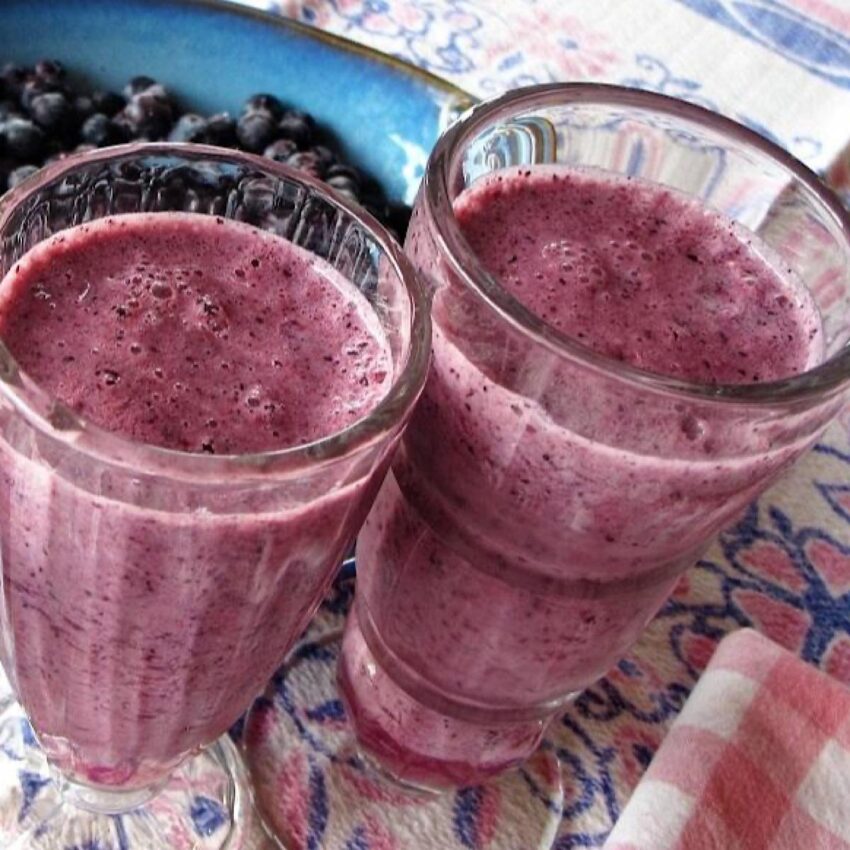
If you are new to the slow carb diet, check out this list of allowed foods, which also includes domino foods and forbidden foods.
FAQ
It’s debated. Tim Ferriss allows it in some contexts. Full-fat cottage cheese is your best option if you include it.
Most fruit is not allowed during fat-loss phases. Half a cup of berries per day is generally acceptable. Lemon and lime juice are fine.
Milk is not allowed (too much sugar). Cottage cheese and small amounts of hard cheese are sometimes permitted. Butter and cream are generally fine.
Beans are encouraged on slow carb because they provide fiber and slow-digesting carbs. They’re not required, but they help with satiety.
Slow carb allows beans and legumes, which keto does not. Slow carb is less restrictive on total carbs but still eliminates sugar, bread, pasta, and most fruit. Slow carb allows a cheat day once a week which keto does not.
Mostly yes, but skip the beans and legumes for strict keto. Everything else overlaps.
The food list covers what’s allowed and what isn’t; basically the rules of the diet. This shopping list assumes you know the rules and focuses on practical grocery decisions: what to buy, how much protein it has, and what to keep in your pantry. Use both, but use them at different moments.
I really wanna do this diet I’m really excited
I’ve tried a lot of low carb diets for a year at a time, including keto. For me, and many that I coached, slow carb is by far the most sustainable which leads to keeping it off long term. I started to let up during Covid, but when I hit the red flag limit of a 4-lb gain, I decided to quickly go back to slow carb. I will say that I have combined it with 16/8 intermittent fasting and walking 2.5 miles a day and that seems to be a winning combination.
Hi Dorothy,
I’m starting the SCD again from 1 June 2020. Currently I’m doing research and ensuring I’m prepared as much as I can be to comply for 30 days.
I usually practice intermittent fasting (16-8 /18-6) so wondering if I can still do this and get fat loss results if I just have 30g protein around 12pm which is normally when I break my fast. Or is it better to have it upon waking? It says in the book it boosts metabolism? Will the metabolism be hindered if i don’t eat?
I’m just 5kg away from my target weight and really want to see the fat go for good!
Thanks
Serena
Hi Serena, In my experience intermittent fasting coupled with a slow carb diet is the hands down best way to lose fat and see a change in body composition. I lost 25 pounds in the first six months on strict slow carb, but couldn’t seem to lose the last 5 pounds. Finally, when I added in 16/8 intermittent fasting the last 5 came off pretty quickly. I have maintained my loss now for six years and love intermittent fasting.
Here is where I think Ferriss was coming from with the eating breakfast within the first hour: Most people are coming from a really high carb way of eating and breakfast is often the highest carb meal of the day. By simply switching your breakfast for a high protein one at the beginning of the diet, you can stave off hunger while significantly lowering calories. Ferriss now does a lot of intermittent fasting himself.
Bottom line on this diet is to avoid sugar, decrease processed foods/carbs, and eat a lot of protein. By doing that you naturally decrease calories, and calories do matter. Ferriss’s bottom line is to experiment on your own body. For my body the magic has been intermittent fasting, decreased carbs and sugar (resulting in decreased calories), and regular exercise of some sort.
At the beginning I practiced the cheat day once a week. After you have been doing this diet for a while, cheat days are still important to bumping up your metabolism (if you have been 100% compliant), but it really doesn’t have to be once a week. Once every other week might be better if you stall out.
Hi there. Thank you for all this wonderful information! I started slow carb a month ago and I am so happy I stumbled onto your site. I am wondering if you could tell me if spaghetti squash is ok?
Thank you
Hi Beth, Spaghetti squash has the least carbs of any of the winter squash and I personally use it quite a bit. There are probably some people that would say it is not technically compliant, but it really is a relative thing. If you use a tracking system like myfitnesspal then you want to keep the total carb level for the day below 100 grams. Spaghetti squash can fit in with a slow carb diet if the rest of the macronutrients are all in line. I think it makes a great bed for ragus, etc. and prefer it over zucchini noodles.
Hello. I am just learning about this 4HB and am very excited, but due to thyroid cancer a few years ago, don’t have a thyroid and rely on synthetic thyroid. How much will this impact the science behind this way of eating? Many thanks for your time.
Hi Lisa, I’m not skilled in answering diet questions that deal with serious medical conditions. Constipation, yes. Synthetic thyroids are out of my baliwick. I would suggest you connect with a doctor that practices functional medicine. They are generally much more knowledgeable about the connections between diet, nutrition and specific health issues.
Best….
What about cashew milk in limited quantities? Also, I saw in an earlier thread that the 30g protein within 30 minutes of waking is no longer considered as important. Can you elaborate on why that is?
It’s not that it is no longer considered important Nick, it’s just a nuanced version of why you should do this and maybe why not. First of all he talks about within an hour of waking in his book with the “30 within 30” just a phrase that is easy to remember. Secondly he has stated often that he tries to keep the diet and principles really simple for people, but if you follow him on his blogs and interviews, etc. he gets much more nuanced about what he means by the rules. He himself experiments frequently with skipping breakfast altogether and fasting, etc.
From everything he has said in the book and since, I am interpreting the breakfast philosophy like this: Most people coming to this way of eating are used to eating a lot of carbs for breakfast (cereal, toast, pastries, bagels). Your “first meal” of the day is quite important as that is when your body is looking for energy after coming out of a fast (sleep). Whether it be within 30 min of waking or 2 hours of waking, your first meal should be high in protein and moderate in fat so that the body will turn to fat stores for its energy rather than burning glucose.
When new people coming to this diet follow the rule of eating protein and fat and excluding carbs for their first meal, the results can be significant if they are coming from a high carb place. Whether that first meal is 30 minutes or an hour or two from waking is dependent on a whole lot of individual variables.
Hello! Thanks for the article. I found a pasta where the only ingredient is red lentils – for some reason this feels like a cheat ????. Is this 4hb compliant? Thank you
It is compliant, but just know that it is a similar situation to using almond flour for baking. It takes an awful lot of almonds to make flour and an awful lot of lentils to make pasta so it can get indulgent fairly quickly. Just watch your daily macros and try to keep the carb level below 100 grams, with the lentil pasta as part of that.
Thank you so much! Your site and help is so amazing. I really appreciate the reply ????
What do you think about Shirataki noodles – also known as konjac noddles? Are they good to use within the Slow Carb Diet? Thanks
Shirataki noodles are great and compliant with slow carb as far as I can tell
Hi! My husband and I started two weeks ago the SCD. We both are experiencing constipation. Having bowel movements every other day. We are drinking between 1 to 1.5 liters of water, drinking green tea, eating beans or lentils with meals and having 1 cup of greens with each meal. Greens are usually spinach, chard or green leafy salad. Any suggestion on what could be causing the constipation?
Constipation is often an issue when you change diets, no matter what diet you change to. Your body is adjusting. Often constipation results from dairy but it doesn’t look like you are having dairy. Get some magnesium citrate tablets and take 1-2 per day. This often helps. Fatigue and sometimes constipation is a result of an inbalance in electrolytes and usually it is a matter of needing more salt and/or more magnesium.
When people reference unsweetened coconut milk do they mean the cans used mostly in cooking or the 1-2litre cartons?
Gillian, Either one will work. Just compare labels and go with the one that has least sugar. I usually use the 2-litre cartons, but will have a couple of cans available for when I run out and can’t get to the store. Just stay away from coconut water and stay away from coconut creams. Get used to looking at the sugar value on labels….brands do differ.
What about seafood? Shrimp? Also how much of each should we be eating? Beans, protein, veggies. And did I read that sugar free jello is ok?
All of the food that you listed is good protein and compliant with the diet. Re how much of each, that is variable depending on a ton of different individual factors (how much you exercise, what your weight is, whether you are insulin resistant, etc. etc.).
I just want to know about brown rice?
Brown rice is not allowed on slow carb or keto or most of the low carb diets. It has the same amount of carbs as white rice, but has a few more nutritional components. If you keep your daily totals of carbs really low elsewhere sometimes you can get away with some brown rice. Depends on how strict you want to be and what else you’re eating that day.
I recently found a slow carb breakfast frittata recipe that called for bacon and turkey sausage. Is this allowed on the 4 hour body diet? Also is it ok to have a protein shake when you wake up instead of a big egg breakfast if you have limited time in the morning?
Yes on both counts. Just make sure the protein shake uses protein powder that is a whey isolate with very little carbs and less than 2-3 grams sugar. It doesn’t have to be right when you wake up either. He has moved on that recommendation.
Hello and thank you for this article.
Do you have any information on the suitability of chayote? I understand it is a member of the squash family, but other research seems to indicate it’s very good for low carb diets. So I’m hopeful it’s OK for this variation as well.
There is so much you can do with it, from faux baked potatoes, to ingredients in casseroles and more. (Great for low carb Thai curries I’ve been concocting.)
Well, with respect to the slow carb diet, chayote is considered a fruit and a large portion of its calories come from sugar (2 grams of sugar and 6 grams carbs for every 25 grams of calories). This would make it non-compliant with a slow carb or low carb diet. Chayote is, however, a good source of Niacin, Vitamin B6, Pantothenic Acid, Magnesium and Potassium, and a very good source of Dietary Fiber, Vitamin C, Vitamin K, Folate, Zinc, Copper and Manganese. So, value in the health area, but not in the weight loss area.
Wow that’s not very much food. 20 grams of protein for supper is basically one chicken thigh and about half a cup a beans or split peas. I though in the book he said that we can eat as much of the above as we want. I’m kinda confused 🙁
That is a minimum amount of “protein”. You want to get in about 30 grams of protein for breakfast, at least 20 grams for lunch and 20 grams for dinner. It’s a guideline and remember you’re also getting carbs, fat, etc. with your meals. Most people have a lot of trouble getting in 30 grams of protein for breakfast and if you are getting enough protein and fat you are not going to be hungry. The total protein per day should run from 70 grams upward.
Beans are allowed but too many beans can stall your weight loss. They are included to keep your energy levels high enough that you don’t get fatigued and quit.
I meant to say can I substitute beans and lentils for split peas?
Yes, lentils are the best in terms of weight loss, black beans next best, then red kidney beans and peas are least best as they have more sugar than the others. I will try and post an article on beans next week. I haven’t had time to post much lately but hope to do a lot more now that my blueberry season is over. I’ll let you know when I post it.
Thanks for the questions/comments!
Thank you so much for the enlightenment . You’re so kind 🙂
No Problem Sofia! I love helping people out on this diet. It has been very good for me and my family and I’m a strong advocate for this way of eating. Healthy and long term sustainability, no hunger, and gets rid of all the sugar. (plus the cheat day is like having Christmas once a week).
I’ve been on this diet for about 4 days now and I love it so much because I’m never hungry. But I’m little worried because everyone is talking so much against legumes because of the lectins they contain. I have been soaking and sprouting mine hoping this would help because I really want to stay with this eating plan. I’m glad to know that you and your family encourage this way of eating !!!
One more thing on beans Sofia. Briefly, National Geographic hired Dan Buettner et.al. to search the globe for those areas which have the longest lived people with the least amount of health issues, and then try to figure out why. They were looking for places with high concentrations of 100-year-olds who had grown old without diseases like heart problems, obesity, cancer, or diabetes. They identified 5 areas in the world that met the criteria. He then studied their diets. Each area had very different diet regimes, but the one thing they all had in common was a cup of beans a day. He called beans the cornerstone to health in these areas’ diets.
That’s so good to hear??? Thank you for the encouragement ! I’m sticking with the diet !!!
Under eggs, beans & misc. Category, tofu is listed to show how many grams of protein yet under the low carb refrigerator and freezer you lis tofu as not being accepted under this diet. Can you clarify-is it or is it not okay to eat under this diet? Also, I’m not able to find any information on shrimp-I know shrimp is high in protein and low in calories. Is that an acceptable protein? I would appreciate your help! This was a helpful post with the exception of those two clarifying questions. Thanks so much
Hi Elly, thanks for pointing out the tofu confusion. Tofu is compliant with the diet as far as carbs go, but soy products are considered unhealthy by the author in terms of GMO’s etc. Shrimp is fine. I’d have to google it to find the number of grams protein and calories, but I’m sure it would be easy enough to find. All the seafood proteins are compliant.
Thanks for the list! I see you on coach.me all the time and I love your input. Your products look awesome and your blogs really show that you’re a down-to-earth lovely lady. Keep up all of your awesome work!
Why thank you Nichole. You just made my day!