
Quick Summary: Silky smooth plum butter flavored with Amaretto, orange zest, and warm spices. Fruit butters have less sugar than jam and a luxurious texture perfect for toast, biscuits, or as a glaze for pork. Prep time: 20 minutes | Cook time: 2 hours | Makes: about 20 servings
Jump to: Recipe | What is Hygge | What is a Fruit Butter? | Cooking Tips | Plum Varieties | More Comfort Food | FAQ
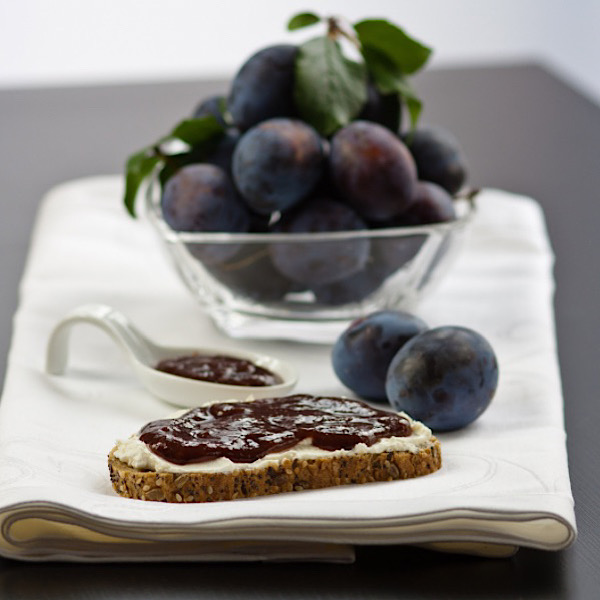
Fall means shorter days, comfort food, and what the Danes call “hygge”, which is that feeling of cozy contentment. Silky fruit butters on warm toast, accompanied by hot tea and a blanket, are hygge in a jar.
Fruit butters are an old American tradition for preserving the fall harvest. They’re simpler than jams, have about half the sugar, and develop a rich, spreadable texture from long, slow cooking. The process is really flexible and easy to customize.
This plum butter gets depth from Amaretto, orange zest, and warming spices like cinnamon, allspice, and vanilla. The almond notes from the Amaretto complement the sweet-tart plums beautifully.
Fruit Butters and the “Hygge” cozy Winter Lifestyle
While “hygge” is an old Danish (and Norwegian) concept, it has taken hold in the US. Pronounced “hue-guh”, it is translated to mean a feeling of cozy contentment and well-being.
Hygge also refers to intimacy, either with yourself, friends or your home. It is the idea of security, comfort, kinship and simpleness.
The concept of hygge is particularly compelling in the cold Winter months and around the holidays when family and friends are near. You probably already practice hygge in a many ways, but here are some ideas to consider to enhance the feeling of hygge in your home this winter.
- Reading a good book indoors while it is snowing or raining outside
- enjoying a cup of hot cocoa while wrapped in a warm blanket
- making a ritual of brewing some turmeric tea and enjoying it in a special pottery mug
- Stopping by the flower shop on your way home from work to pick up some fresh flowers
- playing scrabble or a board game with family or friends while drinking mulled wine with star anise and cardamom
- wearing cashmere socks or old favorite sweatpants around the house
- gathering around a fireplace with friends and telling stories
- baking some bread and relishing the smells
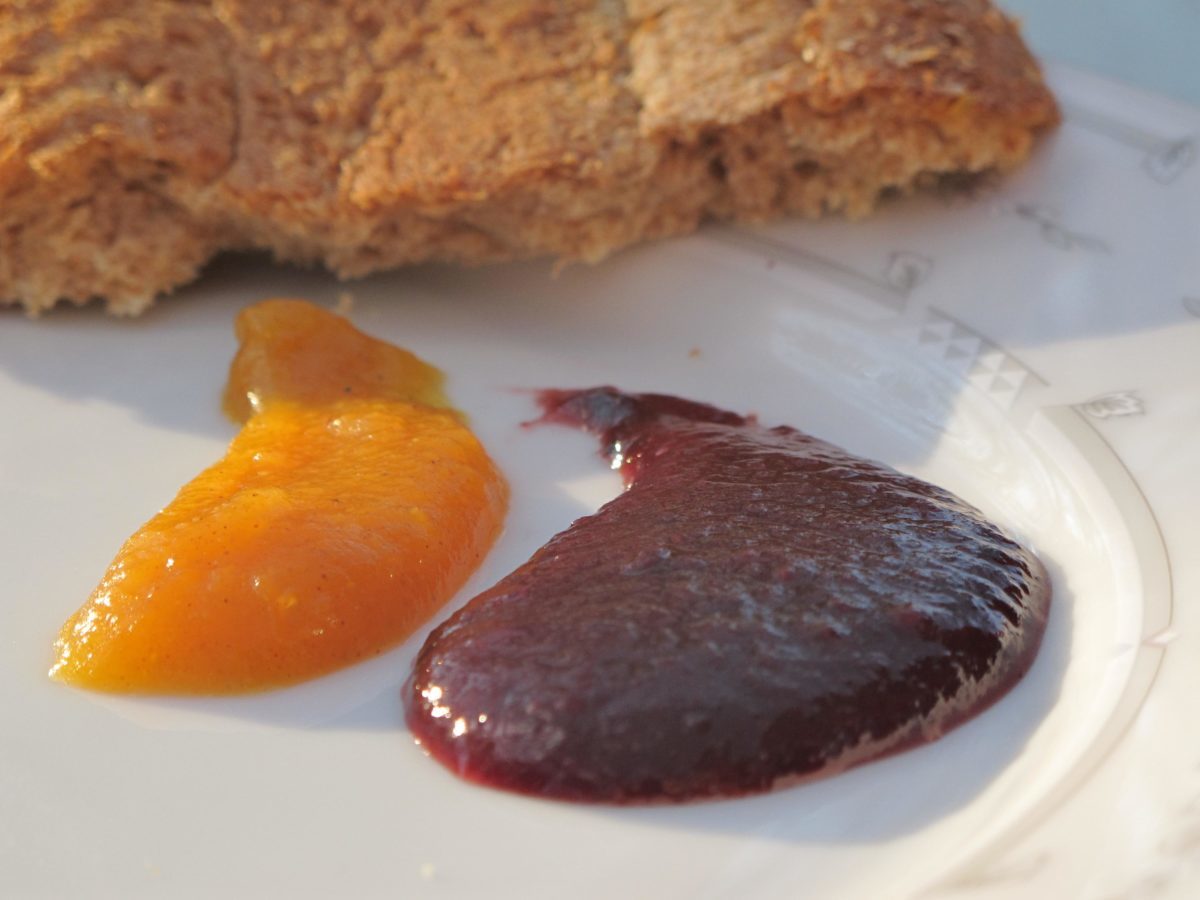
- and of course, eating creamy, silky, rich fruit butters on warm rye bread
What Makes Fruit Butter Different from Jam
Fruit butters are a very old way of preserving the fall fruit harvest and they seem to be a uniquely American preserve, with fruit curds, fruit pastes and the like favored in European countries.
Plum butter might be the exception, as there is a Polish classic spread called powidla sliwkowe which is very similar to a fruit butter and is used on bread, in sauces, and as a glaze on pork or duck.
In general, three things distinguish a fruit butter from jams, jellies, compotes and other fruit preserves.
Texture
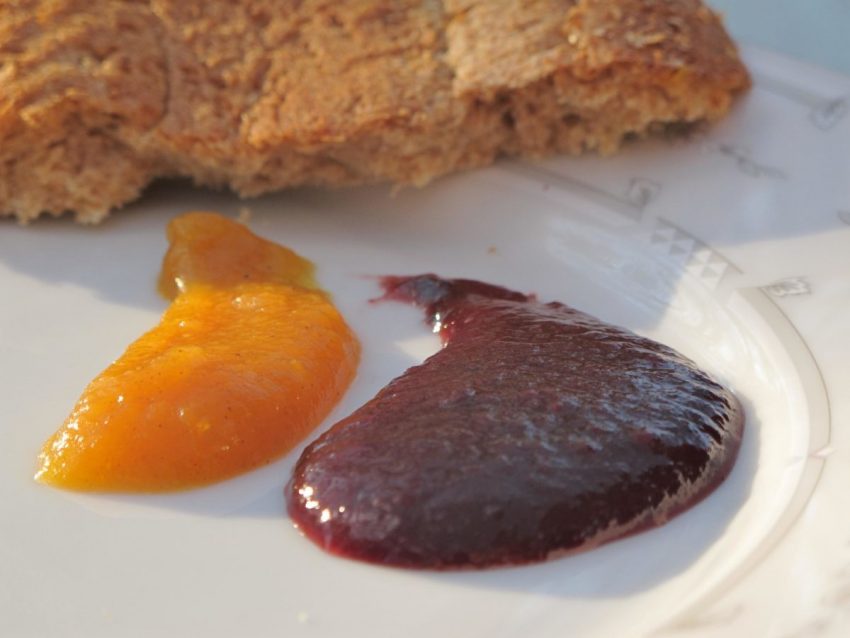
Fresh fruit is simmered for hours with a little sugar and maybe some juice until it softens enough to puree it. It is then further simmered with spices and flavorings until it forms into a soft spread with a texture similar to butter (hence the name).
Sugar Content
Fruit butters generally have half as much (or less) sugar than a jam. Jellies and jams need a certain amount of sugar to generate the chemical reaction with acid and pectin needed to form a gel (unless you use a low-sugar pectin or boil the jam for so long that the sugar content ends up being concentrated and actually results in a deceptively high sugar content).
Spices and Aromatics
Most fruit butters are made and eaten in the cool fall and winter months, and they are usually made with rich wintery aromatics like cinnamon, cloves, allspice and nutmeg.
I like to add vanilla beans and I very often will add a little flavorful “substance” like Amaretto, Grand Marnier or maybe Apple Brandy.
Tips for Making Fruit Butter
- Equipment helps: These two pieces of equipment make fruit butters quite a bit easier: a stick blender and a roaster oven, though neither is necessary.
- Stay nearby: Fruit butters need occasional stirring and watching to prevent scorching.
- Use ripe fruit: Very ripe fruit works perfectly and is often cheaper.
- Test for doneness: Spoon some onto a plate and drag your finger through it. If it doesn’t run back into the groove, it’s ready.
Plum Varieties
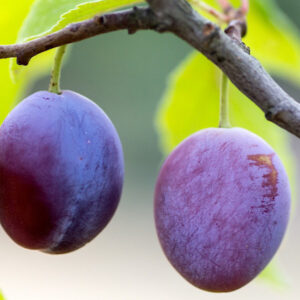
The recipe below was made with a style of plum know as European prune plums. We get a variety called Stanley prune plums occasionally in Minnesota grocery stores. It’s my favorite, but not always easy to find.
A popular plum variety that makes a good fruit butter and is widely available is the Santa Rosa plum.
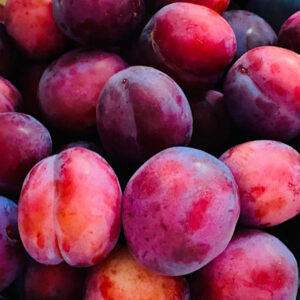
There are a ton of different plum varieties actually and their classic sweet tart flavor is going to be enhance by the Amaretto, so use whichever plum is available to you and you can’t go wrong.
More Fall Comfort Foods
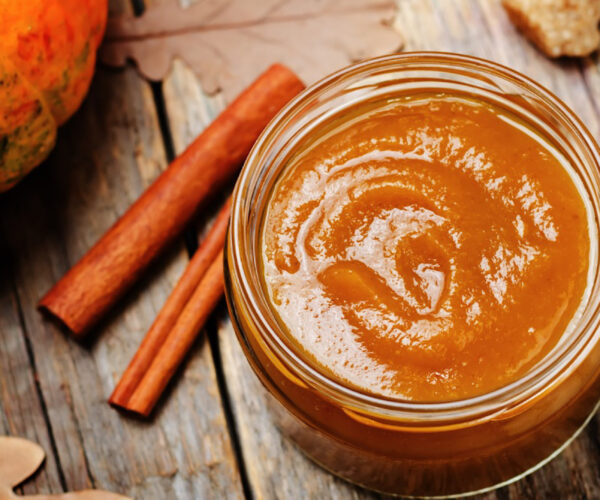
Comforting fruit butters can be made from just about any fruit, but they really shine when made with fruit that comes on in the fall. Try this pumpkin butter for a great holiday spread!
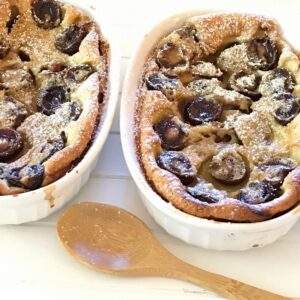
For another cozy dessert that is lower in carbs and sugar, try this Cherry Clafoutis.
FAQ
Refrigerated, it keeps for several weeks. Water bath canned, it keeps for up to a year. Freeze for longer storage.
Yes, fruit butters are forgiving. Start with less sugar and add to taste. The final sweetness depends on your fruit’s natural sugar content.
Keep cooking. Spread it in a wider pan to increase surface area and speed evaporation.
Yes, but it takes much longer, sometimes 8-12 hours. Leave the lid cracked to allow moisture to escape.
On toast, biscuits, or English muffins. As a glaze for pork or duck. Swirled into yogurt or oatmeal. As a layer in a cheese board.
Get seasonal recipes and seasonal gardening tips in your inbox every Sunday when you subscribe to my weekly newsletter. It’s usually 3 recipes and 1 gardening guide. Short, sweet, and helpful.
Plum Amaretto Fruit Butter
Equipment
- roasting pan Or large pot, or crockpot
Ingredients
- 9 cups plums pitted and halved
- 2 cups sugar may need 3 cups, depending on sweetness of fruit
- ⅓ cup Amaretto liqueur
- 1 orange zest and juice
- 1 vanilla bean
- 1 bay leaf
- 1 tsp allspice
- 1 tsp cinnamon
- ½ tsp salt
Instructions
- Simmer halved plums in roaster oven or on stovetop until soft (some people will use a crock pot which works, but just takes a long time). If they are dry you can add a little water.9 cups plums
- When soft, puree. I use a stick blender but you could also put them in the processor (messy business though)
- Put the puree back in the roaster oven or pot over med-low heat and start adding the sugar, a cup at a time until it is the sweetness that you prefer. Stir in each cup of sugar until well-blended and taste, keeping in mind the Amaretto will be a little sweet.Add Amaretto2 cups sugar, 1/3 cup Amaretto liqueur
- Zest the orange into the mix and add the orange juice and the bay leaf and spices.1 orange, 1 vanilla bean, 1 bay leaf, 1 tsp allspice, 1 tsp cinnamon, 1/2 tsp salt
- Simmer the mix over medium heat until it starts to thicken (this usually takes about an hour on the stove, less in the roaster oven because it is spread out over a large surface, and may take several hours in the crock pot).
- Adjust spices, sugar and Amaretto as you go. Taste-adjust-taste-adjust….
- This is how you will know it is ready: take a spoonful of the fruit butter and put it on a clean plate. Drag your finger through the middle of it and if it doesn’t run back into the groove made by your finger, it is done. Ladel into jars and either water bath or refrigerate.
Pingback: Make Homemade Fruit Butters for an Incredible Taste Sensation - Home and Garden Digest
Great post – thank you for sharing! Can’t wait to read me.