Quick Summary: Grow tomatoes in hanging baskets using small, determinate varieties like Tumbler, Tumbling Tom, or Tiny Tim. Use a sturdy basket at least 12 inches wide and deep with drainage holes. Water daily in summer heat. Fertilize regularly since nutrients leach with each watering. Choose a sunny spot protected from strong wind. Read time: 5 min | Experience level: Beginner
Jump to: Why Use Hanging Baskets? | Best Hanging Baskets |Best Tomato Varieties |Growing Tips | FAQ
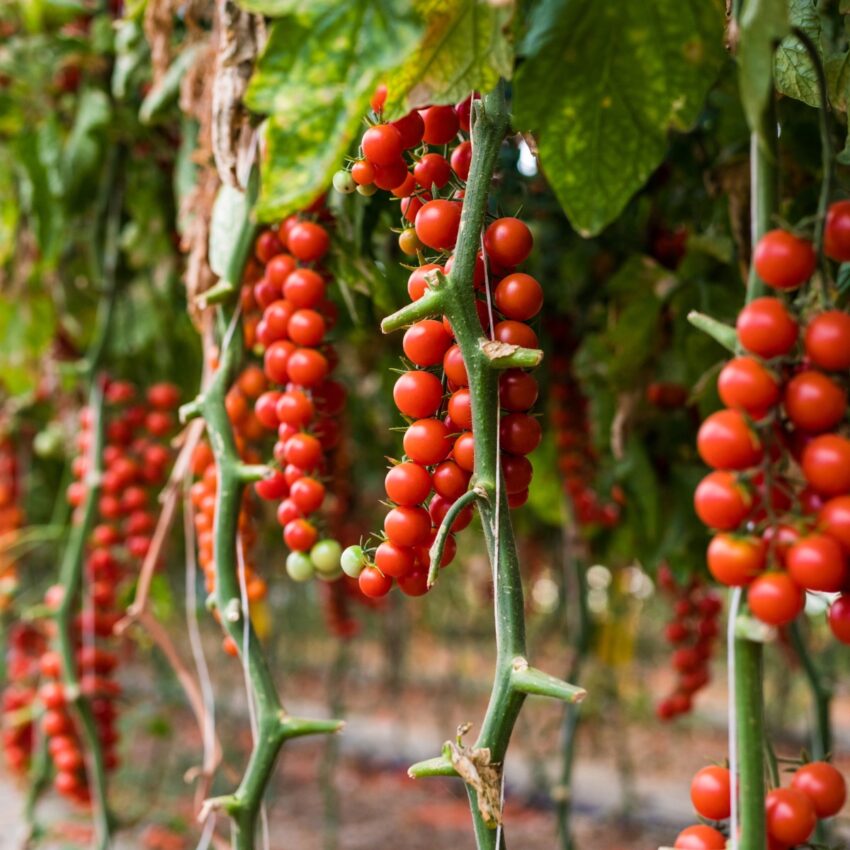
Hanging baskets are one of the best ways to grow tomatoes if you’re short on space. No floor space needed, good air circulation, fewer pest and disease problems, and ripe tomatoes right at eye level.
I recommend this approach for balcony gardeners and anyone who wants to add tomatoes without dedicating land for garden beds. The key is choosing the right variety: small, determinate types with cascading growth habits work best.
This post may contain affiliate links. As an Amazon Associate, I also earn from qualifying purchases. You can read our disclosure information here–
Why Grow Tomatoes In Hanging Baskets?
I encourage growing your own produce. even if you don’t have a garden plot or any land.
It’s easy to grow your own tomatoes on a small deck or balcony, and using a hanging planter or basket is actually the perfect way to do so without using up lots of space.
Advantages of growing tomatoes in hanging baskets include:
- No need to bend down to pick or water the tomatoes, as they’re right at eye level.
- Hanging baskets can be easily moved around if need be.
- Good air circulation.
- More difficult for disease, fungus and bugs to spread.
- A mature, cascading tomato plant in a hanging basket looks fantastic!
What Containers Work Best for Hanging Tomatoes?
There are many different types of hanging planters types marketed for growing tomatoes.
The “upside-down” or “topsy turvy” planter has become particularly popular in recent years, but this type of hanging basket does come with a few downsides.
If you want to try the upside down type of planter with tomatoes, this article on the topsy turvy planter will help you avoid some mistakes.
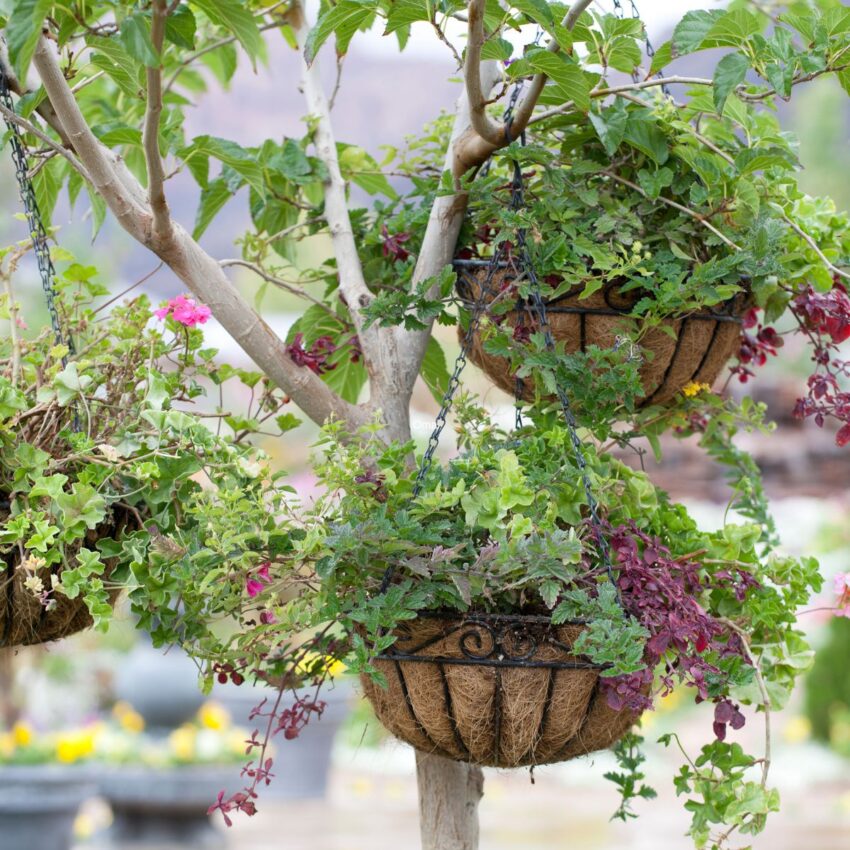
Most gardeners prefer to opt for a sturdy (sturdy is important!) metal basket with a strong chain and hook that can bear the weight of a mature tomato plant laden with fruit.
Here are some things you should look for in a hanging basket meant for tomato growing:
- At least 12″ wide
- At least 12″ deep.
- Has at least one drainage hole.
- Can support a good bit of weight.
- Lined with landscaping fabric or coco coir so the soil doesn’t fall out.
What Tomato Varieties Grow Well in Hanging Baskets?
As you can probably imagine, not all tomato varieties are suitable for a hanging planter. We love heirloom beefsteak tomatoes, for example, but both the plants and the fruits can get absolutely humongous!
It’s better to opt for small tomato varieties unless you have a large heavy-duty basket at your disposal.
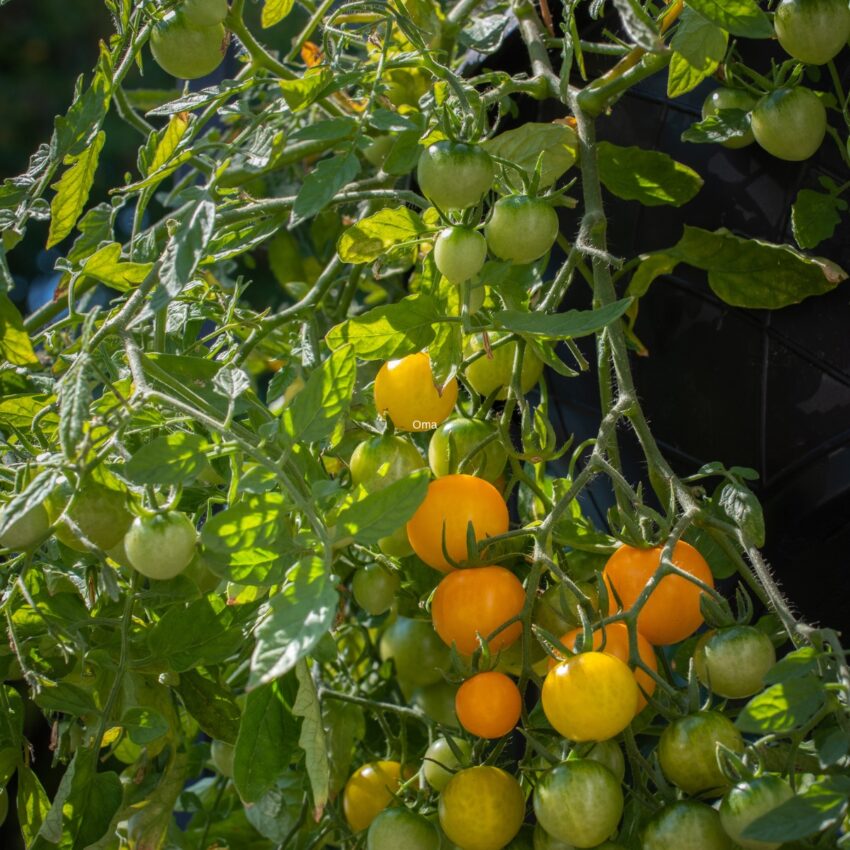
My favorite choice of a tomato well-suited for a hanging basket would be a determinate variety called Tumbler.
The ‘Tumbler’ tomato produces its entire crop of small fruits in one go over a 4-6 week period and it has a cascading growth pattern that makes it perfect for hanging baskets.
Other small varieties that would work well for growing tomatoes in hanging baskets include:
- Tiny Tim: usually doesn’t grow past 18″. Determinate.
- Whippersnapper: a prolific vining cherry. Determinate.
- Tumbling Tom: beautiful cascading vines, perfect for a hanging planter. Determinate.
- Garden Pearl (Gartenperle): created especially for hanging baskets. Determinate.
- Hundreds and Thousands: another cascading tomato. Determinate.
Check out this comprehensive guide to growing tomatoes for the best flavor. This guide is a must-have if you want to grow your own tomatoes, heirloom or hybrid.
How Do You Care for Hanging Basket Tomatoes?
Once you’ve selected the type of basket and tomato you like, it’s time to get this show on the road. You can opt to start your own seeds, but it’s also possible to purchase seedlings at your local nursery if you’d like a little head start.
If you can’t find the variety you want to purchase and you are going to try your hand at starting from seeds, be sure to check out the category on indoor seed starting. It contains all the info you need to produce healthy tomato plants.
Location
It’s important to choose the right location for your hanging tomato basket, especially if you are growing them on a balcony. Balconies and rooftops can get quite windy, and harsh winds can wreak havoc on a fruit-bearing tomato plant dangling from a chain.
On the other hand, it shouldn’t be so sheltered as to be shaded, because tomatoes prefer 6 hours or more of sun.
Water
If you’ve grown plants in containers before, you’ll know how quickly they can dry out during a hot Summer. It’s important to keep a very close eye on your tomato plant, because they do like plenty of moisture!
You’ll probably have to water daily in the heat of Summer, maybe even twice a day in some cases.
Tip: If you stick your finger in the soil and it is dry down to 1″, it is time to water.
Fertilizer
Tomatoes grown in containers will need more fertilizer than if they were grown in the ground, as the nutrients will leach out a bit with each watering.
If you have sterile compost, mix some into the potting soil when you first plant the seedling in the basket,. The compost will add nitrogen to the potting soil and help stimulate growth.
Apply liquid tomato food periodically throughout the growing season, according to the directions on your particular fertilizer package.
Check out this comprehensive guide to growing tomatoes for the best flavor. This guide is a must-have if you want to grow your own tomatoes, heirloom or hybrid.
FAQ
At least 12 inches wide and 12 inches deep. The basket must support the weight of a mature plant loaded with fruit. Use a sturdy metal basket with a strong chain and hook.
Small, determinate varieties with cascading growth: Tumbler, Tumbling Tom, Tiny Tim, Garden Pearl, Hundreds and Thousands. Avoid large beefsteak types.
Daily in summer, sometimes twice daily in extreme heat. Hanging baskets dry out faster than ground plantings. Check soil moisture by sticking your finger in; if dry to 1 inch, water.
Yes, more than ground-planted tomatoes. Nutrients leach out with each watering. Mix compost into potting soil at planting and apply liquid tomato fertilizer throughout the season.
Not recommended. Large indeterminate varieties get too heavy and need support. Stick with small determinate types bred for containers.
Somewhere with 6+ hours of sun, protected from strong wind. Balconies can be windy, which damages fruit-laden plants. Some shelter is good, but not so much shade that the plant doesn’t get enough light.
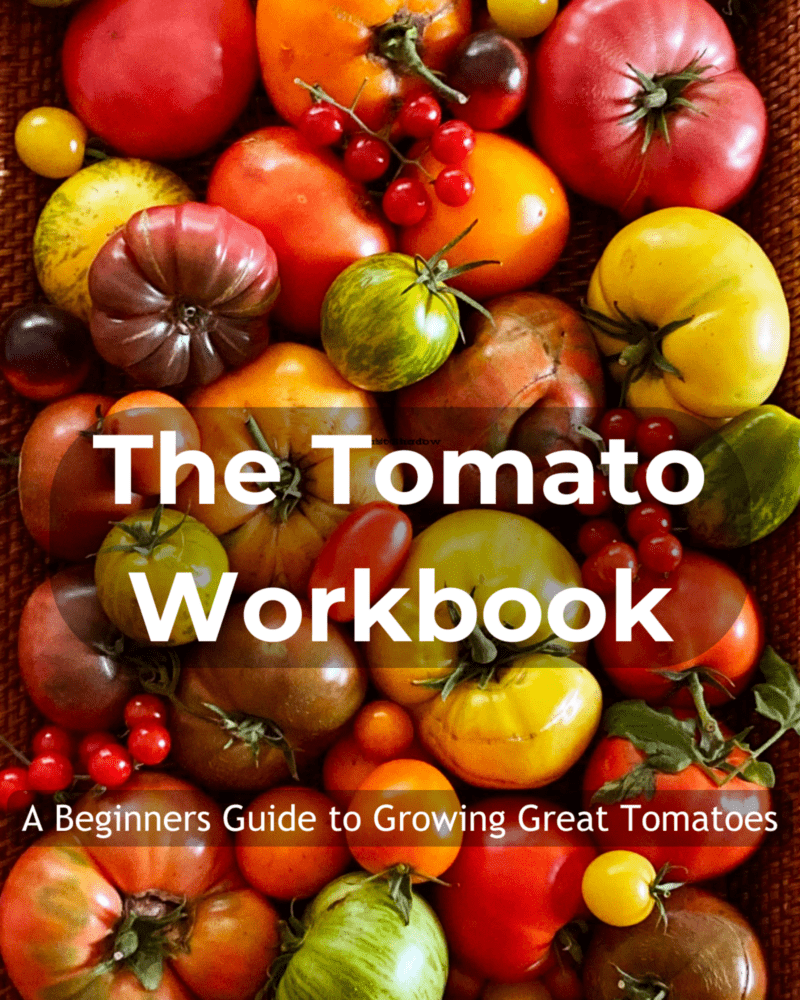
If you want to grow your own tomatoes for recipes like this, The Tomato Workbook for Beginners, covers everything from seed starting to harvest, with variety recommendations for different cooking uses.
You can purchase a digital copy from this website, or purchase a print copy from Amazon. Both are $11.95.