
Quick Summary: Crispy pan-fried catfish cakes (catfish patties) made with hand-shredded catfish and cod, ginger, chipotle, and panko, with a tartar sauce and a spicy dipping sauce. Plus what I learned testing which fish make the best fish cakes. Prep: 10 min | Chill: 1 hr | Cook: 15 min | Serves: 4
Jump to: Recipe | Why Catfish Works in Fish Cakes | Keys to Great Fish Cakes | What to Avoid | FAQ
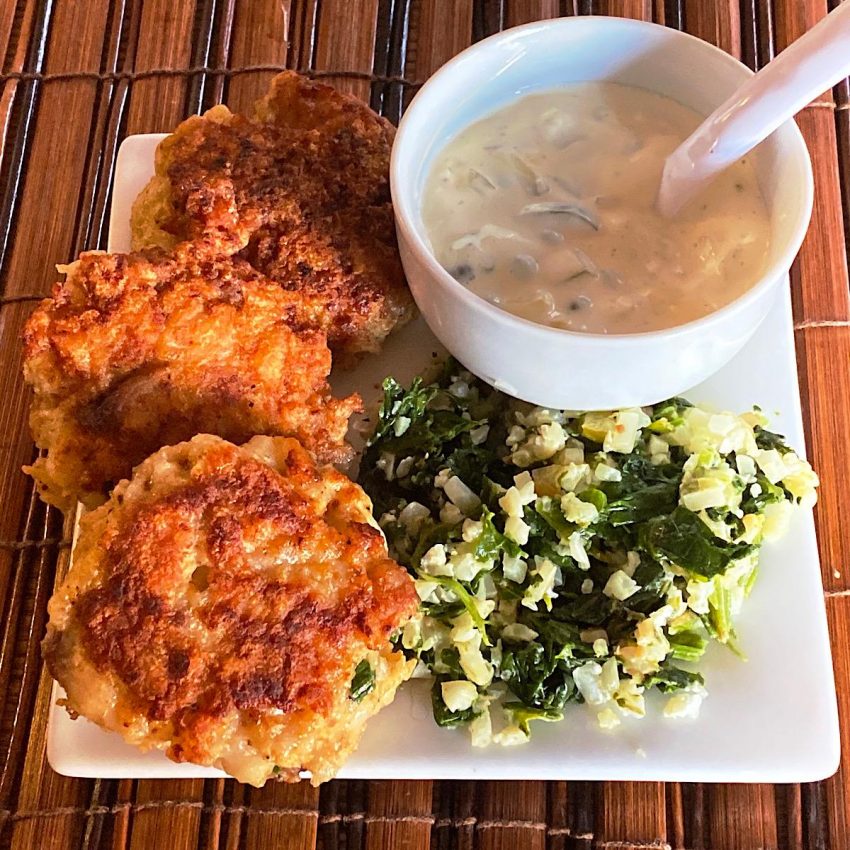
After experimenting with different fish cakes, I found the difference between wonderful and cardboard comes down to two things: what fish you use and how much you process it.
Fresh-frozen fillets, shredded by hand, produce tender, flaky cakes. Canned fish, especially processed in a blender, produces dry, dense hockey pucks. Here are my results for the best, the marginal, and the truly horrible fish cake variations.
This post may contain affiliate links. As an Amazon Associate, I also earn from qualifying purchases. You can read our disclosure information here–
Why Catfish Works in Fish Cakes
Catfish is mild, inexpensive, and firm enough to shred by hand without turning to paste, which is what a fish cake needs. In the South you will also see these called catfish patties or catfish croquettes. I use fresh-frozen fillets, thawed and patted dry, usually mixed with cod.
Best Fish for Fish Cakes: What I Tested
The best fish for fish cakes are mild white fillets shredded by hand: catfish, cod, or cod mixed with lump crab.
| Fish | Form | Result |
|---|---|---|
| Catfish and cod | Frozen fillets, hand-shredded | Flaky and tender |
| Cod and lump crab | Frozen fillets plus canned crab, baked | My favorite |
| Tilapia | Frozen fillets | Good, but hard to chop |
| Crab alone | Canned | Good, not as tender |
| Salmon | Canned | Too dry, strong flavor |
| Tuna | Canned | Almost inedible |
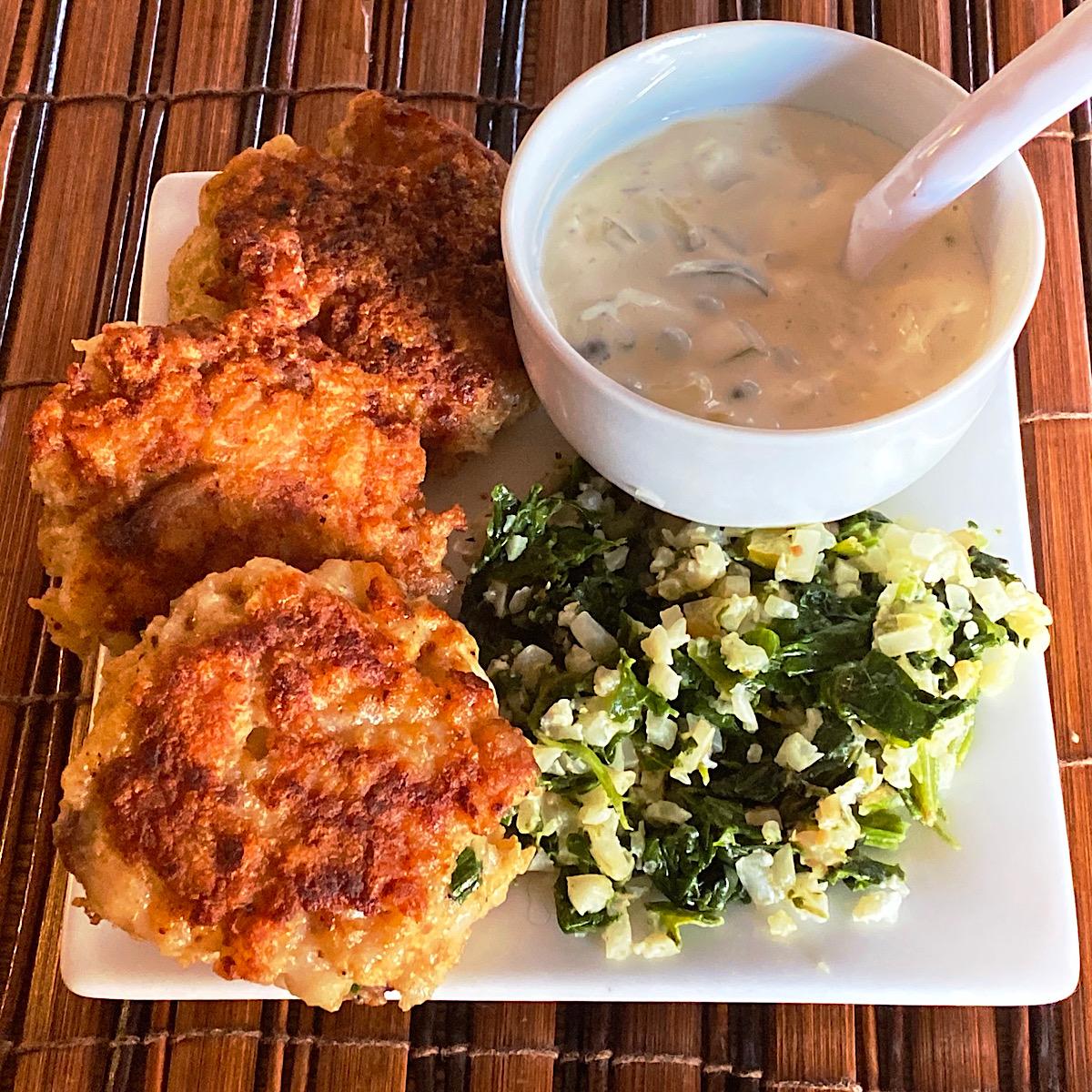
Inspired by one of Gordon Ramsay’s shows, I first made the fish cakes with fresh-frozen fish filets. I used a mix of catfish and cod (he used black cod, but I used the filets I happened to have in the freezer).
They turned out wonderful. They were flaky, tender and mellow in flavor. I accompanied them with a homemade harissa sauce to add some more robust flavor to the dinner.
Later on I developed a fish cake recipe that was low carb, and I used a mix of canned crab and frozen cod that I shredded with a knife. These cakes were baked instead of sautéed and they were my favorite overall, even better than the Gordon Ramsay recipe in my opinion.
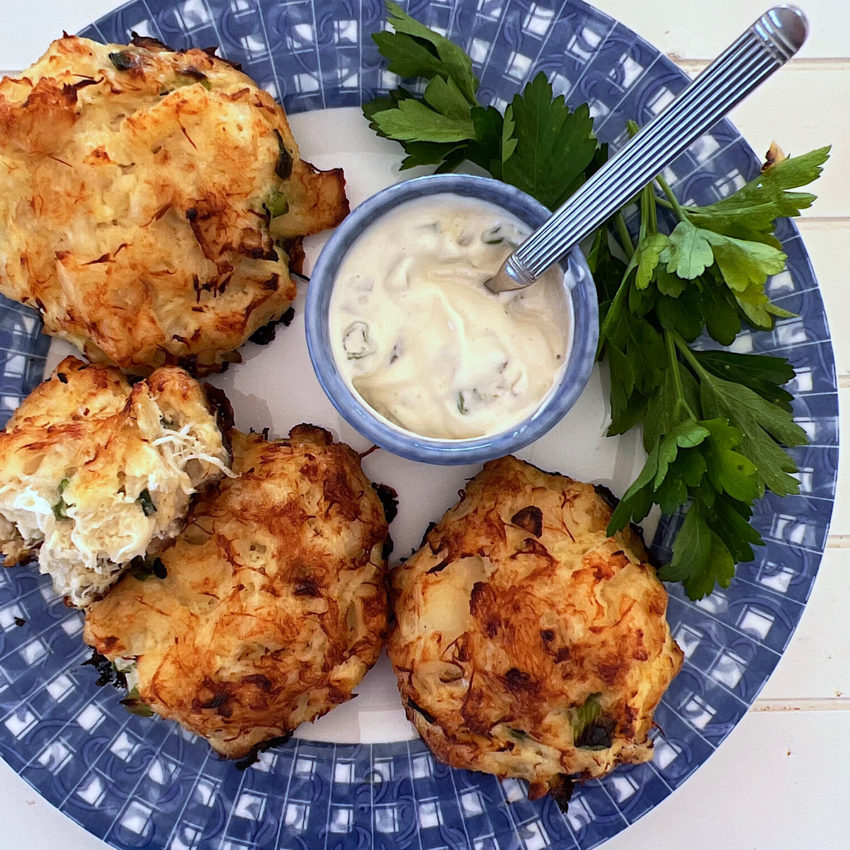
What Fish Should You Avoid for Fish Cakes?
Avoid canned tuna and canned salmon; both made dry, dense fish cakes in my tests.
The salmon test:
They were way too dry. I think the texture of the canned fish was just so meaty from being packed and compressed into cans that it is difficult for the tender nature of the fish to come through.
Salmon also has a much stronger flavor and doesn’t allow the flavor of the dip to shine.
I have made crab cakes with canned crab before, and they were good, but the crab is packed into the cans much more loosely.
And even with the loose packing, the crab cakes didn’t hold a candle to the fresh-frozen filet cakes.
The tuna test:
My diet partner in crime (aka husband) thought tuna would be an inexpensive fish to try. So, being the accommodating sort, I tried it with canned tuna.
They were so dry they were almost inedible!
I do think processing the canned fish in the blender was part of the problem. When using the frozen filets, I shredded them with a knife, giving them a looser texture in the mix.
It pays to be gentle when mixing in the fish and avoid the blender.
Are Fish Cakes Slow Carb Friendly?
Not with panko, but they’re easy to make slow carb
The recipe below was made with panko, which is not low carb or slow carb compliant.
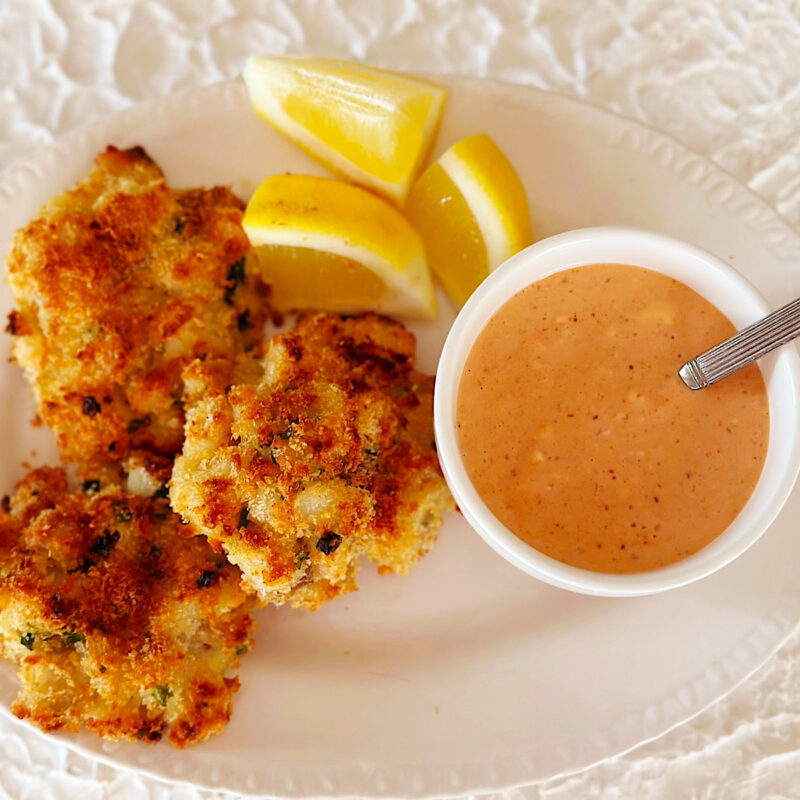
To make fish cakes slow carb compliant, you need to eliminate the panko. Here is a low carb way of making fish cakes without panko or any breading. They are baked instead of sauteed, so they are lower in calories also.
FAQ
For a slow carb version, try my baked fish cakes without panko.
Most likely the fish was overprocessed or you used canned fish. Fresh-frozen fillets shredded with a knife produce much better texture than canned fish pulsed in a blender.
White fish fillets like cod, catfish, haddock, or a combination. Crab also works well if packed loosely (not compressed canned crab). Avoid canned tuna and canned salmon.
Canned crab works reasonably well. Canned salmon is marginal and makes cakes very dry. Canned tuna is not recommended; it produces extremely dry cakes.
Don’t overwork the mixture. Form patties gently and let them set in the refrigerator for 15-30 minutes before cooking. Make sure your pan is hot before adding the cakes, and don’t move them until they’ve formed a crust.
Tartar sauce or the spicy dipping sauce, plus something green: sautéed spinach, a crisp slaw, or roasted asparagus. For a Southern plate, add old-fashioned banana pudding for dessert.
For 40+ more tested recipes, from quick weeknight fish dinners to holiday seafood entertaining, browse the full fish and seafood recipe collection.
Want a printable reference for your kitchen? The Fish and Seafood Quick Reference Guide covers cooking methods, timing charts, sauce pairings, and holiday planning ideas in 8 pages you can keep next to the stove.
Catfish Cakes with Panko
Equipment
- bowls
- measuring spoons & cups
Ingredients
The Fish Cakes
- 2 lbs. skinless fish filets
- 2 large eggs
- 3 Tbsp scallions sliced thinly
- 3 Tbsp Italian parsley leaves chopped
- 2 tsp sea salt
- ½ tsp freshly ground black pepper
- 1 Tbsp grated fresh ginger
- ¼ tsp ground coriander
- 1 tsp chipotle powder
- squeeze of fresh lime juice Ifrom 1/2 medium lime
- ¼ tsp fish sauce
- ¾ cup Panko crumbs
- 2 Tbsp Refined olive oil
Best Tartar Sauce
- 1 cup mayonnaise olive oil based
- 3 Tbsp capers
- 3 Tbsp fresh lemon juice
- 2 Tbsp chopped dill pickles finely chopped
- 1 Tbsp chopped scallions
- ¼ tsp black pepper
Spicy Dipping Sauce
- 1-2 Tbsp fish sauce
- 1 Tbsp rice wine vinegar
- 1 Tbsp fresh lime juice
- 1 Tbsp cilantro minced
- 1 tsp chopped green chile pepper
Instructions
- Preheat oven to 200°F. Combine all ingredients for the fish cakes in large bowl and mash together with fork or hands until well blended2 lbs. skinless fish filets , 2 large eggs, 3 Tbsp scallions, 3 Tbsp Italian parsley leaves, 2 tsp sea salt, 1/2 tsp freshly ground black pepper, 1 Tbsp grated fresh ginger, 1/4 tsp ground coriander, 1 tsp chipotle powder, squeeze of fresh lime juice, 1/4 tsp fish sauce, 3/4 cup Panko crumbs
- Using your hands, form small balls of the fish mixture into patties about 1/2 to 1 inch thick and about 2-3 inches in diameter (about 1/3 cup each). Set on a plate and chill for at least an hour.
- Heat 2 Tbsp oil in large skillet (cast iron if you have it), until lightly smoking (about 3 minutes). Place patties in skillet starting at 6:00 direction and moving clockwise, so you remember which ones to turn over first. Do not crowd the patties; leave a little room between each one.2 Tbsp Refined olive oil
- Cook patties until browned and crispy on one side (about 3-5 minutes) until browned and the centers reach 160°F. Do not move them around while they are browning. Flip, starting at the 6:00 fish cake, and brown about 3 minutes or less on the other side
- Remove the fish cakes to a baking sheet and place in oven to keep warm. Add more oil to skillet if needed and repeat process with remaining patties.
Dipping Sauces
- Combine dipping sauce ingredients for the sauce you are making (spicy sauce or tartar sauce) in bowl and stir until thoroughly blended. For the tartar sauce combine mayonnaise, capers, lemon juice, pickles, scallions and pepper. Cover and refrigerate until ready to use.1 cup mayonnaise, 3 Tbsp capers, 3 Tbsp fresh lemon juice, 2 Tbsp chopped dill pickles, 1 Tbsp chopped scallions, 1/4 tsp black pepper
- For the spicy sauce, combine fish sauce, vinegar, lime juice, coriander, and green chile pepper. Cover and refrigerate until ready to use.1-2 Tbsp fish sauce, 1 Tbsp rice wine vinegar, 1 Tbsp fresh lime juice, 1 Tbsp cilantro, 1 tsp chopped green chile pepper
Notes
- Nutrition calculations are for fish cakes only, and do not include dipping sauces.
- Panko is not compliant with a slow carb diet
- Refined olive oil has higher smoke point than extra virgin
I wasn’t clear on how many cakes the nutrition info was for.
Hi Barbara, so the nutrition count is for 2 lbs. (32 oz) and for our family it served 4. If I recall, it made about 25 appetizer size cakes and 12 large cakes (3 for each of us). So 4 servings of 3 cakes each is what the nutrition analysis is for.
Pingback: Fish Cakes Compliant with Slow Carb Diet - Farm to Jar Food
Pingback: Zucchini & Shrimp Fritters for Slow Carb Diet - Farm to Jar Food
Sounds wonderful, but panko is absolutely not part of the slow carb diet.
You are absolutely right Sarina, panko is not allowed on the slow carb diet. I originally made them without the panko and then later went back to the post and added panko in. I thought when I added it in that I noted it as optional for those not on the SCD, but as I just re-read it, I didn’t say that. So…I will go back and make that clear. Thank you for the notice.
Oh, and by the way, I get all my catfish fresh from Coastal Seafoods.
I love catfish, and these catfish cakes look great! I’m going to make them, with your Thai-style dipping sauce. You asked for other fish recipes, appropriate for the diet. I have a great Thai-style catfish stir fry recipe, it’s quick and easy and really tasty.
Oh yes please Gloria! If you wouldn’t mind sharing it on the blog so others can see it, that would be great. Otherwise, just message me and I can post it also. I’ve found it hard to find catfish. The only place I see it is Sams Club, where they have a lot of it.