
Quick Summary: A centuries-old German tradition: layer summer fruit with rum and sugar, seal the pot, and wait until the first night of Advent to open it. By December, you have deeply flavored boozy fruit for waffles, ice cream, and desserts, plus a syrup that makes unforgettable cocktails. This guide covers which fruits to use, the right rum, layering technique, and timing. Prep: 10 min per layer | Steep: 6-9 weeks minimum | Serves: 25-30+
Jump to: RECIPE | What is Rumtopf? | Which Fruit and Which Rum to Use in Rumtopf | Suggested Equipment | Step by Step for Making Rumtopf | How to Use Rumtopf | FAQ
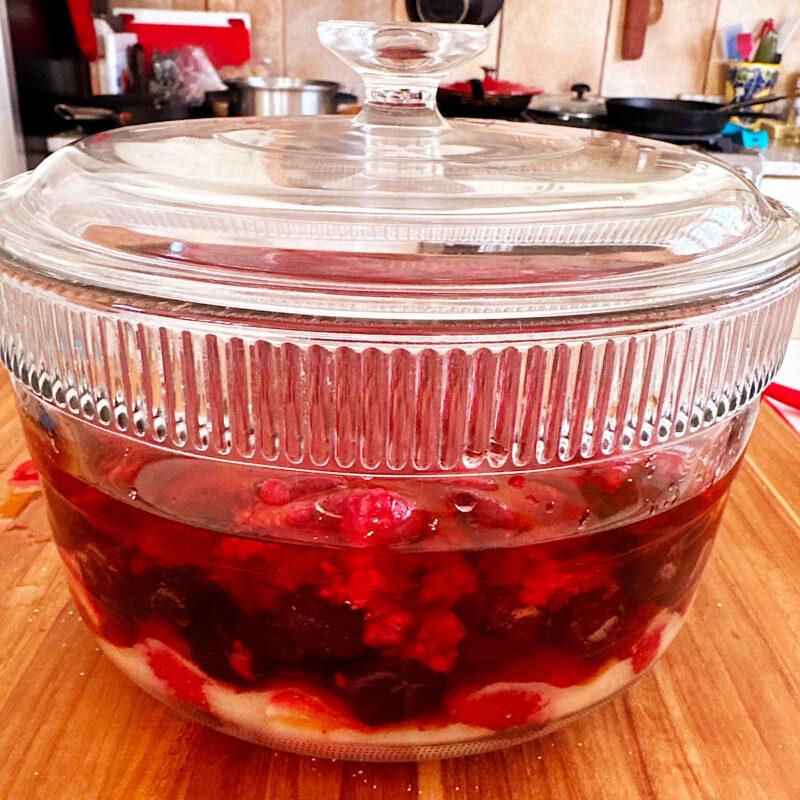
This guide covers how to use seasonal fruits in making rumtopf, which fruits work (and which don’t), alcohol ratios, and a “how-to” recipe on building your own rumtopf.
This post may contain affiliate links. As an Amazon Associate, I also earn from qualifying purchases. You can read our disclosure information here–
What is Rumtopf
Rumtopf (rum pot) is a fruit preserve which is essentially a combination of various fruits soaked in rum and sugar for months at a time and then used in the winter as a delicious, boozy fruit compote or fruit syrup.
Rumtopf has its roots in Germany, and it is usually prepared with Christmas in mind. Most often the syrup is poured off and used in cocktails, while the fruit is served as a topping over desserts, ice cream or pancakes.
Each season offers up a different fruit to add to the rumtopf pot in layers, covering each layer with more sugar and then making sure the fruit is completely immersed in rum. The layers keep growing as the Summer and Fall progress and the flavor keeps developing.
By Christmas, you have a deeply flavored fruit compote for waffles, ice cream, yogurt, and desserts, as well as a fruity syrup for cocktails.
Just know that it is pretty potent in the alcohol level so make sure your guests or kids know this.
My farm, Heathglen Farm, is mostly a berry farm so of course I layer in all the berries, but I will also buy peaches and plums from the farmers’ market to supplement the berries and nuance the flavor.
Which Fruit and Which Rum is Best in a Rumtopf?
While the fruit itself can cover a wide variety of flavors, there are some fruits that don’t work quite as well. The alcohol is another variable that needs to be considered. Here are some suggestions and substitutions:
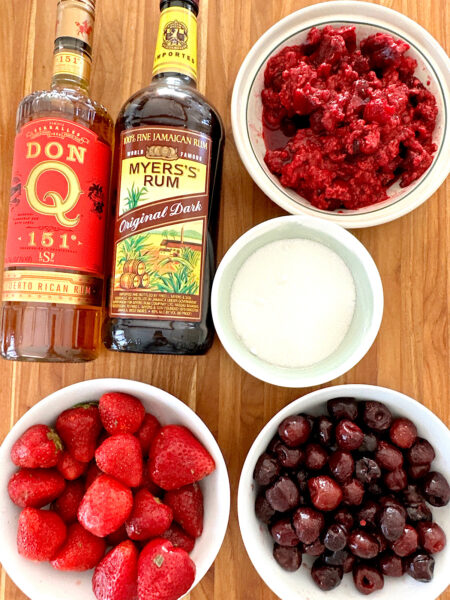
The Alcohol
The rum used to make this flavorful dessert is usually an overproof rum. Overproof proof rum (or barrel strength) is one that is 50 to 55 percent alcohol by volume which is 100 to 110 proof. In the US, rum is typically 40% (80 proof), and it can be difficult to find a 100 proof rum.
Bacardi 151 is 75.5% (151 proof), so based on a recommendation by the Frugal Hausfrau, I mixed an 80 proof Myer’s rum with the Bacardi 151. She suggested using 1 part Bacardi 151 to 2 parts Meyers Rum.
I found my first test of rumtopf with this 1:2 ratio to be a bit too harsh. I like the subtle sweetness of Meyers rum, so I think my next batch will go a bit heavier on the Meyers and a bit lighter on the 151. If you are worried that this is not enough alcohol for preservation purposes, add a little more sugar. Sugar and alcohol are both preservatives.
As to how much alcohol you’ll need, you will basically need to be sure that the fruit is immersed in the alcohol. It should be about 1/4 inch above the fruit. If your fruit floats, you may need to weight it down with a plate.
Best Fruits to Include in Rumtopf
- Strawberries
- Raspberries
- Cherries
- Peaches
- Plums
- Pears
- Apricots
- Blueberries
- Pineapples
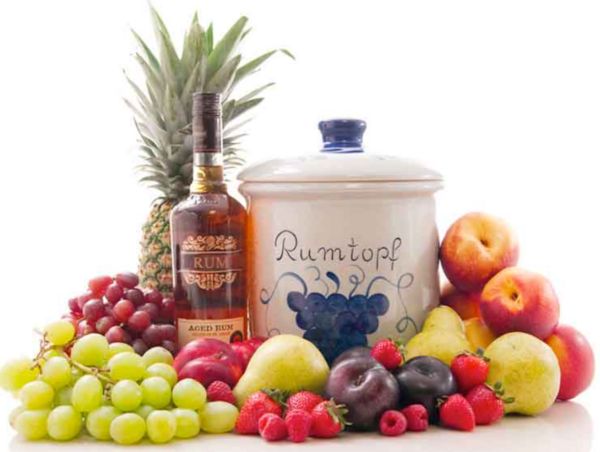
What Fruit to Leave out of Rumtopf
- Currents and gooseberries (their skins will toughen in the syrup)
- Apples (turns the color brown and makes the texture strange)
- Rhubarb (too acid)
- Blackberries (they tend to give everything an off color visually)
- Bananas (too mushy)
- Any fruit that is moldy or damaged
- Melons (too watery)
Special Ingredients
Since rumtopf is often enjoyed around the holidays, I like to add some of the following spices:
- Cinnamon sticks
- Whole cloves
- Whole allspice
- Star anise
- Dried citrus peels
What type of Container is Needed
You need a nonreactive crock of considerable size, from half-gallon and up, with a lid, depending on the amount of fruit you are attempting to make.
There is quite a fan club of rumtopf crocks and many can be found on Etsy or Amazon or at a specialty shop. I like this rumtopf pot….maybe I’ll ask for it for a gift!
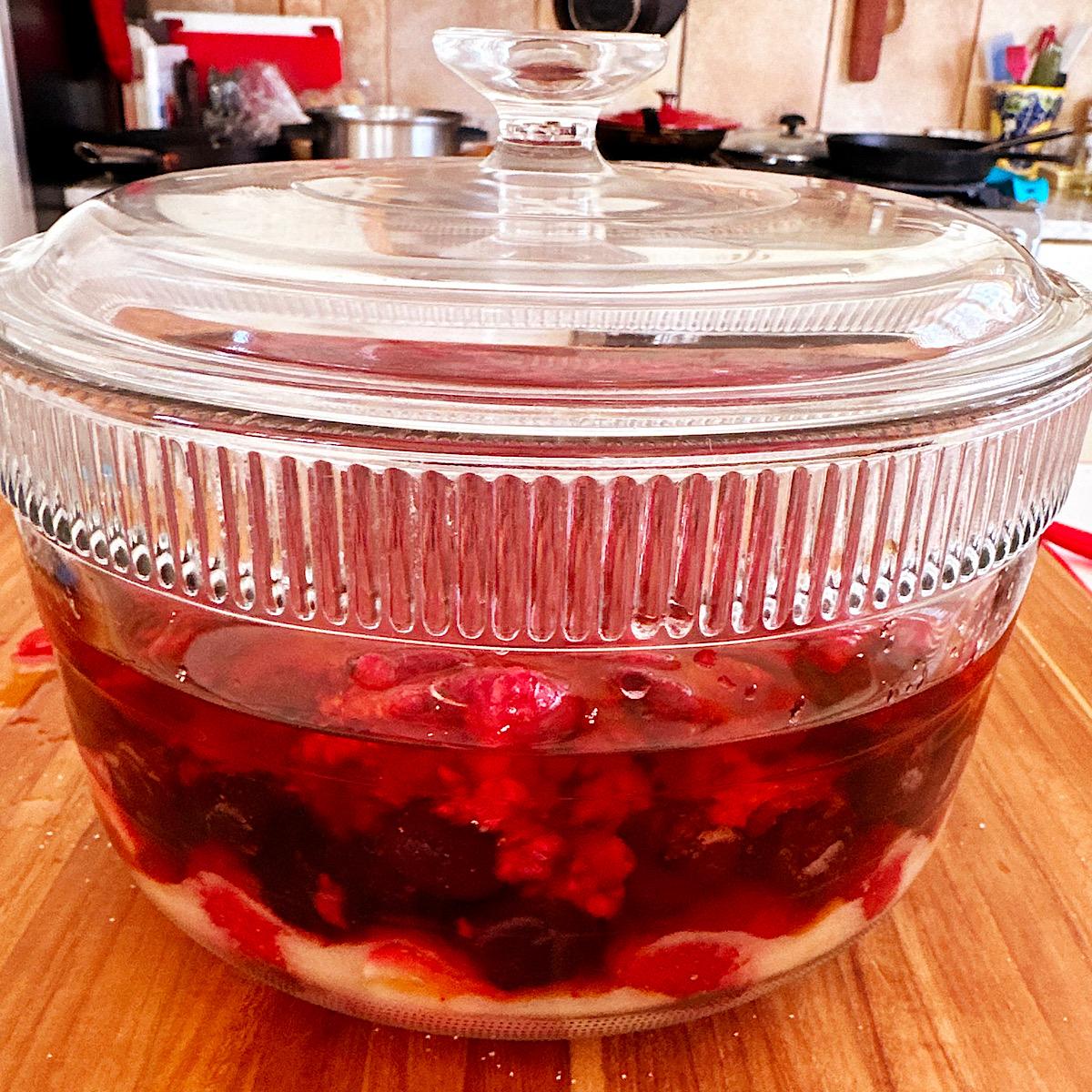
I used a large glass bowl with a lid and then covered the bowl with plastic wrap before placing the lid on it to ensure a tight seal.
Here are the steps lined out with photos. For the details of the recipe itself, see the recipe card below.
How to Make Rumtopf (Step by Step)
Here are the steps lined out with photos. For the details of the recipe itself, see the recipe card below.
Step #1: Layer seasonal fruit in bowl and cover with sugar (1 cup per pound of fruit); let macerate/rest for an hour.
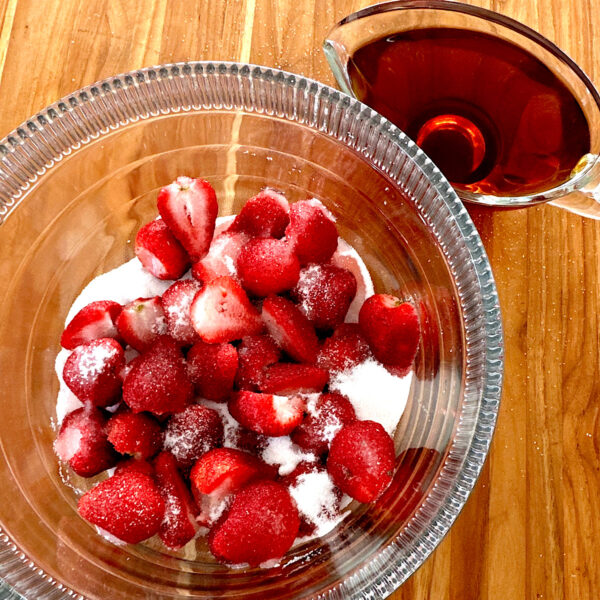
Step #2: Add combination of dark rum (Myer’s) and 151 rum (Bacardi) to cover fruit by ~ 1/4 inch (may have to weight down the fruit to keep it immersed).
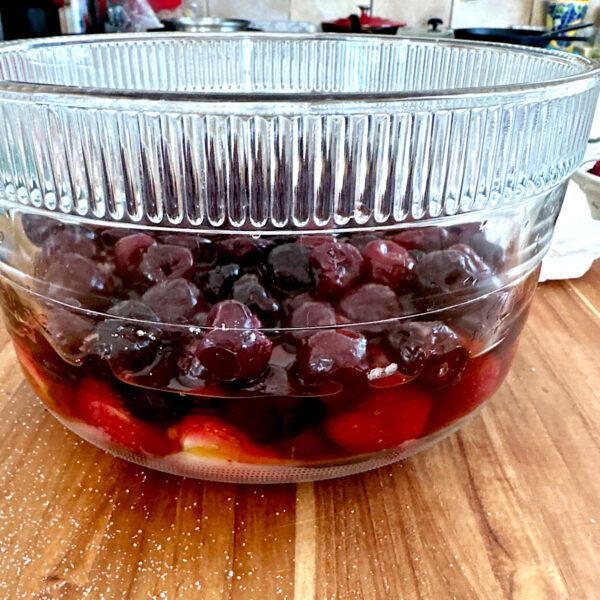
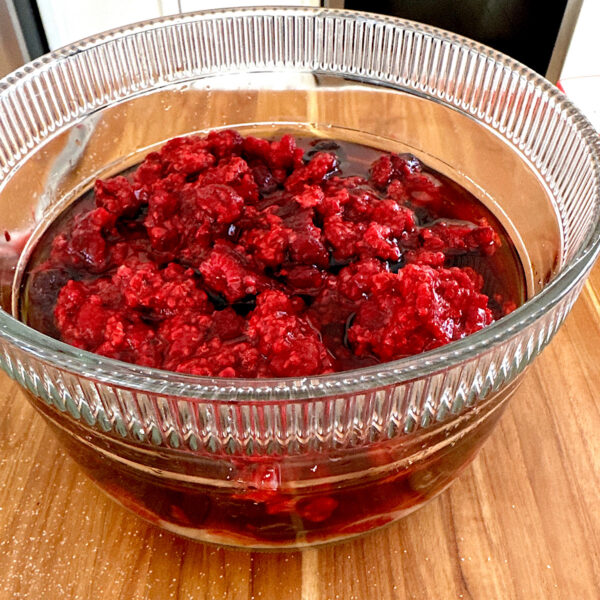
Step #3: Add any optional spices and cover the fruit mixtures tightly with a lid and set in cool dark place to store for several months (use within 1 year).
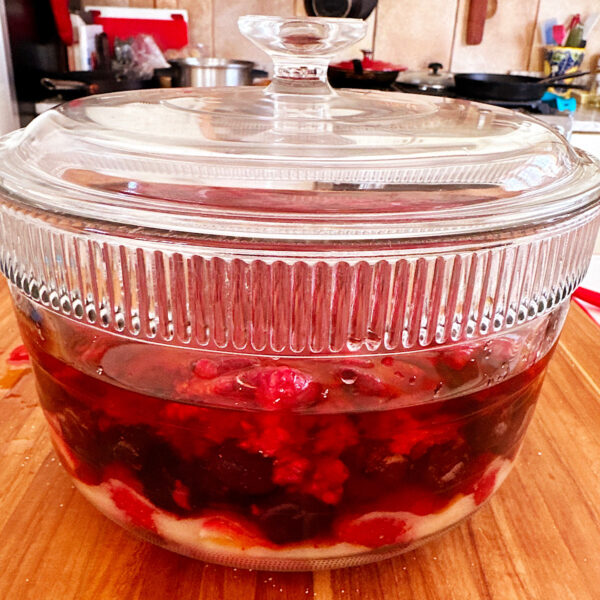
**Tip: Do not stir the fruit, just let it sit in its layers. Just prior to using, give the rumtopf a good stir to combine all the fruit flavors.
Rumtopf is one of the most unique and rewarding preservation methods, turning summer fruit into a holiday tradition. For more ways to preserve your harvest, from dehydrating to pickling to freezing, check out these 10 ways to preserve fresh fruits, vegetables and herbs.
How to Use Rumtopf
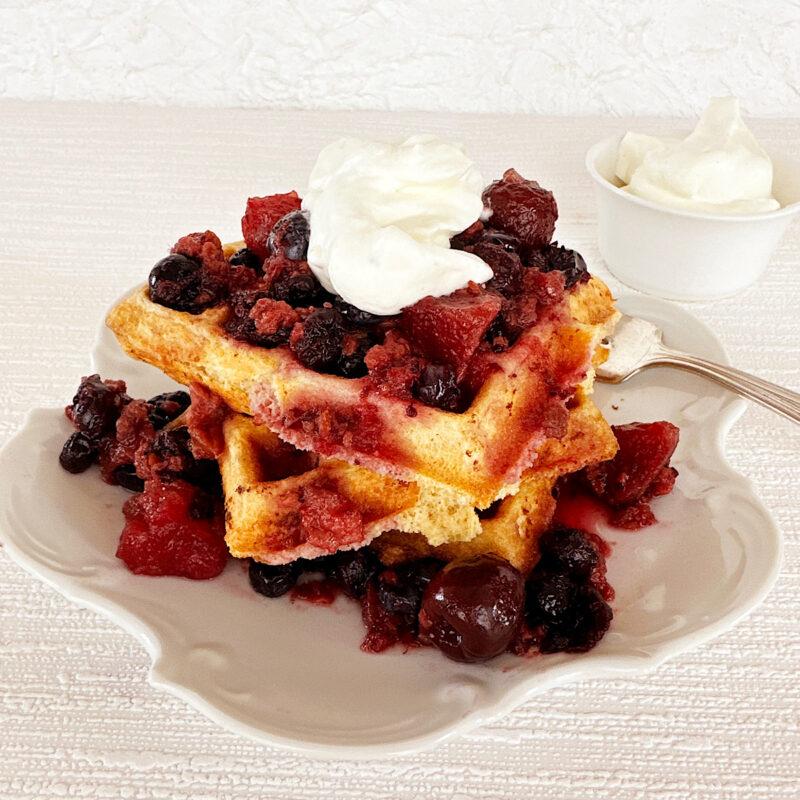
The fruit and the syrup are both the reward. Spoon the boozy fruit over waffles (like these high-protein waffles made with Kodiak mix), ice cream, yogurt, or pancakes. The syrup makes incredible cocktails — try it in a mojito, a rum punch, or simply stirred into sparkling wine.
Rumtopf also makes a memorable holiday gift. Ladle some fruit and syrup into a small jar, tie a ribbon around it, and include a card with serving suggestions.
FAQ
What is rumtopf?Rumtopf (literally “rum pot”) is a German tradition of preserving seasonal fruit in rum and sugar. Fruit is layered into a crock throughout summer, each addition covered with sugar and rum. By winter, the fruit has melded into a deeply flavored compote and the rum has become a fruity syrup. It’s traditionally opened at Advent.
How long does rumtopf need to steep?Minimum 6-9 weeks. Traditional German rumtopf is started in summer and first opened at Advent (early December). Longer steeping develops deeper flavor.
What fruits don’t work in rumtopf?Apples (turn brown), bananas (get mushy), melons (too watery), blackberries (discolor everything), rhubarb (too acidic), currants and gooseberries (skins toughen).
Can I use bourbon or vodka instead of rum?Yes. The alcohol proof matters more than the type. If using lower-proof alcohol, add more sugar or a splash of Everclear to ensure preservation.
How do I store rumtopf?In a nonreactive container (ceramic crock, glass jar) with a tight lid, in a cool dark place like a cellar or pantry. Use within one year.
What do I do with the syrup?Cocktails. It makes excellent mojitos, rum punches, or can be added to sparkling wine. The syrup is intensely flavored and very boozy.
What is the best rum to use for rumtopf?Traditionally, overproof rum (100-110 proof). In the US, a good approach is mixing dark rum like Myers (80 proof) with Bacardi 151. A 2:1 ratio works well, though you can adjust. The higher proof preserves the fruit better, while the dark rum adds sweetness and depth.
Can I make a quick rumtopf?A traditional rumtopf steeps for months, but you can make a faster version by macerating cut fruit in rum and sugar for 2-3 weeks. The flavor won’t be as complex, but it still makes a delicious topping. Use smaller fruit pieces to speed up the process.
Rumtopf (German Rum Pot)
Equipment
- large bowl with cover
- small plate fit into bowl to weigh down fruit
Ingredients
- 3-4 pounds mixed seasonal fruit strawberries, raspberries, cherries, peaches, plums, blueberries, pears
- 3-4 cups sugar approximately 1 cup per pound of fruit
- 1 bottle dark rum Myers or similar, 80 proof
- ½ bottle overproof rum Bacardi 151 or similar, 151 proof
- Optional: cinnamon sticks whole cloves, star anise, dried citrus peel
Instructions
- Start with your earliest seasonal fruit. Layer fruit in a clean, nonreactive crock or glass container. Cover with sugar (1 cup per pound of fruit). Let macerate for 1 hour.3-4 pounds mixed seasonal fruit, 3-4 cups sugar
- Pour rum over the fruit until it covers the fruit by about 1/4 inch. Use a 2:1 ratio of dark rum to overproof rum, or adjust to taste. Add the optional spices and citrus peel.1 bottle dark rum, 1/2 bottle overproof rum, Optional: cinnamon sticks
- Weight the fruit down if it floats (a small plate works). Cover tightly with a lid. Store in a cool, dark place.
- As each new fruit comes into season, add another layer on top with more sugar and rum. Always keep the fruit submerged by 1/4 inch.
- Do not stir between additions. Let the layers develop on their own.
- After the final fruit addition, steep for at least 6-9 weeks before opening. Traditional rumtopf is first tasted on the first evening of Advent.
- To serve, stir gently and spoon fruit over waffles, ice cream, yogurt, or pancakes. Pour off the syrup for cocktails.