
Quick Summary: Sweet scallops cured in citrus that has been blended with charred habanero and roasted garlic, then folded into tomatoes, red onion, and cilantro dressed with olive oil. The char gives the heat a smoky roundness, and the orange-grapefruit-lime mix recreates the sour oranges of southern Mexico. Bright, cold, and ready in under an hour. Naturally slow carb friendly without the tostadas. Prep: 30 min + 20 min curing | Serves: 6
Jump to: RECIPE | What is Ceviche? | Best Fish for Ceviche | Marinating | Oaxacan Ceviche | How to Char Habaneros | Pro Tips | FAQ
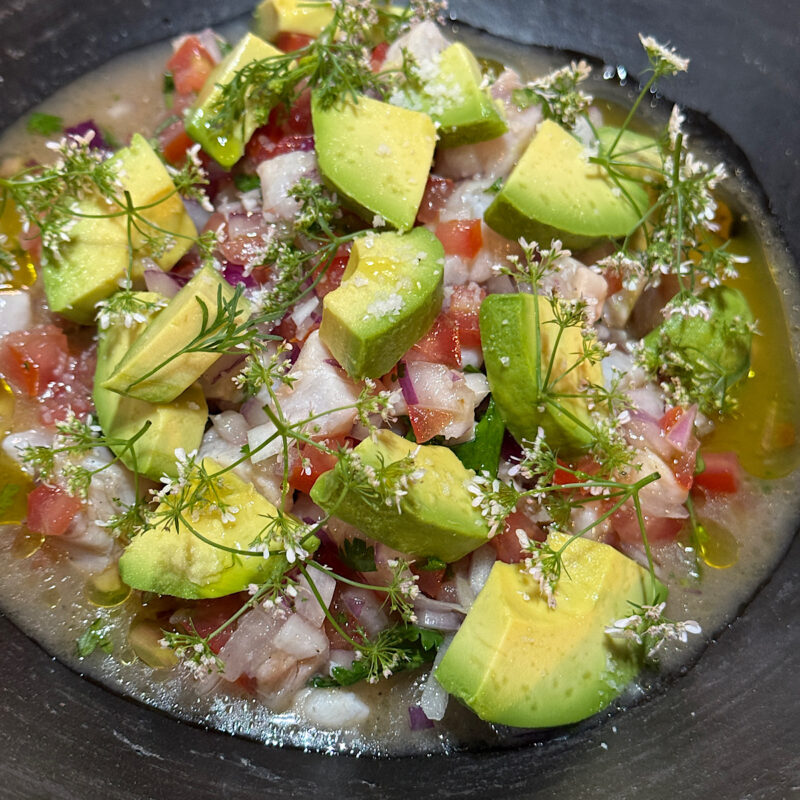
I used to think I disliked ceviche, and I have told that story on this site before: I expected slimy and found bright instead, and scallop ceviche became the version I made at home. Then I went to Oaxaca. [DOROTHY: two or three sentences on the actual meal. Where you ate it, what you noticed first, why it beat everything else on the trip.]
Ceviche is one of those dishes that never really sounded appetizing to me, so I started testing various kinds in restaurants to see what my issue was. I think I anticipated a somewhat slimy raw texture, but I discovered most of them were a fresh, bright treat instead.
Then I went to a cooking class in Oaxaca called Seasons of My Heart, and everything changed. They showed us how to make it with charred habanero and sour orange and it was my favorite dish of the whole trip. That’s saying a lot because all of the food we learned how to make in Oaxaca was a food memory.
The difference was not the fish. It was the curing liquid. Instead of just squeezing limes over the bowl, we charred habaneros and garlic until blackened and blended them into a mix of orange, grapefruit, and lime (a stand-in for Yucatecan sour orange).
This meant the fish cured in flavor, not just acid. I came home, and rebuilt my scallop ceviche around the recipe version I’m sharing below.
What Is Ceviche?
Ceviche (seh-VEE-chay) is a Latin American dish of raw seafood marinated in citrus juice. The acid in the juice changes the protein structure of the fish, firming it up and turning it opaque, similar to what heat does during cooking.
The technique originated in Peru and spread throughout coastal Latin America, with each region developing its own style. Mexican ceviche typically includes tomatoes, onion, cilantro, chile peppers, and a mix of lime and sometimes orange juice.
Ceviche is served cold and eaten fresh. It’s light, bright, and acidic, a perfect contrast to heavier dishes or a refreshing standalone appetizer.
What Type of Fish is Best for Ceviche?
No matter what kind of fish you choose, the key to a great ceviche is quality fish. Since I live in land-locked Minnesota, I opted for fresh-frozen, and I was plenty happy with the results.
Common choices:
- Scallops: Sweet, tender, my preference
- Shrimp: Firm texture, widely available
- White fish (snapper, sea bass, halibut, sole): Traditional in many regions
- Octopus: Requires pre-cooking before marinating
- Mixed seafood: Combine several types
What to look for:
- “Sushi-grade” or “sashimi-grade” if available
- Fresh smell (ocean-like, not fishy)
- Firm texture
- Clear eyes on whole fish
How Long Should Ceviche Marinate?
Ceviche is made by marinating pieces of fish in citrus juice. Essentially, the acid from the juice denatures the proteins just as heat might, giving the seafood a cooked texture and taste, but without any grilling, sautéing or other cooking.
There are no set rules about how long ceviche should marinate in citrus before being served. Some chefs will serve their ceviche immediately after adding the acid, which gives it a more raw texture and taste. Some people will let it marinate for six hours or more.
Here are a few rules of thumb:
- Minimum (10 to 20 minutes): Seafood will be partially “cooked,” more raw in texture.
- Standard (20 to 40 minutes): Seafood is fully “cooked,” opaque throughout but still tender. This is the sweet spot for most ceviches.
- Extended (1 to 2 hours): Firmer texture, more thoroughly marinated. Still good but less delicate.
- Too long (6+ hours): Seafood becomes mushy as the acid continues to break down proteins. Not recommended.
Ceviche can get mushy if you leave it marinating for too long, but I have to say that I made a big bowl, and have been nibbling at it for 2 days without the scallops getting mushy.
Freshness is the main point of ceviche however, so usually the sweet spot is between 20-40 minutes for “cooking”, with anything longer than five or six hours as probably too long for ultimate freshness.
And by the way, after the dish has marinated, you may either keep or drain off the liquid, depending on whether you prefer “wet” or “dry” ceviche (both are accepted).
What Makes Oaxacan Ceviche Different?
Three techniques separate this from the ceviche most of us have made at home, and they are all in the liquid and the assembly rather than the seafood.
The chiles and garlic are charred and blended into the citrus, not diced into the bowl. Charring a habanero over a flame until the skin blackens transforms it. The raw, sharp burn mellows into something smoky and almost fruity, and blending it through the curing liquid means every piece of scallop carries the even warmth.
The citrus imitates sour orange. Southern Mexico cures ceviche in naranja agria, a bitter orange we cannot find in Minnesota. The Oaxacan chef’s solution, and now mine, is a blend of orange, grapefruit, and lime. The grapefruit is the secret: it brings the bitter edge that plain orange juice lacks.
The fish and vegetables cure separately. The scallops cure alone in the blended citrus while the tomatoes, onion, and cilantro sit in a second bowl dressed with olive oil. After twenty minutes you strain the scallops, fold everything together, and splash back just enough curing liquid for sharpness.
This help the vegetables to stay crisp, and the olive oil rounds out the acid. It is a small change in order that makes a large change in texture
Why Scallops Instead of White Fish?
My original recipe used diced white fish, and snapper or sea bass work beautifully if that is what you have available. I stayed with scallops for the same reason I started with them: their natural sweetness is the perfect foil for a curing liquid this assertive, all char and citrus and bitterness.
Living in landlocked Minnesota, I buy fresh-frozen, and I stand by it. High-quality frozen scallops, thawed overnight in the refrigerator and patted very dry, cure just as well as anything sold as fresh, but a thousand miles from the ocean.
Look for dry-packed scallops if you can; wet-packed ones are treated with a solution that fights the cure.
How Do You Char Habaneros?
Char by placing them directly over a gas flame on a skewer, under a broiler, or in a dry cast iron skillet, turning until the skins are blackened in spots and the flesh has softened slightly, about 4 to 6 minutes.
Unpeeled garlic cloves can char alongside in the same skillet until the papery skin is scorched and the clove inside is soft.
Then, peel the blackened skin, and remove seeds and veins wearing gloves. The veins are where the serious heat is, and you need to be very careful about not touching your face or rubbing your eyes. Please wear gloves.
While removing the seeds and veins will decrease the heat quite a bit, the habaneros are still a very spicy pepper. I decreased the amount of habaneros in the recipe below from the five we used in Oaxaca to two. This, of course, all depends on your personal heat tolerance.
Tips for Great Ceviche
- Cut seafood into uniform pieces. This ensures even “cooking.”
- Don’t skip the salt. Salt brings out all the other flavors.
- Add avocado last. It oxidizes quickly and gets mushy if it sits in the acid too long.
- Serve cold. Ceviche should be refreshing. Chill the serving bowl if you want to be fancy.
- Use a non-reactive bowl. Glass or ceramic, not metal, which can react with the acid.
FAQ
Yes. Seafood is an excellent protein source, and the vegetables in ceviche (tomatoes, cucumber, onion) are all allowed. Skip the tortilla chips for a fully compliant meal.
Technically yes, no heat touches it, but the citric acid denatures the proteins the same way heat does, turning the scallops opaque and firm. Start with the freshest scallops you can buy, exactly as you would for any raw preparation.
Yes, and in the Midwest you probably should. Thaw overnight in the refrigerator and pat thoroughly dry. Choose dry-packed scallops when possible, since wet-packed scallops carry added solution that dilutes the cure.
Best within a few hours of making. Can be refrigerated up to 24 hours, but texture suffers after that. Not recommended beyond 2 days.
Prep in stages rather than ahead: blend the curing liquid and prep the vegetable bowl up to a day early, both refrigerated separately. Cure the scallops 30 to 40 minutes before guests arrive and combine just before serving. Assembled ceviche keeps 24 hours in the refrigerator but loses its brightness after the first few hours.
Yes, that is how we made it in Oaxaca. Snapper, sea bass, or halibut, should be diced small, and cured in the same 20-minute window. Everything else in the recipe stays the same.
Charring and seeding remove most of the sting, but you should adjust according to your own heat tolerance. I used two habaneros in the recipe, but the ceviche we made in Oaxaca used six. Start with a lower number, as you can always add more.
Naranja agria is a bitter orange used across southern Mexico for ceviche, cochinita pibil, and marinades. It is nearly impossible to find fresh in the northern US. The orange-grapefruit-lime blend in this recipe is the standard substitution, and the grapefruit is what carries the bitter note.
For another great Mexican recipe that uses sour orange, check out this recipe for Cochinita Pibil.
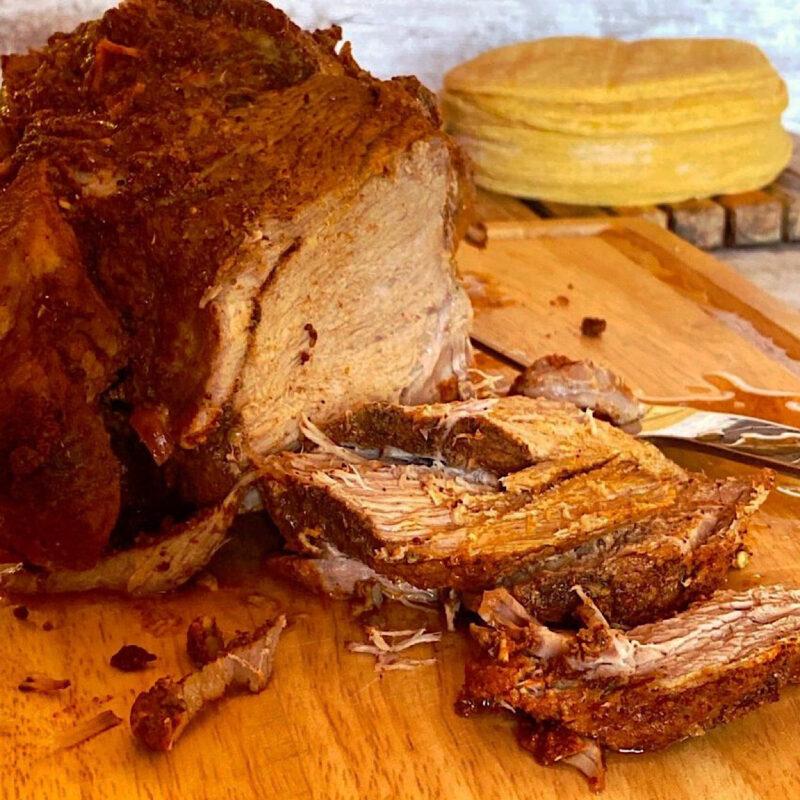
If you want to delve into the world of Mexican cuisine, you’ll want to take a look at this checklist for stocking a Mexican pantry.
Mexican Scallop Ceviche
Ingredients
For the Curing Liquid:
- 2 habaneros charred, peeled, seeded and deveined
- 3 garlic cloves charred and peeled
- ½ cup fresh orange juice
- ¼ cup fresh grapefruit juice
- ¾ cup fresh lime juice 5 to 6 limes
For the ceviche
- 1 ½ pounds scallops bay scallops whole; large sea scallops cut into thirds
- 1 cup finely minced red onion
- 1 cup finely diced ripe tomatoes roma or your best garden tomato; canned diced work in winter, drained well
- ⅓ cup minced cilantro plus more to garnish
- 3 tablespoons good olive oil
- 1 medium cucumber peeled and diced (optional; not in the Oaxaca original, but a good use of a Minnesota garden)
- Salt and black pepper to taste
- 1 avocado sliced, to garnish
- Tostadas to serve
Instructions
- Blend the charred habanero, charred garlic, and all three citrus juices until completely smooth. Taste it. It should be sour, smoky, and warmer than you think the finished dish will be; the scallops tame it.2 habaneros, 3 garlic cloves, 1/2 cup fresh orange juice, 1/4 cup fresh grapefruit juice, 3/4 cup fresh lime juice
- Place the scallops in a glass or ceramic bowl and pour the blended liquid over them, making sure every piece is submerged. Press plastic wrap onto the surface and refrigerate 20 minutes. The scallops are done when opaque through.1 1/2 pounds scallops
- While the scallops cure, combine the red onion, tomatoes, cilantro, olive oil, and cucumber if using in a second bowl. Set aside.1 cup finely minced red onion, 1 cup finely diced ripe tomatoes, 1/3 cup minced cilantro, 3 tablespoons good olive oil, 1 medium cucumber
- Strain the scallops, reserving the curing liquid. Fold the scallops into the vegetable bowl, season with salt and pepper, and add back curing liquid a spoonful at a time until the ceviche is as sharp as you like it. Wet or dry is a matter of taste; both are legitimate.Salt and black pepper to taste
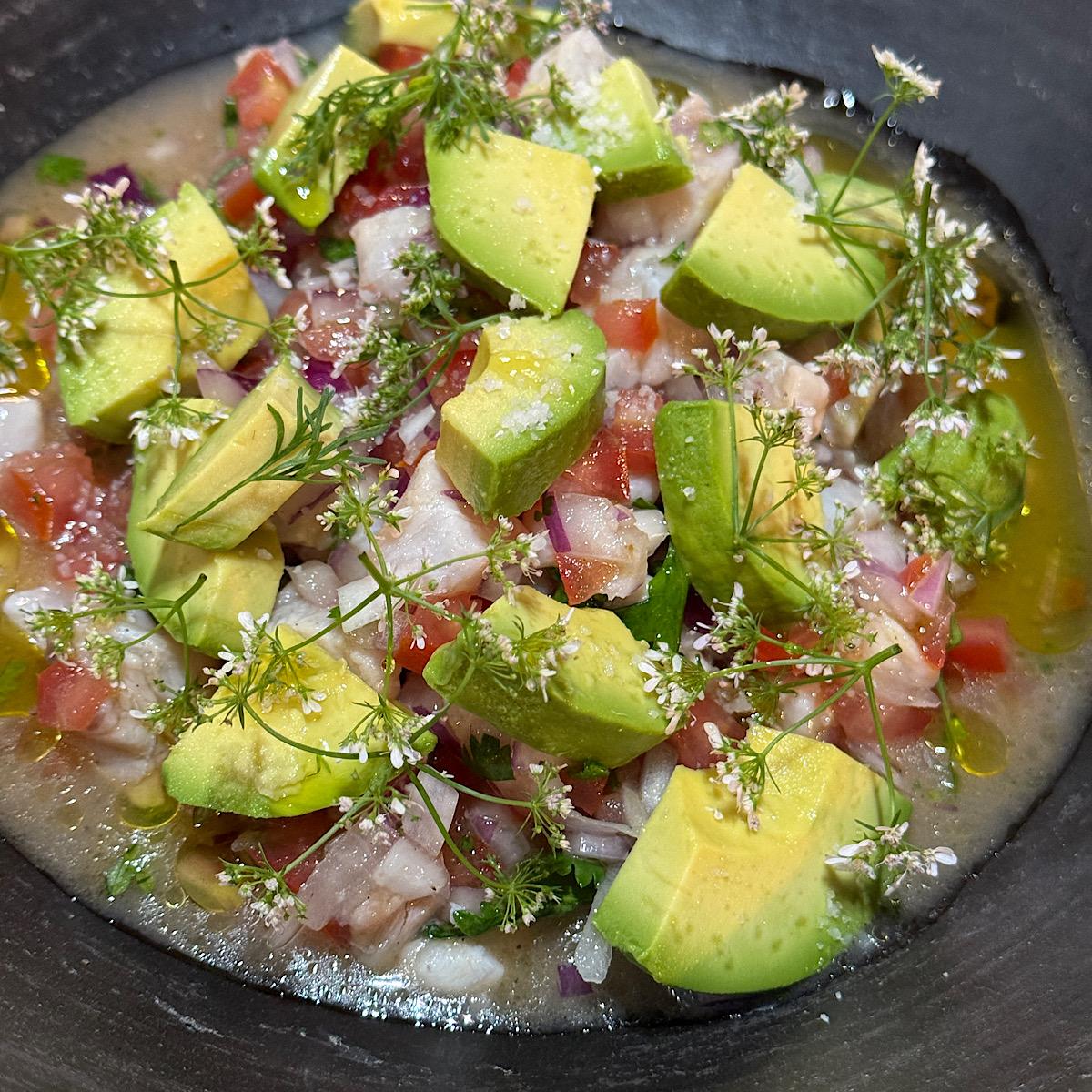
- Serve immediately in a chilled bowl, topped with sliced avocado, a scatter of cilantro, and a pinch of flaky salt, with tostadas alongside. In Oaxaca it came with an ice cold beer, and I see no reason to argue with that.1 avocado, Tostadas
Pingback: Creamed Spinach & Fennel-Seared Scallops - Low carb or keto recipes