
Quick Summary: Group container herbs by growing conditions for success. Sun-loving herbs: basil, rosemary, sage, oregano, thyme, lavender. Shade-tolerant: parsley, cilantro, mint, chives. Moisture-loving: basil, mint, cilantro, parsley, chives. Drought-tolerant: rosemary, sage, thyme, lavender. Combine by cuisine theme: Mediterranean (rosemary, basil, oregano, thyme), Mexican (cilantro, oregano, chile peppers), tea garden (mint, chamomile, lemon balm, lavender). Read time: 6 min | Experience level: Beginner
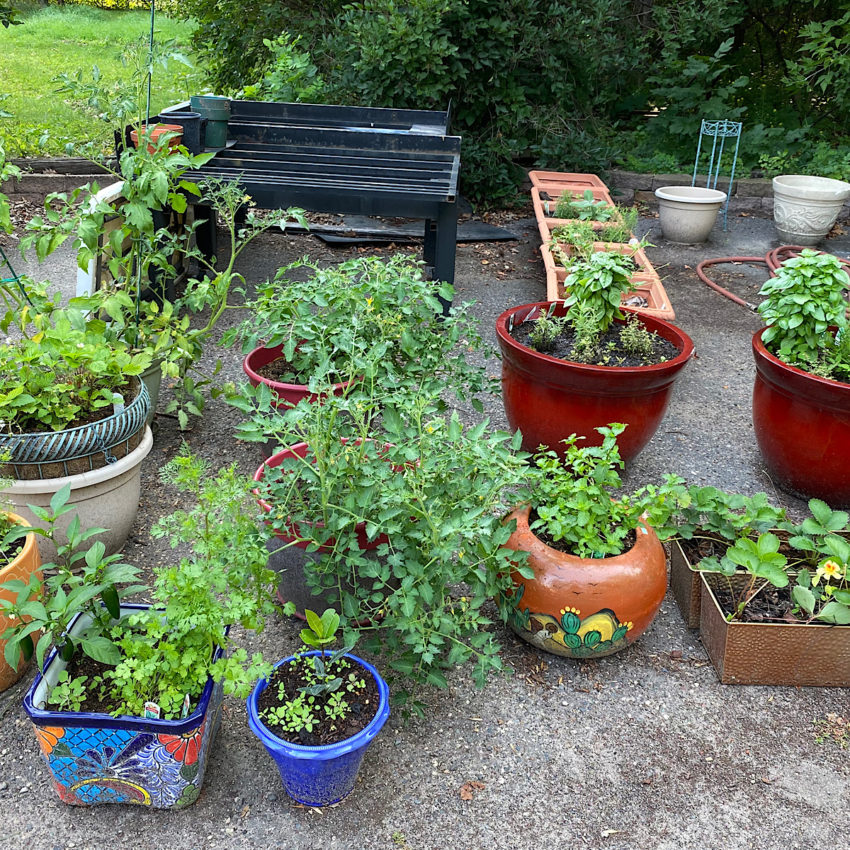
This guide organizes herbs by culinary theme (Mediterranean, Mexican, Indian, tea, cocktail, salad) and by growing requirements so you can plant combinations that thrive together and match how you actually cook.
Jump to: Culinary Themes | Herbs for Sun or Partial Shade | Wet vs Dry Conditions | FAQ
Culinary-themed herb gardens are one of the easiest ways to grow your own food, even if all you have is a balcony small deck. The key to success is grouping herbs that share the same growing conditions: sun-loving Mediterranean herbs together, shade-tolerant herbs together, moisture-lovers together.
This post may contain affiliate links. As an Amazon Associate, I also earn from qualifying purchases. You can read our disclosure information here–
How Do You Choose Which Herbs to Grow Together?
If you have a small space and can only do one or two pots, the herbs you grow together will ultimately depend on your favorite end uses for herbs in your home. Think of it in terms of “themes”
Typical end uses or themes fall into one or more of the following categories:
- Favorite cuisine to cook
- salad gardens
- tea gardens (learn to start your own herbal tea garden)
- cocktail gardens (check out making a (blueberry tarragon shrub syrup)
- healing or medicinal herb gardens (not covered in this post)
Herbs are some of the easiest plants to grow, especially if you are limited to pots or containers.
What Herbs Go Together for Different Cuisines?
The following lists are the classic herbs that go together for each of the above categories (except medicinal).
Since this guide is for beginners, I have only included the herbs & plants that are readily available at most nurseries and are fairly easy to grow. It is not meant to be a comprehensive listing of herbs used in each theme.
- Classic herb combinations for Mediterrean dishes: rosemary, basil, oregano, sage, thyme and lavender
- Classic combinations for Mexican dishes: cilantro, oregano, cumin, mint, parsley and chile peppers
- Classic combinations for Indian dishes: holy basil, mint, curry, mustard, fennel, coriander and dill.
- Classic combinations for Tea Gardens: mint, chamomile, lemon verbena, lemon balm, stevia, lavender, rosemary and sage
- Classic combinations for Cocktail Gardens: mint, rosemary, basil, sage and lavender
- Easy combinations for Salad Gardens: spinach, arugula, lettuce, Mizuna, celery, sorrel, bok choy, watercress, nasturtiums
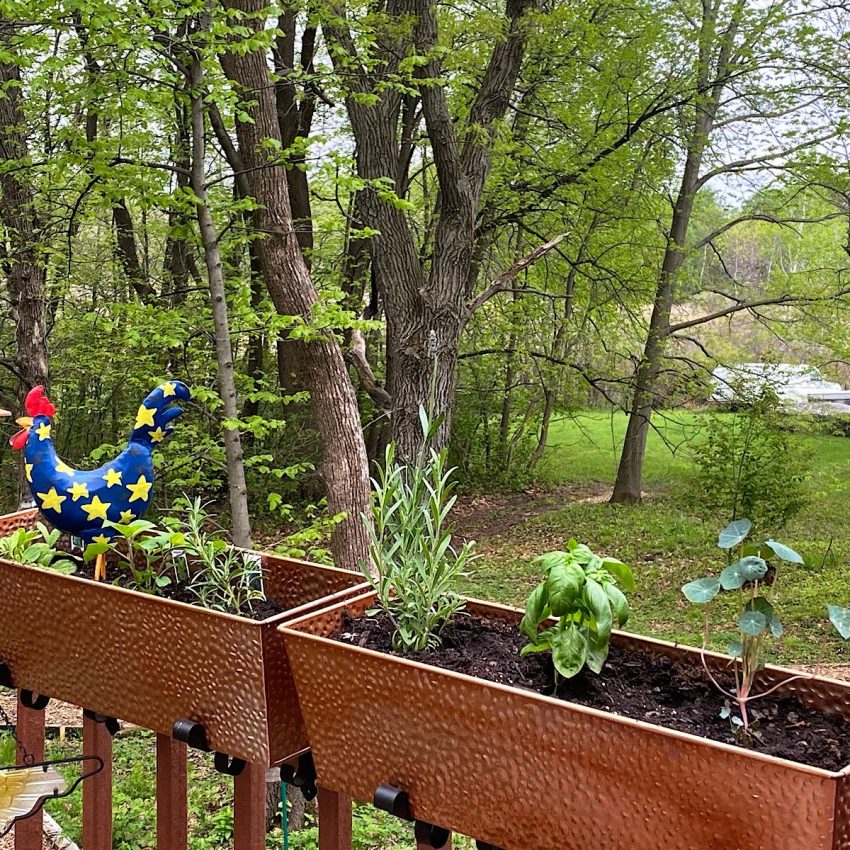
What Herbs Grow Well in Full Sun?
The location of your container garden relative to sun or shade is probably the most important requirement for success. If you are limited to less than 4 hours of sun a day, opt for the herbs that do well in partial shade (see below)
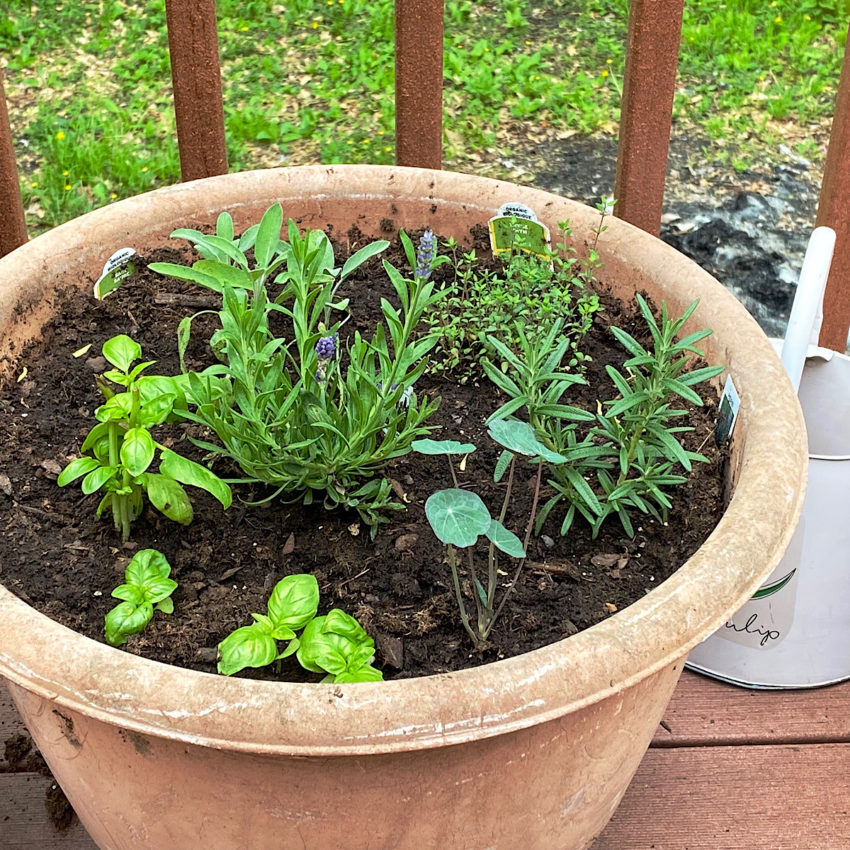
Many herbs do well in full sun, especially the Mediterranean herbs. These would include:
- Basil
- rosemary
- sage
- oregano
- dill
- nasturtiums
- lavender
- chamomile
- fennel
- thyme
What Herbs Grow Well in Partial Shade?
Some herbs will still thrive in partial shade. Partial shade (sometimes called part shade or partial sun) is defined as 3-6 hours of direct sun daily.
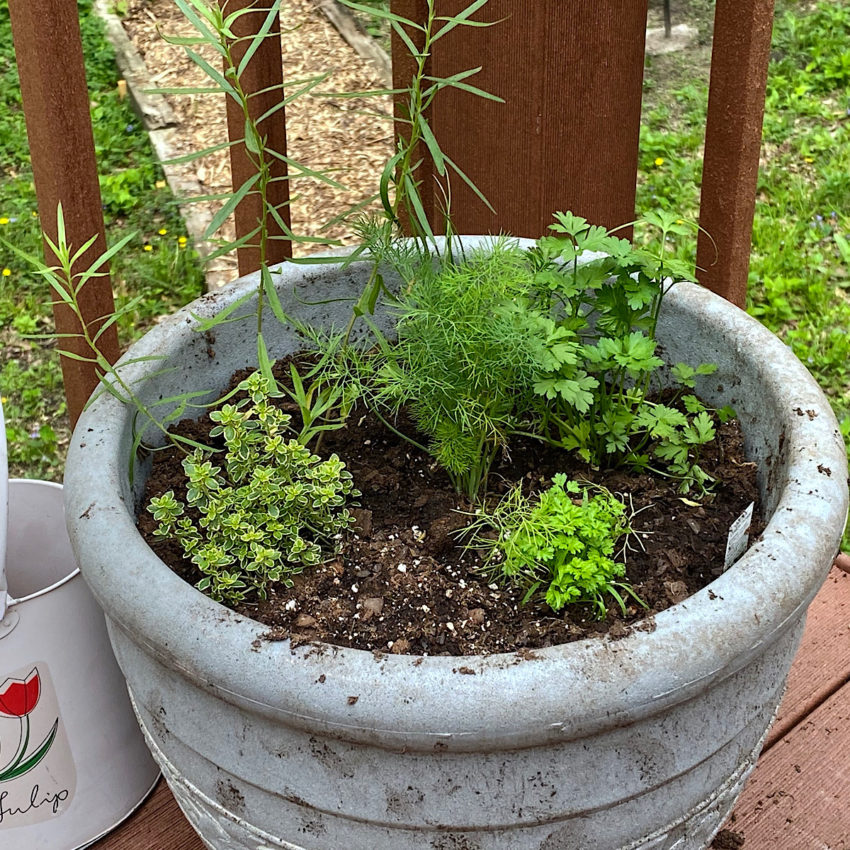
- Parsley
- cilantro/coriander
- mint
- chives
- thyme
- tarragon
- lemon balm
- chervil
- sorrel
What Herbs Need Wet vs. Dry Conditions?
If you are grouping herbs together in one pot, make your life as easy as possible. Combine herbs that thrive with frequent watering in one pot and herbs that do well with dry conditions in another
Moisture-loving herbs:
- Chives
- chervil
- mint
- cilantro
- parsley
- Basil
- arugula
Herbs that thrive under dry conditions:
- Rosemary
- sage
- thyme
- tarragon
- lavender
- bay leaf
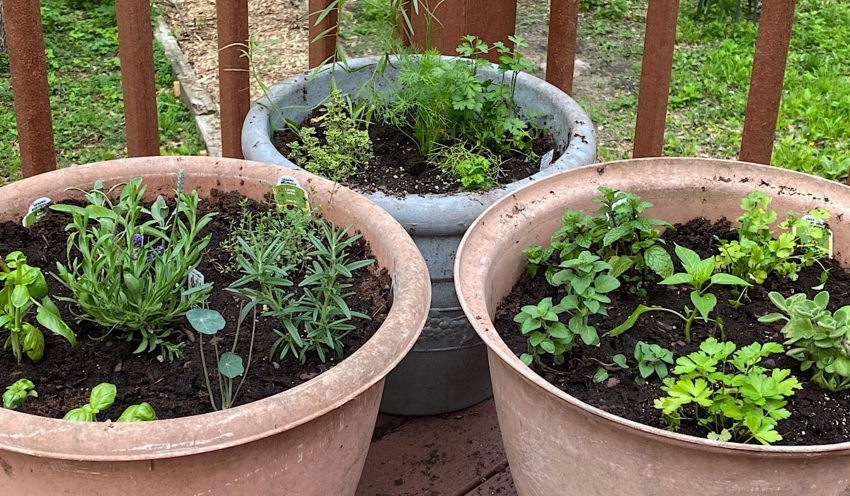
Match herbs to your conditions and cooking style and you will achieve success in your first year!
FAQ
Group by water needs. Rosemary, sage, thyme, and lavender (drought-tolerant) in one pot. Basil, mint, cilantro, and parsley (moisture-loving) in another. Mixing them causes overwatering or underwatering problems.
Parsley, cilantro, mint, chives, tarragon, lemon balm, and chervil tolerate partial shade (4 hours of sun). Most Mediterranean herbs need full sun (6+ hours).
Mint. It’s nearly impossible to kill, grows in sun or partial shade, and tolerates inconsistent watering. Keep it in its own pot; it spreads aggressively.
Yes, with enough light. A sunny south-facing window works for many herbs. Basil, parsley, chives, and mint adapt well to indoor growing. Mediterranean herbs like rosemary struggle without strong light.
Mint, chamomile, lemon verbena, lemon balm, stevia, lavender, rosemary, and sage. All can be grown in containers.
Mint (mojitos, juleps), rosemary (gin drinks), basil (smashes), sage, and lavender. A single large pot can supply a summer of cocktails.
If you want to explore the world of teas and tisanes, check out this Complete Guide to Teas. It includes information on how to grow a tea garden, types of tea, brewing times and temp., recipes for blends, caffeine amounts, and much more.
For more guides on growing food (indoors or outdoors, in pots or in garden, overall growing tips), check out this category of articles called Grow Your Own Food.