
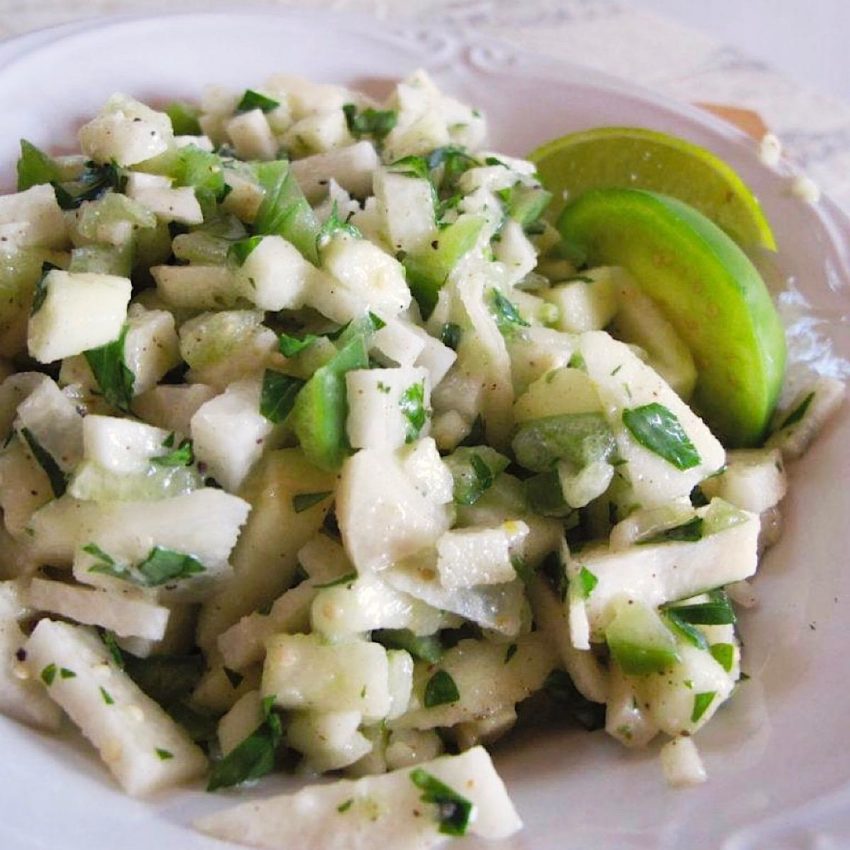
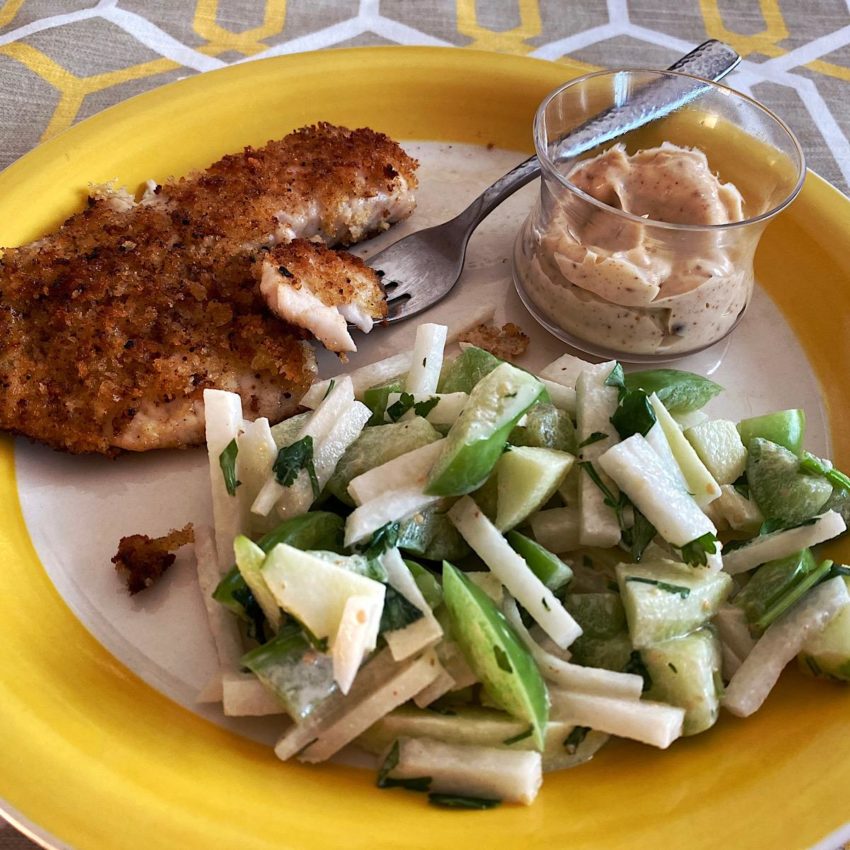
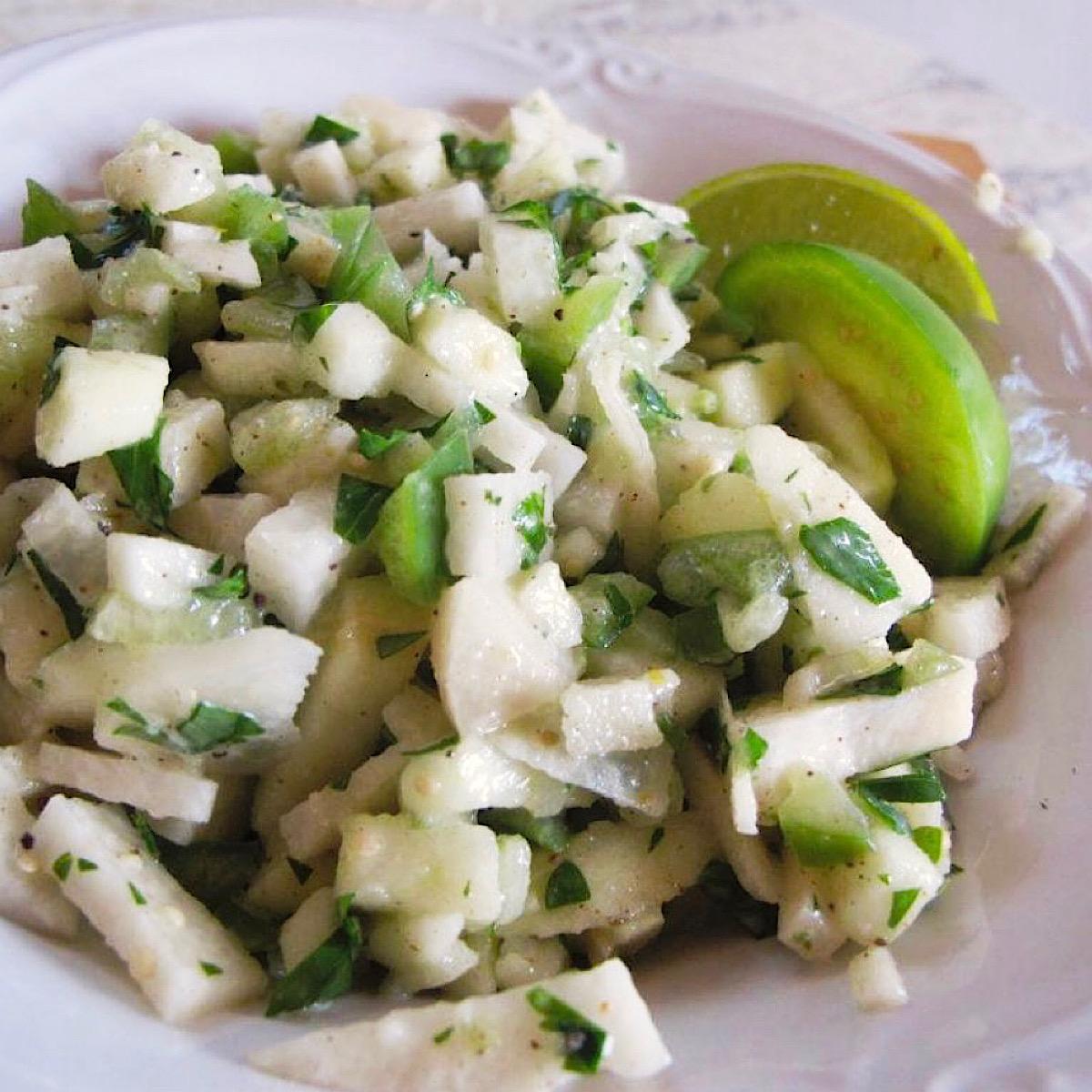
Quick Summary: A crisp, bright salad (or slaw) combining sweet jicama, tart tomatillos, and Granny Smith apples, dressed with a creamy Caribbean-spiced aioli. Recipe includes breaded tilapia to make it a full dinner. Includes homemade jerk seasoning blend and aioli recipe. Salad is low carb but breaded fish is not. Prep: 20 min | Serves: 6
Jump to: RECIPE | What is Jicama? | What is Aioli? | Ingredients | Jerk Seasoning | Is it Low Carb? | More Jicama Recipes | FAQ
Jicama (HEE-kah-ma) is a Mexican root vegetable that tastes like a cross between a water chestnut and an apple. It stays crisp even after dressing, which makes it perfect for salads and slaws.
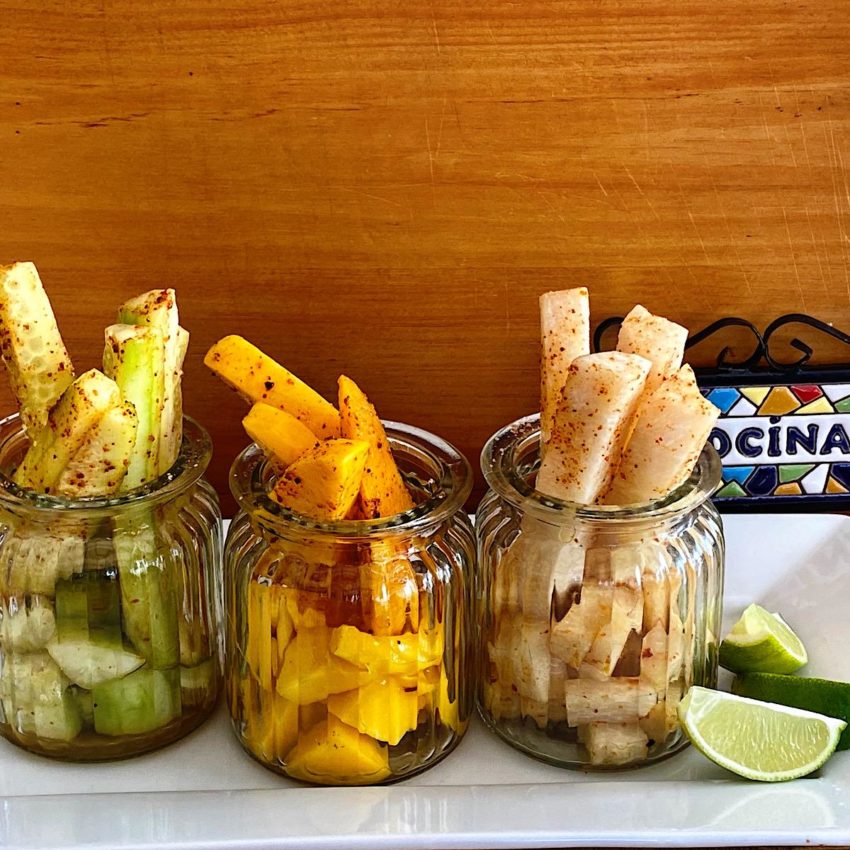
In Mexico, street vendors sell raw jicama sticks, along with other fruit, sprinkled with a chile lime salt (Tajin). In the recipe below however, I’ve combined it with tomatillos and apples as a side dish to breaded tilapia for a refreshing dinner.
The creamy jerk aioli dressing for the salad started as an experiment when I had leftover jerk seasoning from the spice blends I sell at the St. Paul Farmers’ market.
It worked so well that it’s become my default dressing for this slaw. The warming spices (allspice, cinnamon, thyme) complement the cool crunch of the jicama and apples really nicely.
The brightness of the salad pairs beautifully with the breaded tilapia in the recipe below for a healthy, simple dinner.
This post may contain affiliate links. As an Amazon Associate, I also earn from qualifying purchases. You can read our disclosure information here–
What is Jicama?
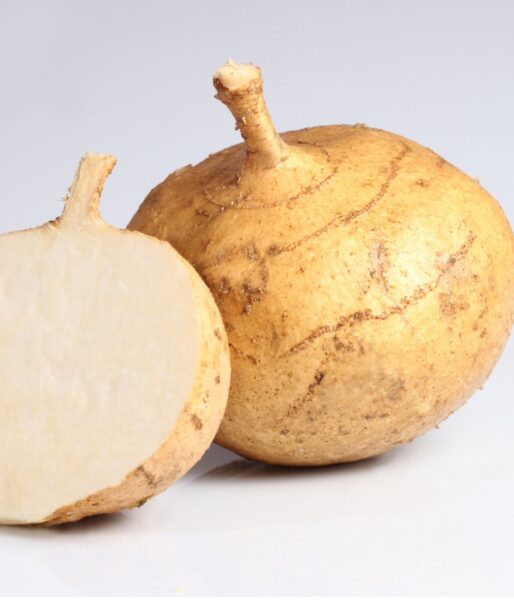
Jicama, (pronounced (HEE-kah-ma), is a root vegetable native to Mexico. It looks like a brown turnip but tastes completely different. It is sweet, crisp, and mild, with a texture similar to water chestnuts or Asian pears.
Unlike most vegetables, jicama is usually eaten raw.
In Central America and Mexico, jicama is popular street food, sold in cups or on sticks with chile lime salt (Tajín) and fresh lime juice squeezed over it. The sweetness of the jicama balances the heat and acid perfectly.
The entire jicama plant except the root is toxic, so don’t be tempted to nibble the leaves if you grow it. The root is the only edible part.
How Do You Prepare Jicama?
Although quite popular in Mexican and Caribbean cuisine, in the United States jicama is less common and may intimidate home cooks who’ve never tried it. Here’s how to prepare it:
- Remove the tough brown skin using a sharp paring knife or a vegetable peeler. The skin is pretty fibrous and can get matted up in the vegetable peeler, so I cut off both ends of the jicama off before peeling, as that is the most fibrous part.
- If you are using a paring knife to peel it, stand the jicama on one flat end and slice downward to remove the skin in strips.
- Then cut the white flesh into cubes or strips (often referred to as matchsticks) with a sharp knife.
- Jicama doesn’t brown or become soggy after cutting, so you can prep it well ahead of serving. Store cut jicama in water in the refrigerator if prepping more than a few hours ahead.
While it is popular to serve this crisp vegetable raw with a dip or in a salad, you can also use quick-cooking methods that allow jicama to keep its crispness (like indoor grilling or stir-frying).
How to Make Homemade Jerk Seasoning Blend?
For making your own jerk seasoning spice blend, whisk together the following ingredients:
- 2 teaspoons brown sugar
- 2 teaspoons dried thyme
- 1 teaspoon ground allspice
- 1 teaspoon salt
- 1/2 teaspoon pepper
- 2 teaspoons garlic powder
- 1/4 teaspoon cinnamon
- 2 teaspoons cayenne pepper
- 1 teaspoon paprika
- 1/2 teaspoon crushed chile pepper
- 2 teaspoons onion powder
How Do You Make the Jerk Aioli?
In Mediterranean cultures, a traditional aioli refers to an emulsified sauce made from olive oil and mashed garlic and salt.
Modern versions use mayonnaise as the base, which is simpler and more stable. Current versions of aioli also include many different spice blends and seasoning additions.
For jerk aioli, mix mayonnaise with jerk seasoning blend (recipe above) to taste. Start with 2 teaspoons per cup of mayo.
The warmth of the allspice and cinnamon, the heat from the cayenne, and the herbaceous thyme create a dressing that’s creamy but complex.
Use the aioli as:
- Dressing for this slaw
- Spread for fish sandwiches
- Dip for jicama sticks or fries
- Topping for grilled fish or shrimp
You can spice it up with hot chile peppers, warm ginger, umami fish sauce, etc.
Ingredients
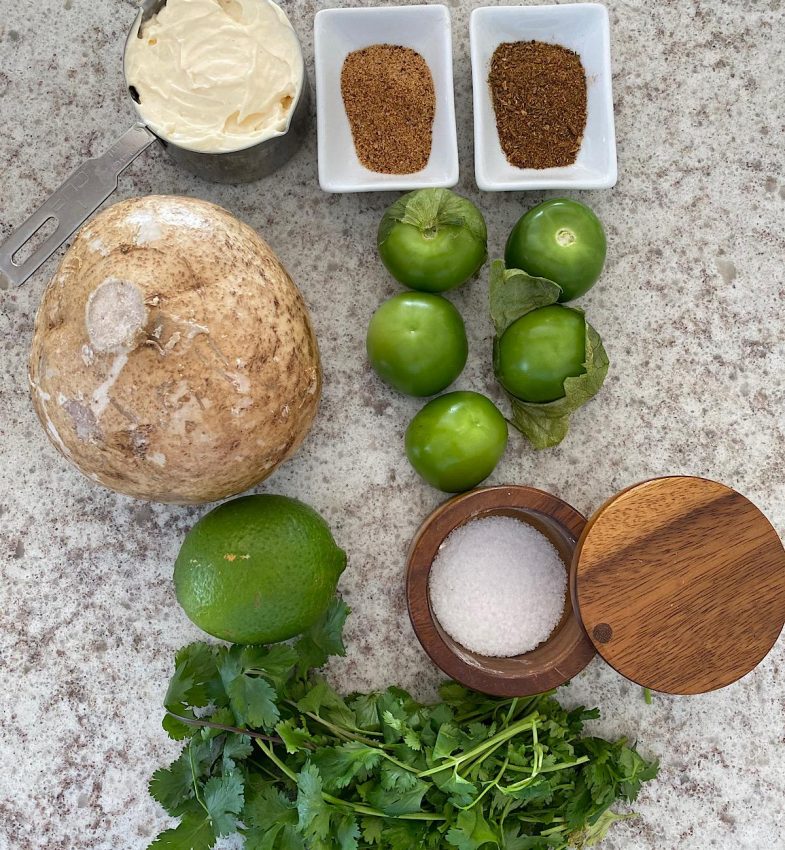
The following photo shows you all the ingredients you will need for this recipe. For details on measurements, see the recipe below.
More Recipes Using Jicama and Jerk Seasoning
Jicama is pretty versatile due to its mild flavor and satisfying crunch. It lends itself to a wide array of snacks, side dishes and toppings. Here are a few of my favorite recipes:
- a topping on a Baja taco
- Jicama fries
- a filling for tacos
- Mexican street food (raw jicama with lime and Tajin)
- Fish sandwich with jicama slaw
- Jicama matchsticks for dipping in guacamole
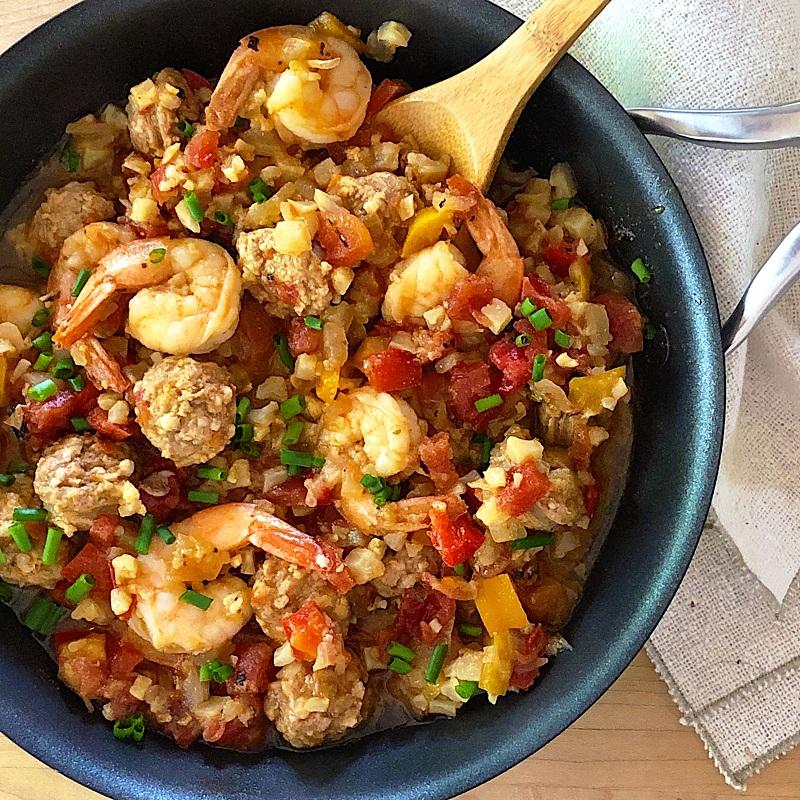
For other recipes using a jerk seasoning mix, check out this chicken sheet pan dinner or this low carb jambalaya.
Where can you Grow Jicama?
Jicama is commercially grown in Puerto Rico, Hawaii, and Mexico and in some warmer areas of the southwest United States. It is sensitive to frost and does best in warm climates with a medium amount of rain.
I’m giving it a go here in Minnesota and started it from seed in mid-March. If we have a long summer I might be able to pull it off. Here’s what the jicama seedlings look like:
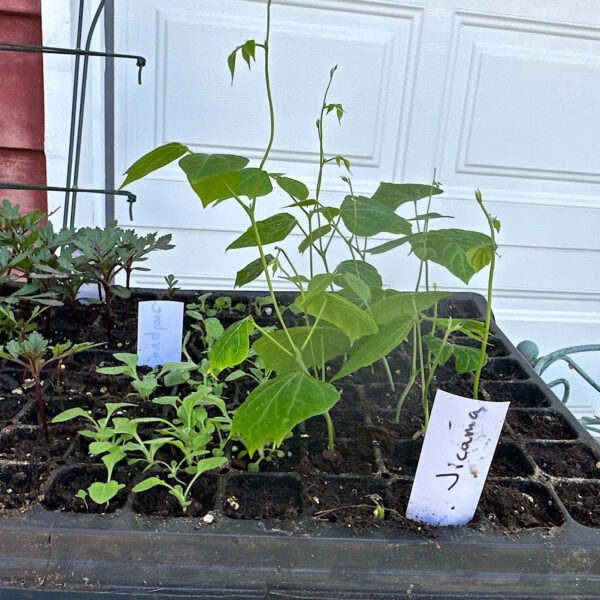
The vines of the plant can grow up to 20 feet in length, but the leaves and seeds are actually toxic. The root is the only edible portion of the entire plant.
All of the jicama found in US markets is produced in Mexico. There has been some interest in producing it in California, but hasn’t been very successful. Many of the efforts in California resulted in luxurious vine growth with prolific flowering, but with low quality fibrous taproots.
A long, warm growing season under relatively short day length is required to initiate good quality fleshy root development. Past efforts in California were successful under unusually warm October and November conditions.
Is Jicama Low Carb or Healthy?
With respect to health, jicama is rich with a prebiotic called inulin, which is a benefit to gut health. It is also rich in Vitamin C and Vitamin A, and is often referred to as one of the “superfoods”.
Most root vegetables are starchy and are not “low carb” if you are counting the overall amount of carbs. The amount of fiber in root vegetables (and in jicama) however, mitigates the impact of the carbs in relation to glycemic response.
The following nutrition information is provided by the USDA for 1 cup (120g) of raw jicama slices.
- Calories:46
- Fat:0.1g
- Sodium: 5.2mg
- Carbohydrates:11g
- Fiber:5.9g
- Sugars:2.2g
- Protein: 0.9g
Because of the high fiber content in jicama, it is considered a low glycemic food. The glycemic load of this vegetable is approximately 10. A glycemic load of less than 10 is thought to have little effect on blood glucose response.
Naturally low in calories at 25 calories per ½ cup serving, jicama is also fat free, low in sodium, and a superb source of fiber.
FAQ
Mild, slightly sweet, and very crisp. Often compared to a cross between water chestnuts and apples. The flavor is subtle enough to take on dressings and seasonings well.
Jicama should stay fresh for about two weeks when stored in the refrigerator. Cover any exposed areas with plastic wrap to minimize air exposure.
Yes, though it’s most commonly eaten raw. Quick-cooking methods (stir-frying, grilling) preserve its crunch. It softens if cooked too long.
Most supermarkets carry it in the produce section, often near other Latin American vegetables. Mexican and Latin grocery stores always have it.
Most supermarkets carry it in the produce section, often near other Latin American vegetables. Mexican and Latin grocery stores always have it.
Green tomatoes provide similar tartness. In a pinch, increase the lime juice and use regular tomatoes, though the flavor will be different.
Use it as a dip for fries, a spread on sandwiches, a dressing for coleslaw, or a topping for grilled proteins. It keeps refrigerated for about a week.
Jicama Tomatillo Slaw on Fish Sandwich
Equipment
Ingredients
- 1 cup mayonnaise
- 2 tsp jerk seasoning mix see notes for homemade blend
- 1 small jicama peeled and thinly chopped or julienned
- 5 tomatillos peeled and chopped
- 1 cup granny smith apples peeled & sliced into thin matchsticks
- 1 lime juiced
- ½ cup cilantro chopped or minced
- ½ tsp salt or to taste
For breaded fish filets
- 2 Tbsp refined olive oil
- 2 eggs lightly beaten with wire whip
- 1 ½ cup panko crumbs
- 4 4-oz Tilapia filets Can use other white fish
Instructions
- In a small bowl, mix together the mayonnaise and the jerk seasoning (see notes below for homemade jerk seasoning).1 cup mayonnaise, 2 tsp jerk seasoning mix
- Combine the next 6 ingredients plus 2 Tbsp of the jerk mayo mix in a large bowl (make sure everything is chopped to be bite size). Cover and place in refrigerator until ready to use.1 small jicama, 5 tomatillos, 1 cup granny smith apples, 1 lime, 1/2 cup cilantro, 1/2 tsp salt
For breaded fish filets
- Dry the fish filets thoroughly with paper towels. Heat oil to quite hot in large skillet. Dip the filets first in the beaten eggs and then in the panko crumbs and place in hot skillet.2 Tbsp refined olive oil, 2 eggs, 1 1/2 cup panko crumbs, 4 4-oz Tilapia filets
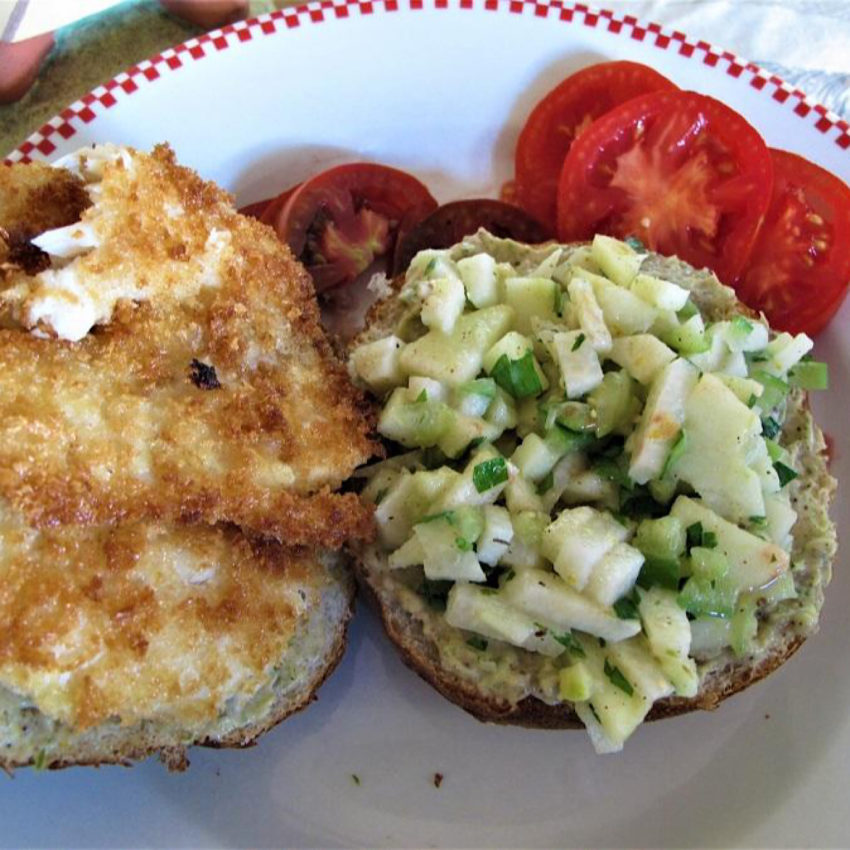
- Lightly fry breaded fish for about 2-3 minutes and then turn and fry on the other side. Transfer the fish to a plate and serve with a side of jicama salad/slaw and the extra jerk aioli. To use in a fish sandwich, spread the aioli on heated buns, add the breaded fish on top of the bun and top the fish with the jicama slaw.
Video
Notes
Homemade Jerk Seasoning Blend
For making your own jerk seasoning spice blend, whisk together the following ingredients:- 2 teaspoons brown sugar
- 2 teaspoons dried thyme
- 1 teaspoon ground allspice
- 1 teaspoon salt
- 1/2 teaspoon pepper
- 2 teaspoons garlic powder
- 1/4 teaspoon cinnamon
- 2 teaspoons cayenne pepper
- 1 teaspoon paprika
- 1/2 teaspoon crushed chile pepper
- 2 teaspoons onion powder
Dorothy, for the better part of 62 years, I have rarely missed any single opportunity to satiate one of the fundamental aspects of my existence – an inner need to constantly diversify, experiment and broaden my experiences regarding my interaction with the culinary realm. In other words, I will try anything, especially foods from other cultures. I was a ‘foodie’ before it became cool. As long as I can remember, this is an inherent personality-shaping quality in me. Simultaneously, I harbor a strong drive to learn everything I can about peoples of the world with all of its vast diversity. Born white, male, middle class, and reared in Oklahoma, I was able at a young age to see many manifestations of racial inequality. And I also could hear the narrow-minded opinions of some adults in my immediate circle, which apparently motivated my desire to grow into a man that meets and greets each person as an equal, simply because we are both persons. In today’s pandemic environment, I sense conditions are currently aligning themselves, so that soon one or more huge strides in the advancement of the civilization of mankind may be possible. My point here is: I was a non-racist before that was cool, too. After all, I wanted to try soul food, too! So, enough of my introduction. I was a virgin until I met you in your blog. I mean, when it comes to Jicama, I was. I was so excited to finally know a way to eat Jicama, I made your Jicama-Tomatillo slaw within 36 hours of watching your video. I suppose it would be an exaggeration to say it filled a void in my life. Besides, saying that raises the valid question of why I never just Googled it before. I did take a liberty with the recipe by using two apples. Your recipe resulted in a wonderful salad with a superb balance of tart vs sweet, and of crunchy vs mushy. I enjoyed it very much. I rarely post a comment, and even rarer do I award 5 stars, but since the only other comment on this recipe is dated from 2012, I figured what the hell and did it anyway. It’s funny, I made the salad knowing I would like it. I knew there was no reason I would not like it: I am predisposed to have a strongly-favorable opinion on any offering from woman whose requisite farm tour toolkit is a large, full wine goblet! From the southern end of the great plains to the northern, thank you for the recipe. Your friend, Art Karatzou
Wow, that is quite a review, and I thank you for the kind words and taking the time to write your thoughts. I am going to change the recipe based on your recommendation to add two apples. I thought the same thing while I was making it this time, so you just confirmed it! Thanks for watching the videos also. Much appreciated……take care.
This looks great, I’m definitely going to make it! I’m off on a short research trip tomorrow so it will be a while but I certainly want to try this before the heirloom tomato season is over.