
Quick Summary: Mexican natilla is a silky stovetop custard made with milk, egg yolks, cornstarch, sugar, and cinnamon. Unlike the firmer Colombian version made with panela (piloncillo), Mexican natilla is pourable and creamy, closer to its Spanish ancestor. Serve it warm or chilled in small cups, dusted with cinnamon. Prep: 10 min. Cook Time: 30 min Serves: 6
Jump to: RECIPE | What is Columbian Natilla | What is Mexican Natilla | Variations | Tips for Best Natilla | More Custard Desserts | FAQ

Natilla, a rich custard-like dessert, has several different variations depending on the country of origin. This recipe is for a Mexican natilla, which is a creamy milk custard that is spoonable and flavored with cinnamon and sometimes vanilla or citrus zest. It’s richer than American pudding but lighter than flan, with a silky texture that coats the spoon.
What is Natilla
Natilla (nah-TEE-yah) is a rich, custard-like Latino dessert. In Mexico, it is more like the drink Atole leche than a pudding or custard. In Costa Rica, sour cream is used in natilla. The Colombian version does not include eggs, and is similar to dulce de leche.
Columbian Natilla
Colombian natilla is thickened with cornstarch and flavored with panela, a dark molasses-like sugar that is a by-product of sugarcane processing. (Dark brown sugar is a good substitute). Colombian-style natilla tends to be firmer and sliceable, though it can also be served in a creamier pudding form.

Ingredients for Columbian Natilla:
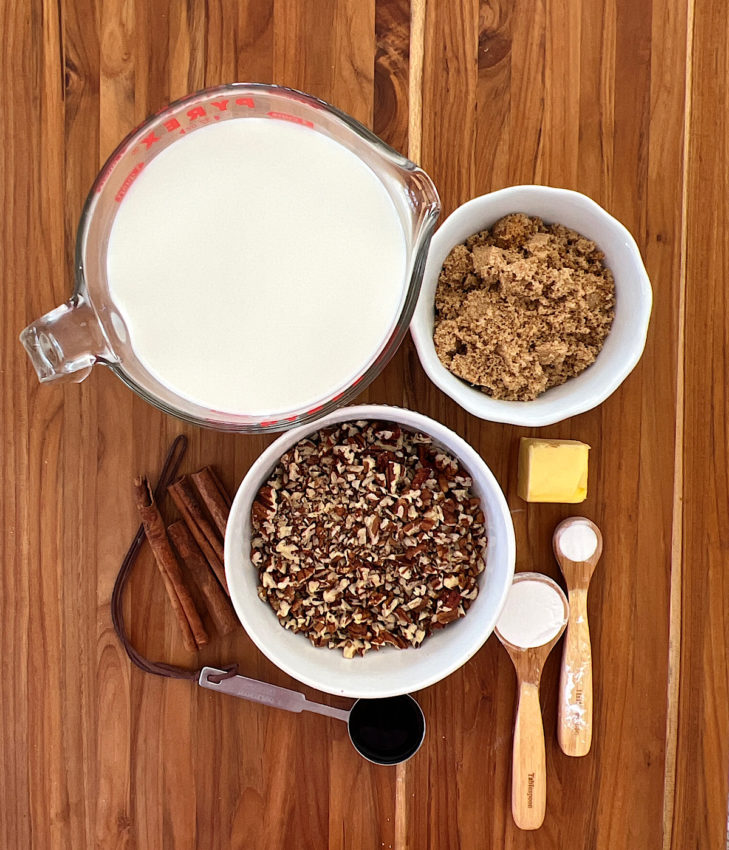
Mexican Natilla
Mexican natilla is a creamy milk custard that came to Mexico from Spain during colonial times. The name comes from nata, meaning cream skimmed from fresh milk. Spanish nuns in La Mancha region convents are credited with developing many egg yolk-based desserts, including natillas, because they used egg whites to clarify wine and needed ways to use the leftover yolks.
The Mexican version stays close to the Spanish original: a pourable, spoonable custard flavored with cinnamon and sometimes vanilla or citrus zest.

Natilla vs Flan
Both are milk-based Mexican desserts, but they’re quite different:
- Natilla is a stovetop custard thickened with cornstarch and egg yolks. It’s spooned into cups and served with a cinnamon dusting.
- Flan is a baked custard set with whole eggs, inverted to reveal a caramel sauce on top.
Natilla is the easier of the two, with no water bath, no unmolding, and it comes together in about 15 minutes on the stove.
Regional Variations
Natilla varies across the Spanish-speaking world:
- Spanish natillas: Light custard often served with María cookies, flavored with lemon zest and cinnamon
- Mexican natilla: Creamier, often using Mexican cinnamon (Ceylon), sometimes with vanilla or chocolate
- Colombian natilla: Firm, sliceable pudding made with panela and no eggs, served at Christmas with buñuelos
- New Mexican natillas: Closest to the Spanish version, sometimes with flour instead of cornstarch, often with whipped egg whites folded in for lightness
- Zacatecan natilla: A modern “tres leches” approach using condensed milk, evaporated milk, and whole milk
The recipe below follows the classic Mexican approach, creamy, not firm, with Mexican cinnamon as the defining flavor.
Ingredient Variations
- Chocolate Natilla: Add 2 tablespoons cocoa powder and an extra 2 tablespoons sugar to the egg mixture. Mexican chocolate versions are common.
- Coffee Natilla (Natilla de Café): Steep 2 tablespoons instant coffee or 1/4 cup strong brewed coffee with the cinnamon-infused milk.
- Coconut Natilla: Replace 1 cup of the milk with full-fat coconut milk. Top with toasted coconut.
- Zacatecan Style: Replace 1 cup whole milk with 1/2 cup sweetened condensed milk and 1/2 cup evaporated milk. Top with roasted pecans.
Tips for Perfect Natilla
- Use Mexican cinnamon. Ceylon cinnamon (canela) has a softer, more complex flavor than cassia cinnamon. It’s the difference between good and great in this recipe.
- Don’t stop stirring. The moment you walk away, the custard will scorch on the bottom. Keep it moving.
- Low and slow. High heat scrambles eggs. Medium-low gives you control.
- The plastic wrap trick. Pressing it directly onto the surface isn’t optional — natilla develops a thick skin if exposed to air.
- Serve in small portions. This is richer than it looks. Small cups (4-6 ounces) are traditional.
What is Traditionally Served with Natilla?
This dessert is often served with buñuelos, especially the Columbian version. Buñuelos are made from a simple yeast dough that is thinly rolled and then fried. Often they are finished off with a sweet topping, but in Colombia they are typically filled with cheese instead of covered in sugar.
Buñuelos may be filled with a variety of things, sweet or savory. They can be round in ball shapes or disc-shaped. In Latin America, buñuelos are seen as a symbol of good luck, and are often served around the holidays.
More Custard desserts you may enjoy

FAQ
Yes. It keeps refrigerated for 3-4 days. The flavor actually deepens overnight.
Traditional natilla is not slow carb compliant due to the sugar and milk. For a slow carb version, substitute unsweetened almond milk, use a sugar substitute like allulose or monkfruit, and reduce cornstarch slightly (or use xanthan gum as a thickener). The texture will differ, but the cinnamon flavor comes through.
Either the heat was too high or you added the eggs too fast. Temper slowly, cook over low heat, and strain through a fine-mesh sieve if needed.
Arrowroot works but thickens more. Use 2 tablespoons instead of 3. Flour creates a heavier, slightly grainy texture.
No. Flan is baked with whole eggs and topped with caramel. Natilla is stovetop, thickened with cornstarch and yolks, and dusted with cinnamon.
Colombian natilla uses panela (unrefined cane sugar), no eggs, and sets firm enough to slice. Mexican natilla is creamy and pourable, made with eggs.
Mexican Natilla

Equipment
- Medium sized pot
- heat proof serving glasses
Ingredients
- 3 cups whole milk
- 2 cinnamon sticks Mexican/Ceylon preferred
- 4 egg yolks
- ¾ cup sugar
- 3 tablespoons cornstarch
- Pinch of salt
- 1 cup whole milk
- 1 teaspoon vanilla extract
- Ground cinnamon for serving
Instructions
- Infuse the milk; Pour 3 cups of milk into a heavy-bottomed saucepan. Add the cinnamon sticks and heat over medium until the milk just begins to steam. Don't let it boil. Remove from heat and let steep for 10 minutes.3 cups whole milk, 2 cinnamon sticks
- Make the egg mixture. In a bowl, whisk together the egg yolks, sugar, cornstarch, and salt until smooth. Slowly whisk in the remaining 1 cup of cold milk until no lumps remain.4 egg yolks, 3/4 cup sugar, 3 tablespoons cornstarch, Pinch of salt, 1 cup whole milk
- Temper the eggs. Remove the cinnamon sticks from the warm milk. Ladle about 1/2 cup of the warm milk into the egg mixture while whisking constantly. This prevents the eggs from scrambling.
- Cook the custard. Pour the tempered egg mixture back into the saucepan with the remaining warm milk. Cook over medium-low heat, stirring constantly with a wooden spoon or silicone spatula. Don’t stop stirring.
- Watch for thickness. After 8-10 minutes, the custard will thicken enough to coat the back of a spoon. Draw your finger across the spoon. If the line holds without dripping, it's ready.
- Finish and cool. Remove from heat immediately. Stir in the vanilla. Pour into small cups or a serving bowl. Press plastic wrap directly onto the surface to prevent a skin from forming.1 teaspoon vanilla extract
- Chill. Refrigerate at least 2 hours. Dust with ground cinnamon before serving.Ground cinnamon for serving
Nutrition
¡Buen Provecho!
Thanks, Dorothy, for correcting the existing misspelling re. Colombia. . And BTW, your recipe is DELICIOUS!!!!
You bet….thanks for letting me know!
PLEEEEAAASSEEEE!!! Make a correction: It’s NOT Columbian with an U!! It’s ColOmbian with the letter “O”! The name of the South American country is ColOmbia. Thanks!
Thank you so much for the helpful comment. I will change pronto. OK, I think I got all the references to Colombia. Thanks again.