Quick Summary: Four reliable methods for making large batches of iced tea: hot brew and chill, cold brew overnight, sun tea, and concentrate. Each method has trade-offs in time, flavor, and convenience. Cold brew produces the smoothest flavor with the least bitterness. Hot brew is fastest. Includes ratios for gallon batches.
At HeathGlen Organic Farm, I’m adding iced tea to my farmers market offerings this summer, which means I’ve been testing big batch methods to find what works best for quality and efficiency. Making iced tea for a crowd is different from brewing a single cup. You need methods that scale, stay fresh, and don’t turn bitter. Here are four approaches I use, with the ratios and timing for each.
Jump to: Cold Brew | Hot Brew | Sun Tea | Concentrate | FAQ
This post may contain affiliate links. As an Amazon Associate, I also earn from qualifying purchases. You can read our disclosure information here–
What Is the Best Method for Making Iced Tea?
It all depends on your priorities.
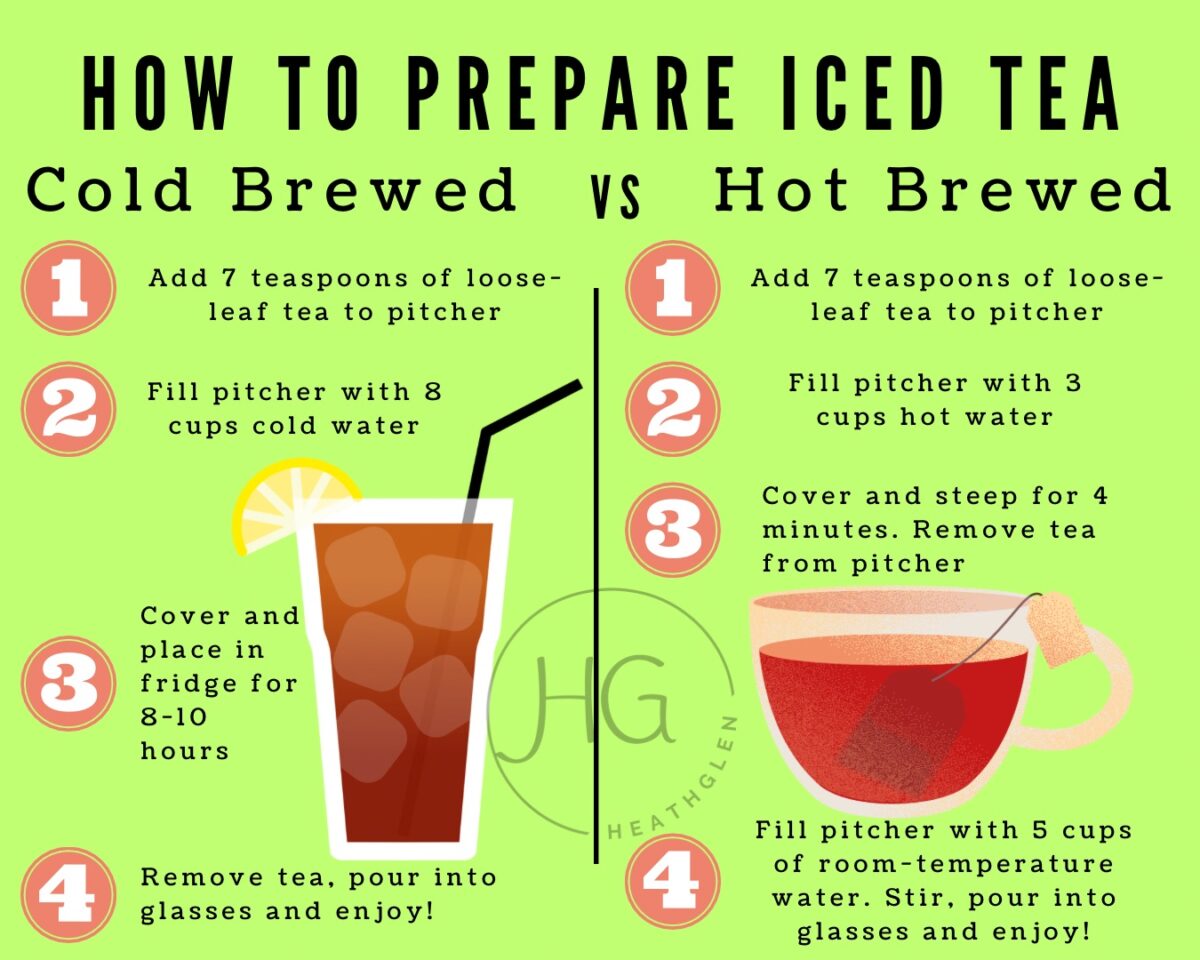
Cold brew produces the smoothest, least bitter iced tea because cold water extracts flavor compounds differently than hot water. It takes 8-12 hours but requires no active effort.
Hot brew and chill is faster (ready in about an hour) and produces a more robust, traditional tea flavor. It risks bitterness if you oversteep.
Sun tea is the nostalgic method but has food safety concerns and produces inconsistent results.
Concentrate lets you make a strong base ahead of time and dilute as needed, which is useful for serving large groups over several hours.
For most home situations, I recommend cold brew for smoothness or hot brew for speed.
How to Make Cold Brew Iced Tea
Cold brew is my preferred method for iced tea. The low temperature extracts sweetness and flavor without pulling out the tannins that cause bitterness.
For one gallon:
- 10-12 tablespoons loose leaf tea (or 15-20 tea bags)
- 1 gallon cold water
Method: Combine tea and cold water in a large pitcher. I like to use a pitcher with a lid that filters out the leaves so you don’t have to do that later. If you purchase an iced tea pitcher, be sure it will fit in your refrigerator (the one I bought was too tall).
Cover and refrigerate for 8-12 hours or overnight. If you don’t have a pitcher with a strainer lid, strain out the tea leaves or remove the bags. Serve over ice.
Tips:
- Black tea cold brews beautifully and produces a clean, smooth flavor
- Green tea works but steep only 6-8 hours to avoid grassiness
- Herbal teas need the full 12 hours to develop flavor
- Cold brew keeps refrigerated for up to 5 days
How to Make Hot Brew Iced Tea
Hot brewing is faster and produces a more assertive tea flavor. The key is using the right ratio and not oversteeping.
For one gallon:
- 8-10 tablespoons loose leaf tea (or 12-15 tea bags)
- 8 cups boiling water (you’ll add cold water or ice later)
Method: Bring 8 cups of water to the appropriate temperature for your tea type (boiling for black, 175-185°F for green). Add tea and steep for the normal time (4-5 minutes for black, 2-3 minutes for green). Strain immediately and add 8 cups of cold water or pour over ice to cool quickly.
Tips:
- Removing the tea promptly prevents bitterness
- Cooling quickly preserves flavor and clarity
- Don’t steep longer to make it “stronger”; use more tea instead
- Hot brew keeps refrigerated for 3-4 days
How to Make Sun Tea
Sun tea is the old-timey summer method that I used to do in college. Put tea and water in a glass jar (like a pickle jar), set it in the sun for a few hours, and let the warmth do the brewing.
For one gallon:
- 8-10 tablespoons loose leaf tea (or 12-15 tea bags)
- 1 gallon room temperature water
Method: Combine tea and water in a clear glass container with a lid. Place in direct sunlight for 3-5 hours. Strain and refrigerate. This is an instance where tea bags may be preferable over looseleaf tea.
The food safety concern: Sun tea brews at temperatures (90-130°F) that encourage bacterial growth. The tea never gets hot enough to kill bacteria, and the long brewing time gives them opportunity to multiply. This doesn’t mean sun tea will definitely make you sick, but the risk is real.
If you make sun tea, use it the same day, start with a very clean container, and refrigerate immediately after brewing. Or just use cold brew, which produces similar smoothness without the safety concerns.
How to Make Iced Tea Concentrate
Concentrate is useful when you’re serving a crowd over several hours and want to keep quality consistent. You make a strong base and dilute it per glass.
For concentrate (makes about 1/2 gallon, dilutes to 1 gallon):
- 12-15 tablespoons loose leaf tea (or 20 tea bags)
- 8 cups boiling water
Method: Steep tea in hot water for 5 minutes (black) or 3 minutes (green). Strain immediately. Let cool, then refrigerate. The concentrate will be very strong—don’t drink it straight.
This type of pitcher is a good way to store the concentrate in the fridge.
To serve: Mix equal parts concentrate and cold water, then pour over ice. Adjust the ratio based on your taste and how much ice will melt into the drink.
Tips:
- Concentrate keeps refrigerated for up to a week
- Great for parties where you’re refilling a dispenser
- Lets guests adjust their own strength by adding more or less water
What Tea Works Best for Iced Tea?
Almost any tea works iced, but some are better suited than others.
Best for iced tea:
- Black tea (classic, robust flavor that holds up to ice and dilution)
- Hibiscus (naturally tart and refreshing, beautiful red color)
- Mint or peppermint (cooling and bright)
- Fruit-flavored teas and herbals (designed for cold drinking)
- Green tea (clean and light, especially cold brewed)
Trickier iced:
- White tea (subtle flavors can get lost)
- Oolong (works but more expensive than necessary for iced)
- Pu-erh (earthy flavor doesn’t appeal to everyone cold)
For large batches, I typically use black tea or herbal blends. Save your expensive teas for hot brewing where you can appreciate the nuance.
**Note: Remember that black tea, green tea, Pu’erh and Oolong teas all have caffeine, and because you are increasing the strength the caffeine will be pretty high. I remember being kept up all night on a vacation in Spain when I had some iced tea for dinner. It was not fun.

How to Sweeten Iced Tea
If you want sweet tea, dissolve your sweetener while the tea is still warm. Sugar doesn’t dissolve well in cold liquid, so adding it to finished cold brew or iced tea results in gritty sediment at the bottom.
Options:
- Granulated sugar: Add to hot tea, stir to dissolve
- Simple syrup: Dissolves easily in cold tea (equal parts sugar and water, heated until dissolved, then cooled)
- Honey: Dissolves better in warm tea; some honeys crystallize when cold
- Maple syrup: Works well, adds its own flavor
- No sweetener: Cold brew is naturally smoother and less bitter, so it often doesn’t need sweetening
For Southern-style sweet tea, the standard is about 1 cup of sugar per gallon. Adjust to your taste.
FAQ
Cold brew and hot brew iced tea keep for 3-5 days refrigerated. After that, flavor deteriorates and the tea can develop off tastes. Concentrate lasts up to a week. Sun tea should be used the same day.
Cloudiness happens when hot tea cools too slowly. The tannins bind together and create haze. It’s harmless but unappealing. Prevent it by cooling hot brew quickly with ice or cold water immediately after straining.
For cold brew, no—the long steep time extracts most of the flavor the first time. For hot brew, you can sometimes get a weaker second steep, but it’s not worth it for big batches.
A gallon makes about 10-12 glasses (8 oz each), accounting for ice. If you’re serving at a party, plan on 2-3 glasses per person.
Yes. Add sliced citrus, berries, or fresh mint after brewing. For stronger fruit flavor, muddle the fruit slightly or let it infuse in the refrigerator for a few hours.
Slightly, in some cases. Cold water extracts caffeine more slowly than hot water. But the difference isn’t dramatic enough to rely on if you’re caffeine-sensitive.
If you want to explore the world of teas and tisanes, check out this Complete Guide to Teas. It includes information on how to grow a tea garden, types of tea, brewing times and temp., recipes for blends, caffeine amounts, and much more.