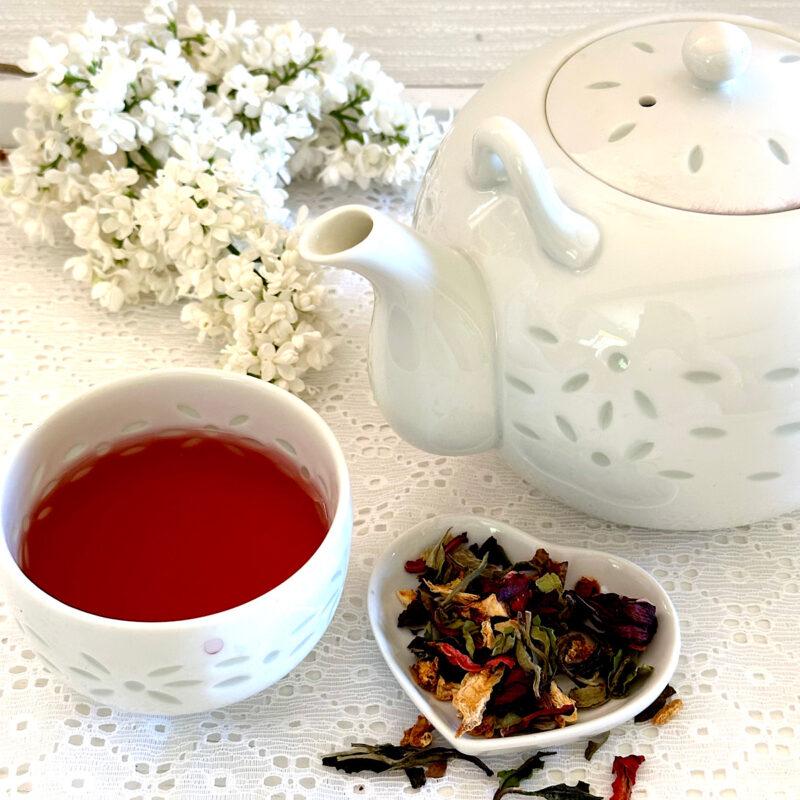
At the St. Paul Farmers’ Market, I sell both caffeinated teas and caffeine-free herbal blends (tisanes), and caffeine content is one of deciding factors in purchasing tea. The answer depends on which tea, how you brew it, and how your body processes caffeine. Here’s what I tell my customers.
Quick Summary: Tea has less caffeine than coffee per cup, but the exact amount varies widely by tea type, brewing method, and steep time. Black tea averages 40-70 mg per cup compared to coffee’s 95-200 mg. Tea’s caffeine also releases more gradually due to L-theanine, producing alertness without the jitters.
JUMP TO: Delayed Energy Levels | Caffeine per Tea Type | Steep Time | FAQ
This post may contain affiliate links. As an Amazon Associate, I also earn from qualifying purchases. You can read our disclosure information here–
How Much Caffeine Is in Tea Compared to Coffee?
On average, an 8-ounce cup of brewed coffee contains 95-200 mg of caffeine. An 8-ounce cup of black tea contains 40-70 mg. Green tea runs 20-45 mg, and white tea about 15-30 mg.
So yes, coffee has more caffeine than tea, typically about twice as much per cup. But the ranges overlap depending on the specific coffee or tea, how it’s brewed, and serving size.
Here’s a general comparison:
- Brewed coffee: 95-200 mg per 8 oz
- Espresso: 63 mg per 1 oz shot
- Black tea: 40-70 mg per 8 oz
- Green tea: 20-45 mg per 8 oz
- White tea: 15-30 mg per 8 oz
- Oolong tea: 30-50 mg per 8 oz
- Herbal tea (tisanes): 0 mg (naturally caffeine-free)
Why Does Tea Caffeine Feel Different Than Coffee?
Many people report that tea gives them alertness without the jitters or crash they experience with coffee. This isn’t imagination, as there’s a biochemical reason.
Tea contains L-theanine, an amino acid that promotes calm focus. L-theanine slows the absorption of caffeine and stimulates alpha brain waves associated with relaxed alertness. The combination of caffeine and L-theanine produces a smoother, more sustained energy than caffeine alone.
Coffee has little to no L-theanine, so its caffeine hits faster and harder. This is why some people feel anxious or jittery after coffee but fine after tea, even when the caffeine amounts aren’t dramatically different.
Which Tea Has the Most Caffeine?
Black tea generally has the most caffeine among common tea types because the leaves are fully oxidized, which affects how caffeine releases during brewing.
However, the tea with the absolute highest caffeine content is matcha. Because you consume the whole powdered leaf rather than steeping and discarding it, a cup of matcha can deliver 70 mg or more of caffeine, approaching coffee levels.
Other high-caffeine options include:
- Matcha: 70+ mg per cup
- Black tea (Assam, breakfast blends): 50-70 mg
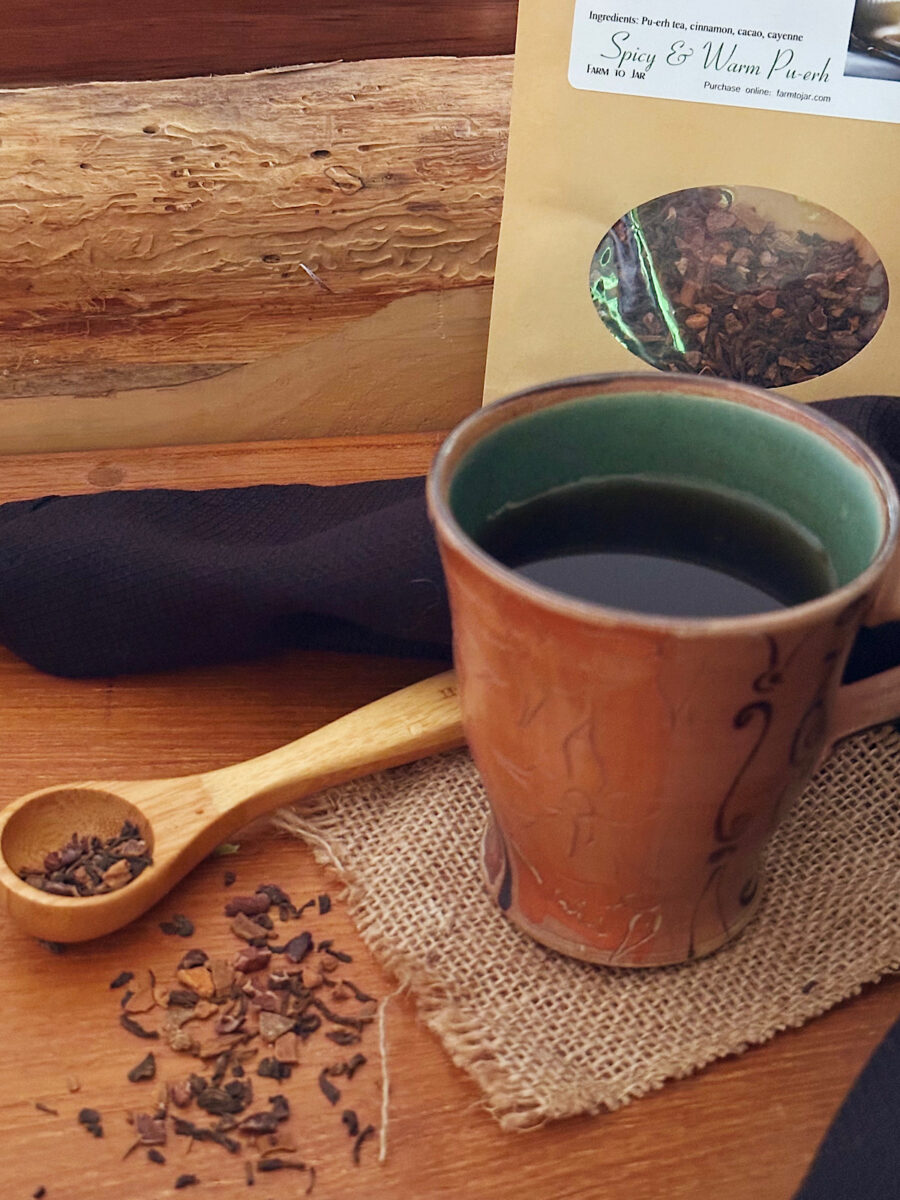
- Pu-erh tea: 30-70 mg
- Oolong tea: 30-50 mg
Young tea buds and tips also contain more caffeine than mature leaves, so teas made from buds (like silver needle white tea) can be higher in caffeine than you’d expect from “delicate” white tea.

Which Tea Has the Least Caffeine?
If you want tea with minimal caffeine but aren’t ready to switch to herbal, these are your best options:
- Kukicha (twig tea): Made from stems rather than leaves, naturally lower in caffeine
- Hojicha (roasted green tea): Roasting reduces caffeine content
- Aged white tea: Caffeine decreases somewhat with age
- Lightly steeped green tea: Shorter steep times extract less caffeine
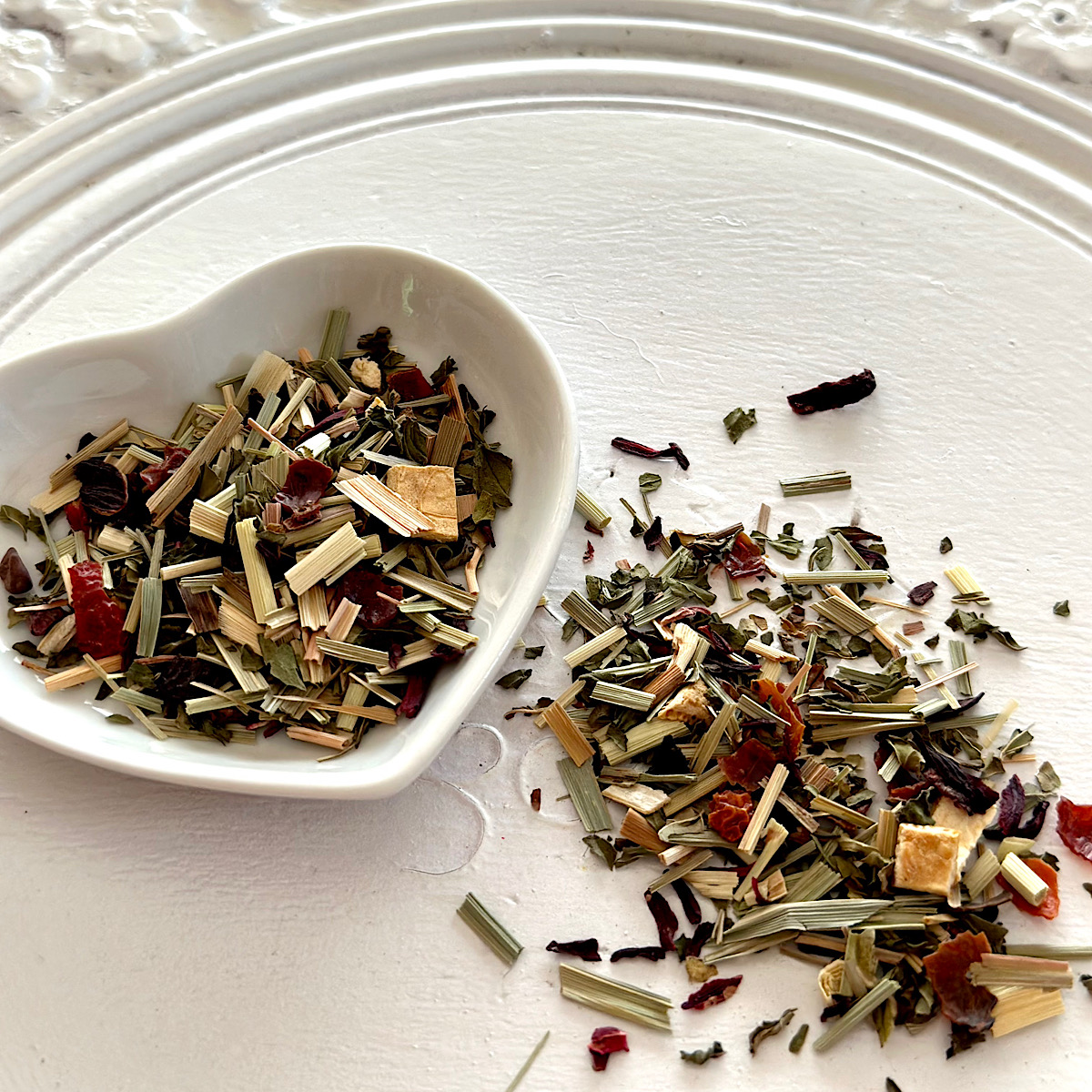
For zero caffeine, herbal teas (tisanes) are the only option. Chamomile, peppermint, rooibos, and other herbals contain no caffeine because they don’t come from the Camellia sinensis plant.
Which “Teas” Have No Caffeine?
While herbal blends are often referred to as herbal teas, they do not contain any of the leaves from a true tea plant (camillia senensis). They are, in fact, technically called tisanes. Because many people refer to them as herbal teas, however, I am going to reference them here as a “no-caffeine herbal tea”.
There is a huge variety of non-caffeinated herbal teas. You can get a sampling of them on my tea page.
Does Steeping Time Affect Caffeine?
Yes. The longer you steep tea, the more caffeine extracts into your cup.
A one-minute steep releases significantly less caffeine than a five-minute steep. If you’re caffeine-sensitive, try steeping your tea for a shorter time. You’ll sacrifice some flavor intensity, but you’ll reduce the caffeine hit.
Water temperature also matters. Hotter water extracts caffeine faster than cooler water. Green tea brewed at the proper 175°F will have less caffeine than the same tea accidentally brewed with boiling water.
Can You Remove Caffeine by Dumping the First Steep?
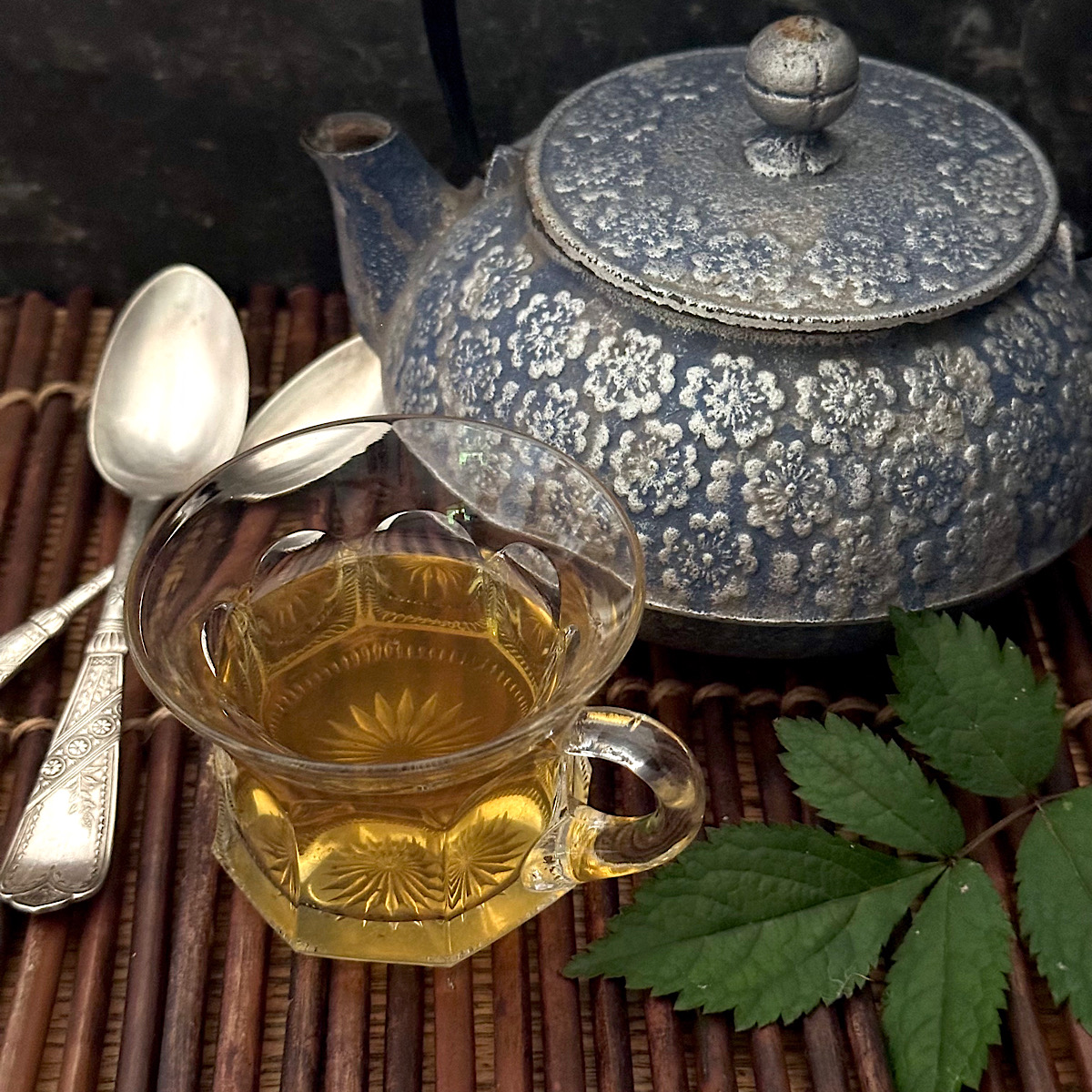
This is a popular myth. The idea is that you can “rinse” the caffeine out by steeping tea briefly, discarding that water, and re-steeping.
The reality is more complicated. Studies show that a 30-second rinse removes only about 10-20% of the caffeine. To remove most of the caffeine this way, you’d need to steep for several minutes, which would also remove much of the flavor.
If you need low caffeine, it’s better to choose a naturally lower-caffeine tea or switch to herbal. Don’t rely on the rinse method.
Do Tea Bags Have More Caffeine Than Loose Leaf?
Tea bags often release caffeine faster than loose leaf tea, though the total caffeine content depends on the tea itself rather than the format.
Tea bags typically contain smaller leaf particles (fannings or dust) which have more surface area exposed to water. More surface area means faster extraction, so a tea bag steeped for 3 minutes may deliver more caffeine than the same tea in whole-leaf form steeped for the same time.
However, this doesn’t mean tea bags are “higher caffeine” overall. If you steep loose leaf tea longer or use more leaf, you’ll extract comparable or more caffeine. The difference is speed of extraction, not total caffeine potential.
For practical purposes: if you want a quicker caffeine hit, tea bags deliver it faster. If you prefer a slower, more controlled extraction (and plan to re-steep), loose leaf gives you more flexibility.
Is Tea a Good Coffee Replacement?
For many people, yes.
If you’re trying to cut back on caffeine, switching from coffee to black tea roughly halves your intake. Switching to green tea cuts it further. You still get the ritual of a warm, flavorful beverage and enough caffeine to feel alert.
If you’re trying to eliminate caffeine entirely, herbal teas give you the ritual without any caffeine.
Rooibos, in particular, has a full-bodied flavor that some find satisfying as a coffee alternative. There are several herbal teas that blend chicory with cocoa nips and can result in a tea that has a coffee-like flavor. This herbal mocha tea has been popular with my customers as a coffee substitute.
The adjustment period is real. If you’re used to coffee’s stronger caffeine hit, tea may feel weak at first. Give it a week or two. Most people find their bodies adjust and they appreciate the steadier energy.
FAQ
Generally yes. Green tea averages 20-45 mg per cup, while black tea averages 40-70 mg. But this varies by specific tea and brewing method. A strongly brewed green tea can have more caffeine than a lightly brewed black tea.
No. True herbal teas (chamomile, peppermint, rooibos, hibiscus, etc.) are caffeine-free because they don’t contain leaves from the Camellia sinensis plant. The exception is yerba mate, which is sometimes grouped with herbals but does contain caffeine.
It depends on your sensitivity. Many people can drink green or white tea in the evening without sleep disruption. Black tea and matcha are riskier. Herbal teas are always safe for evening drinking since they have no caffeine.
No. Decaffeinated tea retains a small amount of caffeine, usually 2-5 mg per cup. If you need truly zero caffeine, choose herbal tea instead of decaf.
Tea contains L-theanine, which moderates how caffeine affects your brain. It produces calm alertness rather than the spike-and-crash pattern coffee often causes. This is why many people tolerate tea better than coffee even when the caffeine amounts are similar.
Most health guidelines suggest up to 400 mg of caffeine daily for healthy adults, which translates to roughly 5-8 cups of black tea or more of green tea. Individual tolerance varies. If you’re sensitive to caffeine, track your intake and adjust accordingly.
If you want to explore the world of teas and tisanes, check out this Complete Guide to Teas. It includes information on how to grow a tea garden, types of tea, brewing times and temp., recipes for blends, caffeine amounts, and much more.