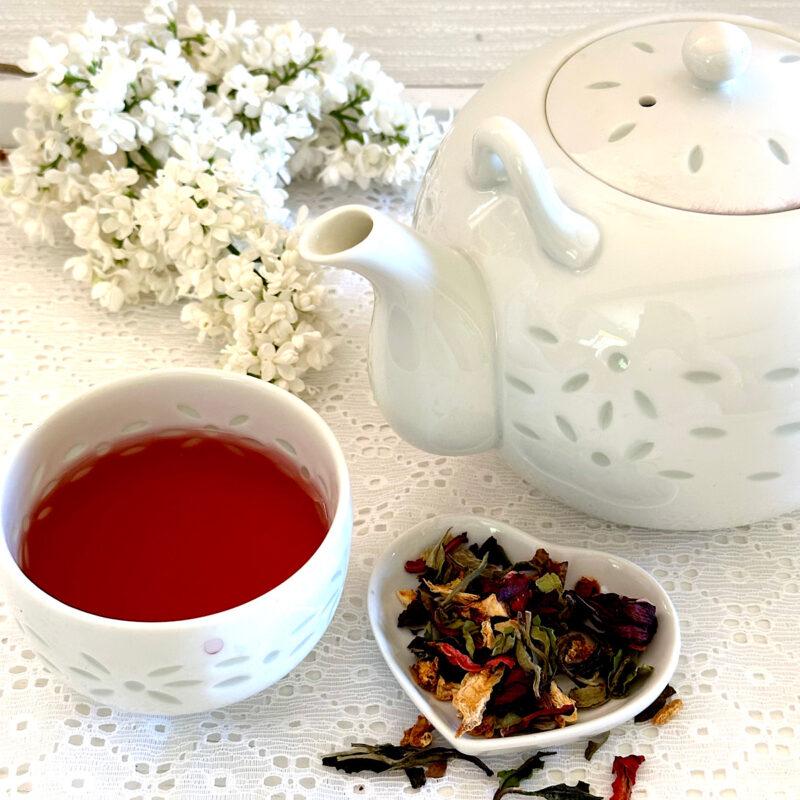
Quick Summary: Loose leaf tea offers better flavor, more variety, and often costs less per cup than tea bags. The leaves are larger and less processed, allowing them to unfurl fully and release more complex flavors. Tea bags work for convenience, but if you care about taste, loose leaf is worth the small extra effort.
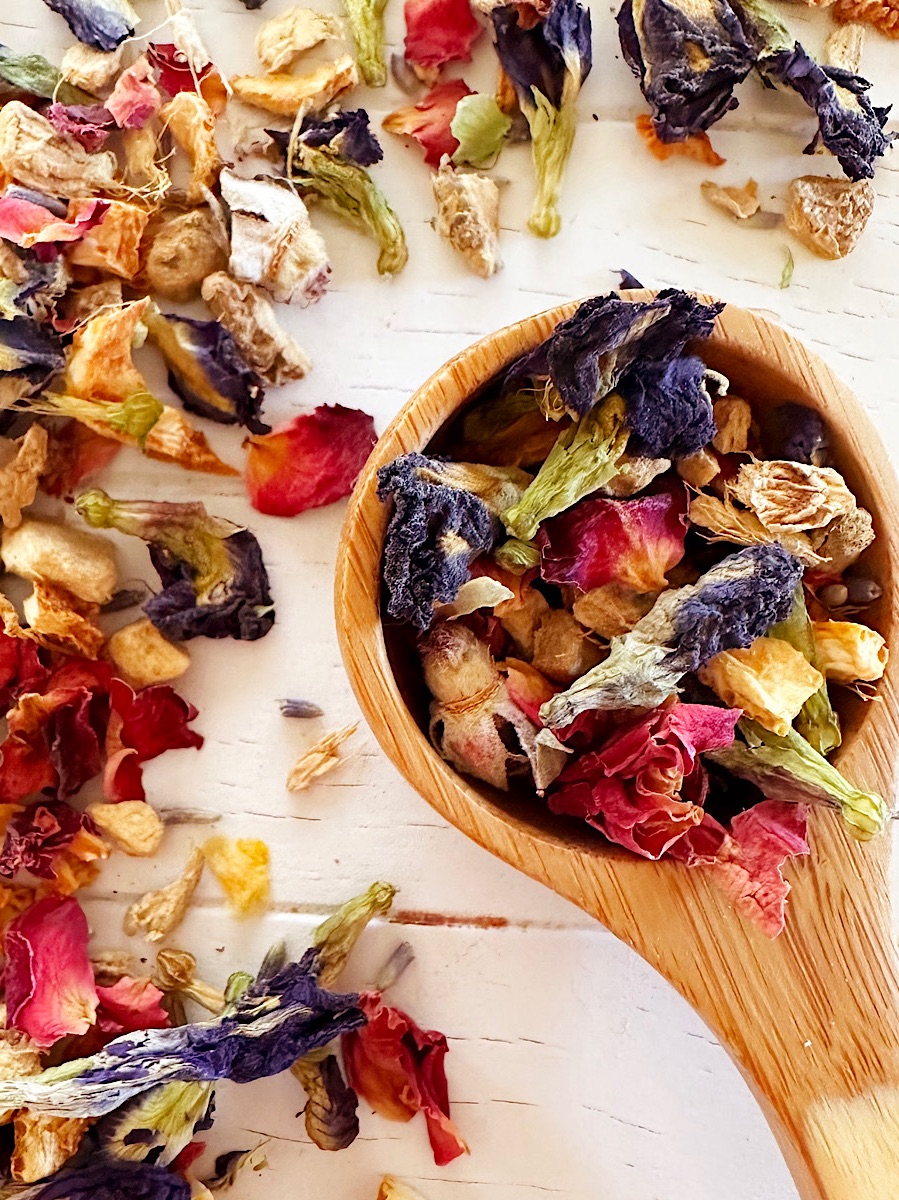
At HeathGlen Organic Farm, I blend and sell loose leaf teas at the St. Paul Farmers’ Market, and one of the most common questions I get from new customers is whether loose leaf tea is really better than bags. The short answer is yes, but not for the reasons most people assume. It comes down to leaf size, freshness, and how the tea actually brews.
JUMP TO: Taste Differences | Expense | Brewing | Tea bags pros | FAQ
This post may contain affiliate links. As an Amazon Associate, I also earn from qualifying purchases. You can read our disclosure information here–
What Is the Difference Between Loose Leaf Tea and Tea Bags?
The main difference is the size and quality of the tea leaves.
Loose leaf tea consists of whole or large pieces of tea leaves. When you brew them, the leaves have room to expand and release their full flavor, aroma, and beneficial compounds.
Most tea bags contain what the industry calls “fannings” or “dust,” which are the small broken pieces left over after higher-grade leaves are sorted out. These tiny particles brew quickly and produce a strong cup, but they lack the nuanced flavors of whole leaves.
The small bag also restricts the leaves from expanding, which limits extraction.
Some premium tea bags now use whole leaves in larger pyramid-shaped sachets, which addresses part of the problem. But even these can’t match the quality of buying fresh loose leaf tea from a reputable source.
Does Loose Leaf Tea Taste Better?
In most cases, yes.
Whole tea leaves retain more of their essential oils, which carry the complex flavors and aromas that make tea interesting. When those leaves have room to unfurl in hot water, they release a fuller, more layered taste.
Tea bag contents, being smaller, tend to produce a one-dimensional flavor. The tea is often more bitter and astringent because the increased surface area of the tiny particles releases tannins faster.
The difference is most noticeable with green and white teas, which have delicate flavors that get lost in low-quality tea bags. Black teas are more forgiving, but even there, loose leaf produces a smoother, more complex cup.

Is Loose Leaf Tea Fresher Than Bagged Tea?
Usually, yes.
Tea bags often sit in warehouses and on store shelves for months or even years before you buy them. The small particles lose their volatile flavor compounds faster than whole leaves, so by the time the tea reaches your cup, much of the nuance is gone.
When you buy looseleaf tea from a specialty tea shop or a farmer’s market vendor like me, you’re getting tea that was blended or packaged more recently. Stored properly in an airtight container away from light and moisture, loose leaf tea stays flavorful for up to a year.
Is Loose Leaf Tea More Expensive?
Loose leaf tea often costs less per cup than tea bags, even though the upfront price looks higher.
A 2-ounce package of quality loose leaf tea, which is the standard size from most tea sellers, yields roughly 25-30 cups. A box of 20 premium tea bags yields 20 cups and often costs nearly the same.
The math favors loose leaf further when you factor in that many loose leaf teas can be steeped multiple times, effectively doubling your cups per purchase
Oolong and pu-erh, in particular, are designed for multiple infusions, which stretches your tea even further.
Is Loose Leaf Tea Harder to Make?
Not really, especially if you have the right paraphernalia.
The basic process is the same: add tea to hot water, steep, remove the leaves, drink. With tea bags, the bag does the containing and removal. With loose leaf, you use a tea infuser, strainer, or teapot with a built-in filter.
The extra step takes about 30 seconds. You measure your tea (roughly one teaspoon per cup), place it in your infuser, pour hot water over it, set a timer for the appropriate steep time, and remove the infuser when it’s done. That’s it.
The small investment in a tea infuser or a teapot with a strainer pays off quickly in better-tasting tea. I recommend starting with a simple mesh ball infuser or a basket-style infuser that sits in your mug.
When Are Tea Bags the Better Choice?
Tea bags make sense in certain situations, like the following:
- If you’re traveling, at the office, or somewhere without easy access to a kettle and infuser, tea bags are more practical.
- They’re also fine for large batches of iced tea when the subtleties of flavor matter less.
- For herbal teas where convenience matters more than complexity, tea bags work OK if they are from a good source. Freshness of the herbs will matter here. Peppermint, chamomile, and other single-ingredient herbals don’t benefit as much from the loose leaf treatment as more nuanced teas, but they may not taste as fresh.
- If you simply don’t care that much about tea flavor and just want a caffeine delivery system, tea bags do the job.
How to Start with Loose Leaf Tea
If you’ve never tried loose leaf tea, start simple.
Pick one tea you already enjoy in bag form and try the loose leaf version. Black tea (like English Breakfast or Earl Grey) is forgiving for beginners. Green tea shows a bigger difference between bag and loose leaf, so should be a second experiment.
You’ll need:
- Loose leaf tea from a reputable source
- A tea infuser or strainer
- A kettle (temperature-controlled is helpful but not essential)
- A timer
Use about one teaspoon of tea per 8-ounce cup. Follow the temperature and steeping time for your tea type (black tea: boiling water, 4-5 minutes; green tea: 175-185°F, 2-3 minutes). Taste and adjust next time based on whether it was too strong or too weak.

FAQ
The tea itself has the same health properties regardless of form. However, loose leaf tea is often fresher and less processed, which may preserve more antioxidants and beneficial compounds. The bigger factor is tea quality overall, not leaf versus bag.
Yes, especially oolong, pu-erh, and high-quality green teas, which are designed for multiple steepings. Each infusion tastes slightly different as different compounds release. Black tea and herbal teas are usually one-and-done.
Start with one teaspoon per 8-ounce cup and adjust to taste. Some teas (like fluffy white teas or large-leaf oolongs) need more volume; dense teas need less. You’ll calibrate quickly.
Just a way to contain the leaves and remove them after steeping. A mesh infuser ball, basket infuser, or teapot with a built-in strainer all work. Prices range from a few dollars to premium options.
Stored in an airtight container away from light, heat, and moisture, loose leaf tea stays flavorful for 6-12 months. It doesn’t spoil after that, but the flavor fades.
They’re better than standard flat tea bags because they hold larger leaf pieces and give more room for expansion. They’re a reasonable middle ground if convenience is essential. They still don’t match fresh loose leaf from a quality source.
If you want to explore the world of teas and tisanes, check out this Complete Guide to Teas. It includes information on how to grow a tea garden, types of tea, brewing times and temp., recipes for blends, caffeine amounts, and much more.