
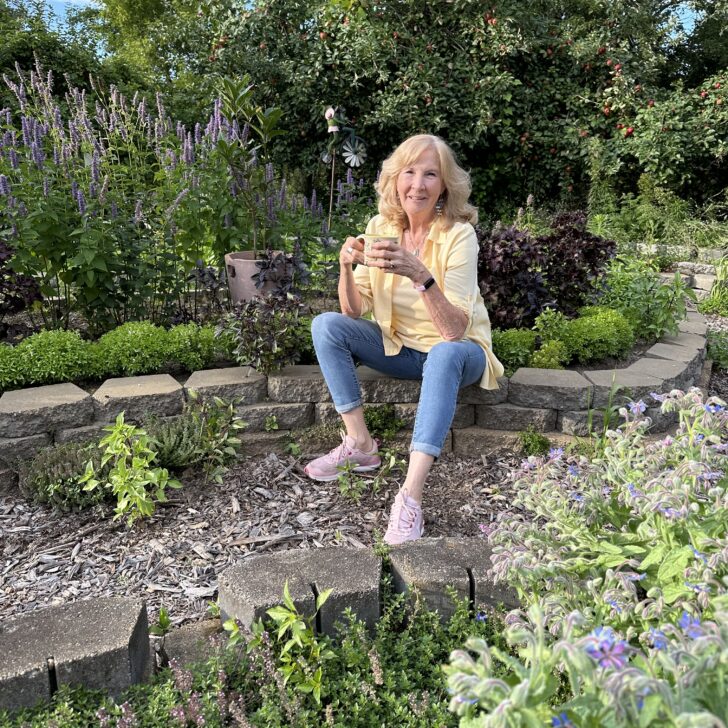
Quick Summary: These ten herbs are easy to grow in containers or garden beds and produce flavorful homemade herbal blends for tea. Chamomile, mint, lavender, lemon balm, and rosemary are beginner-friendly options that thrive with minimal care. Growing your own herbs means fresher tea with better flavor and more health benefits than store-bought blends. Includes three root plants for tea blending additions.
Jump to: Why Grow an Herbal Tea Garden | 10 Best Herbs for Tea | 3 Root Plants for Tea | FAQ
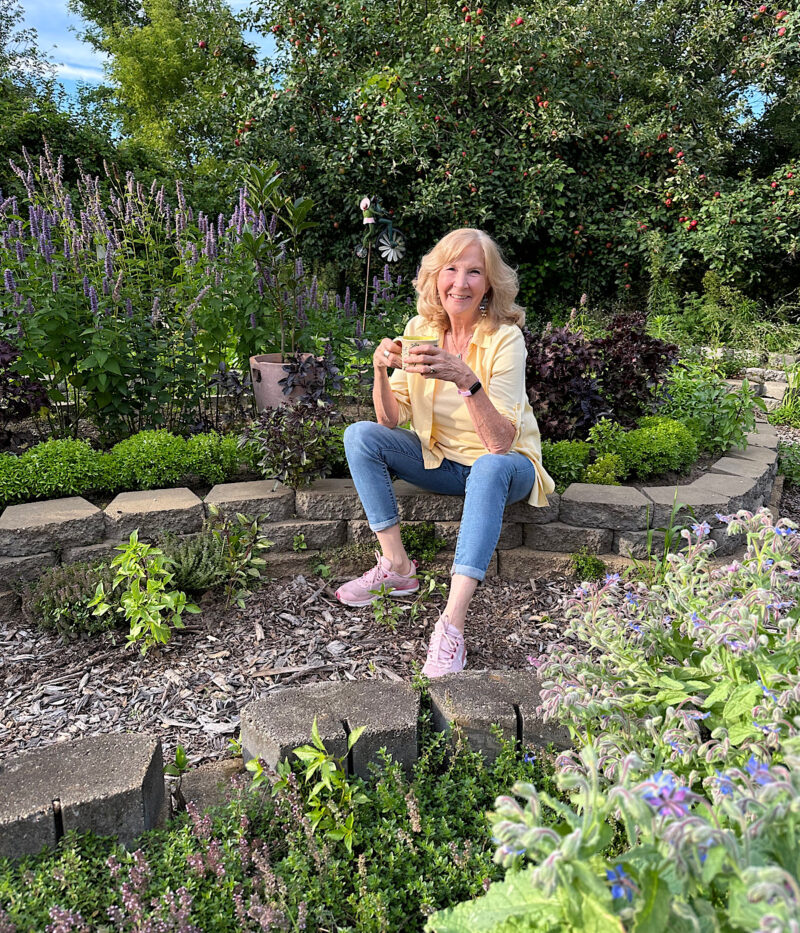
Homegrown herbs are fresher than anything you can buy, which means better flavor and stronger health benefits. Here are ten of my favorite herbs for a well-rounded tea garden, plus three bonus options for adding root plants.
At HeathGlen Organic Farm, I grow the herbs I use in the tea blends I sell at the St. Paul Farmers’ Market. Most of the popular tea herbs are easy to grow at home, whether you have a garden plot or just a few containers on a balcony.
This post may contain affiliate links. As an Amazon Associate, I also earn from qualifying purchases. You can read our disclosure information here–
Why Grow an Herbal Tea Garden?
Reserving a corner in your garden or on your balcony or deck for a little tea garden has so many advantages. A few of them include:
- It’s easy. You can grow these plants in a bed, but most do just as well in pots.
- Herbs are versatile. Many are not just useful for tea!
- The aesthetics. Lots of these plants bloom beautifully and abundantly.
- And speaking of flowers, bees and other insects love herbs.
10 Best Herbs to Plant for Flavor in Tea Blends
Chamomile (Matricaria recutita or Anthemis nobilis)
Chamomile produces delicate, soothing tea with an unmistakably floral flavor. Both German chamomile and Roman chamomile are a great caffeine-free alternative to green tea. I add chamomile to many of the herbal teas that I blend for sleep and find it blends well with Rooibos and Honeybush teas.
Growing: Full sun (8 hours ideal), scatter seeds and press gently into soil, fertilize every few weeks if container-grown. Pick flowers when fully open. Dry for storage or use fresh.
Flavor: Delicate, soothing, floral.”
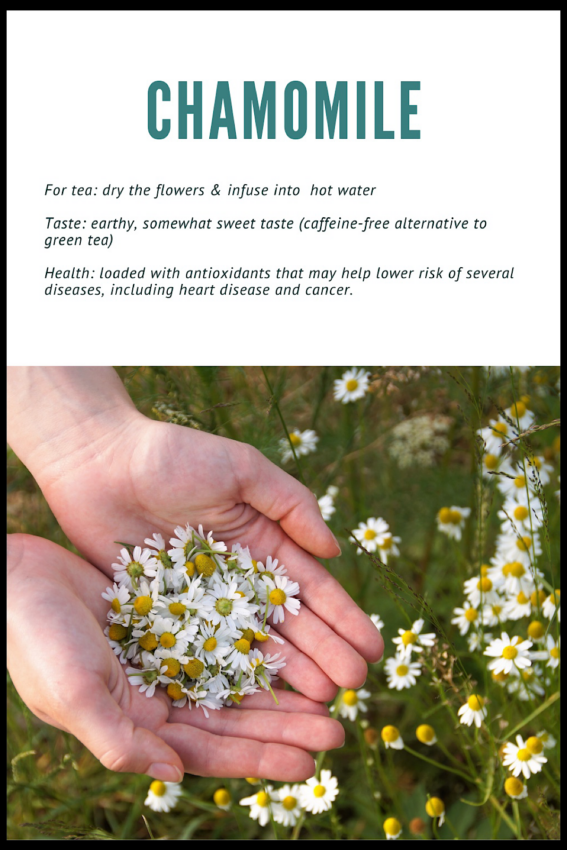
Did you know there isn’t just one chamomile plant? The name refers to a few different species in the daisy family. Two of them, Roman chamomile (Anthemis nobilis) and German chamomile (Matricaria recutita) are commonly used in herbal teas. Their flavor is wonderfully delicate and soothing, but unmistakably floral.
Chamomile is easy to grow. Just scatter some seeds over a bed or in a planter and give them a gentle press into the soil. Give the plants plenty of sun (8 hours is great) and don’t forget a little fertilizer every few weeks if you’re growing in a container.
Rosehip (Rosa sp.)
The rose hips are frequently used in tea blends, but the petals are also used to add a delicate floral flavor to tea. I blend the petals with Chinese black tea for the market work as well.
Growing: Roses likes moist but well-drained soil, full sun or semi-shade and not too much frost during the winter season. The seeds need cold storage, so they’re not the quickest to germinate. You may want to grow roses from a purchased plant rather than starting from seed.
Flavor: A delicate, floral flavor which is slightly sweet with a tart aftertaste.
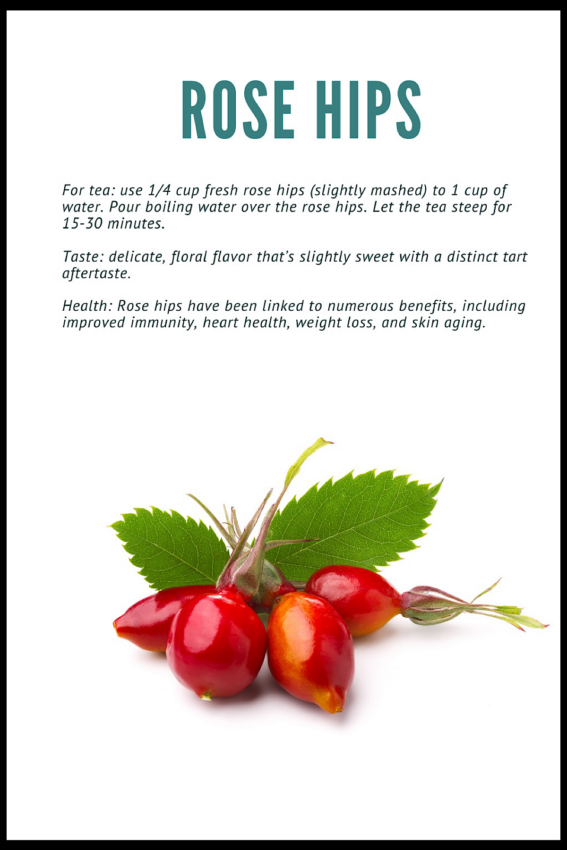
I mentioned earlier that some tea garden plants bloom wonderfully, and this is definitely a prime example. Rosehips are the fruit of the rose bush. That means that in order to obtain them, you have to grow roses first (what a bother!).
One of the most popular rose species for rosehips is the wild dog rose (Rosa canina), which blooms a delicate pink.
Rosemary (Salvia rosmarinus, formerly Rosmarinus officinalis)
You may think of rosemary mostly as a herb used in Mediterranean cooking (like my delicious tomato crostata), but it also works really well in herbal tea blends. Since rosemary is quite strong, I only add it to black teas, like this Black Currant tea.
Growing: It’s easiest to buy a rosemary seedling rather than sowing yourself. Well-drained, sandy soil with some added compost is great if you’re growing in a container, or just pop the plant directly into the ground.
Give it plenty of full sun and keep it well-watered, though be sure not to drown it. They can take a bit of drought, but they grow much better if you keep them hydrated.
Flavor: Strong pine aroma and flavor with undertones of lemon and mint.
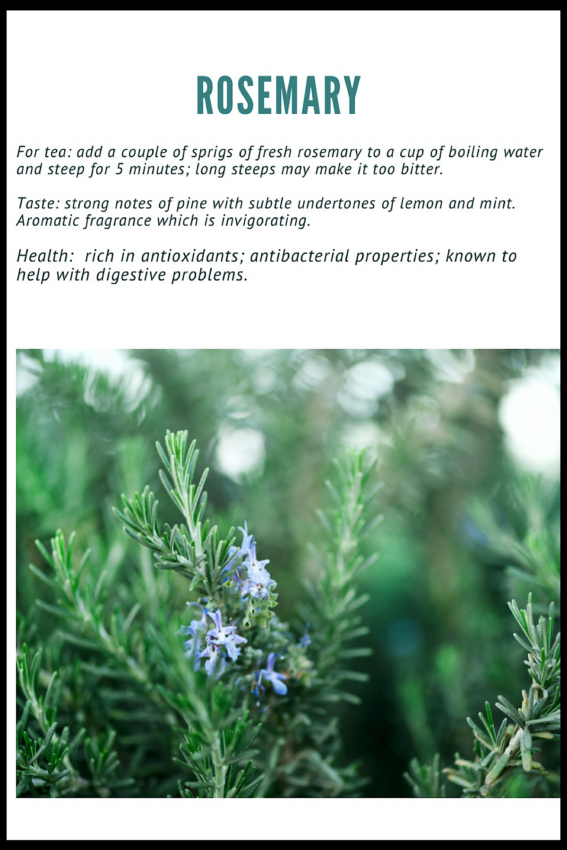
This plant is a total delight: you can smell it just walking by, it grows into a huge and beautiful bush and its Mediterranean origins mean it’s not demanding at all.
Fennel (Foeniculum vulgare)
Tea blends with fennel have long been considered a soothing digestive. I use fennel in my Raspberry-fennel-mint blend that I sell at the Saturday St. Paul Farmers’ market.
Growing: Fennel likes a warm and sunny location and well-draining soil. It doesn’t need a lot of water, but be sure not to let it dry out too much either. In fall, when the seedheads have dried, cut them off and harvest for tea.
No need to re-sow next year, because although the plant will die off in winter in most climates, it’ll come right back when things warm up.
Flavor: It tastes a little like licorice, with a slightly bitter aftertaste. It is highly aromatic.
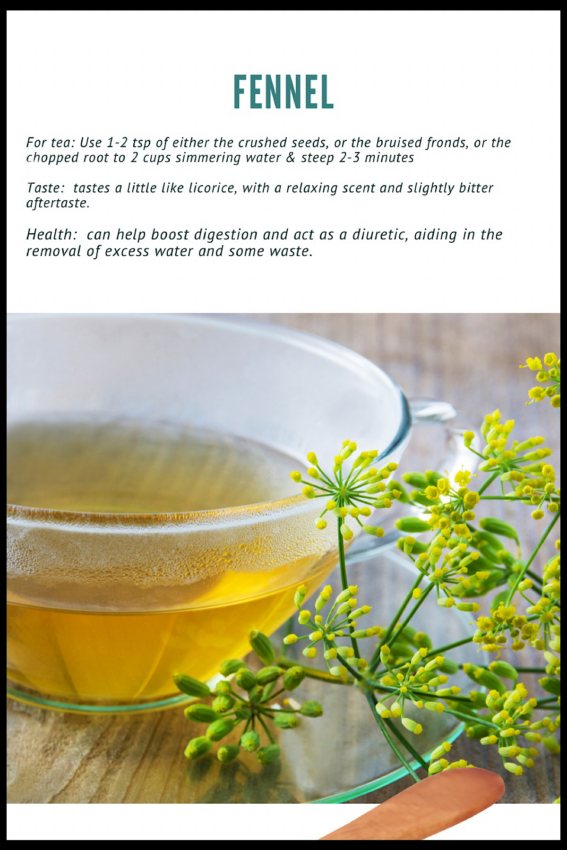
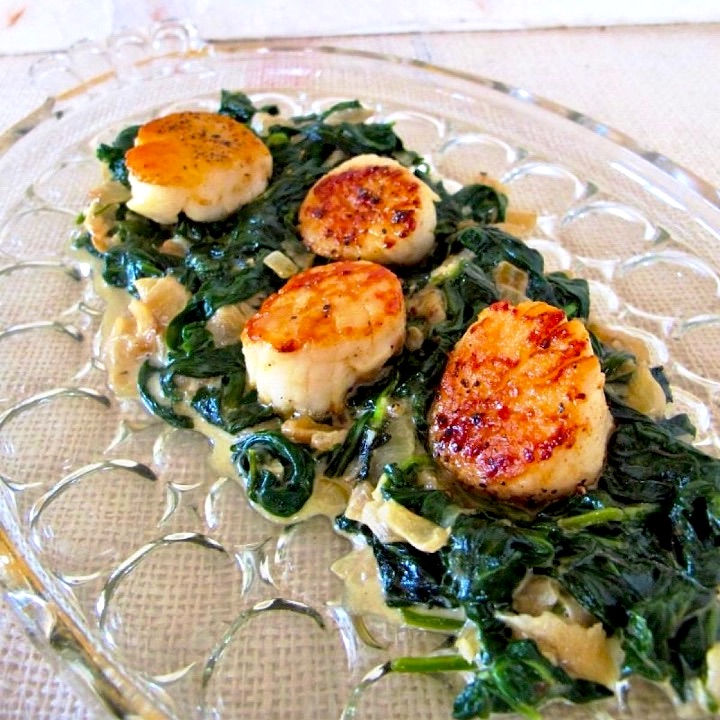
Another one of those versatile numbers, roasted fennel is to die for. Fennel leaves make a great topping for yogurt tips and in vinaigrettes. Fennel pollen was trendy for a while and I developed a great recipe for scallops using ground fennel seed that remains one of my favorites.
Mint (Mentha sp.)
Fresh mint is a standard for many tea blends, herbal or blended with green tea, like this Moroccan Mint tea. Although some types of mint are more common than others, there is actually a mind-boggling amount of hybrids and cultivars out there. For tea-making purposes, good ones include:
- Apple mint (Mentha suaveolens – considered by many to be the best for iced tea)
- Peppermint (Mentha x piperita)
- Spearmint (Mentha spicata – used for Moroccan mint tea, which is to die for)
- Water mint (Mentha aquatica)
Growing: Mint is very easy to grow: it can actually attain weed status if you let it do its thing in your garden. So be warned, and grow your mint in a container instead if you don’t want to find it everywhere. Just provide rich, moist soil and partial shade and you’re good to go.
Flavor: Minty and mildly sweet with a cooling sensation.
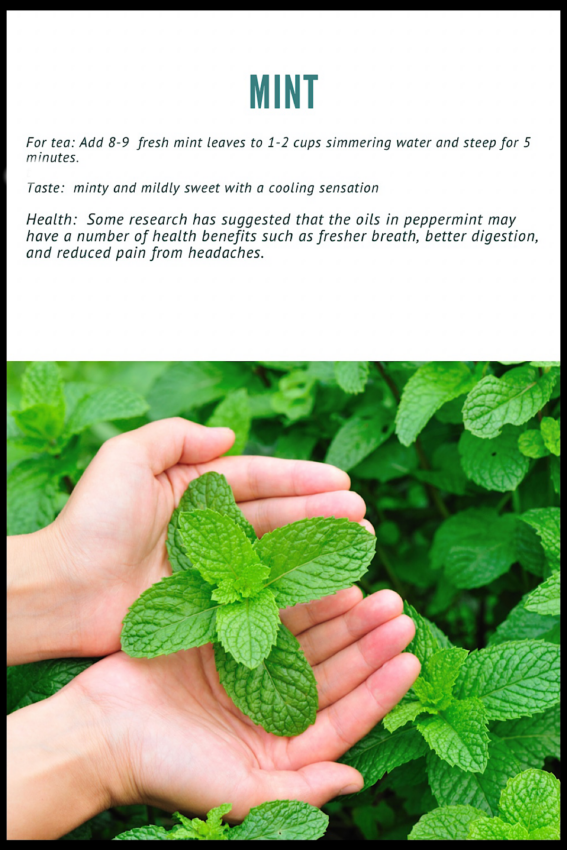
Did you know? Catnip, which is another member of the mint family, also tastes great in a herbal tea blend.
Lemon balm (Melissa officinalis)
Although lemon balm belongs to the mint family, it’s a member of a different genus, so it deserves its own spot on this list. It’s a great herb to use if you’d like to add a subtle lemon flavor to your tea blends.
Growing: Like its Mentha cousin, this one is very easy to grow. You can sow indoors from March or outdoors once the risk of frost has passed. Alternatively, go for a seedling from your local nursery.
Use a rich, well-drained soil and give your lemon balm plant direct sun. It will die off during winter in cooler climates, but don’t worry, as you’ll be able to enjoy it again come springtime.
Flavor: Slightly minty, mostly sweet, with a citrus background.
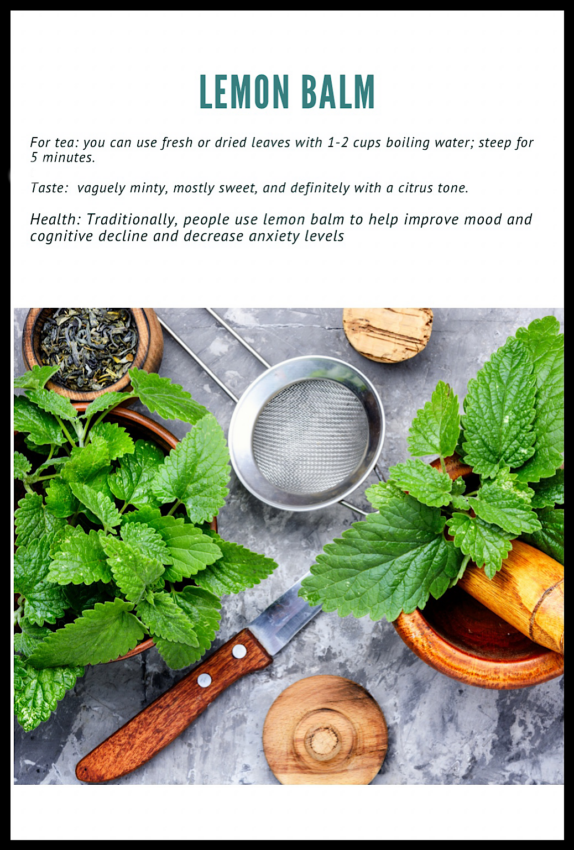
Remember to remove the flowers if you don’t want to end up with lemon balm all over the place.
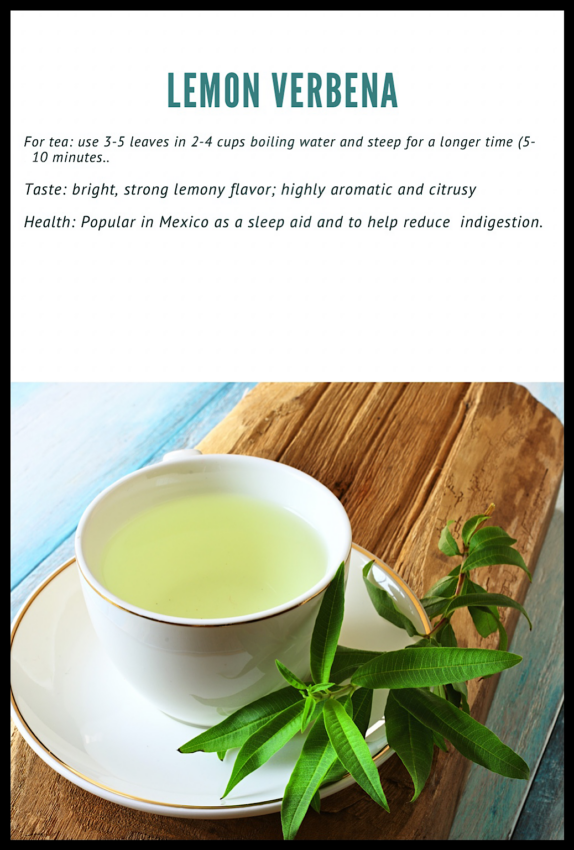
Lemon verbena (Aloysia citrodora)
Also known as lemon beebrush, this herb has many culinary uses and is widely used to flavor all sorts of beverages, from liqueurs to sodas to teas. I particularly like to brew it with some fresh mint. The oils from the leaves add a stronger lemon background to herbal teas than lemon balm leaves.
Growing: Because lemon verbena is originally found in tropical Latin America, it isn’t as hardy in cooler climates as lemon balm. It can handle some frost, but will lose its leaves once things reach freezing levels. You could consider keeping yours as a container plant and grow it indoors during the colder months if your winters are on the harsher side.
Planting should always be done after the risk of the last frost passes. Like the other species on this list, lemon verbena appreciates plenty of sun.
Flavor: Bright, strong citrus flavor and highly aromatic.
Lavender (Lavandula sp.)
I use lavender in many tea blends that are focused on sleep or relaxation. I found it went well with this blend of butterfly pea flowers or this blend with honeybush tea. Also use dried flower buds (and optionally, dried leaves) for lavender baked goods, to flavor savory dishes, for potpourris or even to make a delicious jam.
Growing: Lavandula angustifolia is a Mediterranean native, which is good news for us as it means it’s on the hardy side and not difficult to grow.
Surprisingly, it can even handle a good bit of frost, although it may be best to bring it indoors in winter if you live in an area colder than Zone 5. Provide a well-draining, neutral soil and full sun. Water deeply whenever the soil has dried completely.
Flavor: A hint of rosemary and mint. Some species have a smoky or woody flavor while others tend to be more floral and sweet.
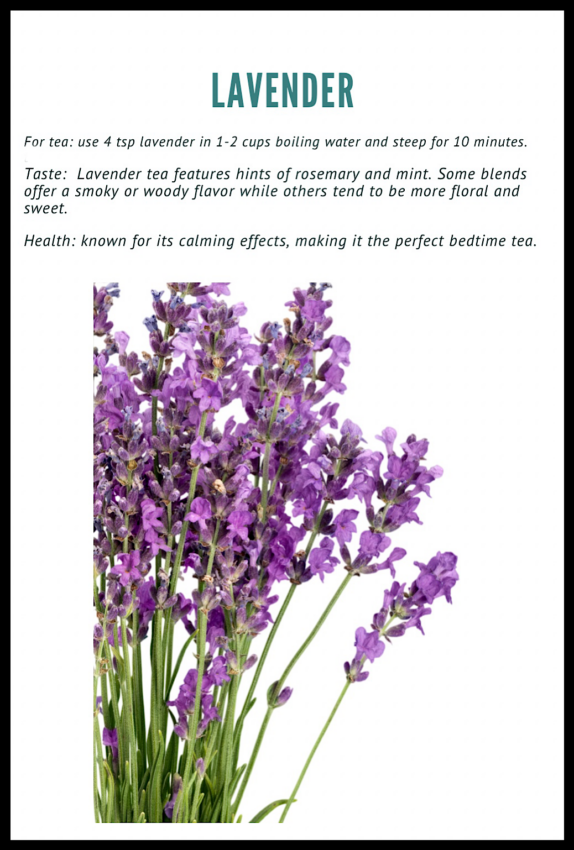
Is a herb garden really a herb garden if there’s no lavender?! The genus Lavandula, particularly Lavandula angustifolia, is beloved for its lovely blueish-purple flowers, its culinary uses, its fragrance, its essential oil, its medicinal properties… need I go on? Even bees adore this herb.
Coneflower (Echinacea sp.)
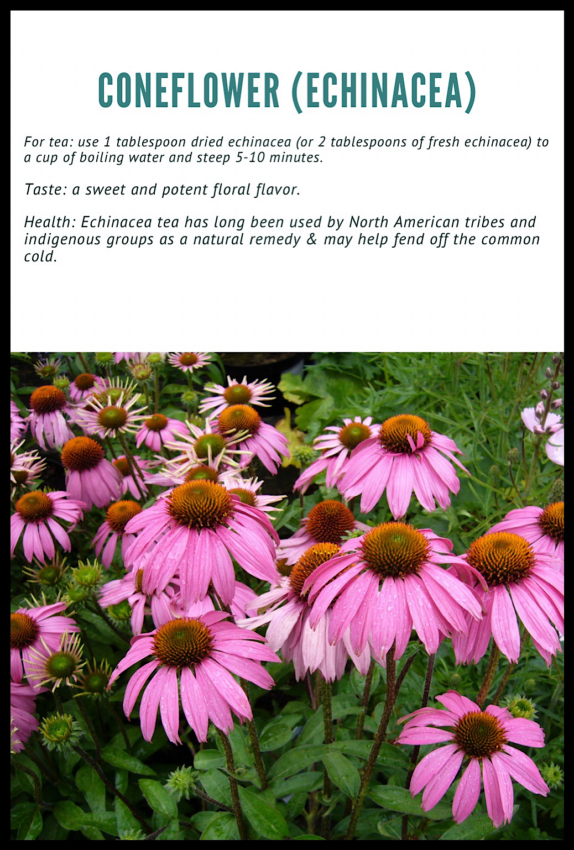
The species is popular in herbal remedies. While research on its health claims is ongoing, its flavor itself makes it worth brewing into tea. You can use the roots and/or the flowers for an earthy, soothing and floral drink.
The most popular coneflower variety for tea gardens is Echinacea purpurea, although Echinacea pallida and angustifolia also work well.
Growing: All are hardy perennials that can be grown in almost any type of soil and like plenty of sun. You can sow yours whenever except full summer or full winter – they start flowering reliably in the second year.
Flavor: A sweet, floral flavor that is quite strong.
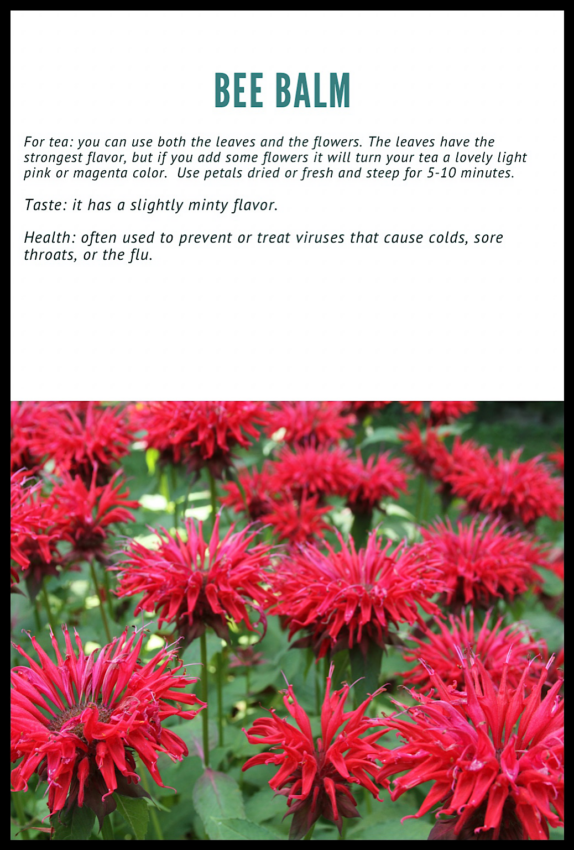
Bee balm
Bee balm is actually a North American native and not just known for its fragrance and flavor, but also its beautiful bright pink flowers. Both the leaves and the flowers can be used for making tea.
Growing: Bee balm is easy to care for. It grows well in a range of conditions, although it prefers full sun and lightly moist soil. Before you sow, be sure to stratify the seeds. The easiest way to provide this necessary period of cold in a natural manner is to simply sow in fall, because otherwise, you may end up having to pop the seeds into the refrigerator.
Flavor: It has a slight minty flavor
Three Root Plants for Herbal Tea Blends
- Licorice: Takes a while to grow, but in the meantime, the little flowers are very nice. Our hand blended Licorice Spice tea is probably my favorite herbal tea.
- Ginger: Can be grown from a store-bought ginger root. Fantastic with honey and lemon.
- Valerian: The underground stems can be brewed into a natural sleep aid. Be sure to follow a recipe so you don’t overdo it!
FAQ
Mint, lemon balm, and chamomile are the most forgiving for beginners. Mint grows so vigorously it can become invasive, so consider keeping it in a container. All three thrive in partial shade and tolerate inconsistent watering.
Yes. Most tea herbs do well in pots, making them ideal for balconies, patios, or windowsills. Use well-draining soil and containers with drainage holes. Herbs in containers need more frequent watering and occasional fertilizer.
Harvest leaves in the morning after dew has dried but before the sun gets hot. This is when essential oils are strongest. For flowers like chamomile and lavender, harvest when fully open but before they start to fade.
No. Fresh herbs make excellent tea, though you’ll need about three times more fresh herbs than dried. Drying herbs allows you to store them for year-round use. See my guide to drying herbs for tea for detailed instructions.
Mint spreads aggressively and will overtake other plants, so keep it in its own container. Fennel can inhibit growth of nearby plants. Lavender and rosemary prefer drier conditions than mint and lemon balm, so group herbs with similar water needs together.
Yes. Rosemary, fennel, mint, and lavender are all used in cooking and tea-making. Growing dual-purpose herbs maximizes your garden space.
If you want to explore the world of teas and tisanes, check out this Complete Guide to Teas. It includes information on how to grow a tea garden, types of tea, brewing times and temp., recipes for blends, caffeine amounts, and much more.

I’m a Master Gardener in Surry County NC and would love to use the recipe sheets for each of the herb teas you have provided. We are presenting a program on making herbal teas and these would be perfect to use. We would be glad to give the author credit. Thanks so much for your help.
Mari and I collaborate on all posts and they are done for the farmtojar site rather than an individual. You are welcome to use the recipe sheets if you link back to the blog for credit (https://farmtojar.com)
thanks for sharing all this great information. I’m planning a herbal tea garden. this was so helpful to me.
Thank you for leaving a comment Debbie. It make me happy to be helpful and I like to be happy lol. Happy Gardening!