
Quick Summary: A fruity gazpacho made with yellow and orange heirloom tomatoes, sherry vinegar, and olive oil. Milder and more delicate than traditional red gazpacho, and the color is stunning served side by side. Only 15 minutes of hands-on prep. Prep: 15 min | Chill: 2 hr | Serves: 6″
Jump to: Recipe | Tomato Forward Dinner Menu | Why Yellow Gazpacho? | Flavors of Yellow Heirloom Tomatoes | Ingredients and Substitutions | Step by Step | Side Garnishes | FAQ
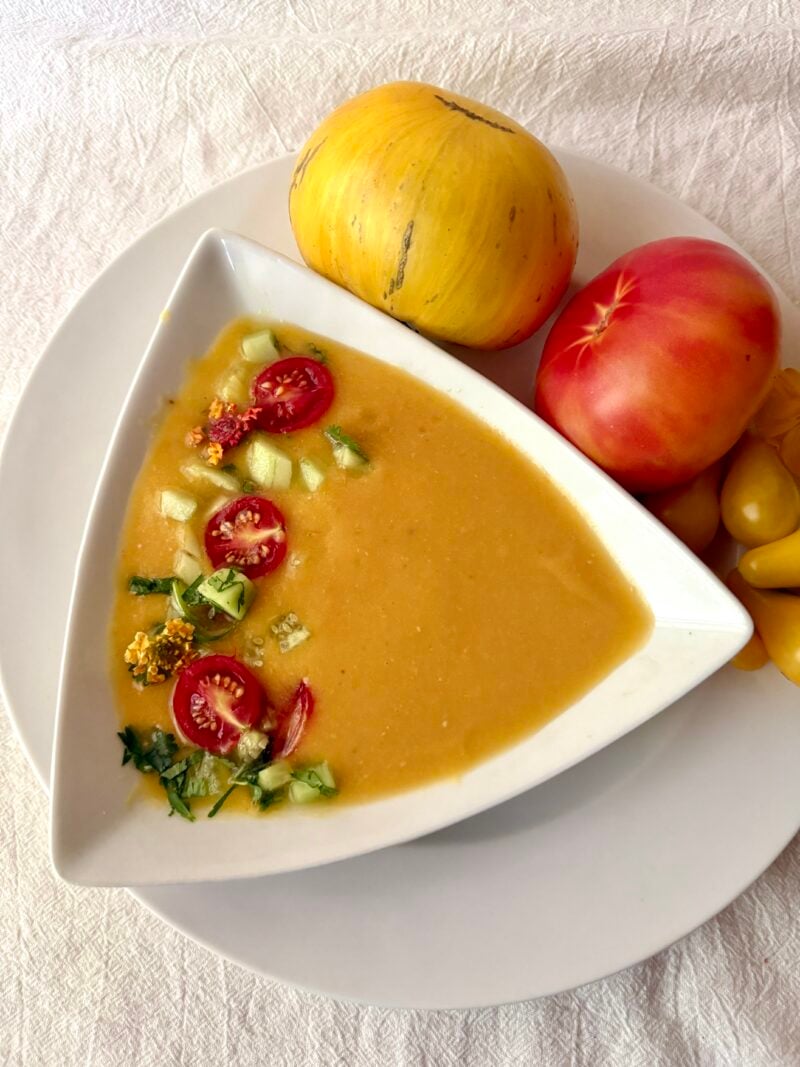
I have been growing hundreds of varieties of heirloom tomatoes at Heathglen Farm since 2000. I sell the heirloom tomatoes at the St. Paul Farmers’ Market in St. Paul, Minnesota, and over the years I have selected out about 50 varieties that are my customers favorites (as well as my own favorites).
The heirloom tomatoes all have very different flavor profiles, and while it is a generalization, you can distinguish many similar flavors based around color. This guide on the flavor profiles based on color is a good all-around summary of what you can expect to find in the different colors of heirloom tomatoes. There are exceptions of course, but it is a good starting point.
Tomato Forward Menu at a Tomato Tasting Event
So, when I decided to have a tomato-tasting festival at the farm this year (2026), I put together a light tomato-forward menu that I would offer to the guests post-tasting. The tasting event was for the Minnesota Les Dames d’Escoffier and many of the “dames” brought tomato dishes to share also.
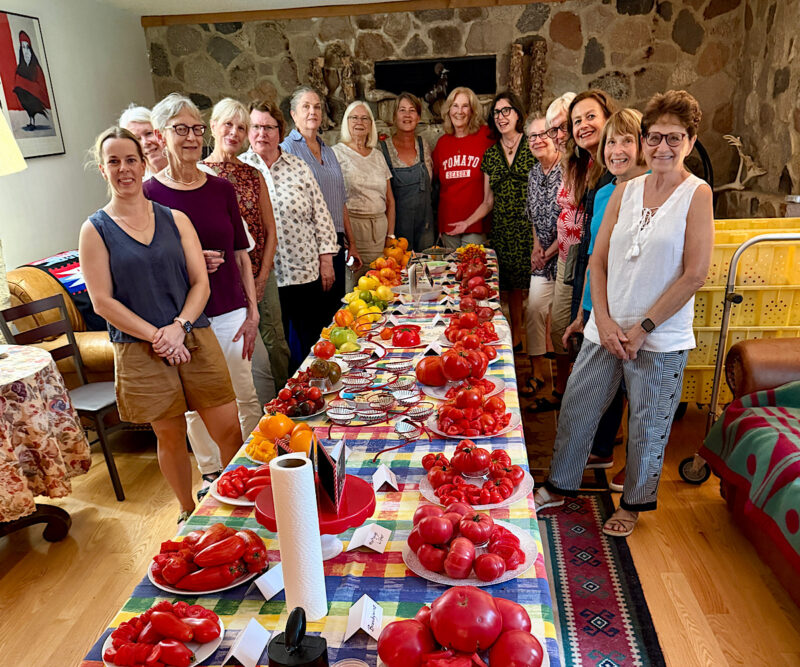
Below are the dishes I provided (with recipes), made with my heirloom tomatoes. Gazpacho was one of my offerings on the menu, and I thought I’d make a yellow gazpacho in addition to the traditional Andalusian gazpacho to highlight the flavors of these beautiful yellow heirlooms. The yellow gazpacho ended up being more popular than the traditional red gazpacho.
Here are my personal dishes at the tasting:
- Andalusian Gazpacho (traditional red gazpacho)
- Yellow Heirloom Tomato Gazpacho (this post’s recipe in recipe card)
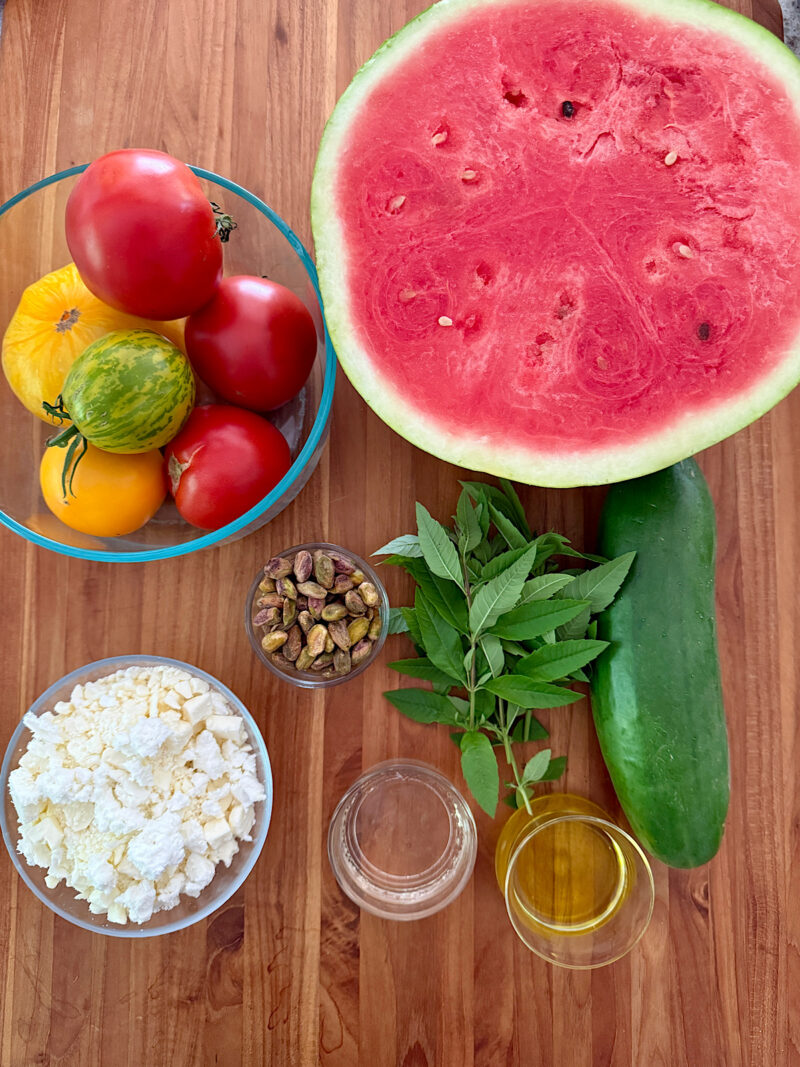
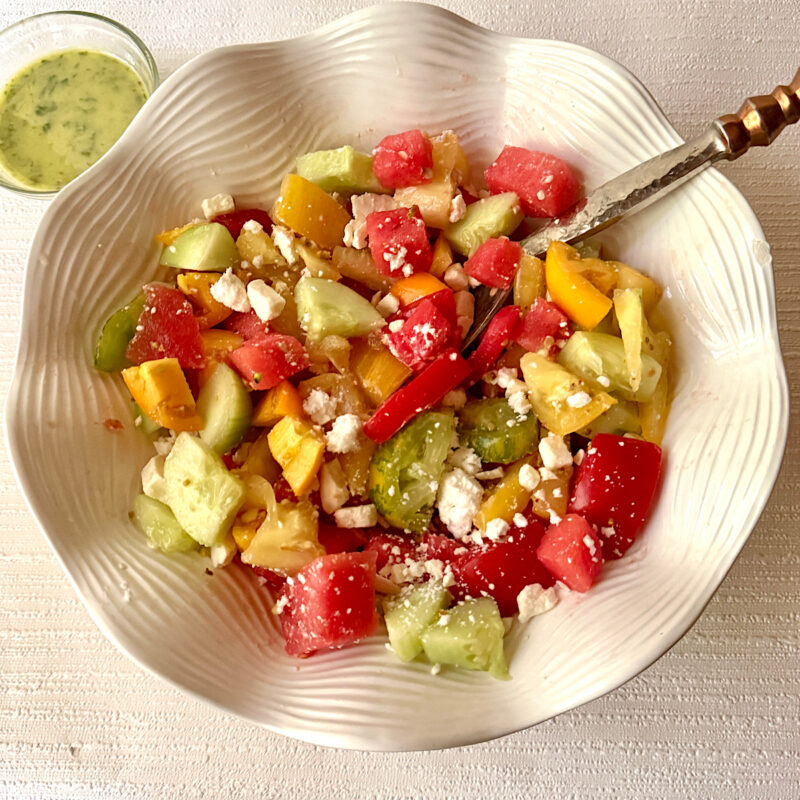
- Watermelon-Tomato-Feta Cheese Salad (recipe summary below)
- Rustic Tomato Bread
- Tomato Martinis
- Sweet Caramelized Tomato Tarte Tartin
- Big Batch Iced Tea
Watermelon Tomato Recipe Summary:
While I haven’t posted yet on the watermelon salad, it was very easy and here is a summary of the ingredients and a photo of the final product:
Why Yellow Gazpacho?
Yellow tomatoes do have different flavor profiles than red or purple tomatoes. Yellow heirloom tomatoes tend to be on the fruity side, while bright red tomatoes are more robust, and purple tomatoes are sweeter and “wine-like”.
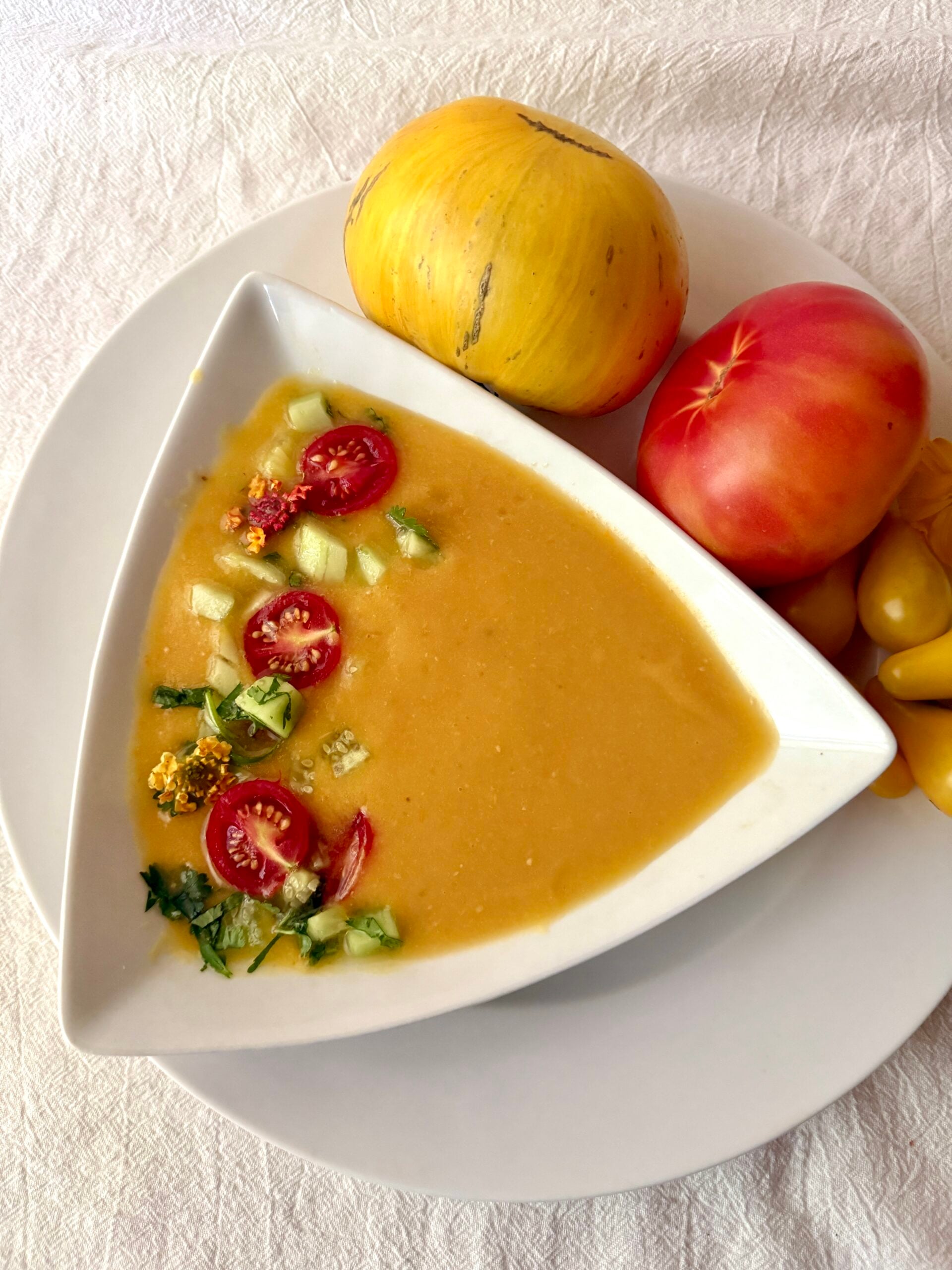
In addition to highlighting the different flavors of yellow tomatoes in a gazpacho, the visual beauty of the yellow gazpacho next to the red gazpacho is stunning.
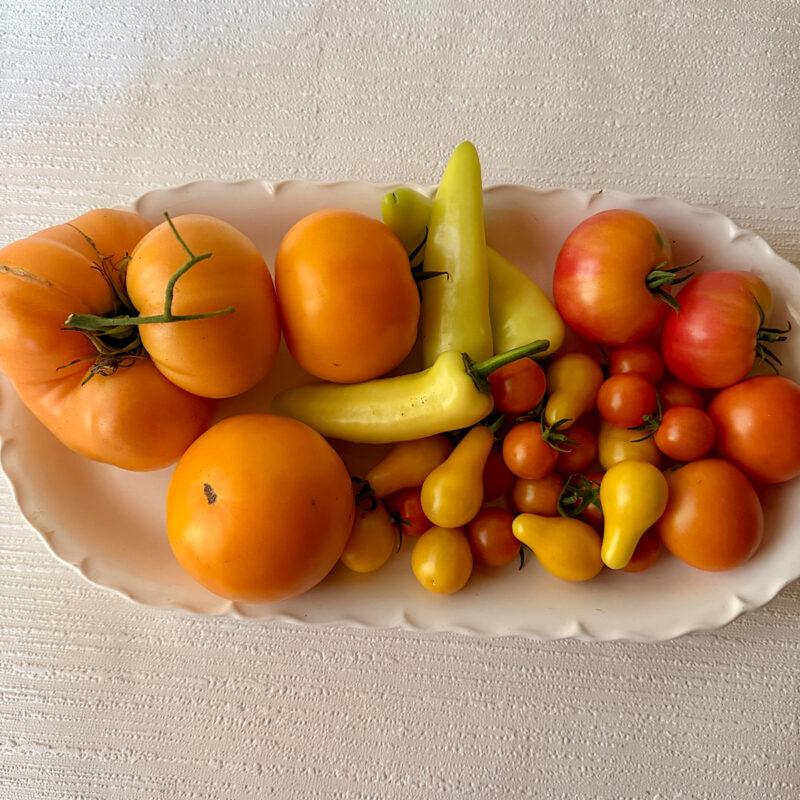
In the photo below are the yellow and orange tomatoes that I used for the gazpacho, but there are many, many that would work well.
And by the way, about that myth that yellow tomatoes have less acid: check out this researched article answering the question are yellow tomatoes low acid?.
Flavor Profiles of Yellow Tomatoes
Each yellow and orange variety brings something slightly different to the gazpacho. Here are the ones I grow at HeathGlen Farm and what they contribute
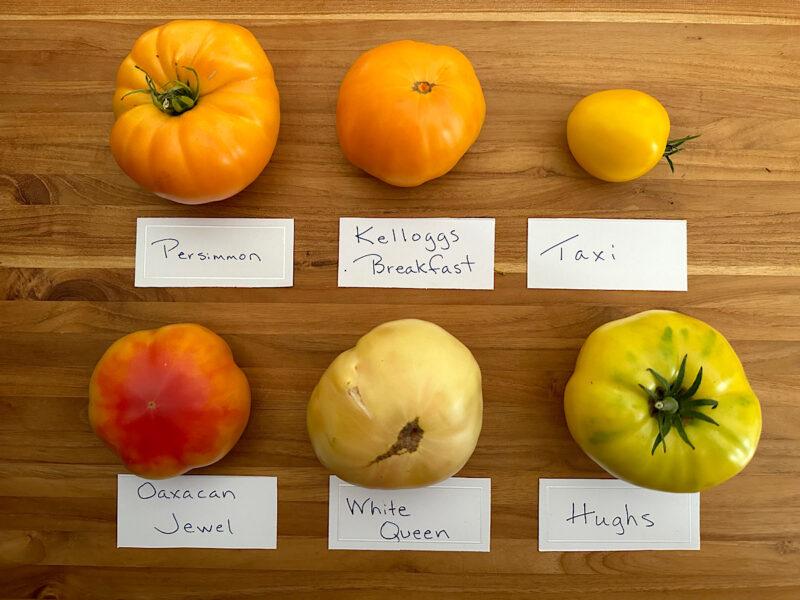
My favorite yellow and yellow-orange tomatoes are shown below. Persimmon is very large, juicy and fruity, Kelloggs Breakfast is firm and fruity, Taxi is small and on the mild side, Oaxacan is beautiful bi-colored tomato that is a bit sweet, White Queen is pale yellow and mild, and Hughs is my all time favorite with the most robust flavor of all the yellows.
Ingredients & Substitutions for Yellow Gazpacho
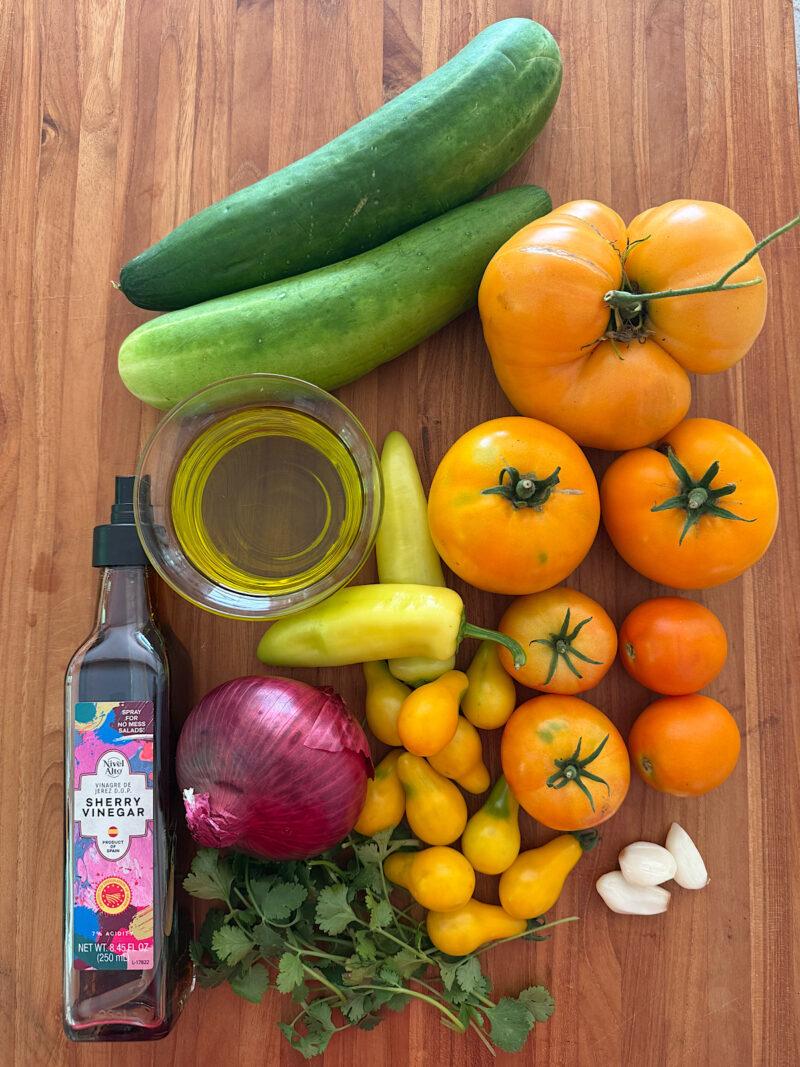
The ingredients are shown below. Here is a list of the ingredients with some substitutions:
Tomatoes: The Tomatoes are the star of a gazpacho, and it pays to get the best ones you can. Get them fully ripe so you can be sure they have developed their sugars. The tomatoes that lean towards more orange colors are going to be a little fruitier in general. It’s all good though.
Cucumbers: Some people prefer seedless cucumbers, but since everything is blended thoroughly, the seeds are not really apparent.
Vinegar: The traditional vinegar for a Spanish gazpacho is sherry vinegar. I think a quality sherry vinegar is the second most important ingredient after the tomatoes. You can substitute a white wine vinegar if you don’t have a sherry vinegar. Don’t use a red wine or balsamic vinegar with this recipe or you will change the beautiful color.
Peppers: I used a sweet banana pepper. Yellow bell peppers are a good substitute.
Cilantro: For people that don’t like cilantro, basil is a good substitute.
Onion and garlic: These are the least important. You can omit the garlic if you are not a fan.
Step by Step Directions
Basically there are 4 steps to this easy recipe:
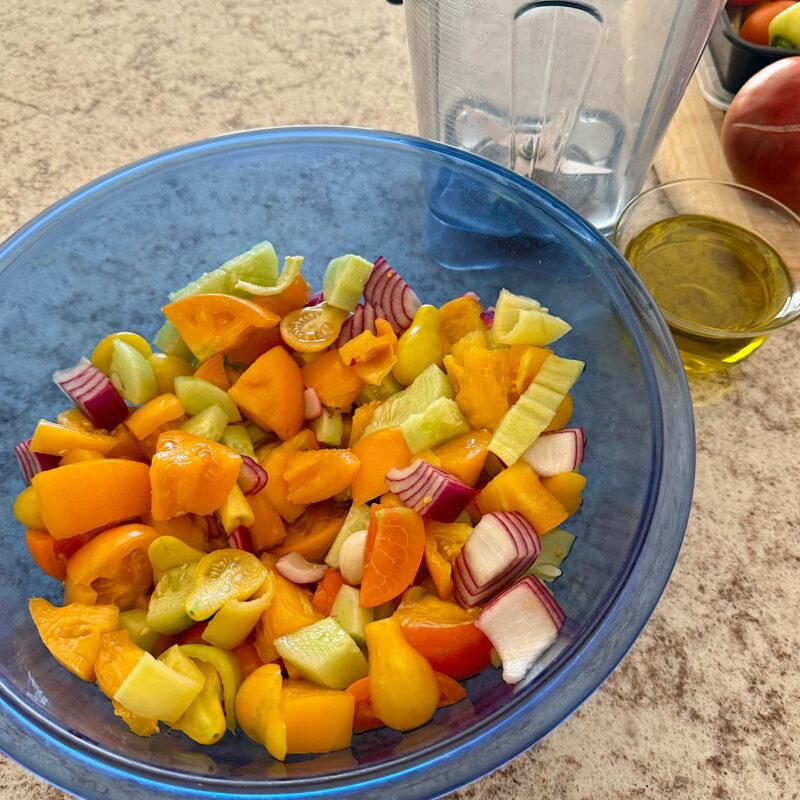
- Roughly chop the fruit/vegetables;
- Let them sit in the vinegar and salt for 15+ minutes;
- Blend it up until smooth.
- Chill for a couple of hours.
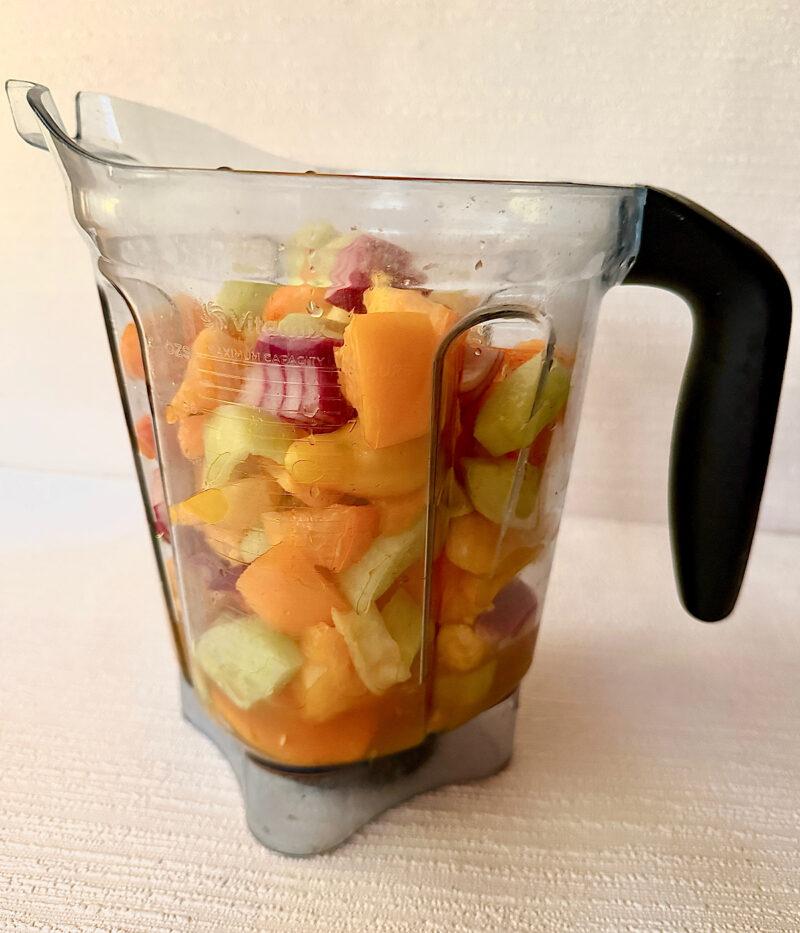
This gazpacho is best served cold but not straight-from-the-refrigerator cold. Pull it out about 15 minutes before serving. Too cold and the flavors go flat. The texture should be completely smooth, almost silky. If it’s too thick after chilling, thin it with a splash of cold water or a drizzle of olive oil.
Sides and Garnishes for Gazpacho
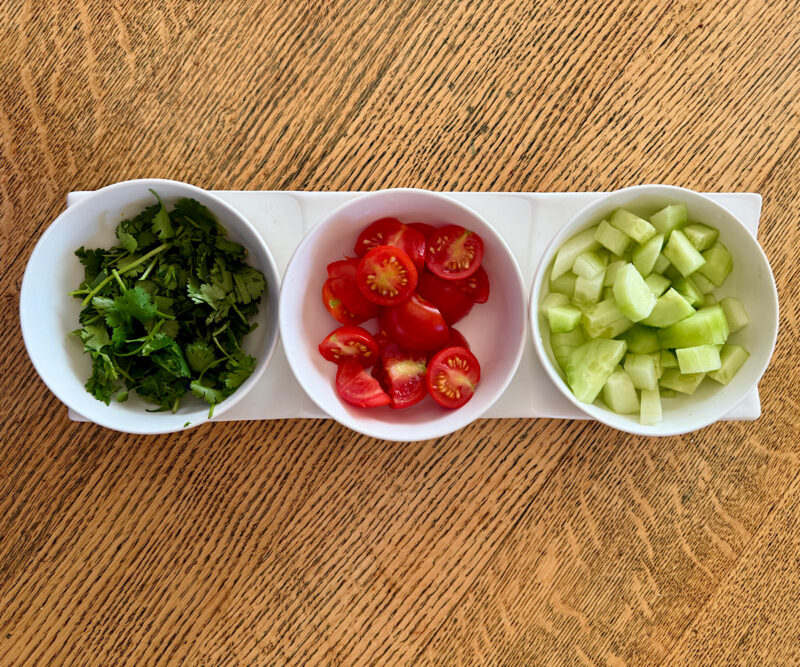
Some people prefer a smooth gazpacho and some like the texture of chunks of chopped vegetables. I like to blend the gazpacho until smooth and then serve it with an array of chopped accompaniments on the side.
Here are the classic garnishes. Some people will add some jalapenos for heat or some edible flowers for beauty and fun.
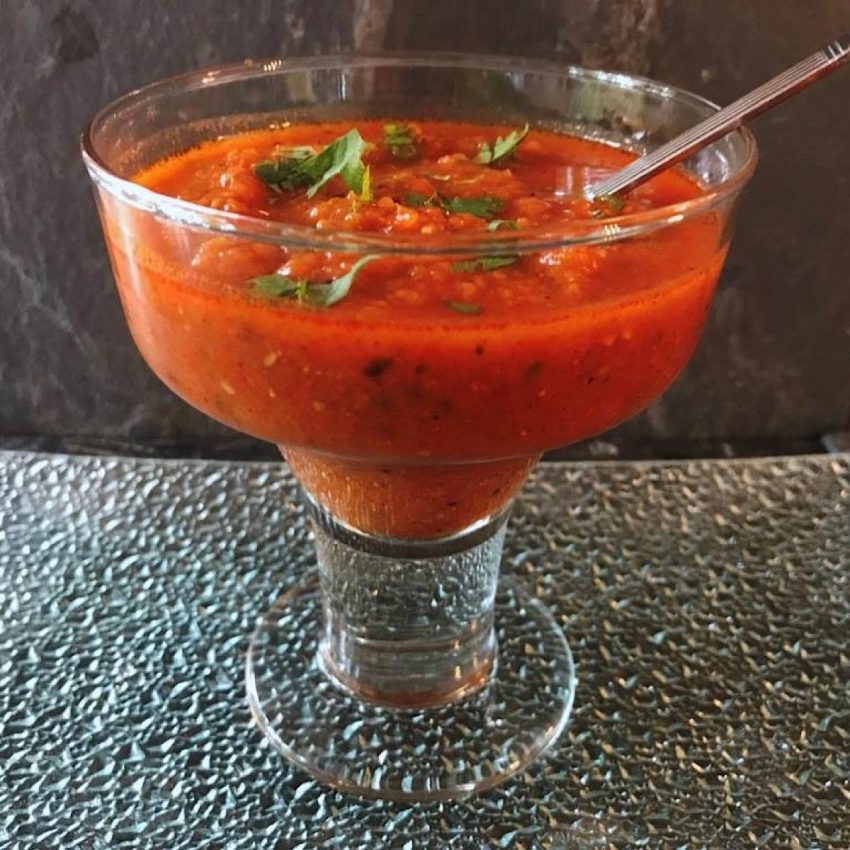
Spanish (Red) Gazpacho: Andalusian Gazpacho
For an authentic Spanish gazpacho made with robust tomatoes, red peppers, cucumbers, garlic, sherry vinegar and spices, check out the recipe for Andalusian Gazpacho.
FAQ
Yes, but then you’re making traditional gazpacho. The whole point of yellow gazpacho is the different flavor profile and the striking color. If you want to try both, here’s the classic Andalusian gazpacho recipe to serve alongside.
No. Everything gets blended smooth, so the skins break down completely. This is one of the easiest tomato recipes you can make.
Sherry vinegar is the traditional choice for Spanish gazpacho and has a nutty depth that complements the fruity yellow tomatoes. White wine vinegar works as a substitute. Avoid red wine or balsamic vinegar, which will muddy the beautiful yellow color.
Refrigerated, 3-4 days. The flavor actually improves overnight as everything melds together, so making it the day before serving is ideal.
Refrigerated, 3-4 days. The flavor actually improves overnight as everything melds together, so making it the day before serving is ideal.
Yes, and it’s better that way. Make it a day ahead, keep it refrigerated, and prepare the garnishes separately. Pull it out 15-20 minutes before serving so it’s cool but not ice cold.
This is a common assumption, but it’s not always true. Yellow tomatoes generally taste milder because their flavor leans fruity rather than robust, but acidity varies by variety. This researched article on whether yellow tomatoes are low acid goes deeper into the science.
Yes. This gazpacho is fully compliant with the Slow Carb Diet and any low carb plan. It’s vegetables, olive oil, and vinegar with no bread, sugar, or grain. Traditional Spanish gazpacho sometimes includes bread as a thickener, but this version does not.
Yellow tomato gazpacho has a fruitier, milder, more delicate flavor. Red gazpacho made with traditional varieties is more robust and acidic. Serving both side by side makes a stunning visual presentation and lets guests compare the flavor differences.
For more ways to cook with heirloom tomatoes from fresh salsas to preserved sauces, browse this collection of heirloom tomato recipes.
Yellow Gazpacho Made with Heirloom Tomatoes
Equipment
- large bowl
Ingredients
- 2 ½ pounds tomatoes yellow or orange tomatoes
- 2 cups cucumbers chopped (about 2 small cukes)
- 1 red onion small red onion
- 1 cup sweet yellow peppers 2 small sweet banana or 1 large yellow bell
- 3 cloves garlic
- ¼ cup sherry vinegar
- 2 teaspoons kosher salt
- ¾ cup olive oil
Instructions
- Roughly chop the tomatoes, cucumbers, onion and peppers and place in a large bowl. Add the garlic, vinegar and salt. Stir it all together and let it rest for 15 minutes2 1/2 pounds tomatoes, 2 cups cucumbers, 1 red onion, 1 cup sweet yellow peppers, 3 cloves garlic, 1/4 cup sherry vinegar, 2 teaspoons kosher salt
- Pour ingredients from the bowl into a blender, add the oil, and blend until smooth.3/4 cup olive oil
- Chill for 2+ hours and serve cold or at room temperature. Serve with a side of garnishes that could include chopped cucumbers, minced cilantro or basil, chopped jalapenos and chopped or halved cherry tomatoes.