
Quick Summary: The short answer is that “low acid tomatoes” as marketed by seed companies are largely a myth. All tomatoes fall within a narrow pH range (4.1 to 4.7), regardless of color. Yellow and orange varieties taste less acidic because they’re higher in sugar, which masks the tartness. If you’re avoiding tomatoes for digestive reasons, the issue may be something other than pH.
Jump to: The Science | Yellow Tomatoes | Heirlooms vs Hybrids | Stomach Upset | Digestive Strategies | Canning Safety | Seed Company Labels | FAQ
Every summer I get asked which tomato varieties are “low acid.” People with acid reflux, sensitive stomachs, or canker sores want to enjoy fresh tomatoes without the consequences. Sometimes people just like a milder tasting tomato and believe that means low acid.
Here’s what 20+ years of growing heirlooms has taught me, backed by the research: the “low acid tomato” label on seed packets is mostly marketing. The tomatoes that taste milder aren’t actually lower in acid. They’re higher in sugar.
The Science: All Tomatoes Are About Equally Acidic
A landmark USDA study tested hundreds of tomato varieties and found that virtually all of them fall within a pH range of 4.1 to 4.7. That includes red, yellow, orange, pink, purple, and green varieties. That includes heirlooms and hybrids. That includes large beefsteaks and tiny cherries.
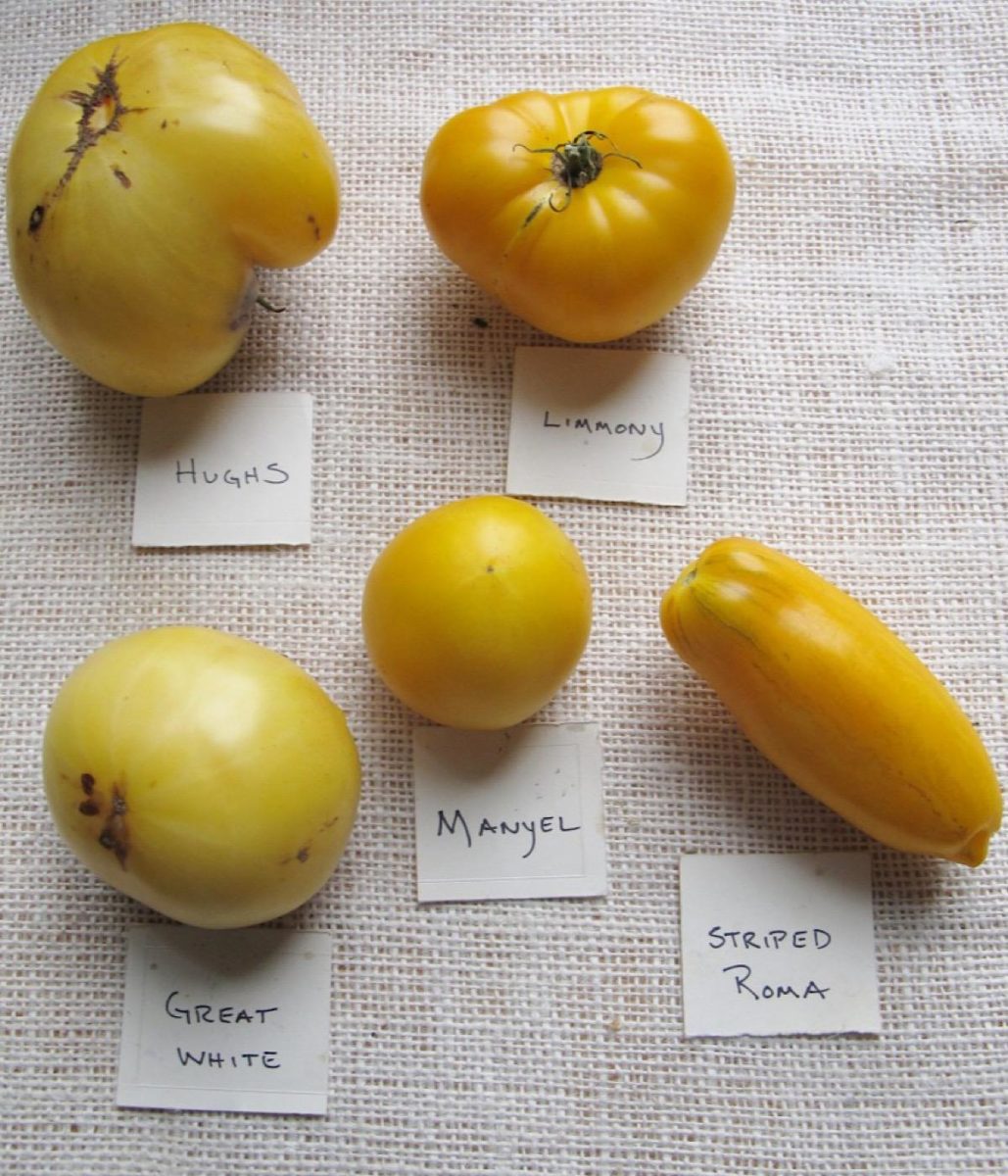
The researchers were blunt about the common belief that yellow tomatoes are low acid: “The public has been told repeatedly that light-colored and small tomato cultivars are low in acid but it is a myth. The small and light-colored varieties tended to be higher in acid (lower pH) than other tomato types.”
Yes, you read that right. In the study, yellow and small tomatoes were actually more acidic than red ones on average. The opposite of what seed catalogs claim.
Robert Pavlis at Gardenmyths.com has written extensively about this research and points out something important about pH: it’s a logarithmic scale. A tomato with pH 4.7 is significantly less acidic than one with pH 4.1. So there are real differences between varieties. But those differences don’t correlate with color the way we’ve been told.
Why Yellow Tomatoes Taste Less Acidic
If the pH is similar, why do yellow, white and sometimes orange tomatoes taste so much milder?
Sugar masks acid. When you bite into a sweet orange tomato like Persimmon or Jaune Flamme, the high sugar content counteracts the tartness. Your taste buds register “sweet” more than “sour” even though the actual acid level is comparable to a red tomato.
This is the same reason Sun Gold cherry tomatoes taste almost like candy despite being quite acidic. The sugar overwhelms the acid perception.
When taste testers are asked to identify the “least acidic” tomato in a lineup, they consistently pick the sweetest ones. We perceive sweetness and acidity as opposites, so a sugary tomato seems less acidic even when it isn’t.
Flavor compounds differ by color. Beyond sugar, the volatile compounds that create tomato flavor vary between color categories. Red tomatoes have a more complex, robust flavor profile. Yellow and orange varieties tend to be simpler and “cleaner” tasting. This can read as “milder” even when the pH is the same.
For more information on color compounds, I have detailed my experience with nuanced flavor of tomatoes based on their color in this guide on heirloom tomatoes by color.
What About Heirlooms vs. Modern Hybrids?
Another common belief is that modern breeding has produced more acidic tomatoes, and that older heirloom varieties are gentler on the stomach.
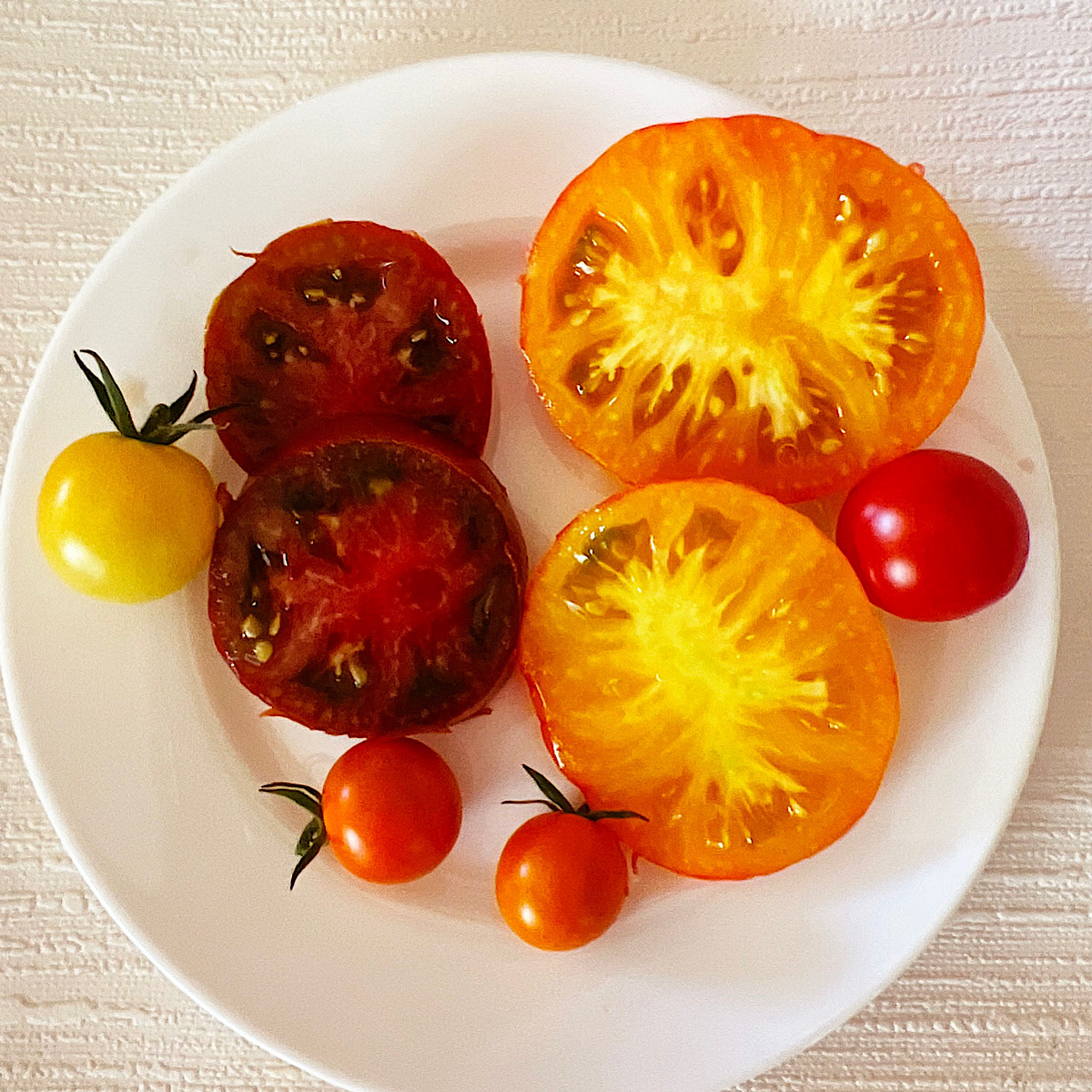
The research doesn’t support this either. A Utah State study comparing hybrids, open-pollinated varieties, and heirlooms found that heirlooms actually tended to be less acidic (higher pH) than hybrids. But the differences were small, and all varieties were still well within the normal acidic range.
There’s no pH trend between older and newer cultivars. Some heirlooms are more acidic than some hybrids, and vice versa. The variety name doesn’t tell you much about actual acidity.

If It’s Not Acid, What’s Causing Your Symptoms?
If you experience heartburn, stomach upset, or mouth irritation from tomatoes, the problem is real. But if all tomatoes have similar pH, what’s actually happening?
For acid reflux and GERD: Tomatoes can trigger symptoms even though they’re not unusually acidic compared to other foods. They contain both citric and malic acid, which can increase stomach acid production. They can also relax the lower esophageal sphincter (LES), the muscle that keeps stomach acid from backing up into your esophagus.
The issue isn’t that tomatoes are more acidic than other foods. It’s that they interact with your digestive system in ways that promote reflux.
For canker sores: Some people are sensitive to citric acid specifically, which tomatoes contain. This is different from overall pH.
For general stomach sensitivity: The combination of acids, certain proteins, and other compounds in tomatoes may cause irritation for some people. This can vary by preparation (raw vs. cooked) and by what else you eat with the tomatoes.
Possible lycopene sensitivity: Some researchers speculate that certain people react to lycopene, the red pigment in tomatoes, rather than to the acid. This would explain why lighter-colored tomatoes (which have less lycopene) seem easier to tolerate for some people, even though their pH is similar.
What Actually Helps If You’re Sensitive to Tomatoes
If you want to enjoy tomatoes but have digestive issues, here are strategies that may actually help:
- Try sweeter varieties. While they’re not truly lower in acid, the sugar may make them more tolerable. Orange varieties like Persimmon, Jaune Flamme, and Kellogg’s Breakfast are worth trying. So are sweet cherry types like Sun Gold.
- Eat tomatoes with other foods. Pairing tomatoes with alkaline foods (leafy greens, cucumbers, avocados) may help buffer the acid. Don’t eat tomatoes on an empty stomach.
- Try cooked vs. raw. Some people tolerate cooked tomatoes better; others do worse with concentrated tomato sauces. Experiment to see what works for you.
- Don’t eat tomatoes late at night. Lying down soon after eating tomatoes increases reflux risk.
- Add a pinch of baking soda to sauces. If you’re making your own tomato sauce, a small amount of baking soda (1/8 to 1/4 teaspoon per cup of sauce) neutralizes some acid. Be careful not to add too much or you’ll get a soapy taste.
- Keep a food diary. Track which specific varieties and preparations cause problems. You may find patterns that aren’t obvious.
- Talk to your doctor. If you’re having significant digestive issues, the tomatoes may be a symptom of something else (like GERD) that needs treatment beyond dietary changes.
A Note on Canning Safety
The “low acid tomato” myth has implications beyond fresh eating. Some home canners believe that yellow or heirloom tomatoes are too low in acid to can safely.
Here’s the reality: all tomatoes are borderline for safe water bath canning. The 4.6 pH threshold for botulism safety is right at the edge of the tomato range. That’s why USDA canning guidelines recommend adding lemon juice or citric acid to all canned tomatoes, regardless of variety or color.
You don’t need to worry more about yellow tomatoes than red ones. But you should acidify all home-canned tomatoes according to tested recipes.
Varieties Often Marketed as “Low Acid”
For reference, here are varieties frequently labeled “low acid” by seed companies, along with what that label actually means:
- Ace 55: Sweet flavor, not actually lower pH
- Jet Star: Mild taste due to sugar content
- Lemon Boy: Yellow color, sweet, normal tomato pH
- Yellow Pear: High sugar, actually tested higher in acid than many red varieties
- Ponderosa Pink: Mild flavor, not genuinely low pH
- Great White: Low in flavor intensity overall, not specifically low acid
- San Marzano: Interestingly, this red paste tomato tested as one of the less acidic varieties in one study
The pattern: these are generally sweet, mild-flavored tomatoes. The “low acid” label is based on taste perception, not measured pH.
FAQ
No. Research shows yellow tomatoes have similar pH to red varieties, and in some studies tested more acidic. They taste milder because they’re higher in sugar, which masks the tartness.
There’s no variety that’s genuinely low in acid. However, sweeter varieties (many orange and yellow types) may be more tolerable because sugar balances the acid taste. Smaller portions, eating earlier in the day, and pairing tomatoes with other foods may help more than variety selection.
Neither consistently. Studies show no clear trend. Individual variety matters more than whether it’s an heirloom or hybrid.
Because the myth persists and it sells seeds. If people believe yellow tomatoes are low acid, labeling them that way moves product. The label reflects perceived taste, not measured pH.
Yes, with the same precautions as any tomato. Add lemon juice or citric acid according to USDA guidelines. Yellow tomatoes are not more dangerous to can than red ones.
Genetics plays the largest role, but growing conditions (soil, water, climate) also affect pH. The same variety grown in different locations can have different acidity levels. This is another reason “low acid variety” claims are unreliable.
Not necessarily. Experiment with different varieties, preparations, and portions. Many people who think they can’t eat tomatoes find they can tolerate certain types or amounts. A food diary helps identify your specific triggers.
If you want to grow your own tomatoes for recipes like this, The Tomato Workbook for Beginners, covers everything from seed starting to harvest, with variety recommendations for different cooking uses.
References
Sapers, G.M., Phillips, J.G., & Stoner, A.K. (1977). Tomato acidity and the safety of home canned tomatoes. HortScience, 12(3), 204-208.
Heflebower, R., & Washburn, C. (2010). The influence of different tomato varieties on acidity as it relates to home canning. Journal of Extension, 48(6), Article 6RIB6. https://open.clemson.edu/joe/vol48/iss6/21/
LeHoullier, C. (2015). Epic Tomatoes: How to Select and Grow the Best Varieties of All Time. Storey Publishing.