Quick Summary: Pu-erh is a fermented tea from Yunnan, China, that improves with age like wine. Unlike other teas that are best fresh, pu-erh undergoes microbial fermentation that develops complex, earthy flavors over time. It comes in two types: sheng (raw) ages naturally over decades, while shou (ripe) is accelerated to mimic aged tea. Properly stored pu-erh can be aged for 20 years or more.

Jump to: How is Pu-erh different? | Types of Pu-erh | Taste? | Looseleaf vs Compressed | How to Brew | FAQ
At HeathGlen Organic Farm, I blend and sell teas at the St. Paul Farmers’ Market, and pu-erh is always the tea that sparks the most questions. It smells different (earthy, sometimes mushroomy), and behaves differently (it improves with age rather than going stale).
Pu-erh has a long-time dedicated following, and now its popularity in the US is growing as more tea drinkers discover its unique characteristics.
What Makes Pu-erh Different from Other Teas
First of all pu-erh is a fermented tea, which sets it apart from all other tea categories.
Black, green, white, and oolong teas are processed and then finished. Their flavor is set at production, and they’re best consumed within a year or two. Oxidation (exposure to air) degrades them over time.
Pu-erh undergoes fermentation after initial processing. This means living bacteria and fungi transform the tea leaves over months or years, developing flavors that don’t exist in fresh tea.
This fermentation is similar in concept to cheese aging or wine fermentation, though the specific microbes are different.
Because of this fermentation, pu-erh improves with age rather than degrading. A 20-year-old pu-erh can be more valuable and more delicious than a fresh one
Where Does Pu-erh Come From?
Authentic pu-erh comes exclusively from Yunnan Province in southwestern China. The name is protected by Chinese geographic indication, similar to how Champagne must come from the Champagne region of France.
Yunnan’s old-growth tea trees, some centuries old, produce the most prized pu-erh. The leaves from these ancient trees have different flavor compounds than plantation-grown tea bushes. Single-origin pu-erh from specific mountains or villages commands premium prices.
The climate and microbial environment of Yunnan contribute to pu-erh’s character. Teas processed identically in other regions don’t develop the same way.
What Is the Difference Between Sheng and Shou Pu-erh?
Pu-erh comes in two types, and understanding the difference is essential:
Sheng (Raw) Pu-erh: Traditional pu-erh that ages naturally over time. Fresh sheng is astringent, vegetal, and sometimes bitter. Over 10-30 years of proper storage, it transforms into something smooth, complex, and highly valued. Young sheng is an acquired taste; aged sheng is what collectors seek.
Shou (Ripe) Pu-erh: Developed in the 1970s to meet demand for aged-tasting tea without the decades of waiting. Shou undergoes an accelerated fermentation process called “wet piling” (wo dui) that mimics years of aging in weeks. The result is dark, smooth, and earthy from the start. Shou doesn’t improve dramatically with additional aging since the fermentation is already complete.
For beginners, shou is more approachable. For collectors and enthusiasts, aged sheng is the prize.
What Does Pu-erh Taste Like?
Pu-erh’s flavor profile is unlike other teas:
Common tasting notes:
- Earthy (forest floor, mushrooms, damp wood)
- Smooth and thick mouthfeel
- Sweet undertones (dried fruit, molasses)
- Mineral or stone-like quality
- Aged leather or tobacco (in older teas)
- Clean, lingering finish
What affects flavor:
- Age (young sheng is sharp; aged sheng is smooth)
- Processing (shou is earthier; sheng is brighter)
- Source (old-growth trees produce more complexity)
- Storage conditions (humidity, temperature, airflow)
Some pu-erh has fishy or musty off-flavors, usually from poor storage or rushed production. Quality pu-erh should smell and taste clean, even when earthy.
How Do You Brew Pu-erh Tea?
Pu-erh brews differently than other teas. The traditional method uses small vessels and multiple short infusions.
Gongfu style (traditional):
- Use a small teapot or gaiwan (4-6 oz)
- Add 5-7 grams of pu-erh
- Rinse with boiling water and discard (this “wakes up” the leaves)
- First steep: 10-15 seconds
- Subsequent steeps: add 5-10 seconds each time
- Quality pu-erh can yield 10-15 infusions
Western style (simpler):
- Use 1 teaspoon per 8 oz cup
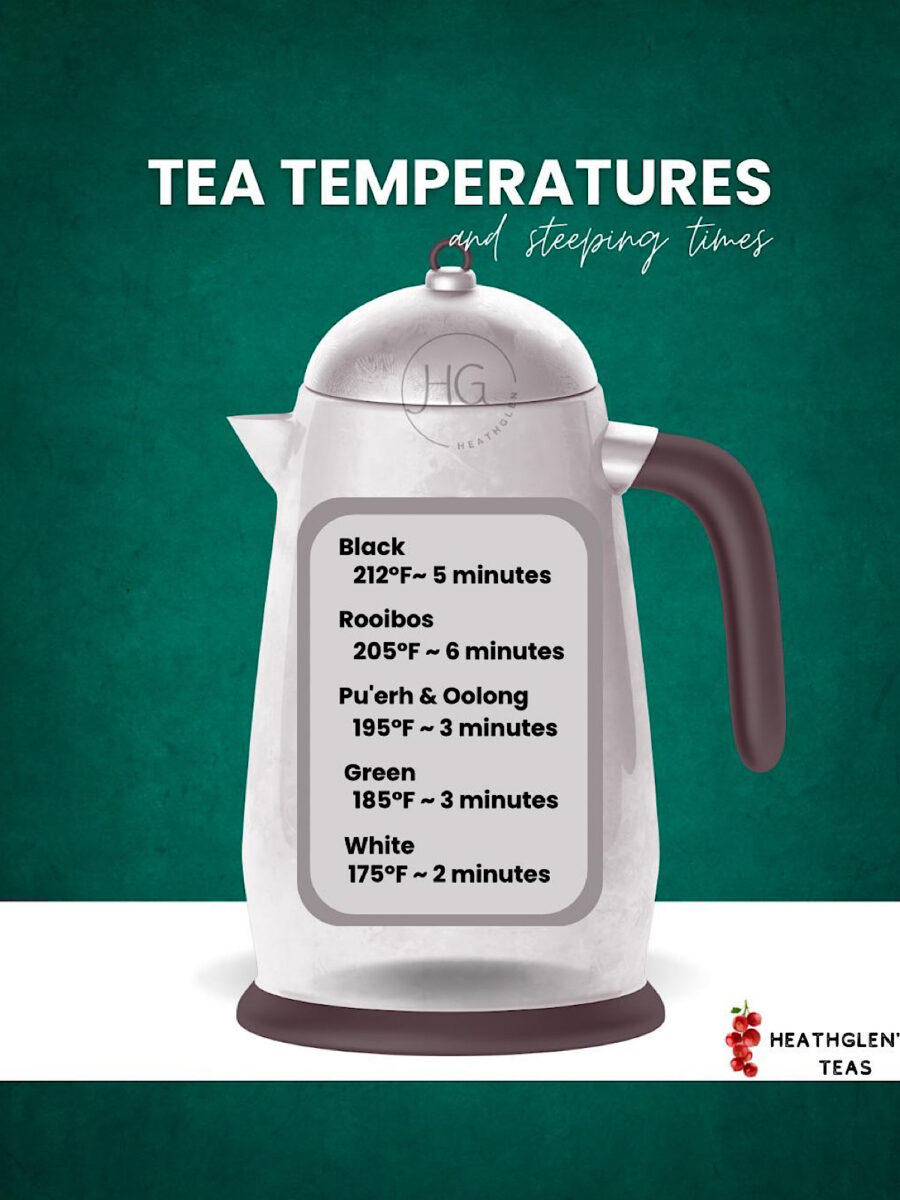
- Boiling water (212°F)
- Steep 3-5 minutes
- Can often re-steep 2-3 times
The rinse step is important for pu-erh, especially aged or compressed tea. It removes dust, loosens compressed leaves, and prepares the tea to release flavor.
Why Is Pu-erh Compressed into Cakes?
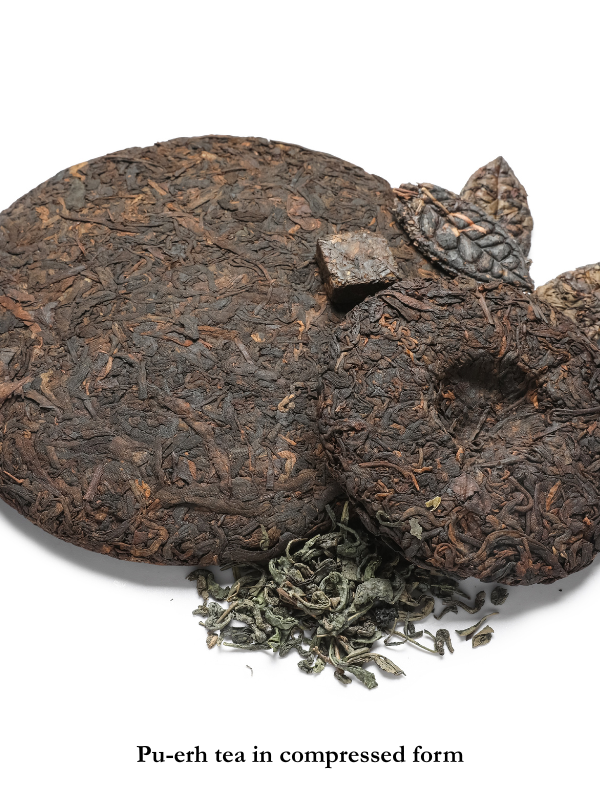
Pu-erh is traditionally compressed into various shapes: cakes (bing), bricks (zhuan), nests (tuo), and mushrooms (jin). This compression serves several purposes:
- Historical: Compressed tea was easier to transport on the ancient Tea Horse Road trading routes through mountainous terrain.
- Aging: Compression slows oxidation and creates a stable environment for microbial fermentation. Loose pu-erh ages faster but less evenly.
- Storage: Cakes stack efficiently and take less space than loose tea.
- Collectibility: Cakes are dated and often wrapped with identifying information, making them easy to track and trade.
To brew compressed pu-erh, break off a portion with a pu-erh knife or pick. Don’t crumble it to dust; you want intact leaf pieces.
How Do You Store Pu-erh Tea?
Unlike other teas, pu-erh needs some air circulation and controlled humidity to age properly.
For aging sheng pu-erh:
- Store away from strong odors (pu-erh absorbs smells)
- Maintain moderate humidity (60-75%)
- Keep at room temperature, avoiding extremes
- Allow some air circulation (don’t vacuum seal)
- Keep away from direct sunlight
For drinking stock (shou or aged sheng you’re consuming):
- Similar to other teas: cool, dark, away from odors
- Less humidity sensitivity since you’re not aging further
- Use within a few years for best flavor
Serious collectors maintain dedicated storage spaces with controlled humidity. For casual drinkers, a cupboard away from the kitchen works fine.
Does Pu-erh Have Caffeine?
Yes. Pu-erh contains caffeine comparable to other teas, roughly 30-70 mg per cup depending on brewing method.
Some sources claim pu-erh has less caffeine due to fermentation, but this isn’t consistently supported by research. Fermentation may reduce caffeine slightly, but the effect varies.
The gongfu brewing method (multiple short steeps) distributes caffeine differently than Western brewing. Early steeps may have higher caffeine; later steeps have less.
FAQ
Start with shou (ripe) pu-erh, which is smooth and approachable. Young sheng can be astringent and challenging. Aged sheng is wonderful but expensive.
Improperly stored pu-erh can develop mold or off-flavors, but it doesn’t expire in the traditional sense. Well-stored pu-erh continues improving for decades.
Fishy smell usually indicates rushed or poorly controlled shou production. Quality pu-erh should smell earthy, not fishy. A fishy cake may improve with airing out, but it’s often a sign of low quality.
Pu-erh has been traditionally consumed for digestive support and is popular after heavy meals in China. Some studies suggest benefits for cholesterol and weight management, though research is ongoing and not conclusive. Drink it because you enjoy it, not as medicine.
If you want to explore the world of teas and tisanes, check out this Complete Guide to Teas. It includes information on how to grow a tea garden, types of tea, brewing times and temp., recipes for blends, caffeine amounts, and much more.