Quick Summary: Recent studies show that plastic and nylon tea bags can release billions of microplastic particles into a single cup of tea. Even some paper tea bags contain plastic sealants. Loose leaf tea brewed in a glass, ceramic, or stainless steel infuser avoids this problem entirely. Here’s what the research says and how to enjoy tea without the plastic. Read time: 8 min
Jump to: What Research has Found | Hot Water Issue | Safe Brewing | Which Tea Bags Have Plastic | Looseleaf Option | FAQ
I blend wellness teas with herbs from our farm and sell them at the St. Paul Farmers’ Market as looseleaf teas. Lately customers have been asking about microplastics in tea bags. They’ve heard the headlines and want to know if their daily cup of tea is safe.
The short answer: it depends on how you brew it.
Recent research has found that some tea bags, particularly the silky pyramid-style bags made from nylon or plastic mesh, can release billions of microscopic plastic particles into your tea when steeped in hot water. Even traditional paper tea bags often contain plastic in the sealant that holds them together.
Loose leaf tea avoids this problem entirely. Here’s what the science shows and what you can do about it.
What the Research Found
A landmark 2019 study from McGill University in Canada made headlines when researchers discovered that steeping a single plastic teabag at brewing temperature (95°C) releases approximately 11.6 billion microplastics and 3.1 billion nanoplastics into a single cup of the beverage. ACS Publications
That study focused on the pyramid-style “silken” tea bags that many premium brands use. But subsequent research has found problems with other types of tea bags as well.
A December 2024 study from the Autonomous University of Barcelona tested tea bags made from nylon-6, polypropylene, and cellulose. They found that polypropylene bags released approximately 1.2 billion particles per milliliter, while cellulose bags released about 135 million particles, and nylon-6 released 8.18 million particles per milliliter. MedicalXpress
The study also found that these particles can be absorbed by human intestinal cells, suggesting a pathway for plastic particles to enter the bloodstream. ScienceDirect
A 2024 review in the journal Food Chemistry summarized the research to date: “The most important contributor overall is the teabag, regardless of its construction material.” ScienceDirect
Why Hot Water Makes It Worse
The problem is temperature. Tea is brewed with water at or near boiling (95-100°C or 203-212°F). Even “food grade” plastics can begin to break down and release particles when heated above 40°C (104°F), a temperature far below that of a freshly brewed cup of tea. Nanwang Pack
When you pour boiling water over a tea bag containing plastic fibers, the heat causes the polymer chains to break apart and shed microscopic fragments directly into your tea. The higher the temperature and the longer the steep time, the more particles are released.
Which Tea Bags Contain Plastic?
Not all tea bags are created equal. Here’s what to look for:
Definitely contain plastic:
- Pyramid-shaped “silken” bags (typically nylon or PET plastic)
- Most heat-sealed paper bags (the seal is often polypropylene)
- Mesh bags marketed as “premium”
May contain plastic:
- Standard paper bags (many use a plastic sealant along the edges)
- “Biodegradable” bags made with PLA (polylactic acid), which is technically a bioplastic
Generally plastic-free:
- Unbleached paper bags sealed with a staple or fold
- Bags made from Manila hemp (abaca) or other plant fibers
- Loose leaf tea (no bag at all)
Some brands like Numi Tea, Stash Teas, and Yogi Tea have stated their bags are plastic-free. Numi uses “biodegradable, unbleached Manila hemp fiber,” Stash uses “100% cellulose fibers (wood)” that are “machine folded and pressed, therefore no glue is needed or used,” and Yogi uses abaca plant fibers with organic cotton string. Beyond Plastics
However, the safest approach is to skip the bag entirely.
Why Loose Leaf Tea Is the Safest Choice
Making the switch from tea bags to loose leaf tea is among the simplest strategies to prevent consuming microplastics in tea. PubMed Central
Loose leaf tea has no bag to leach particles. You control what touches your tea: glass, ceramic, or stainless steel. There’s nothing to break down in hot water.
Beyond avoiding microplastics, loose leaf tea has other advantages:
- Better flavor: Loose leaf tea consists of whole leaves or large fragments, not the dust and fannings often found in tea bags. The result is a richer, more nuanced flavor.
- More economical: Loose leaf tea can be steeped multiple times, stretching your tea further.
- Less waste: No single-use bags, strings, tags, or individual wrappers to throw away.
- Better quality control: You can see exactly what you’re brewing.
How to Brew Loose Leaf Tea Safely
If you’re switching from tea bags to loose leaf, here’s what you need:
- A non-plastic infuser: Stainless steel mesh infusers, ceramic pots with built-in strainers, or glass teapots all work well. Avoid silicone infusers at high temperatures as a precaution.
- Quality loose leaf tea: Look for whole leaves or large fragments. At the farmers market, I sell herbal blends made with herbs grown at HeathGlen Organic Farm, but any reputable loose leaf tea will work.
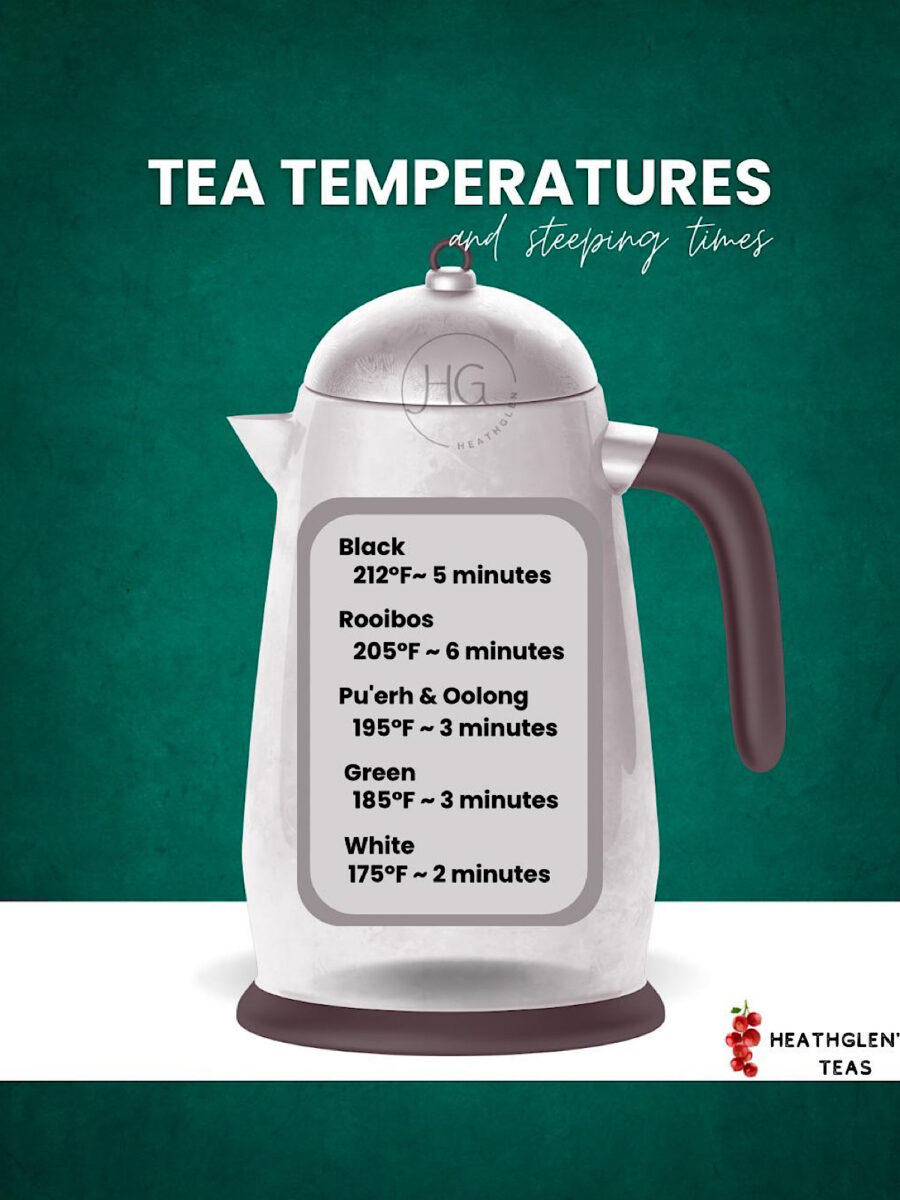
- The right water temperature: Different teas need different temperatures. Green tea brews best around 175°F, while black tea and herbal teas can handle boiling water. This isn’t about microplastics (you’re not using plastic), but about flavor.
- Basic ratio: About one teaspoon of loose leaf tea per 8 ounces of water is a good starting point. Adjust to taste.
What About the Health Risks?
Actually, we don’t fully know yet.
The health consequences of ingesting microplastics and nanoplastics on people are unclear, but the absence of evidence of toxicity does not imply safety. PubMed Central
What we do know:
- Microplastics have been found in human blood, livers, hearts, lungs, and placentas
- Laboratory studies in animals have shown inflammation, cellular stress, gut microbiome disruption, and reproductive effects
- Smaller nanoplastics can potentially cross biological barriers that would stop larger particles
- Plastics can carry other chemicals like phthalates and bisphenols that have known health effects
The research is ongoing, but many health-conscious consumers are choosing to minimize exposure while we learn more. Given how easy it is to switch to loose leaf tea, it seems like a reasonable precaution.
FAQ
Not all, but many do. Pyramid-style silken bags are the worst offenders (made from nylon or PET plastic). Many paper tea bags use a polypropylene heat seal. Some brands now use fully plant-based materials, but you need to verify with the manufacturer.
Not necessarily. Many biodegradable bags use PLA (polylactic acid), which is technically a bioplastic. While it breaks down faster in industrial composting than petroleum-based plastics, early research suggests it may still release particles when steeped in hot water.
Yes. Longer steeping at higher temperatures releases more particles. However, reducing steep time isn’t a practical solution since you need adequate time to extract flavor.
You can, but the tea inside bags is typically lower quality (dust and fannings rather than whole leaves). You’re better off buying loose leaf tea from the start.
Stainless steel, glass, and ceramic are all excellent choices. Avoid plastic infusers and be cautious with silicone at high temperatures.
Instant tea avoids tea bag issues, but it’s typically lower quality and may have its own concerns depending on packaging.
If you want to explore the world of teas and tisanes, check out this Complete Guide to Teas. It includes information on how to grow a tea garden, types of tea, brewing times and temp., recipes for blends, caffeine amounts, and much more.