
Quick Summary: Poblano chiles stuffed with sweet and savory pork picadillo, bathed in creamy walnut sauce (nogada), and garnished with pomegranate seeds and parsley. The colors represent the Mexican flag, making this the traditional dish for Mexican Independence Day in September. A complex, celebratory dish worth the effort. Prep: Day before + 2 hours | Cook: 1.5 hours | Serves: 12
Jump to: What is Chiles en Nogada? | History | Key Ingredients | How to Make It | Cooking Tips | FAQ
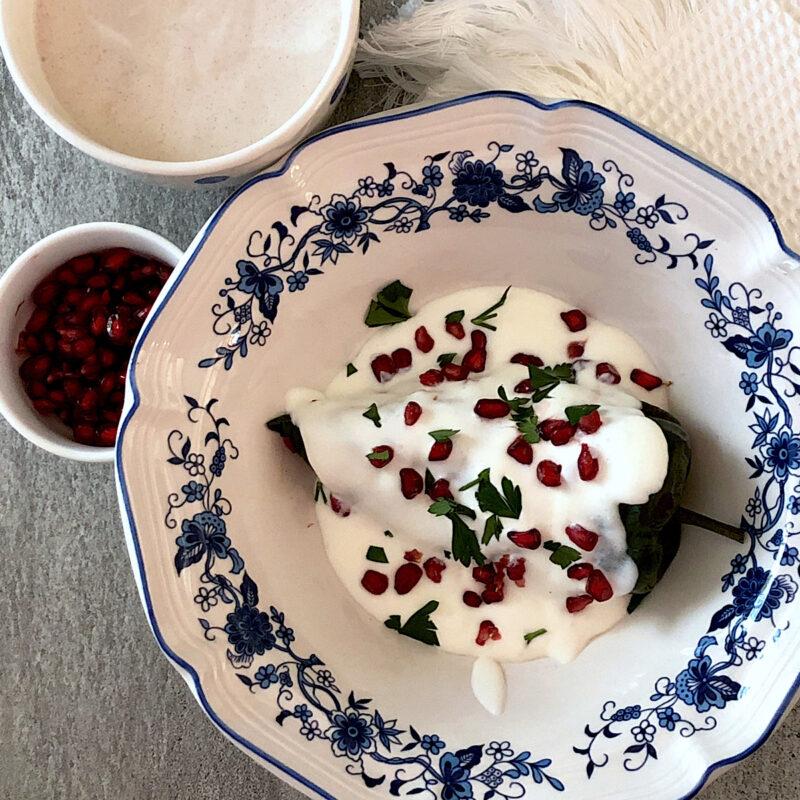
Chiles en nogada is a dish I had at a small little restaurant in Arizona a long time ago. It was definitely a food memory and one I wanted to replicate when I had time on my hands (it’s definitely not a weeknight dinner).
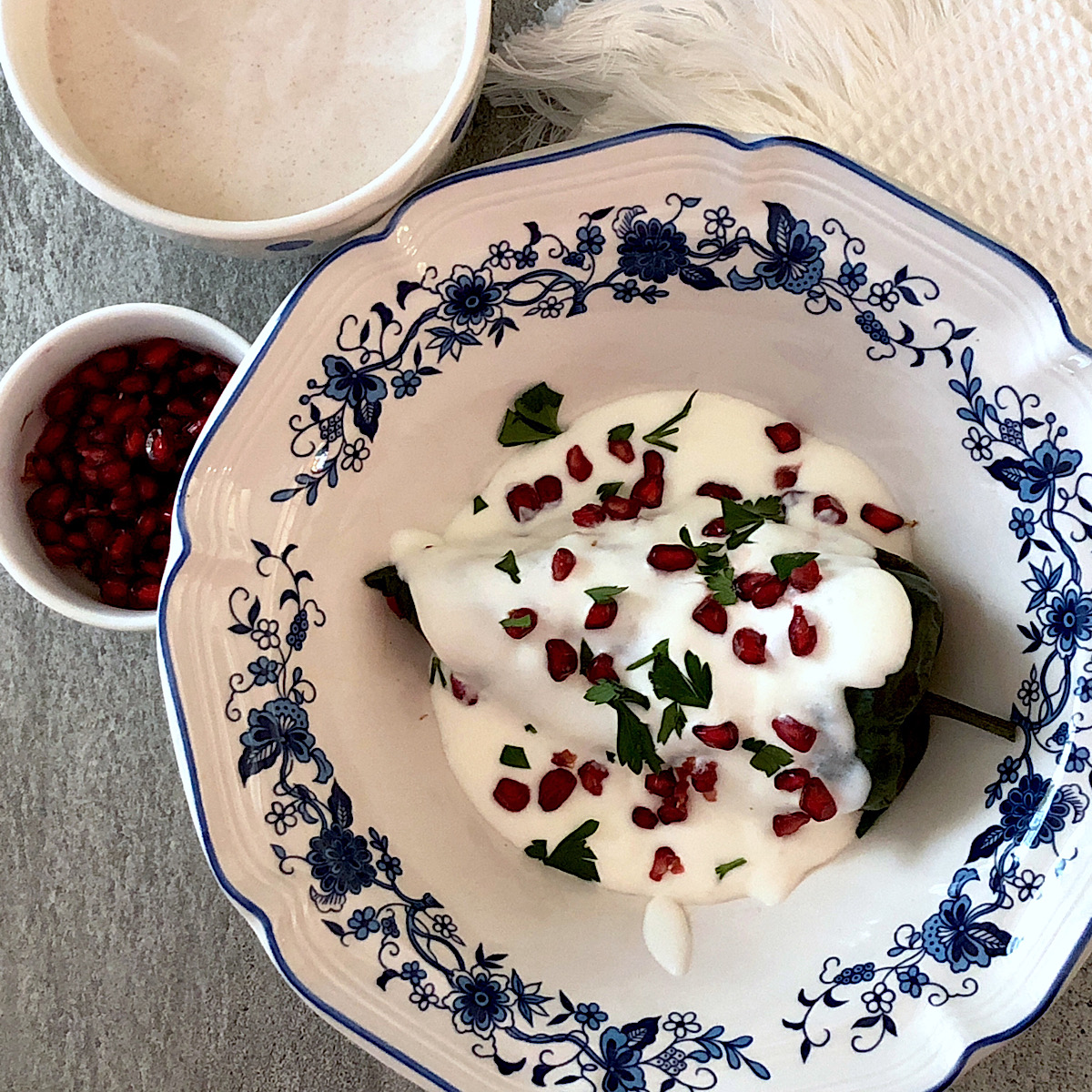
This is celebration food at its finest. It is roasted poblano chiles stuffed with a sweet-savory pork filling studded with fruit and nuts, covered in a silky walnut cream sauce, and finished with ruby pomegranate seeds and bright green parsley.
The colors of the Mexican flag appear on the plate, highlighting the green, white, and red.
In Mexico, it appears on tables in September for Independence Day, when pomegranates and fresh walnuts are in season.
The dish originated in Puebla (poblano means “from Puebla”), and every family has their version. My version was developed with the help of mi amiga, my daughter’s foster teen. She had never made it, but with the aid of the iphone, grandma was able to walk her through it with me.
I won’t pretend it’s quick. Chiles en nogada is a project, best spread over two days. But when you plate it and see those colors, and when you taste the interplay of smoky chile, rich pork, sweet fruit, and creamy walnuts, you understand why it is a celebration dish.
It was quite a food memory for me and I hope I did it proud.
What is Chiles en Nogada?
Chiles en nogada combines three distinct ingredients: the chile, the filling, and the sauce.
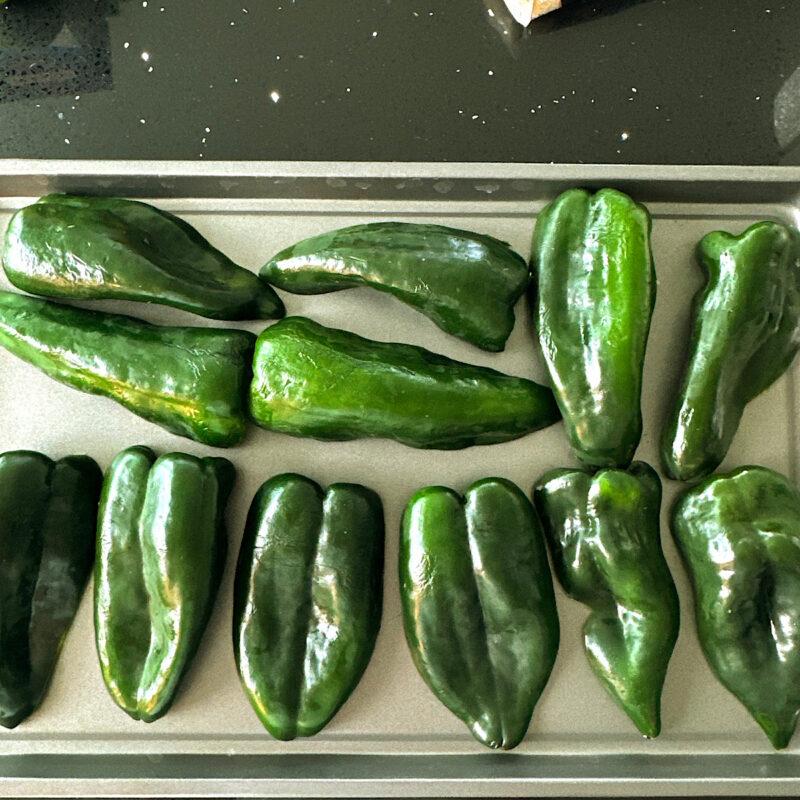
The chile is always a poblano, roasted to remove the skin, then carefully opened and deseeded while keeping it intact for stuffing. Poblanos are mild with a deep, slightly smoky flavor.
The filling is picadillo, which translates to “hash.” This version includes ground or shredded pork cooked with warm spices (cinnamon, cloves, black pepper), fresh and candied fruit (pear, peach, raisins, acitrón), and almonds.
The combination of sweet and savory is essential to the dish’s character.
The sauce is nogada, a walnut cream made from fresh walnuts soaked to remove their bitter skins, then blended with Mexican crema, farmer’s cheese, and a touch of sugar and cinnamon. It should be silky, nutty, and just sweet enough to complement the spiced meat.
The garnish of pomegranate seeds and Italian parsley completes the flag colors and adds brightness and crunch.
History and Significance
Chiles en nogada dates to 1821, created by Augustinian nuns in Puebla to celebrate Mexico’s independence from Spain. The dish was served to Agustín de Iturbide, who had just signed the Treaty of Córdoba ending Spanish rule. The nuns deliberately chose ingredients that displayed the colors of the new Mexican flag.
Today, chiles en nogada remains strongly associated with Mexican Independence Day on September 16th. The timing isn’t just symbolic. September is when fresh walnuts and pomegranates are in season in Mexico, making this a truly seasonal dish.
In the US, you’ll find chiles en nogada on Mexican restaurant menus year-round, but making it at home in late summer or early fall, when the ingredients are at their best, honors the tradition.
Chiles en nogada calls for poblanos, fresh walnuts, and pomegranate seeds, which are all seasonal ingredients worth knowing. For the full list of what to stock for Mexican cooking, here’s my Mexican pantry guide.
The 3 Main Components
The Nogada (Walnut Sauce): Fresh walnuts must have their papery brown skins removed, or the sauce will be bitter. Pour boiling water over walnut halves, soak for 5 minutes, then peel by hand. Soak the peeled walnuts in milk overnight. The next day, blend with Mexican crema, farmer’s cheese, a piece of crustless white bread (for body), sugar, and a pinch of cinnamon.
The Picadillo (Pork Filling): Start with pork shoulder, simmered until tender, then shredded or diced. The cooking liquid becomes your fat for frying (or use olive oil). The meat is fried with onion, garlic, whole spices (cloves, peppercorns, cinnamon stick), tomatoes, raisins, almonds, and fresh fruit. The result is complex: meaty, sweet, spiced, and fruity all at once.
The Chiles: Poblanos are roasted under a broiler until blackened, then cooled and peeled. Remove stems and seeds carefully, keeping the chile intact. The goal is a pocket you can stuff without it falling apart.
Ingredients and Substitutions
- Poblano chiles: No substitute. They’re widely available and essential to the dish. Look for large, uniformly shaped peppers. They’re sometimes mislabeled as pasillas. If you’re not sure which pepper you’re looking at, my guide to Mexican chile peppers covers the core varieties and common labeling confusion.
- Fresh walnuts: Use walnut halves, not pre-chopped pieces. Fresh walnuts are easier to peel. The peeling step is tedious but necessary. Bitter walnut skins ruin the sauce.
- Mexican crema: Substitute crème fraîche or sour cream thinned with a little milk.
- Farmer’s cheese (queso fresco): Ricotta works as a substitute.
- Acitrón (candied cactus): Traditional but hard to find. Substitute candied citron, candied pineapple, or omit.
- Pomegranate seeds: Buy the arils separately if you don’t want to extract them from a whole pomegranate.
- Chorizo: Some versions add chorizo to the picadillo. I use Andouille sausage when good chorizo isn’t available.
How to Make Chiles en Nogada (Day Before)
The full instructions and ingredient amounts are in the recipe card below. In short:
Prepare the walnuts:
- Cover walnut halves with boiling water. Soak 5 minutes.
- Drain and peel off the papery brown skins by hand. This is slow work.
- Place peeled walnuts in a bowl, cover with milk, refrigerate overnight.
Prepare the pork:
- Cut 3 pounds pork shoulder into 2-inch cubes. Remove excess fat.
- Place in a Dutch oven with half an onion (sliced), 2 garlic cloves, and 1 tablespoon salt. Cover with water.
- Bring to a boil, reduce heat, simmer 40-45 minutes until tender.
- Cool in the liquid. Strain and refrigerate meat. Save the broth.
- Next day, skim fat from broth and reserve for cooking the picadillo.
How to Make Chiles en Nogada (Serving Day)
Roast the poblanos:
- Broil poblanos on a baking sheet at 550°F, turning once, until blackened on all sides (5-7 minutes per side).
- Cool until handleable. Peel off charred skins.
- Carefully slice open and remove seeds and stems, keeping chiles intact.
Make the picadillo:
- Crush cloves and peppercorns with a mortar and pestle.
- Dice the cooked pork into small pieces.
- Heat 2 tablespoons reserved pork fat (or olive oil) in a skillet. Sauté chopped onion and garlic until soft.
- Add diced pork, cook until slightly crispy and golden (about 10 minutes).
- Add crushed spices, ground cinnamon, salt, and cinnamon stick. Cook 5 minutes until fragrant.
- Add crushed canned tomatoes. Cook 10 minutes.
- Stir in raisins, slivered almonds, diced pear, diced peach, and candied fruit. Cook a few more minutes.
- Keep warm on low heat.
Make the nogada:
- Drain the soaked walnuts, discard milk.
- Blend walnuts with Mexican crema, farmer’s cheese, a piece of crustless white bread, sugar, and a pinch of cinnamon until smooth.
Assemble:
- Stuff each roasted poblano with picadillo.
- Place on a baking sheet in a warm oven until ready to serve.
- To serve: plate stuffed chiles, pour nogada sauce over generously, garnish with pomegranate seeds and chopped Italian parsley.
Tips for Success
- Prep everything first. This dish has many components. Chop all ingredients before you start cooking. Read the recipe through completely before beginning.
- Spread over two days. Night before: prepare walnuts and cook pork. Serving day: roast chiles, make picadillo and nogada, assemble.
- Cut uniformly. The picadillo looks best when all ingredients are cut to similar small sizes.
- Don’t skip peeling the walnuts. The skins are bitter. The peeling is tedious but essential.
- Make for a crowd. This recipe makes 12 chiles. The nogada doesn’t scale down well. Serve one chile per person with rice and/or beans. Leftover picadillo freezes well; the nogada does not.
- Season as you go. Taste the picadillo before stuffing. Adjust salt and spices.
FAQ
Mid-September, around Mexican Independence Day (September 16th). The dish represents the colors of the Mexican flag and uses seasonal ingredients: fresh walnuts and pomegranates.
No. Poblanos are mild chiles. If you leave some seeds in, you might get occasional heat, but the dish is meant to be rich and complex, not spicy.
Make it the day you serve. It doesn’t freeze well and can separate if stored too long. The walnut prep (peeling and soaking) happens the night before.
Yes. The meat filling freezes well for several months. Make extra, freeze half, and roast fresh chiles another time.
Use the freshest, largest walnut halves you can find. Avoid pre-chopped pieces. Check bulk bins at natural food stores for better quality.
The picadillo is traditionally meat-based, but you could substitute a mixture of mushrooms, lentils, and the same fruits and spices. The nogada is already vegetarian.
Three components: roasted poblano chiles for the shell, a sweet-savory pork picadillo filling with fruit, nuts, and warm spices, and a creamy walnut sauce called nogada. The dish is garnished with pomegranate seeds and Italian parsley. The combination represents the green, white, and red of the Mexican flag.
Nogada comes from “nogal,” the Spanish word for walnut tree. The nogada sauce is a cream made from fresh walnuts blended with Mexican crema, farmer’s cheese, and a touch of sugar and cinnamon. It must be made fresh on serving day since it doesn’t freeze or keep well.
Chiles en Nogada
Equipment
- Dutch oven 6-quart
- Blender or food processor
- mortar and pestle (or spice grinder)
- Large baking sheets
- 10-inch skillet 10-inch
Ingredients
For the Nogada (Walnut Sauce)
- ¼ pound walnut halves about 20-25
- Boiling water to cover
- ¼ cup milk for soaking
- ¼ pound farmer’s cheese or ricotta
- 1 ½ cups Mexican crema or crème fraîche
- 1 small piece white bread crust removed
- 1 ½ tablespoons sugar
- Pinch of ground cinnamon optional
For the Picadillo (Pork Filling)
- 3 pounds boneless pork shoulder
- ½ medium onion sliced (for cooking pork)
- 2 cloves garlic for cooking pork
- 1 tablespoon kosher salt
- Water to cover
- 2 tablespoons reserved pork fat or olive oil
- ½ medium onion chopped
- 5 whole cloves
- 8 whole peppercorns
- 1 teaspoon ground cinnamon
- 1/2- inch cinnamon stick
- 2 teaspoons kosher salt
- 14 ounces canned whole peeled tomatoes crushed
- 3 tablespoons golden raisins
- 2 tablespoons blanched slivered almonds
- 2 tablespoons candied fruit acitrón, chopped
- 1 pear peeled and diced
- 1 peach peeled and diced
For Assembly
- 12 poblano chile peppers
- 1 small bunch Italian parsley chopped
- 1 cup pomegranate seeds
Instructions
- Night Before:1/4 pound walnut halves
- Prepare walnuts: Cover walnut halves with boiling water, soak 5 minutes. Drain and peel off brown skins by hand. Place in bowl, cover with milk, refrigerate overnight.Boiling water to cover, 3 pounds boneless pork shoulder, 1/2 medium onion, 2 cloves garlic, 1 tablespoon kosher salt, 2 tablespoons reserved pork fat, 1/4 cup milk for soaking
- Prepare pork: Cut pork into 2-inch cubes. Place in Dutch oven with sliced onion, garlic, and salt. Cover with water. Bring to boil, reduce heat, simmer 40-45 minutes until tender. Cool in liquid. Strain meat and refrigerate. Save broth; skim fat next day.
- Serving Day:
- Roast poblanos: Broil at 550°F on baking sheet, turning once, until blackened (5-7 minutes per side). Cool. Peel off charred skins. Carefully remove stems and seeds, keeping chiles intact.12 poblano chile peppers
- Make picadillo: Crush cloves and peppercorns. Dice cooked pork. Heat reserved fat in skillet, sauté chopped onion and garlic until soft. Add pork, cook until golden (10 minutes). Add spices, cook 5 minutes. Add crushed tomatoes, cook 10 minutes. Stir in raisins, almonds, pear, peach, and candied fruit. Keep warm.Water to cover, 1/2 medium onion, 5 whole cloves, 8 whole peppercorns, 1 teaspoon ground cinnamon, 1/2- inch cinnamon stick, 2 teaspoons kosher salt, 14 ounces canned whole peeled tomatoes, 3 tablespoons golden raisins, 2 tablespoons blanched slivered almonds, 2 tablespoons candied fruit, 1 pear, 1 peach
- Make nogada: Drain walnuts. Blend with crema, farmer's cheese, bread, sugar, and cinnamon until smooth.1/4 pound farmer’s cheese, 1 1/2 cups Mexican crema, 1 small piece white bread, 1 1/2 tablespoons sugar, Pinch of ground cinnamon
- Assemble: Stuff poblanos with picadillo. Keep warm in low oven. To serve, plate chiles, pour nogada over generously, garnish with pomegranate seeds and parsley.1 small bunch Italian parsley, 1 cup pomegranate seeds
Notes
- The nogada in this recipe is slightly sweetened. For a more savory version, substitute 1/2 teaspoon salt for the sugar and omit cinnamon.
- If fresh peaches or pears aren’t available, use canned fruit, well drained.
- Leftover picadillo freezes well. The nogada does not.