Quick Summary: Rooibos (pronounced ROY-boss) is a naturally caffeine-free herbal tea from South Africa with a sweet, earthy flavor and no bitterness. It’s not technically a tea at all but rather a tisane made from the leaves of a shrub in the legume family. Rich in antioxidants and gentle on the stomach, rooibos has become popular worldwide as an alternative to caffeinated teas.
Jump to: What is Rooibos? | What Does it Taste Like? | Red vs Green | Different from Honeybush? | Good Blends | FAQ
Looseleaf teas and tisanes are products I sell at the St. Paul Farmers’ market, and it seems every year I learn something new about them. During the off-market season, I visit as many tea shops as possible across the country and one of the first questions I ask is “What is your most popular tea?” It was quite a surprise to me that rooibos teas (red teas) were the answer over 60% of the time.
Rooibos has been enjoyed in South Africa for over 300 years, but its popularity is fairly recent in the US. The indigenous Khoi people of the Western Cape collected wild-growing shrubs, cut and fermented the needle-like leaves, sun-dried them, and brewed them into a deep red, naturally sweet drink. The name rooibos means “red bush” in Afrikaans.
Rooibos has a smooth, slightly sweet flavor with none of the bitterness that can come from over-steeping black or green tea, and unlike black and green tea, rooibos has no caffeine. You can brew it strong, let it sit, even forget about it on the counter, and it won’t turn harsh.
This guide covers how Rooibos differs from “real” tea, whether it has health benefits, and what to watch out for.
Is Rooibos Actually Tea?
Technically, no. True tea comes from the Camellia sinensis plant, which produces black, green, white, oolong, and pu-erh teas. Rooibos comes from an entirely different plant: Aspalathus linearis, a shrub in the legume family that grows only in the Cederberg mountain region of South Africa.
Because it doesn’t come from the tea plant, rooibos is classified as a tisane or herbal infusion, rather than a true tea. The same is true of chamomile, peppermint, and other herbal “teas.”
That said, most people call it rooibos tea, and it seems to be more descriptive and understandable to talk about tisanes as herbal teas. The distinction matters mainly if you’re being precise about caffeine content or botanical classification.
What Does Rooibos Taste Like?
Rooibos has a distinctive flavor that’s hard to compare to anything else. Here are some general flavor characteristics:
- Sweet and smooth (without added sugar)
- Earthy and woody with hints of vanilla and caramel
- Nutty undertones in some batches
- No bitterness or astringency even when over-steeped
The low tannin content is key. Tannins are the compounds that make tea bitter if you steep it too long. Rooibos has very little tannin, so it’s forgiving. You can steep it for 10-15 minutes without any harsh notes developing.
Some people say it has a slight medicinal quality, especially in straight rooibos that has not been blended. This is partly genetic (similar to how some people taste cilantro as soapy).
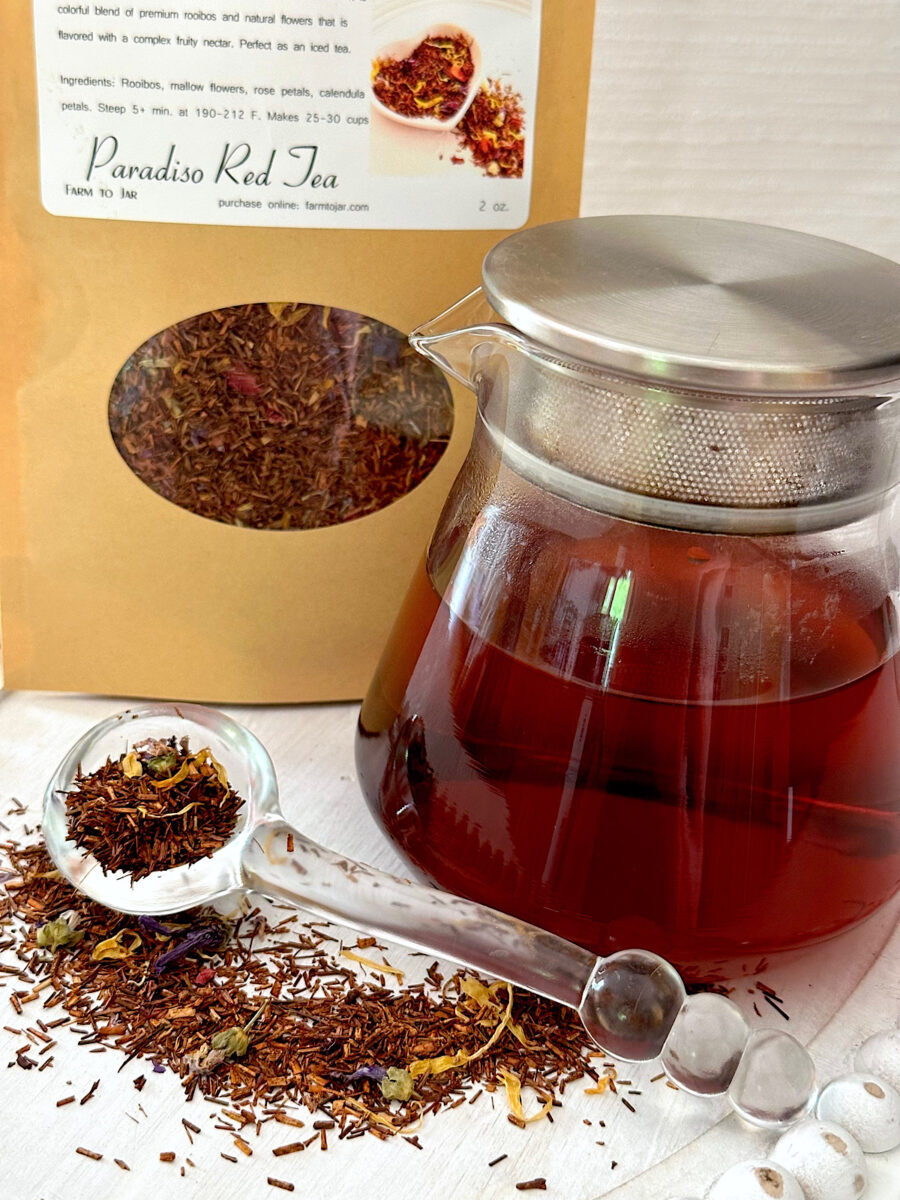
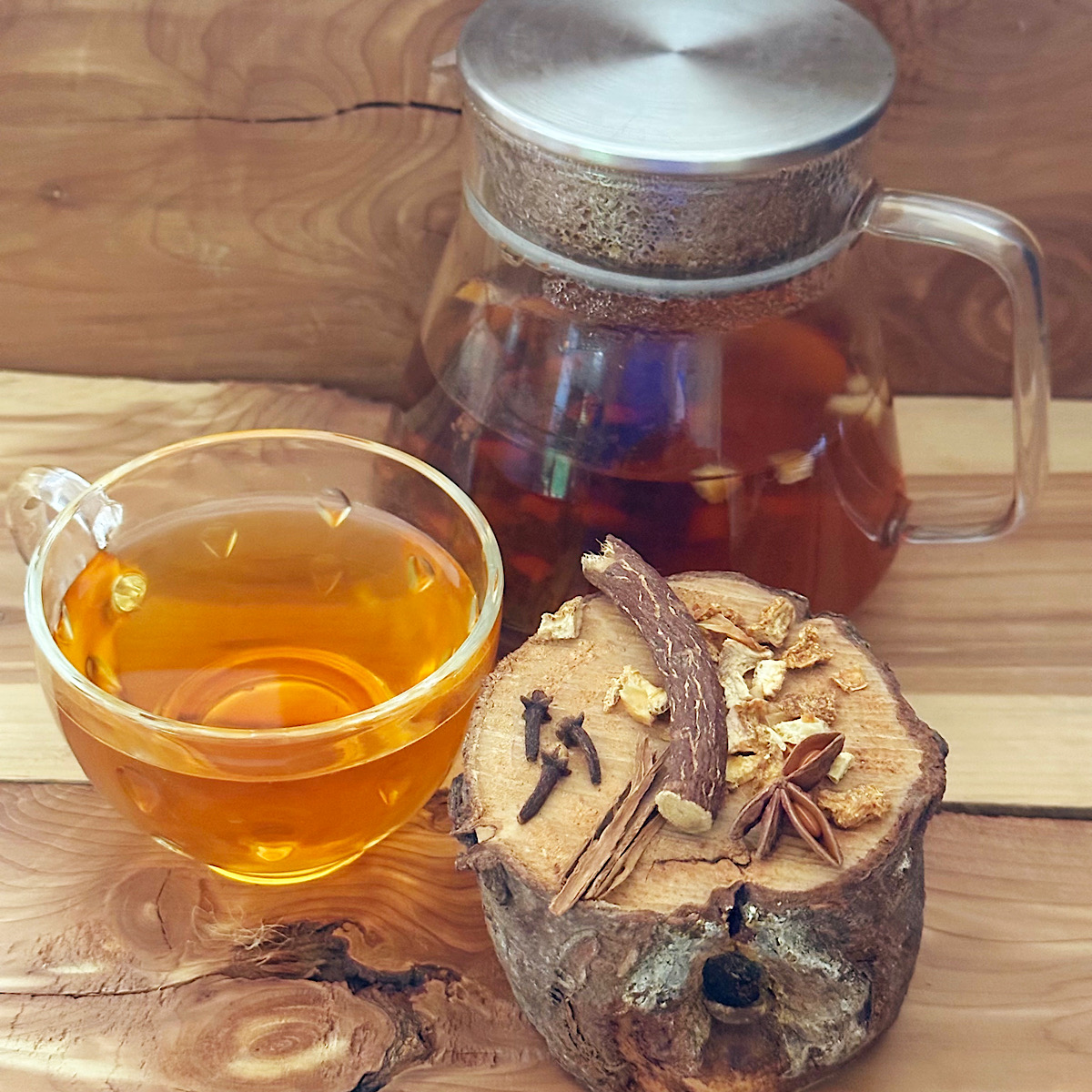
I have three different blends using rooibos as the base, and they all taste quite different. Because it has a little bit of sweetness I have enhanced that characteristic by adding vanilla in one blend, licorice aromatic spices in another blend, and flowers in the third blend.
Because these rooibos blends are on the sweeter side, they make wonderful iced teas that don’t need added sugar. If you want more information on making great iced tea, check out this guide on 4 Methods for Making Homemade Iced Tea.
Red Rooibos vs. Green Rooibos
Most rooibos you’ll encounter is red rooibos, which has been oxidized (dried) after harvesting. The oxidation process turns the green leaves reddish-brown and develops the characteristic sweet, earthy flavor.
Green rooibos is unoxidized. It’s dried immediately after harvesting, retaining more of the original green color. The flavor is lighter, grassier, and more herbaceous, with notes some describe as similar to hay or a true green tea.
Green rooibos is less common and more expensive, but it has higher antioxidant levels because oxidation does tend to reduce some antioxidants. If you’re drinking rooibos primarily for health benefits, green rooibos may offer more, although red rooibos is still antioxidant-rich.
Rooibos vs. Honeybush: What’s the Difference?
Honeybush is rooibos’s cousin, another South African tisane that’s often confused with rooibos. Both are caffeine-free, antioxidant-rich, and processed similarly. But they come from different plants and taste a bit different.
| Plant | Aspalathus linearis | Cyclopia species (several) |
| Region | Cederberg mountains | Eastern and Western Cape coastal areas |
| Flavor | Earthy, woody, nutty, vanilla notes | Sweeter, floral, honey-like |
| Color | Reddish-brown | Deeper brown, lighter liquor |
| Availability | Widely available | Less common |
Honeybush is naturally sweeter and more floral. If you find rooibos too earthy, honeybush might suit you better. Both are excellent caffeine-free options.
I have blended honeybush with chamomile and lavender to offer customers a tea to help with sleep. Check out this guide if you are interested in herbal teas or tisanes for sleep.

Health Benefits of Rooibos
Rooibos is rich in antioxidants, including two that are unique to rooibos: aspalathin and nothofagin. These have been studied for potential benefits including:
What research supports (see references below):
- High antioxidant content that may help with oxidative stress
- May help lower blood pressure (one study showed ACE-inhibiting effects)
- May support blood sugar regulation
- Anti-inflammatory properties in lab studies
- No caffeine, so it doesn’t interfere with sleep or cause jitters
What’s often claimed but less proven:
- Weight loss (no strong clinical evidence)
- Skin improvements when consumed as a beverage (topical application is better studied)
- Bone health (some mineral content, but amounts are trace)
The bottom line is rooibos is a healthy, caffeine-free beverage with genuine antioxidant content. It’s a good choice for people who want to reduce caffeine or who find black tea too harsh and green tea too bitter. The more dramatic health claims often seen in marketing, however, aren’t well-supported by clinical research in humans.
Potential Concerns and Interactions
Rooibos is generally very safe, but there are some considerations:
Medication interactions:
Rooibos may affect how the liver metabolizes certain drugs, particularly:
- Statins (cholesterol medications)
- Some diabetes medications
- Blood pressure medications
If you’re on chronic medications, especially those processed by the liver, it’s worth mentioning your rooibos habit to your doctor.
High consumption:
A few case reports have linked very high rooibos consumption (multiple cups daily over extended periods) with elevated liver enzymes. These cases involved unusually large amounts. Moderate consumption (1-3 cups daily) has not shown problems in studies.
Pregnancy:
Rooibos is caffeine-free and often recommended as a pregnancy-safe alternative to tea. However, formal safety studies during pregnancy are limited. Most sources consider moderate consumption safe, but check with your healthcare provider.
Estrogen effects:
Rooibos contains very small amounts of phytoestrogens. In typical consumption amounts, this is not considered significant, but people with estrogen-sensitive conditions may want to discuss with their doctor.
How to Brew Rooibos
Rooibos is one of the most forgiving teas to brew:
Basic method:
- Use 1-2 teaspoons of loose rooibos per cup
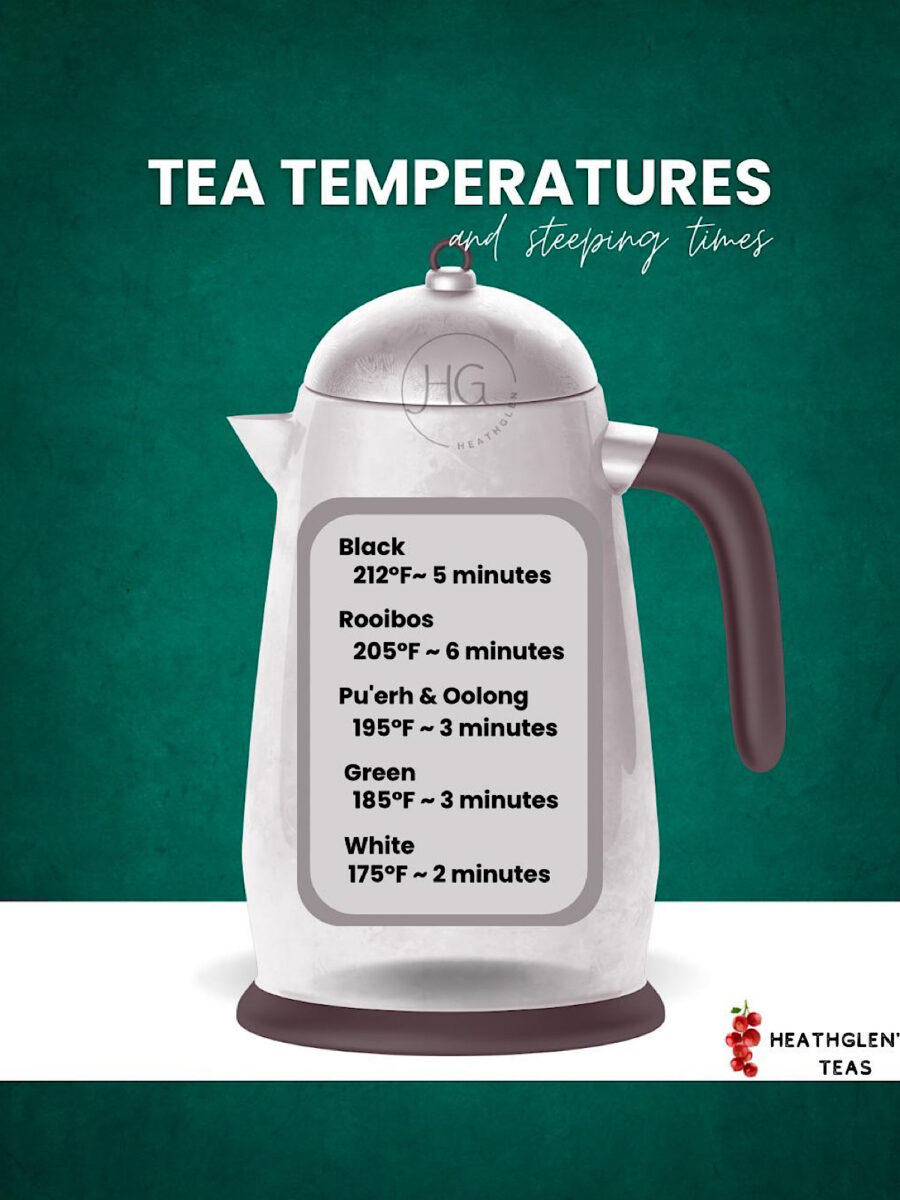
- Pour boiling water (212°F) directly over the leaves
- Steep for 5-10 minutes (or longer; it won’t get bitter)
- Strain and enjoy
Tips:
- Unlike green tea, rooibos can handle boiling water without becoming harsh
- Longer steeping extracts more flavor and more antioxidants
- It’s delicious hot or iced
- Some people add milk and honey, similar to how they’d drink black tea
- It makes excellent iced tea because it doesn’t cloud when chilled
For details on temperature and steeping times for each type of tea, check out this guide on how to steep tea.
Popular Rooibos Blends
Plain rooibos is lovely, but rooibos also serves as an excellent base for flavored blends because its mild sweetness complements many additions:
Classic combinations:
- Rooibos vanilla: Vanilla beans or vanilla flavoring enhance the natural vanilla notes
- Rooibos chai: Warming spices like cinnamon, cardamom, ginger, and cloves
- Rooibos citrus: Orange peel, lemon, or bergamot (like an Earl Grey without caffeine)
- Rooibos berry: Dried berries add tartness and color
Wellness blends:
- Rooibos with chamomile: For relaxation
- Rooibos with lavender: For calming evenings
- Rooibos with ginger: For digestion
Rooibos is more commonly sold in flavored blends than honeybush, partly because some people find unflavored rooibos has a slightly medicinal edge that flavorings help soften.
If you are interested in learning how to blend herbs for wellness teas check out this guide on How to Make Your Own Herbal Tea Blends.
Is It Safe to Drink Rooibos Every Day?
For most people, yes. Rooibos is caffeine-free, low in tannins, and has been consumed daily in South Africa for centuries. Studies of moderate consumption (a few cups per day) have not shown adverse effects.
The concerns that exist relate to very high consumption or interactions with specific medications. If you’re healthy and not on medications that might interact, daily rooibos is a perfectly reasonable habit.
FAQ
ROY-boss (rhymes with “toy boss”). The name is Afrikaans for “red bush.”
No. Rooibos is naturally caffeine-free, making it suitable for evening drinking and for people who are caffeine-sensitive.Is rooibos good for sleep? It won’t make you sleepy like chamomile or valerian might, but because it has no caffeine, it won’t interfere with sleep. Many people drink it as an evening beverage for this reason.
Much less than black tea or coffee. The tannin content is lower, so staining is minimal.
Yes. Because it’s caffeine-free and gentle, rooibos is considered safe for children. In South Africa, it’s traditionally given to infants and children.
Some research suggests rooibos may have mild ACE-inhibiting effects, which could benefit blood pressure. However, if you’re on blood pressure medication, the interaction potential is worth discussing with your doctor.
Yes. Rooibos takes milk well, similar to black tea. Some South Africans traditionally drink it with milk and sugar.
If you want to explore the world of teas and tisanes, check out this Complete Guide to Teas. It includes information on how to grow a tea garden, types of tea, brewing times and temp., recipes for blends, caffeine amounts, and much more.