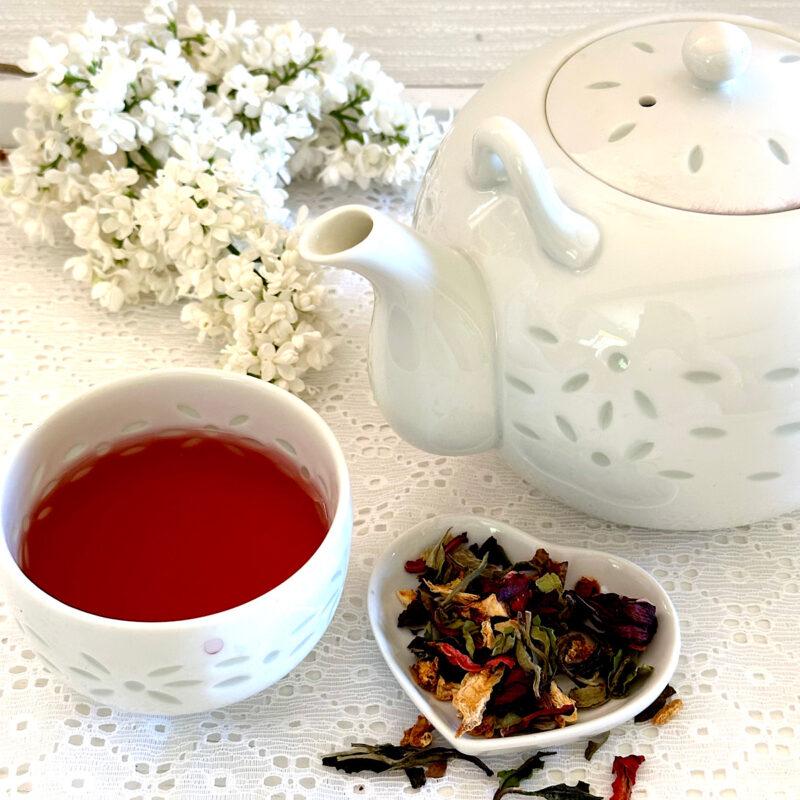
Quick Summary: A tea tasting party lets guests sample multiple teas, similar to a wine tasting. Set up flights of 3-5 teas organized by theme (regional, type, or flavor profile). Low-cost, easy to host, and works for small casual gatherings or more formal events.
Jump to: Tea flight | Choosing Teas | Set-up | Food Pairings | FAQ
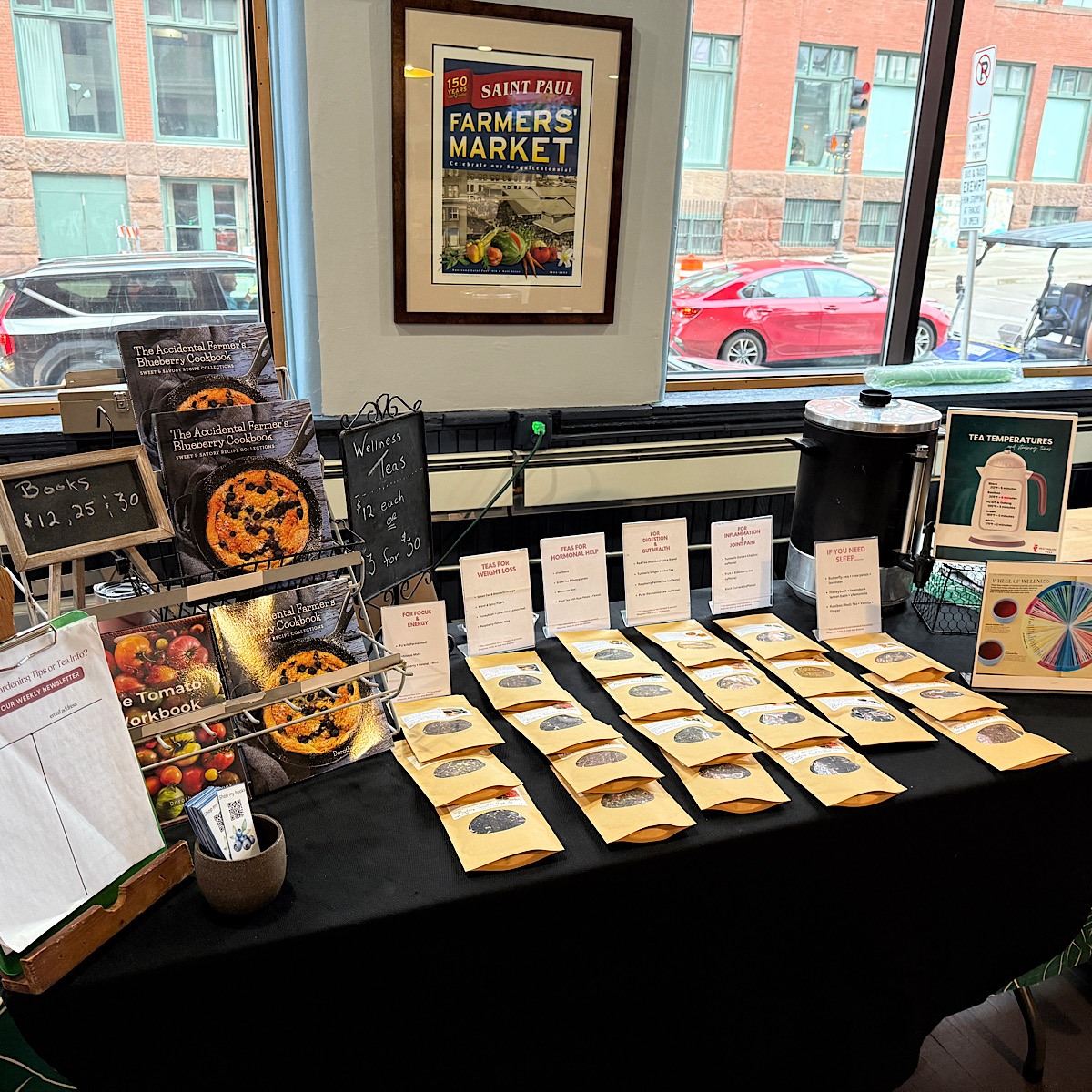
At the St. Paul Farmers’ Market where I sell HeathGlen’s teas, I offer sampling of several of the teas. It makes selling a more social experience and often leads to customer inspiration and questions about how they can sample teas at home via a tea-tasting party.
A tea tasting party is a great way to pull off a small party for friends, introducing them to teas they might not try on their own, while having a fun social event (and it costs far less than a wine tasting). Here’s how to set one up:
This post may contain affiliate links. As an Amazon Associate, I also earn from qualifying purchases. You can read our disclosure information here–
What Is a Tea Flight?
A tea flight is a small selection of teas served together for comparison, borrowed from the wine and beer world. Instead of drinking one tea, guests taste several in sequence, noticing differences in color, aroma, and flavor.
Flights work best with 3-5 teas. Fewer than three doesn’t give enough contrast; more than five overwhelms the palate.
The teas in a flight should have some connecting thread, as in the same type, same region, or same flavor family, so the comparisons are meaningful. Random teas with nothing in common make for a confusing tasting.
How to Choose Teas for a Tasting
Organize your flight around a theme. Here are ideas that work well:
By tea type:
- Black tea flight: Assam, Darjeeling, Ceylon, Keemun
- Green tea flight: Sencha, Dragon Well, Gunpowder, Genmaicha
- Oolong flight: Light oolong, medium roast, dark roast
By region:
- Japanese teas: Sencha, Hojicha, Genmaicha, Matcha
- Chinese teas: Dragon Well, Pu-erh, Lapsang Souchong, Jasmine
- Indian teas: Assam, Darjeeling, Nilgiri, Masala Chai
By flavor profile:
- Floral teas: Jasmine, Rose, Lavender Earl Grey, Chrysanthemum
- Smoky/earthy teas: Lapsang Souchong, Pu-erh, Hojicha
- Citrus teas: Earl Grey, Lemon Ginger, Yuzu Green
By caffeine level:
- Caffeinated to herbal: Black tea, Green tea, White tea, Herbal blend
- Good for guests who want to understand their options
Beginner-friendly flight:
- Classic black, smooth green, floral oolong, herbal blend
- Gives a broad introduction without anything too challenging
What Equipment Do You Need?
Tea tastings don’t require fancy equipment. Here’s what works:
Essential:
- Small cups or tasting cups (3-4 oz capacity)—one set per guest, or shared cups that get rinsed between teas
- A kettle for hot water
- A timer (I love this one for tea)
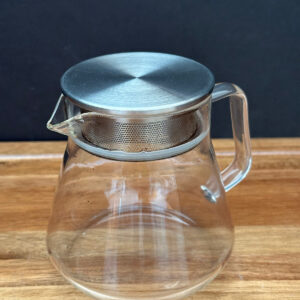
- Tea infusers or small teapots
- Spoons or small white dishes for viewing dry leaves
Helpful but optional:
- Tasting mats or placemats to organize cups
- Printed tasting notes or scorecards
- A water pitcher for palate cleansing between teas
- Small plates for food pairings
You can buy inexpensive tea tasting cups online, but small white porcelain cups or even shot glasses work fine. White interiors let guests see the tea’s color clearly.
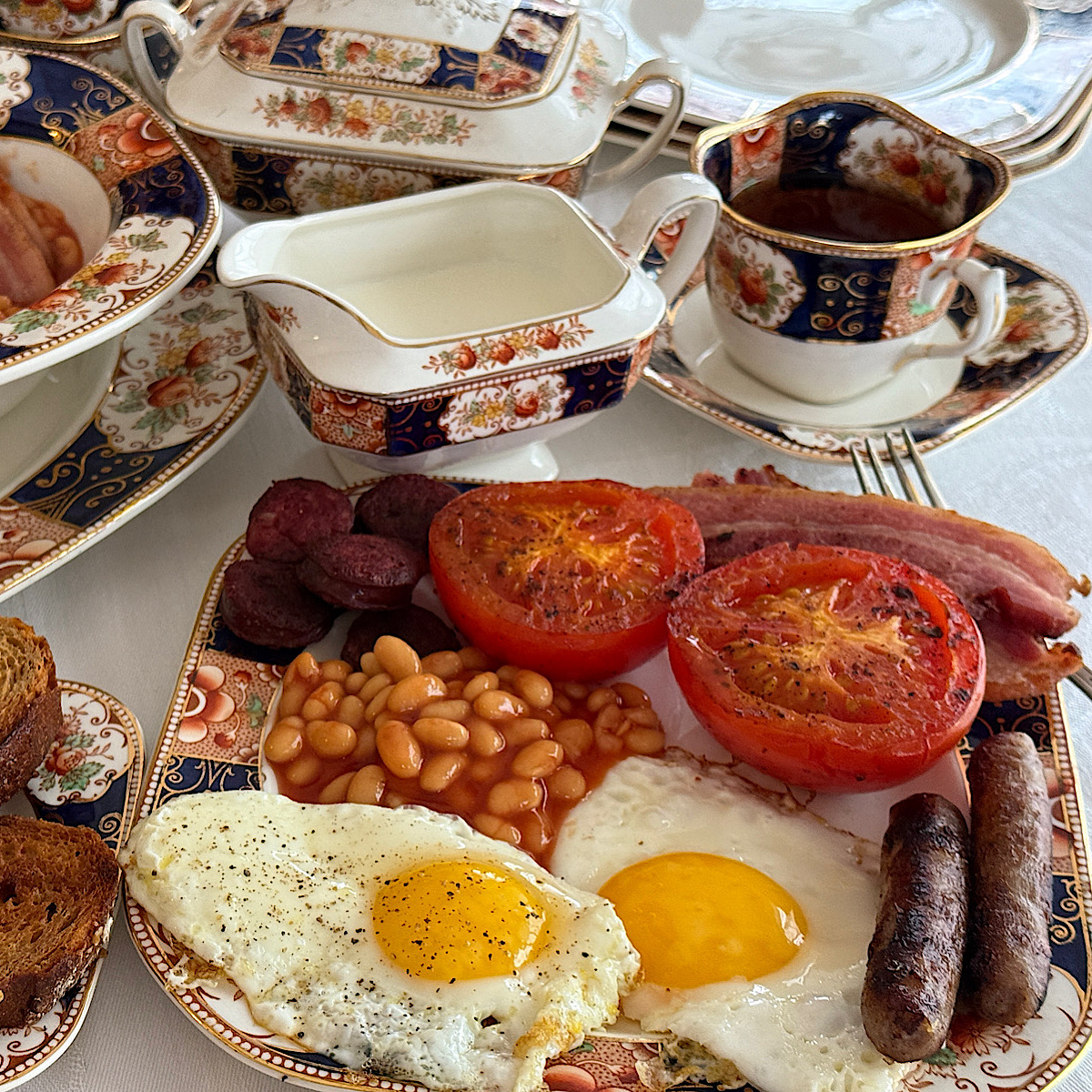
Thrift shops often have wonderful tea cups or tea sets like the vintage one I found below.
How to Set Up the Tasting
Before guests arrive:
- Measure out each tea into separate containers, labeled
- Set out cups, one set per tasting station or per guest
- Prepare tasting notes (tea name, origin, flavor hints, brewing instructions)
- Set up the kettle and have water ready
- Arrange any food pairings on small plates
Room setup: Guests can sit around a table or stand at stations. Seated works better for focused tasting; standing works for a more casual, mingling atmosphere.
Place the teas in tasting order. If comparing intensity, go from lightest to strongest. If comparing types, I usually go: white, green, oolong, black, herbal.
How to Lead the Tasting
You don’t need to be an expert. A simple structure keeps things moving:
For each tea:
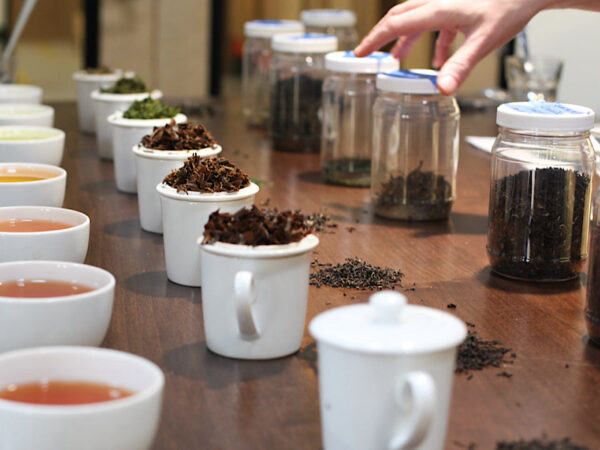
- Show the dry leaves. Pass around a small dish so guests can see and smell the leaves before brewing. Note the leaf size, color, and aroma.
- Brew together. Add water and start a timer. While steeping, share basic information: where the tea comes from, how it’s processed, what flavors to expect.
- Observe the color. Once brewed, have guests look at the liquor (the brewed tea). Hold cups up to light. Note the color—pale gold, amber, deep red, etc.
- Smell before tasting. Aroma is a huge part of tea. Have guests sniff the cup before drinking.
- Taste and discuss. Take small sips. Ask guests what they notice. Sweet? Grassy? Smoky? Floral? There are no wrong answers.
- Cleanse the palate. Offer plain water and a few minutes before moving to the next tea.
What Food Pairs with Tea Tastings?
Keep food simple so it doesn’t overpower the tea. Small bites between teas cleanse the palate and give guests something to nibble.
Good options:
- Plain crackers or bread
- Mild cheese (nothing too strong)
- Shortbread or butter cookies
- Fresh fruit (apple slices, grapes)
- Small cucumber sandwiches
- Nuts (unsalted)

Avoid:
- Strong cheeses
- Spicy food
- Anything with garlic or onion
- Chocolate (save for after the tasting or pair specifically with one tea)
For a more elaborate event, you can match specific foods to specific teas, but this isn’t necessary for a casual tasting.
Sample Tea Tasting Party Timeline
Here’s a simple flow for a 90-minute tasting with 4 teas:
- 0-15 minutes: Guests arrive, settle in, general mingling. Offer water.
- 15-30 minutes: Introduction and first tea. Explain the format.
- 30-45 minutes: Second tea. Guests are warmed up and more talkative.
- 45-60 minutes: Third tea. This is often the most complex or interesting one.
- 60-75 minutes: Fourth tea. End with something memorable—a bold black tea, a unique pu-erh, or a soothing herbal.
- 75-90 minutes: Open discussion, favorites, refills of any tea guests want to revisit. Food.
Adjust timing based on your group. Some tastings move quickly; others spark long conversations about a single tea.
Tea Tasting Party Variation Ideas
- Blind tasting: Don’t reveal the tea names until after tasting. Have guests guess the type or describe what they taste without preconceptions.
- Competition format: Have guests rate each tea and crown a winner. Silly but fun.
- DIY blending party: After the tasting, set out base teas and additions (dried fruit, herbs, spices) and let guests create their own blends to take home.
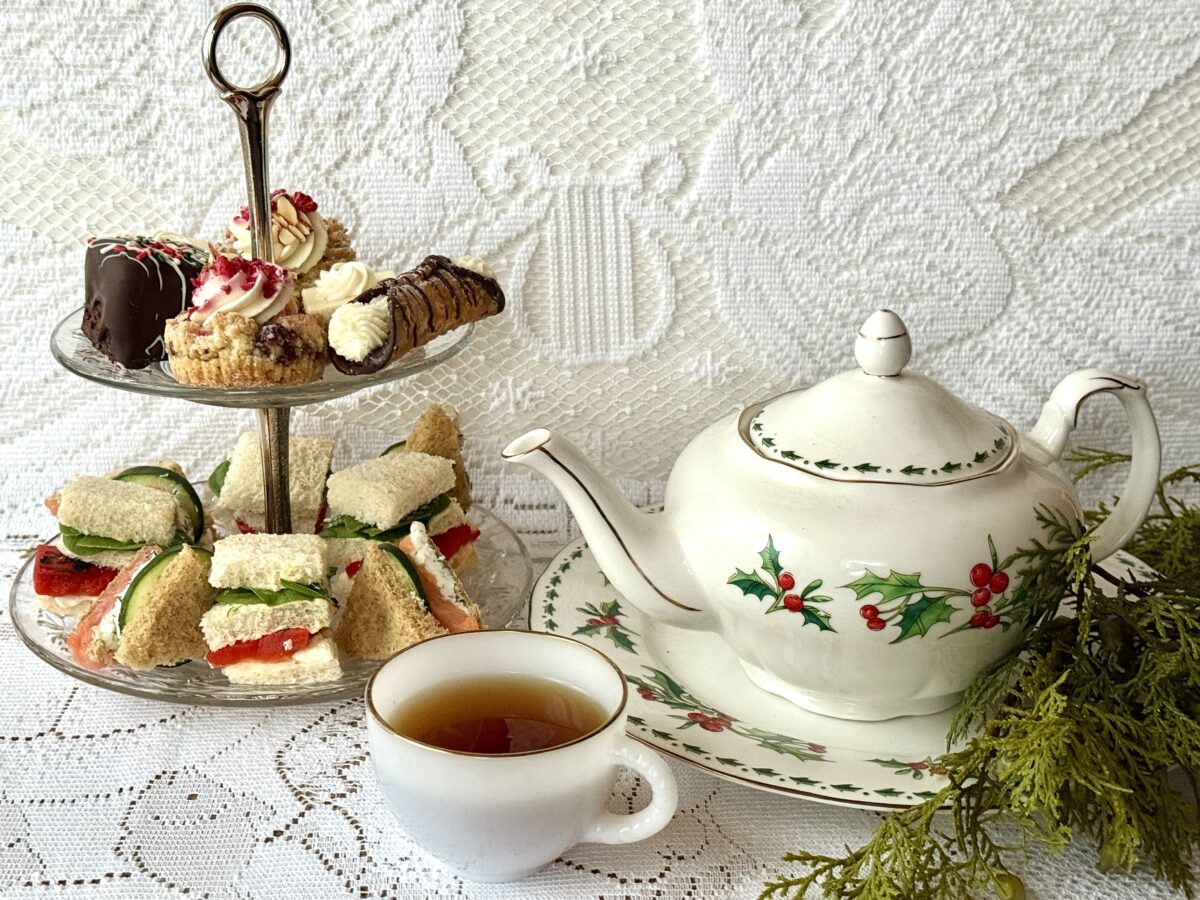
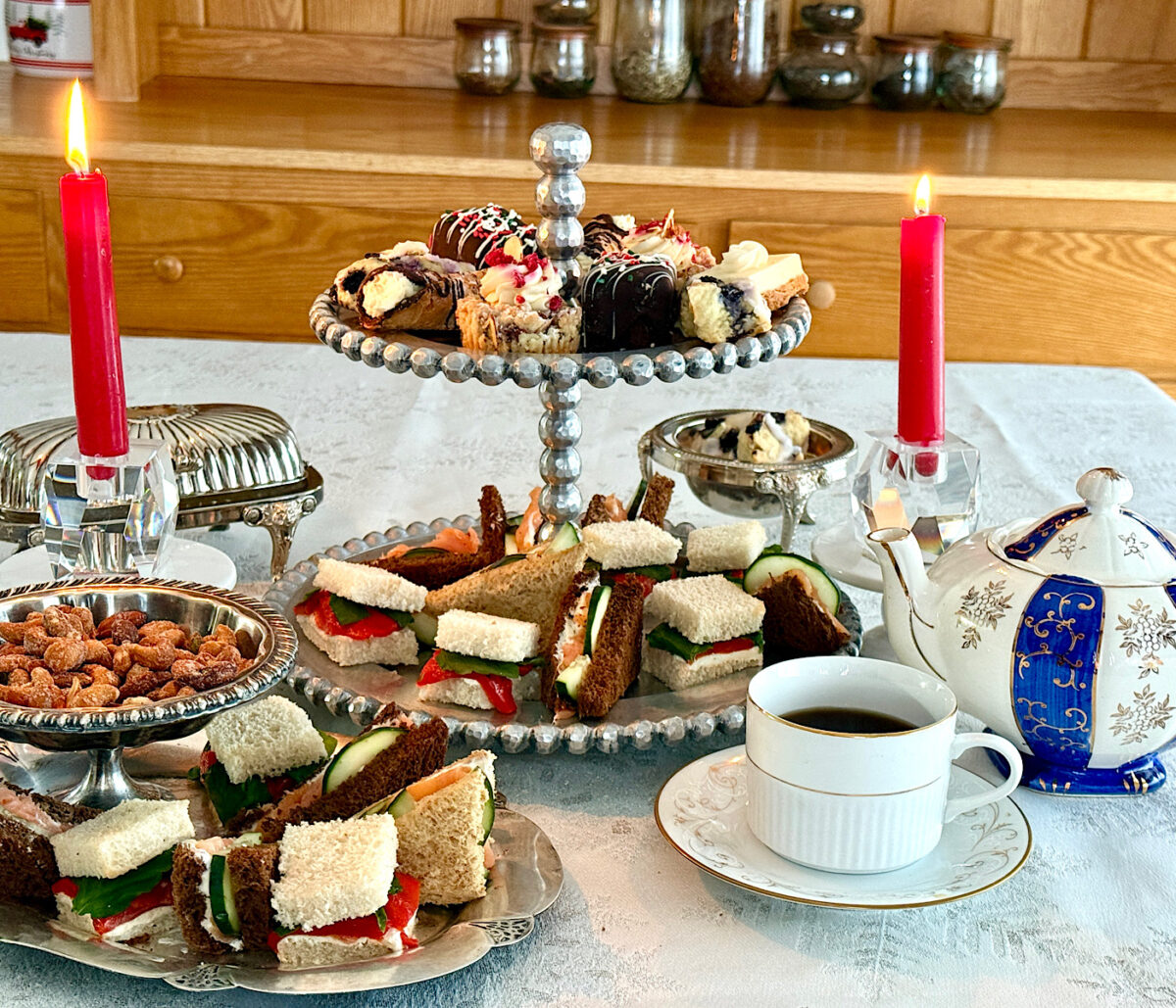
- Afternoon tea hybrid: Combine a shorter tasting with a traditional afternoon tea spread—scones, sandwiches, and sweets.
The term “high tea” has been misused for a while now in the US, equating it with an “afternoon tea”. They are actually quite different beasts. Here is a good comparison of a true high tea to an afternoon tea (complete with cucumber sandwich recipe).
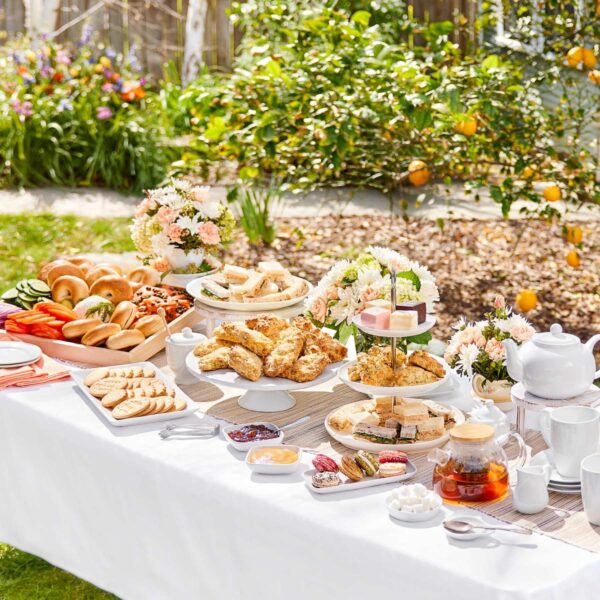
Seasonal themes: Spring greens, autumn oolongs, winter warmers. Match the teas to the time of year.
FAQ
Three to five is ideal. Fewer doesn’t allow enough comparison. More than five causes palate fatigue and makes the event drag.
No. You just need to facilitate the experience and keep things organized. Guests bring their own observations. Read up on the teas you’re serving beforehand, but you don’t need deep expertise.
Plan on about 2-3 grams (roughly one teaspoon) per person per tea. For a 4-tea tasting with 6 guests, you’d need about 50-75 grams of tea total.
It’s possible but not ideal. Loose leaf shows better in a tasting because guests can see and smell the leaves. If you use bags, cut them open to show the contents.
It depends on the tea type. For a mixed tasting, you can simplify: use boiling water for black teas and herbals, water that’s cooled a few minutes for greens and whites. Or get a temperature-controlled kettle that makes this easy.
Follow the standard times: 4-5 minutes for black, 2-3 minutes for green, 3-4 minutes for oolong, 5+ minutes for herbal. Consistency matters more than perfection—steep all teas for the same duration within their type so comparisons are fair.
If you want to explore the world of teas and tisanes, check out this Complete Guide to Teas. It includes information on how to grow a tea garden, types of tea, brewing times and temp., recipes for blends, caffeine amounts, and much more.