
Quick Summary: Succession planting staggers your harvest by planting crops at different times or choosing varieties with different maturity dates. Three approaches: plant different crops that mature in different seasons, sow the same crop every 2-3 weeks for continuous harvest, or grow early, mid, and late varieties of the same vegetable. Benefits include no harvest gluts, fresh produce longer, and better use of small spaces. Read time: 8 min | Experience level: Beginner
Jump to: |Why it Matters | 3 Methods | Best Veg for Succession Planting | Planting Schedules | Spring | Summer | Fall | Common Mistakes | FAQ
If you’ve ever had all your vegetables ripen at once, leaving you with more than you can eat, freeze, or give away, succession planting is the solution.
This gardening strategy staggers your planting so crops mature at different times throughout the season. Instead of one overwhelming harvest, you get a steady supply of fresh vegetables from spring through fall.
This guide covers three approaches to succession planting: choosing crops with different maturity dates, planting the same crop in waves, and selecting early, mid, and late varieties of your favorite
Starting your first vegetable garden? Check out this comprehensive post on the Beginners Guide to Starting a Kitchen Garden, using Italian vegetables as the examples.
This post may contain affiliate links. As an Amazon Associate, I also earn from qualifying purchases. You can read our disclosure information here–
What Is Succession Planting?
Succession planting is a gardening strategy that spreads your harvest across the growing season instead of everything coming on all at once.
The approach involves three related techniques:
- Planting the same crop in waves, every 2-3 weeks
- Choosing different crops that mature at different times throughout the season
- Selecting early, mid-season, and late varieties of the same vegetable
Most gardeners use a combination of all three. The goal is the same: fresh harvests from spring through fall (and into winter for some crops), with no feast-or-famine cycles.
Why Does Succession Planting Matter?
The benefits go beyond avoiding harvest tsunamis:
- Steady fresh supply. Instead of 30 heads of lettuce ready on the same day, you get 5-6 heads per week for six weeks. You actually eat what you grow instead of composting it or frantically giving it away.
- Extended season. By planting cold-tolerant crops early and late, and timing heat-lovers for midseason, you can harvest something from your garden for 6-8 months in most climates (and longer with season extension techniques).
- Better use of space. When one crop finishes, another goes in. A single raised bed can produce spring spinach, summer beans, and fall kale in the same year.
- Pollinator support. Staggered blooming means something is always flowering in your garden, feeding bees and beneficial insects throughout the season.
- Risk management. If a late frost kills your first planting of beans, your second planting two weeks later survives. You’re not putting all your seeds in one basket.
Three Strategies for Succession Planting
Strategy 1: Same Crop, Staggered Plantings
This works best for fast-maturing crops that you want continuously. Plant a new batch every 2-3 weeks.
Best candidates:
- Lettuce and salad greens (30-45 days to harvest)
- Radishes (25-30 days)
- Spinach (40-45 days)
- Bush beans (50-60 days)
- Cilantro (45-70 days, bolts quickly in heat)
- Arugula (40 days)
- Scallions (60-70 days)
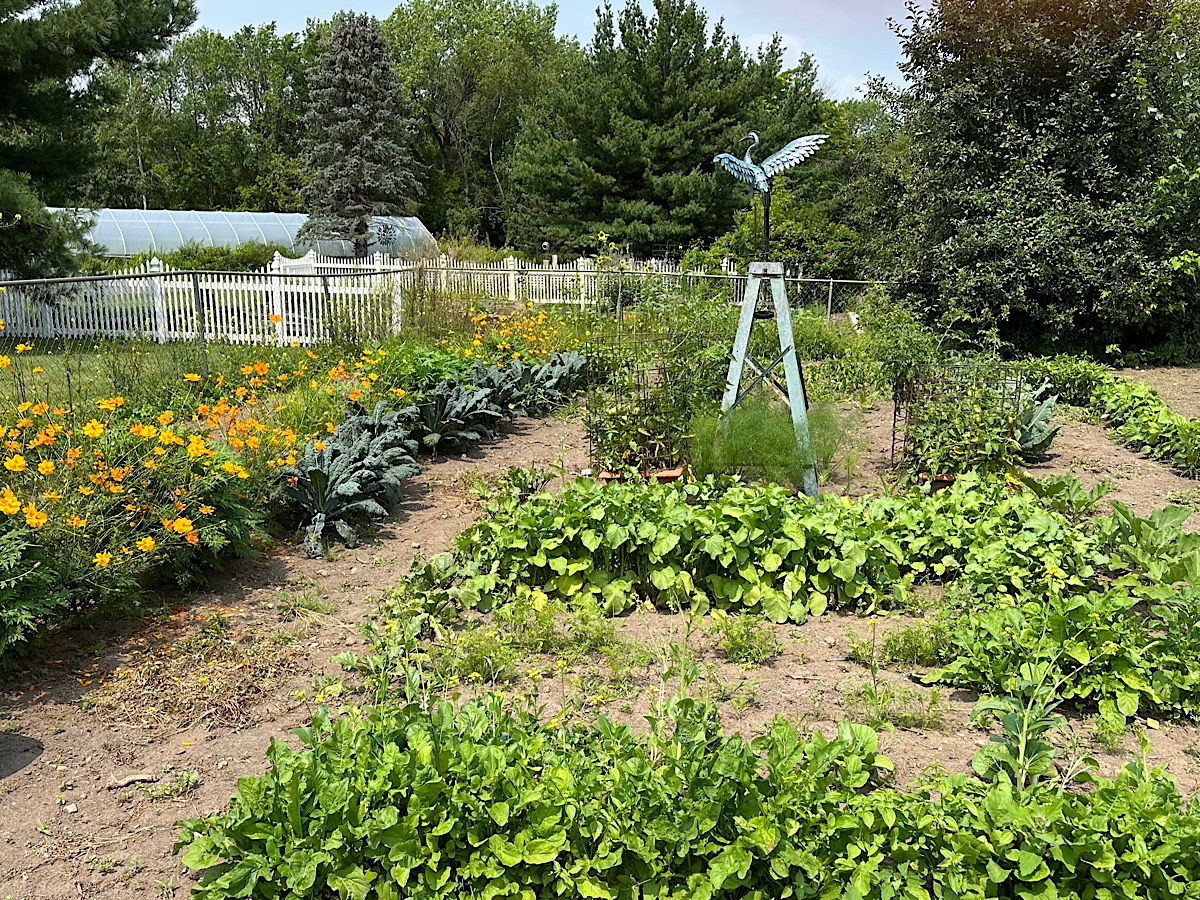
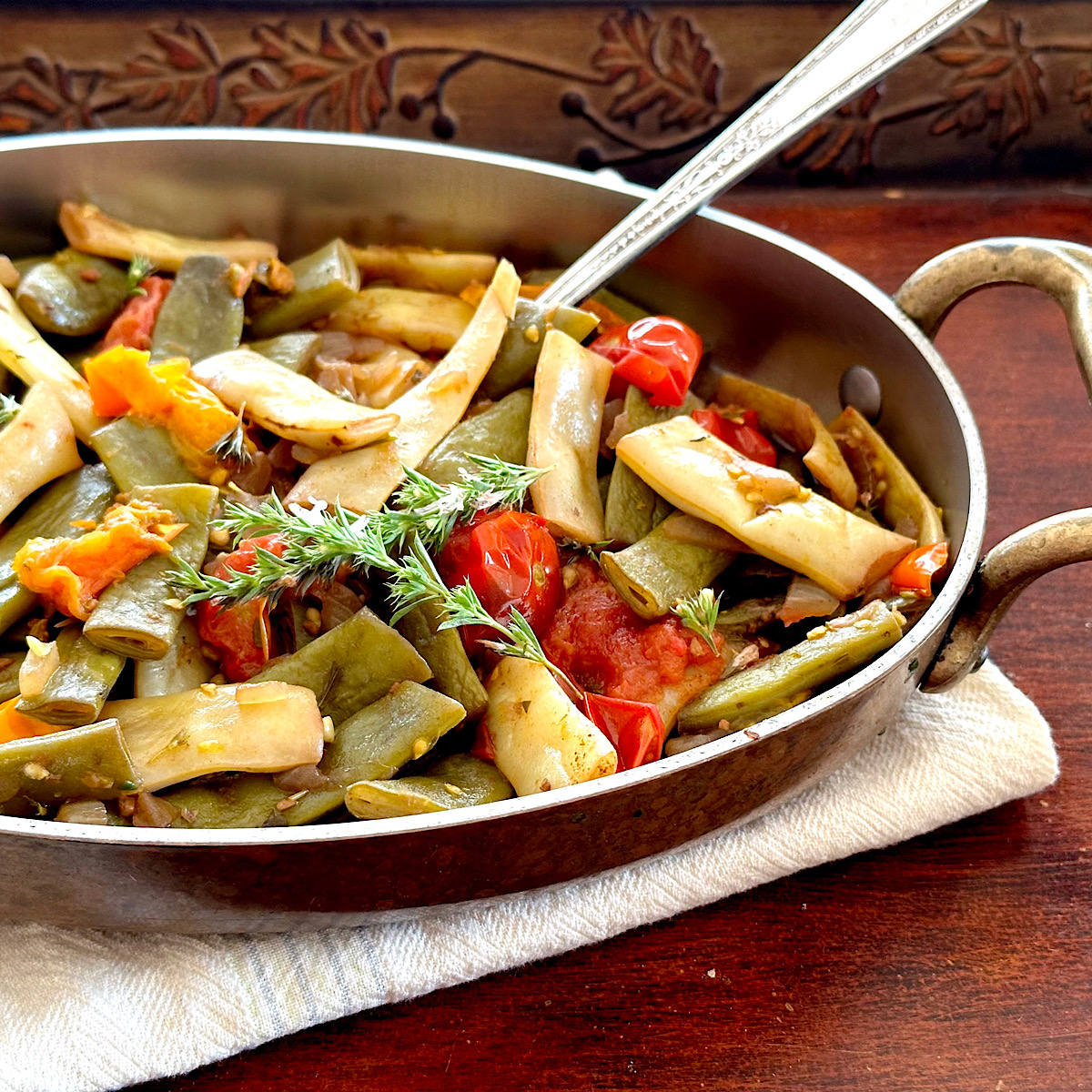
In my Italian kitchen garden at HeathGlen, I succession plant Roma beans every 2-3 weeks from one week after last frost until mid-July. Each planting produces for about 2-3 weeks before slowing down.
By staggering, I have fresh beans for pasta e fagioli and romano bean sautes all summer. Basil gets the same treatment: I replant 1-2 times through the season, or keep existing plants producing by pinching off flower buds before they set.
Strategy 2: Different Crops for Different Seasons
Plant crops matched to each season’s conditions. Cool-season crops book-end the year; heat-lovers take center stage in summer.
- Spring (plant as soon as soil can be worked): Peas, spinach, lettuce, radishes, arugula, kale, chard
- Early summer (after last frost): Beans, zucchini, cucumbers, basil, peppers (transplants)
- Peak summer: Tomatoes, eggplant, melons, corn, peppers
- Late summer/fall (plant midsummer for fall harvest): Broccoli, Brussels sprouts, cabbage, kale, carrots, beets, turnips.
- Fall/winter (cold-hardy, can overwinter in many climates): Kale, leeks, parsnips, spinach (with protection), garlic (planted in fall for next summer)
A themed kitchen garden naturally lends itself to succession by season. My Italian garden includes:
- Spring: Lettuce, radicchio, endive, kale (for ribollita and salads)
- Early summer: Beans, zucchini, basil, fennel
- Peak summer: Tomatoes, eggplant, peppers, summer squash
- Fall: Broccoli, radicchio (second planting), kale, winter squash
The cuisine guides the planting. Italian cooking uses different vegetables at different times of year, and the garden follows that rhythm.
Strategy 3: Early, Mid, and Late Varieties
Most vegetables come in varieties with different maturity times. Planting one of each extends your harvest window significantly.
Example with peppers:
- Early (55-65 days): ‘Ace’, ‘Gypsy’, ‘Early Jalapeño’
- Mid-season (70-80 days): ‘California Wonder’, ‘Marconi’, most jalapeño varieties
- Late (85-100 days): ‘Corno di Toro’, ‘Jimmy Nardello’, habanero types
Example with beans:
- Early (50 days): ‘Provider’, ‘Contender’
- Mid-season (55-60 days): ‘Blue Lake’, ‘Roma II’
- Late/extended harvest: Pole beans like ‘Kentucky Wonder’ (produce for 6-8 weeks)
Which Vegetables Work Best for Succession Planting?
Excellent for repeat sowings (fast maturers):
- Lettuce and mesclun mixes
- Spinach
- Arugula
- Radishes
- Bush beans
- Beets (greens and roots)
- Carrots
- Cilantro
- Dill
- Scallions/green onions
- Turnips
- Peas (spring and fall)
Good for variety selection (different maturity times):
- Peppers (wide range from 55-100+ days)
- Cucumbers
- Squash (summer and winter types)
- Broccoli
- Cabbage
- Corn
- Melons
Not ideal for succession planting:
- Tomatoes (indeterminate types produce continuously from one planting; determinate types could be staggered but take too long to justify multiple plantings)
- Perennial vegetables (asparagus, rhubarb, artichokes)
- Garlic (one planting per year, fall-planted)
- Onions (long season, one planting)
- Potatoes (typically one main crop)
Notice the pattern: leafy greens and beans benefit most from succession planting. Fruiting vegetables (tomatoes, peppers, eggplant, squash) produce continuously from one planting and don’t need it.
Here’s how succession planting works for a 12-vegetable Italian kitchen garden:
| Vegetable | Succession Approach | Notes |
|---|---|---|
| Roma beans | Sow every 2-3 weeks until July | Perfect for fresh eating and canning |
| Lettuce | Sow every 2-3 weeks, pause for heat | Resume in August for fall salads |
| Radicchio | Sow every 1-2 weeks | Won’t germinate above 80°F; spring and fall crop |
| Fennel (Florence) | Replant 1-3 times | Bolts in heat; better as spring/fall crop |
| Basil | Replant 1-2 times OR pinch heavily | Pinching delays need for new plants |
| Endive | Early spring and late summer only | Heat causes bolting |
| Kale | Spring planting + midsummer for fall | Flavor improves after frost |
| Broccoli | One main planting; harvest side shoots | Side shoots extend harvest 1-4 weeks |
| Tomatoes | One planting (indeterminate types) | Not succession planted |
| Peppers | One planting | Not succession planted |
| Eggplant | One planting | Not succession planted |
| Zucchini/squash | One planting | Produces heavily from single planting |
How Do You Create a Succession Planting Schedule?
Step 1: Know your frost dates.
Find your average last spring frost and first fall frost dates. In Minnesota (Zone 4), that’s roughly mid-May and late September, giving about 130-140 frost-free days.
Step 2: Work backward from desired harvest.
If you want lettuce ready June 1 and it takes 45 days to mature, plant around April 15 (with frost protection) or transplant seedlings started indoors.
Step 3: Create a simple calendar.
Mark your frost dates. Then fill in planting windows:
| Crop | First Planting | Repeat Every | Stop Planting |
|---|---|---|---|
| Lettuce | April 15 (protected) | 2 weeks | June 1, resume Aug 1 |
| Radishes | April 1 | 2 weeks | May 15, resume Sept 1 |
| Spinach | April 1 | 3 weeks | May 1, resume Aug 15 |
| Bush beans | May 20 | 3 weeks | July 15 |
| Cilantro | April 15 | 2 weeks | June 1, resume Sept 1 |
| Carrots | April 15 | 3 weeks | July 1 |
| Beets | April 15 | 3 weeks | July 15 |
Step 4: Account for summer heat gaps.
Many cool-season crops (lettuce, spinach, cilantro, radishes, peas) bolt or turn bitter in summer heat. Stop planting these by early June and resume in August for fall harvest. This natural gap is when you focus on heat-lovers.
Step 5: Plan your fall garden in midsummer.
This is when most gardeners forget about succession planting. July is the time to start seeds for fall broccoli, cabbage, kale, and late-season greens. Count backward from your first frost date.
My Schedule for Zone 5
In Minnesota, my growing season runs roughly May 1 through November 1 (about 180 days, with frost protection extending both ends). Here’s my actual succession schedule for the Italian kitchen garden:
- March: Start tomato, pepper, and eggplant seeds indoors (8-10 weeks before last frost)
- Early April: Start basil, parsley, broccoli, and kale seeds indoors
- Mid-April: Direct sow lettuce, radicchio, and endive outdoors (2-4 weeks before last frost, with row cover protection)
- Late April: First fennel direct sowing
- Early May: Transplant tomatoes, peppers, eggplant after last frost. First bean sowing (1 week after last frost).
- Mid-May: Second bean sowing. Second lettuce sowing.
- Early June: Third bean sowing. Pause lettuce (too hot). Second basil planting or heavy pinching of first.
- Late June: Fourth bean sowing. Start fall broccoli and kale indoors.
- Mid-July: Last bean sowing. Transplant fall brassicas.
- August: Resume lettuce, radicchio, endive sowings for fall.
- September: Harvest intensifies. Second fennel planting matures.
- October-November: Kale, winter squash, late radicchio. Season extension with row covers.
Succession Planting for Spring Crops
Spring is prime time for cool-weather vegetables. Start as soon as soil can be worked (or use row covers for earlier planting).
- Peas: Plant 4-6 weeks before last frost. They stop producing when temperatures consistently exceed 80°F. In Zone 4, that means planting early April, harvesting through June. You can plant again in late August for a fall crop if your season is long enough.
- Lettuce and salad greens: Start indoors 4-6 weeks before last frost, transplant out under row covers. Direct sow every 2 weeks from mid-April through May. Succession sowing is essential; a single planting gives you about 2-3 weeks of good harvests before bolting.
- Spinach: One of the earliest crops to plant. Direct sow as soon as soil hits 40°F. Makes excellent use of the “shoulder seasons” (early spring, late fall) when not much else grows.
- Radishes: The fastest vegetable in the garden (25-30 days). Interplant with slower crops like carrots. By the time carrots need the space, radishes are harvested.
- Radicchio and endive: These Italian chicories are ideal spring crops. Direct sow as soon as soil can be worked, then again every 1-2 weeks. They won’t germinate once temperatures exceed 80°F, so get them in early.
- Fennel (Florence type): Direct sow after last frost, but know that fennel bolts quickly in heat. For continuous harvest, plan a spring planting and a late-summer planting for fall bulbs.
Succession Planting for Summer Crops
Summer is when the garden hits peak production. Succession planting helps manage the bounty.
- Bush beans: Perfect for succession sowing. Plant every 2-3 weeks from last frost through mid-July. Each planting produces for about 2-3 weeks, then declines. Pole beans are different; one planting produces continuously.
- Zucchini and summer squash: These produce heavily from a single planting. Rather than succession plant, stagger varieties (one early, one mid-season) or plant just 2-3 plants and pick frequently to keep them producing.
- Cucumbers: Can be succession planted with 3-4 weeks between sowings. First planting after last frost; second planting in early July for late-summer harvest after the first plants succumb to cucumber beetles or powdery mildew.
- Basil: Plant every 3-4 weeks for continuous fresh basil. Once basil flowers, leaf production declines and flavor changes. Keep new plants coming.
- Basil: TBasil hates cold (don’t transplant until night temperatures stay above 50°F) but thrives in summer heat. Succession plant by either starting new plants every 4-6 weeks, or by pinching existing plants heavily. Remove flower buds the moment they appear. Once basil flowers, leaf production drops and flavor changes.
- Zucchini and summer squash: Rather than succession plant, I plant once and pick frequently (every 2-3 days) when fruits are small and tender. Letting zucchini get huge reduces future production. I
Succession Planting for Fall and Winter Crops
Many gardeners neglect fall planting, but it’s when some vegetables taste best. Cool weather concentrates sugars in brassicas and root vegetables.
Timing fall crops: Count backward from your first expected frost. Most fall crops need to mature before hard freezes but actually improve with light frosts.
- Brussels sprouts: 90-100 days; start transplants indoors in June, plant out in July
- Broccoli: 55-80 days; direct sow or transplant in July-August
- Kale: 55-75 days; plant in July-August, harvest into winter
- Carrots: 70-80 days; sow in July for fall harvest
- Beets: 55-70 days; sow in August
- Lettuce: 45-60 days; resume sowing in August for fall salads
- Fall radicchio: This is when radicchio really shines. The bitter leaves sweeten after light frosts. Resume sowing in August for heads that mature in October and November. In Zone 4-5, radicchio can survive surprisingly hard frosts, especially with row cover protection.
- Kale for Italian cooking: Tuscan kale (lacinato/dinosaur kale) is essential for ribollita and other Italian soups. Plant in spring for early-summer harvest, then again in midsummer for fall. Fall-harvested kale is sweeter and more tender. In my Minnesota garden, kale often survives into December under row covers.
- Winter squash: Not a succession crop (one planting per season), but critical to Italian fall cooking. Varieties like ‘Delicata’ and ‘Butternut’ need 85-100 days, so plant after last frost and harvest before hard freeze. Cure properly and they store for
Overwintering crops: Some crops can stay in the ground through winter with mulch protection, or even improve. Parsnips get sweeter after frost. Kale can survive Zone 4 winters under heavy mulch or cold frames. Garlic is planted in fall, overwinters, and harvests the following summer.
Succession Planting in Containers and Small Spaces
Succession planting is even more valuable when space is limited. Every square foot needs to work hard.
Principles for small spaces:
- Relay planting: Start the next crop’s seedlings indoors while the current crop is finishing. Transplant immediately after harvest.
- Interplanting: Grow fast and slow crops together. Radishes between lettuce heads. Lettuce under pepper plants. Spinach at the base of trellised peas.
- Vertical growing: Train vining crops (pole beans, cucumbers, peas) vertically to free up ground space for succession plantings.
- Salad bowl containers: A single large container can provide continuous salad greens if you harvest cut-and-come-again style and resow every 2-3 weeks.
Common Succession Planting Mistakes to Avoid
- Forgetting to actually plant the next batch. Put reminders in your calendar. “Plant lettuce” on April 15, May 1, May 15, etc.
- Planting too much at once. The point is to stagger. Two or three plants (or a short row) every few weeks beats a massive single planting.
- Ignoring summer heat gaps. Cool-season crops fail in summer. Don’t keep planting lettuce in June hoping it will work.
- Starting fall crops too late. July feels like peak summer, but it’s when you need to be starting fall broccoli and kale. Count backward from frost.
- Not accounting for transplant time. If you’re starting seeds indoors, you need to begin 4-6 weeks before you want to plant out. Build this into your schedule.
- Planting the same variety repeatedly. Instead of three sowings of the same lettuce, try an early variety, a heat-tolerant mid-summer variety, and a fall variety. Diversify your succession.
FAQ
A gardening strategy that staggers your harvest by planting at different times, choosing crops that mature in different seasons, or growing varieties with different maturity dates.
Fast-maturing crops like lettuce, radishes, spinach, and beans work well for continuous sowing. Tomatoes, peppers, and squash benefit from planting early, mid, and late varieties.
Every 2-3 weeks during the growing season. Stop sowing about 6-8 weeks before your first expected frost.
Yes. It actually maximizes small spaces because you’re replanting beds as soon as one crop finishes. A single raised bed can produce spring greens, summer tomatoes, and fall brassicas in one season.
Count backward from your desired harvest date using the “days to maturity” on seed packets. Factor in your last frost date for spring plantings and first frost date for fall plantings.
Start with the cuisine. List the vegetables essential to that cooking style, then research which ones benefit from succession planting (usually leafy greens, beans, and quick-maturing crops). Fruiting vegetables like tomatoes, peppers, and eggplant typically don’t need succession planting because they produce continuously. See my Beginners’ Kitchen Garden Guide for a complete example with planting charts.
July, which feels counterintuitive. Count backward from your first expected frost using the “days to maturity” on seed packets. Most fall brassicas (broccoli, kale, Brussels sprouts) need to be started midsummer.
Generally not worth it. Indeterminate tomatoes produce continuously from one planting. Determinate tomatoes could theoretically be staggered, but their long maturity time (70-100 days) makes multiple plantings impractical in most climates.
Yes, and it’s especially valuable for small spaces. Use relay planting (start seedlings indoors while current crop finishes), interplant fast and slow crops, and grow vertically to maximize production.
Succession planting is about timing harvests within a single season. Crop rotation is about moving crop families to different beds each year to prevent soil diseases. They work together but serve different purposes.
Plant heat-tolerant lettuce varieties like ‘Jericho’, ‘Muir’, or ‘Nevada’. Use shade cloth during the hottest weeks. Or accept the gap and focus on heat-loving crops like beans and tomatoes, resuming lettuce in August.
Check out this Beginners Guide to a Kitchen Garden for starting your own vegetable garden, whether in a garden plot or on an apartment balcony.